You've created beautiful designs and are ready to bring them to life through manufacturing. But when you contact factories, they're asking for technical documents you've never heard of, and you're unsure what exactly they need to accurately quote and produce your collection. Missing or incomplete design files lead to misunderstandings, cost overruns, and products that don't match your vision. What specific documents transform your creative concepts into manufacturable reality?
For custom apparel manufacturing, you need comprehensive technical packages (tech packs) containing detailed flat sketches, complete measurement specs, materials lists, construction details, and branding artwork. These documents serve as the universal language between design and production, ensuring your vision translates accurately into finished garments while enabling manufacturers to provide precise quotes and timelines. Complete technical documentation typically reduces sampling iterations by 60-80% and prevents the most common manufacturing errors that derail new collections. Let's break down exactly what files you need and how to create them effectively.
What should be included in your technical package?
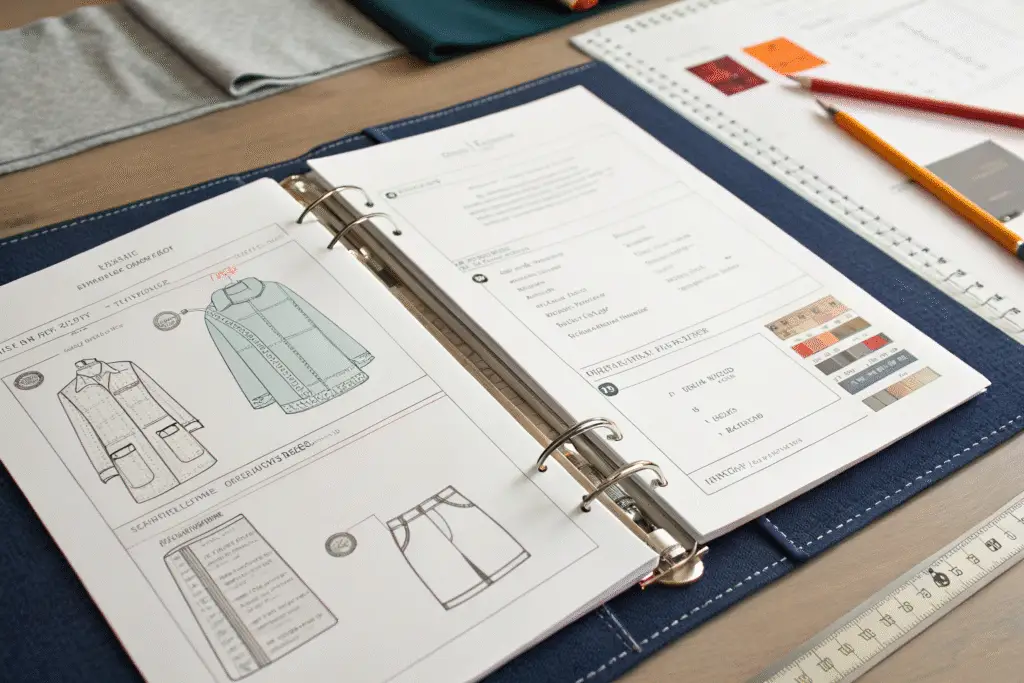
Your technical package (tech pack) is the single most important document in apparel manufacturing—it's the blueprint that guides every aspect of production from costing to final inspection. A complete tech pack typically runs 10-20 pages per style and contains both visual and technical specifications that leave no room for interpretation.
A comprehensive tech pack includes flat technical sketches from all angles, detailed measurement specifications for all sizes, materials list with specific compositions and sources, construction callouts specifying seam types and stitching, trim placement with exact dimensions, and colorways with Pantone references. When a contemporary brand provided us with exceptionally detailed tech packs including grading rules between sizes and tolerance specifications for each measurement, we produced their first samples with 95% accuracy to their vision. Their previous manufacturer had required three sample rounds for simpler designs because of incomplete specifications.
Why are flat technical sketches crucial?
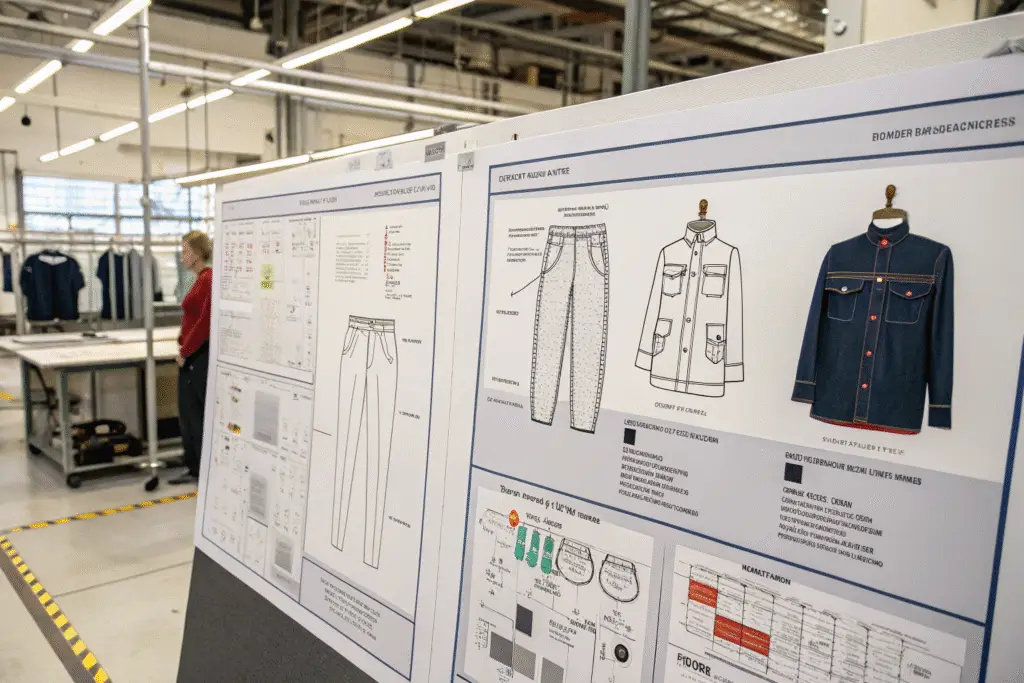
Flat sketches show the garment as if it's lying flat, without artistic styling or body draping that can obscure construction details. These drawings must include front, back, and side views with all seams, darts, and design lines clearly visible. A streetwear client learned this when their initial "inspiration" sketches showed models wearing jackets open with shirts underneath—the factory couldn't determine proper closure placement or lining construction. Once they created proper flat sketches showing zipper placement, placket construction, and interior details, we could accurately quote and sample their design.
What measurement specifications are essential?
Your measurement chart should include all critical dimensions for every size you're producing, plus grade rules showing how measurements change between sizes. Include not just basic body measurements but garment-specific points like sleeve opening circumference, cuff width, and collar stand height. We recently helped a client avoid a costly mistake when their measurement spec revealed an unusually narrow shoulder measurement that would have restricted movement—catching this during tech pack review allowed for correction before pattern making began.
How do you specify materials and trims?
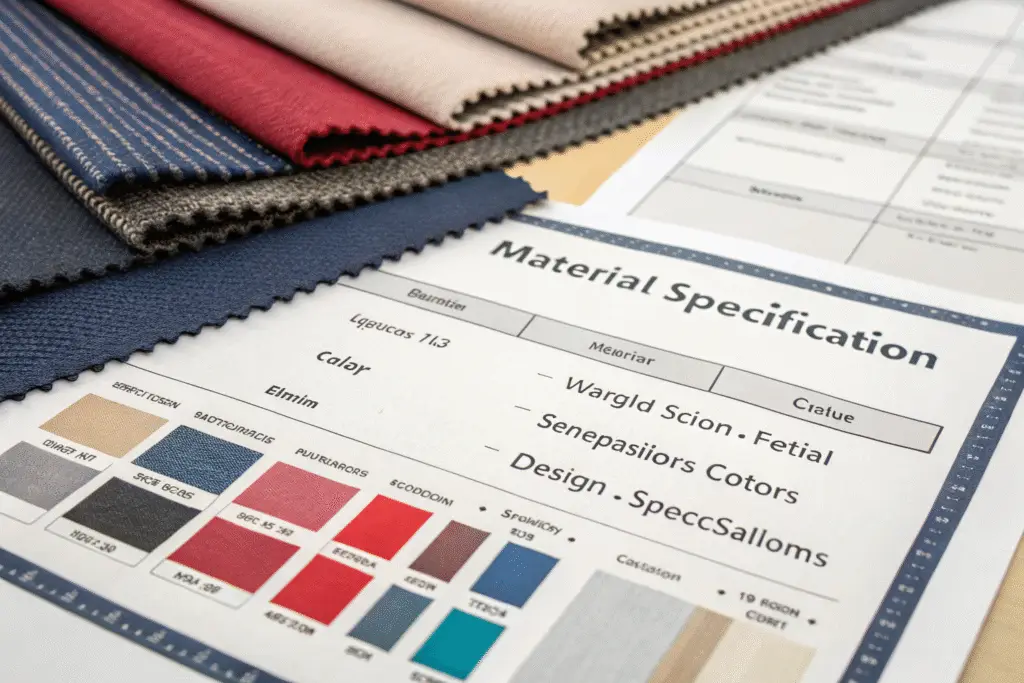
Materials typically represent 50-70% of your garment's cost and directly impact quality, performance, and manufacturing feasibility. Vague material descriptions guarantee inconsistent results, while precise specifications ensure you receive exactly what you envisioned regardless of who handles production or when you reorder.
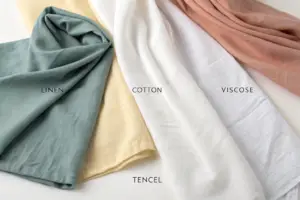
Your materials list should specify exact composition (e.g., "94% cotton, 6% spandex"), weight (in GSM or ounces), finish (e.g., "garment washed, enzyme softened"), source or certification when important (e.g., "GOTS certified organic cotton"), and performance requirements when applicable (e.g., "colorfast to 5 home washes"). A sustainable activewear brand provided exceptionally detailed material specs including Oeko-Tex certification requirements and specific stretch/recovery percentages—this enabled us to source perfect substitutes when their first-choice fabric was unavailable, maintaining their quality standards without delaying production.
What trim specifications prevent production errors?
Trims—zippers, buttons, labels, elastics—seem minor but can derail production if specified incorrectly. For each trim, provide specific type, size, color, material, and attachment method. One client learned this when their "standard plastic zipper" specification resulted in flimsy zippers that failed during wear. After this experience, they began specifying "#5 VISLON nylon coil zipper with auto-lock slider and double-sided tape for easy application"—detailed enough that any quality manufacturer could source the correct component.
How do you communicate color accurately?
Color specification requires both visual references and standardized systems. Use Pantone TPX/TCX codes for textiles alongside physical lab dip approvals for critical colors. A luxury brand client provides both Pantone references and previously approved fabric swatches for color matching—this dual approach has eliminated color disputes and ensured consistency across multiple production runs spanning different dye lots and even different factories.
What construction details must be documented?
How a garment is assembled significantly impacts its appearance, durability, and cost. Construction details that seem obvious to designers are often interpreted differently by factories unless explicitly documented. Clear construction specifications prevent manufacturing shortcuts that compromise quality.
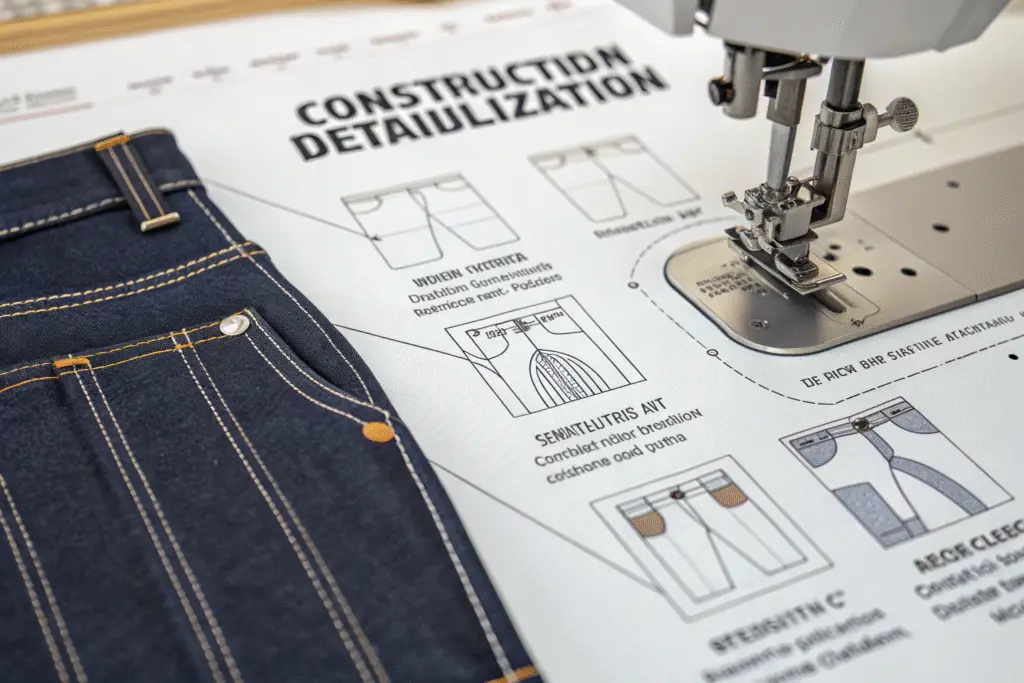
Specify seam types (French seam vs. flat fell vs. overlook), stitch types (lockstitch vs. chainstitch), stitch density (stitches per inch/cm), and any specialized operations like binding, taping, or fusing. Include close-up sketches of complex construction areas. A technical outerwear brand provides incredibly detailed construction callouts specifying exact seam sealing techniques, tape widths, and application temperatures—this level of detail ensures their waterproof claims are technically valid and consistently executed across production.
Why are finish specifications important?
How raw edges are finished dramatically affects both aesthetics and durability. Specify whether seams should be overlooked, bound, pinked, or left raw based on your quality standards and fabric type. A high-end knitwear client specifies "clean finish interiors with all seams flatlock stitched" rather than assuming the factory will use their preferred method. This explicit direction has eliminated the interior roughness issues they experienced with previous manufacturers who used faster but inferior finishing techniques.
How do you specify branding and label placement?
Branding elements require precise placement specifications to maintain consistency. Provide exact measurements from specific points (e.g., "center chest logo positioned 3" below neckline seam, centered between side seams"). One client provides templates for all their labels and tags with die-line artwork and attachment specifications—this attention to detail means their branding appears consistently regardless of which factory or production run creates the garments.
What additional files support manufacturing?
Beyond the core tech pack, several supplementary files ensure smooth manufacturing and consistent results. These supporting documents address pre-production validation, compliance requirements, and packaging specifics that complete the customer experience.
Include fabric performance test reports (for colorfastness, shrinkage, pilling), compliance documentation for your market (like CPSC certifications for children's wear), packaging specifications (poly bag thickness, hangtag attachment, folding methods), and shipping mark requirements. A children's sleepwear brand provides not only their tech packs but also copies of their flammability compliance certificates and specific packaging instructions—this comprehensive approach has prevented multiple potential compliance issues and ensured their products arrive in perfect condition.
Why include pattern references when available?
If you've developed patterns with a previous manufacturer or pattern maker, include these files (typically in .dxf format) to maintain fit consistency. Even basic pattern references help new manufacturers understand your fit preferences. A client transitioning between factories provided their existing patterns, which allowed us to replicate their successful fit while improving production efficiency through better pattern engineering—maintaining their signature look while reducing fabric waste by 12%.
How do quality standards documents help?
Provide your quality standards manual or inspection criteria if you have specific requirements beyond standard AQL practices. One established brand shares their 15-page quality manual detailing everything from acceptable stitch tension to packaging presentation—this document aligns expectations and has reduced quality disputes by over 80% since they began requiring manufacturers to acknowledge it before production begins.
Conclusion
Complete, detailed design files transform custom apparel manufacturing from a guessing game into a precise execution of your vision. Investing time in comprehensive technical packages, material specifications, and construction details pays exponential returns through accurate quoting, fewer sampling rounds, consistent quality, and faster time to market. The most successful brands treat their tech packs as living documents that evolve with their collections and manufacturing partnerships.
Remember that your design files are the primary communication tool with your manufacturer—clarity and completeness prevent misunderstandings and ensure you receive exactly what you envisioned. For a manufacturing partner who values thorough documentation and provides detailed guidance on preparing your design files, contact our Business Director Elaine at elaine@fumaoclothing.com. Let's transform your designs into perfectly executed collections through clear communication and technical excellence.