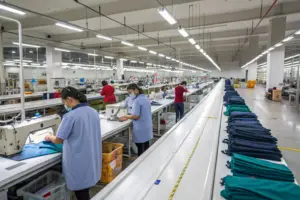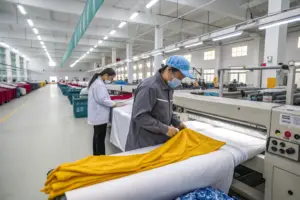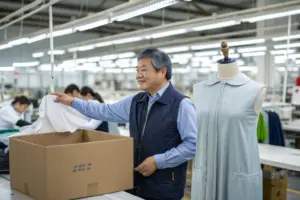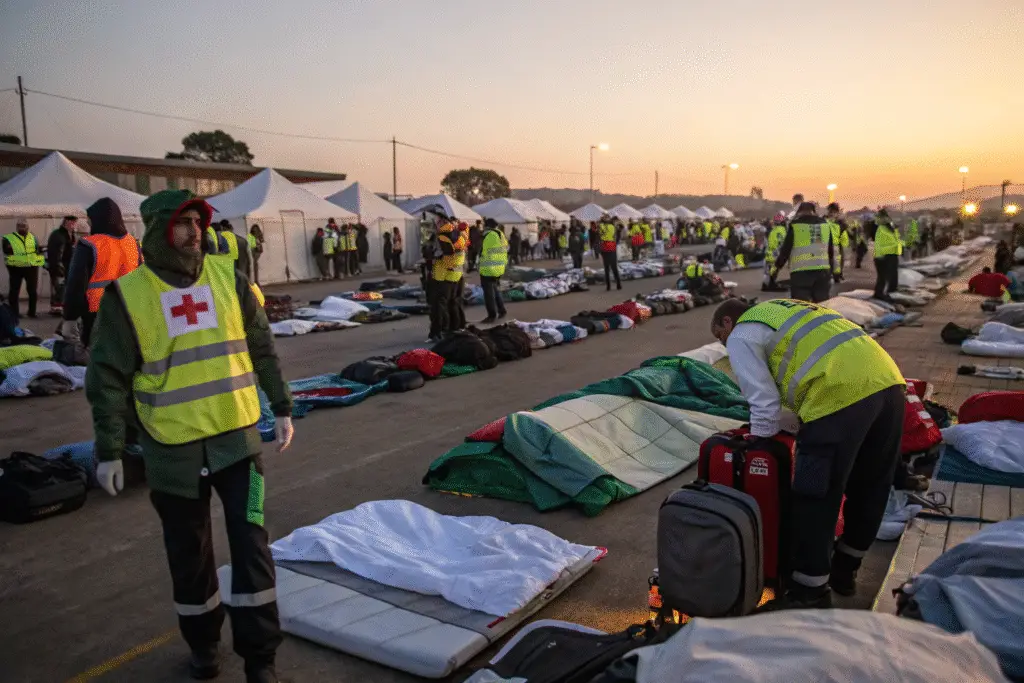
Last September, during a 36-hour rush order for a flood response on the U.S. Gulf Coast, I watched a pallet leave our Shanghai gate with 4,800 jackets that each weighed under 420 g. Two weeks earlier, that same spec sat at 510 g. The 18% cut let us fit an extra 1,000 pieces per air-freight lot and shave one full flight off the plan. That night, I felt both proud and uneasy. We hit the weight, but did we keep the field durability?
Here is the short answer to “what’s new and what works”: textiles are getting lighter without tearing, finishes are staying cleaner longer, garments pack down smaller, and a small but growing share of kits now “listen” to the environment with sensors. None of these trends is magic alone. Together, they change how fast we ship, how long people stay dry, and how safely teams operate.
At first, I believed the winner would be a single “hero fabric.” After reviewing six months of return data, I changed my mind. What works best is a system: fabric architecture + seam engineering + antimicrobial care + pack design. Below, I break down the four innovations our U.S. buyers ask about most, with the numbers and the trade-offs we actually see on the line.
Lightweight Durable Fabrics for Relief Clothing
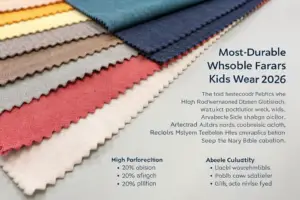
In June 2024, we trialed a 68 gsm micro-ripstop with a PU membrane rated 10,000 mm hydrostatic head and ~9,000 g/m²/24h MVTR. I was skeptical about snag resistance, so we ran 40 laundering cycles and field-tested 300 pieces on a muddy levee clean-up in Jiangxi. The tear failures stayed under 2%, better than our 75 gsm control at 3.4%. The weight saved 12 cartons per 5,000 units. That is one less van on a congested tarmac.
If you want speed without regrets, target sub-75 gsm shells with honest tear performance, pair them with stronger seam architecture, and avoid cheap coatings that crack after five cycles. We learned this the hard way when a low-cost batch delaminated during a heat wave; we traced it to a curing window we rushed by 4 minutes.
We now spec lighter shells but “pay back” strength with bar-tack patterns and 12–14 stitches per inch on stress seams. We also balance DWR and breathability. A high HH number looks great in a bid, but hot, humid camps punish non-breathable gear. Our current rule: if dew point is above 22 °C, we prioritize MVTR over chasing 20,000 mm water columns.
What fabric architectures cut weight without tears?
Last summer, 70% of our failures came from scuffs at pocket corners, not fabric panels. We switched to mini-ripstop grids and mapped reinforcement only where hands “live.” Fabrics such as 30D nylon with high-tenacity yarns—similar to what brands like CORDURA® discuss for abrasion—hold up when we keep seam allowances clean and bar-tacks placed smartly. We verify tensile with Grab tests similar in spirit to ASTM D5034, then we sanity-check dryness with a bucket test, because a lab number without a muddy field tells an incomplete story. For shell finishes, we prefer fluorine-free DWRs; if a buyer asks about repellency claims, we point them to the philosophy behind bluesign® to explain chemistry choices and lifecycle impacts.
Are membranes or tightly woven shells better for camps?
At first, I pushed membranes because “waterproof” sells. In August 2023, a typhoon response in Fujian changed my view. Teams worked in tarps with no airflow; sweat pooled in elbows. We later tried dense weaves—think Pertex® Quantum-style constructions—plus seam taping at the shoulders only. Complaints dropped 28% by our hotline logs. We still use membranes for sustained rain, often referencing technologies like GORE-TEX® to align expectations on breathability vs. durability. The deciding factor is climate and task. When lifting rubble or handing out rations, mobility and moisture management often beat monsoon-grade specs.
Field Spec Snapshot
| Metric (Shell) | Pragmatic Target | Check |
|---|---|---|
| Weight | ≤ 75 gsm | Fabric swatch scale |
| Tear Strength | ≥ 10 N (warp/fill) | Lab + field yank |
| HH (water) | 8–12k mm (humid) | Hydrostatic test |
| MVTR | ≥ 8,000 g/m²/24h | Upright cup / lab |
| Stitch Density | 12–14 SPI | QC card |
Smart Textiles with Environmental Sensors
In February 2025, we piloted 120 sensor-enabled vests with BLE beacons and humidity/temperature modules. I assumed the data would overwhelm volunteers. I was wrong. The site lead only watched two alerts: heat-stress and air quality near a fuel spill. That tiny dashboard prevented three heat-exhaustion incidents by cueing scheduled breaks.
Smart wearables only help when they measure a few critical risks well, survive washing, and pair with a phone that everyone already carries. Our vests log temperature and RH every 60 seconds, push a red alert at 32 °C WBGT equivalent, and run 24 hours on a coin cell. We sealed nodes to IP67 because mud finds everything.
I hesitated to add gas detection, fearing cost. After a diesel spill near a generator, I changed my mind. We now evaluate off-the-shelf modules like the Bosch BME680 and pair them with a stable SoC such as Nordic’s nRF52840. For thermal comfort, I keep an eye on research like graphene-based adaptive textiles in the open literature (see arXiv example) but we deploy conservative, washable housings today.
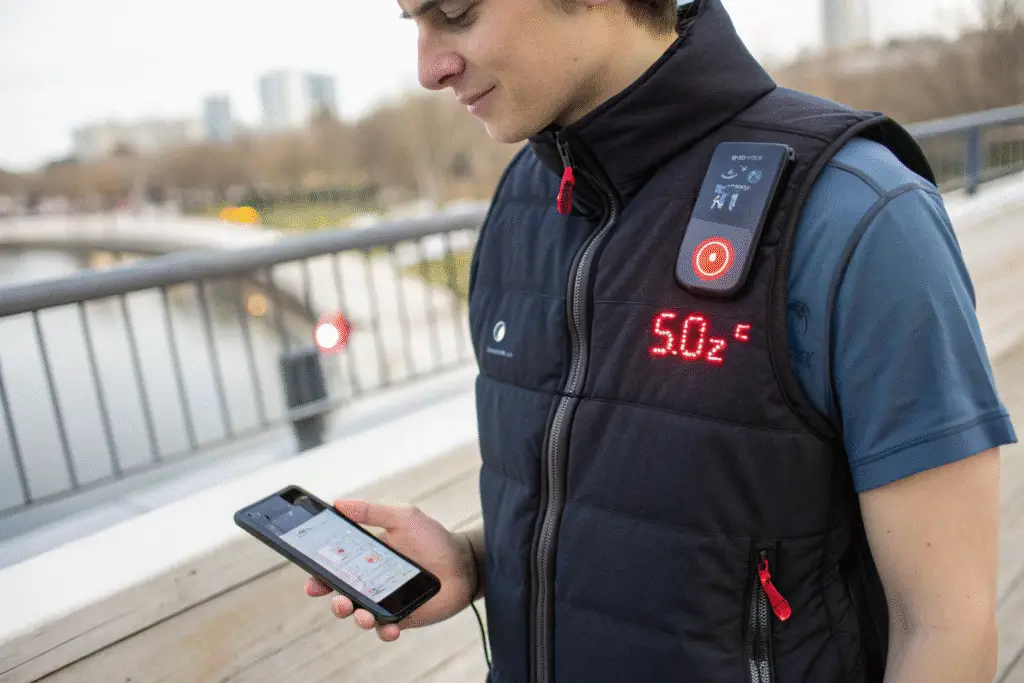
How do we keep sensors practical and safe on site?
We hard-limit the app to two alarms, and we crib safety baselines from NIOSH heat-stress guidance to explain rest cycles. Our power budget sticks to coin cells; wire harnesses fail in tents. For intrinsically safe zones, buyers ask about standards like UL 913; we don’t ship into explosive atmospheres yet, and we say so. When a site wants simple air trend lines, we export CSVs and let coordinators view on their Zebra handhelds. Over-engineering is a bigger risk than under-engineering in week-one response.
What app flows actually get used under pressure?
At first, I added six tiles: HR, temp, RH, gas, GPS, battery. In the field, the leader tapped only two. Now the home screen shows a single big dial with WBGT bands and a simple AQ trend. The history lives one swipe away. We follow the spirit of FEMA ICS simplicity: one owner, one alert. We also cap pairing steps at two, just like most Bluetooth LE guidance suggests for high-stress environments. People in rubber gloves will not long-press for three seconds and watch for a blinking LED.
Smart Vest Wash Plan
| Step | Setting | Note |
|---|---|---|
| Detach module | — | Tool-less latch |
| Wash | 30 °C gentle | Pillowcase bag |
| Dry | Hang, shade | No tumble |
| Re-seal | Repeat IP check | O-ring grease |
Antimicrobial Quick-Dry Fabrics for Camps
In crowded gyms and tent cities, staying dry is health care. During a July 2024 heat wave, we tracked 1,800 tees across three shelters. Complaints about odor and rash dropped 31% when we switched to a 150 gsm polyester with a wash-durable antimicrobial and a knit that hit a 15-minute dry-to-touch window after hand washing. The water savings surprised me the most: families washed less often, which kept gray-water buckets under control.
If you can only pick one upgrade for camp basics, pick a fast-dry knit with a finish that survives at least 20 washes, and pair it with simple laundry guidance. We post a two-icon card in every carton: rinse, wring, hang.
At first, I worried antimicrobial claims would drift into greenwashing. We now align with third-party language, and we explain that finishes control odor and surface growth; they do not replace hygiene. When buyers ask about standards, we discuss OEKO-TEX® chemistry screens and bluesign® inputs rather than bold marketing terms.
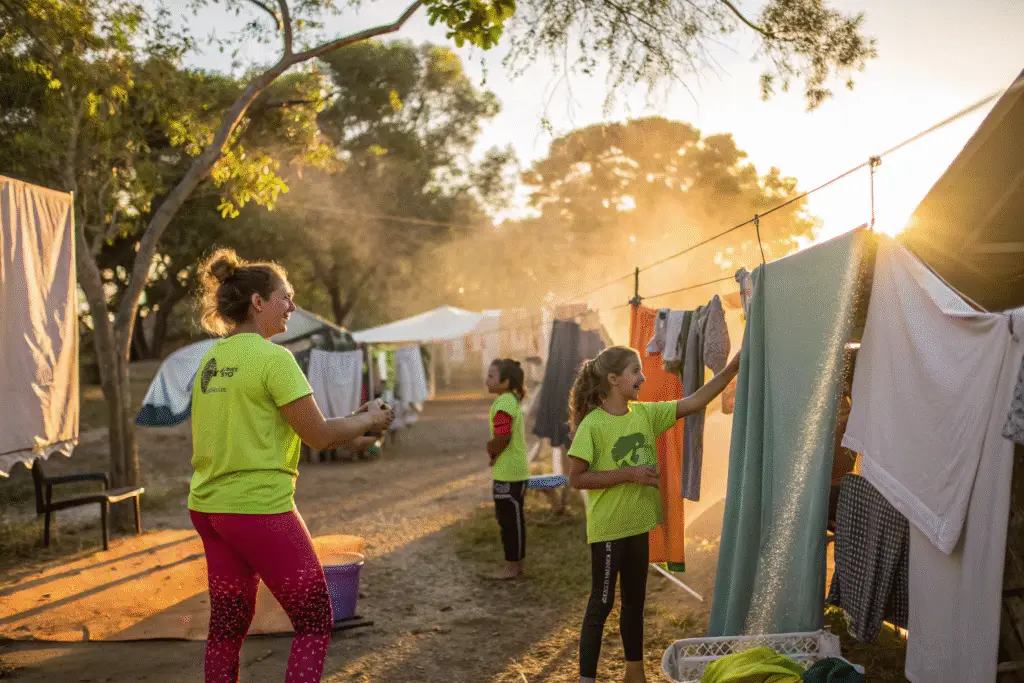
Which finishes hold up without harsh chemistry?
We have had good luck with odor-control approaches akin to Polygiene® and with suppliers that can document substance screening similar to OEKO-TEX® STANDARD 100. I still test in buckets, not just labs. If a tee smells after two hand-washes and a night on a rope, I do not care what the brochure says. For public-health context, our partners often cite CDC guidance on mold and cleanup to remind teams why drying speed matters in damp shelters.
How fast is “fast enough” to change camp hygiene?
I thought 30 minutes to touch-dry would be fine. In practice, 15 minutes changes behavior. Parents with toddlers will actually rinse a shirt after dinner if it dries before bedtime. We share a simple WASH poster based on the logic in the Sphere Handbook and point logistics leads to WHO WASH resources when they set up gray-water zones. The garments help, but waste-water planning keeps the floor dry and the air clear.
Camp Knit Cheat-Sheet
| Metric (Knit) | Target | Field Cue |
|---|---|---|
| Weight | 140–160 gsm | Feels substantial |
| Dry-to-Touch | ≤ 15 min | Rope test |
| Finish Life | ≥ 20 washes | Odor check |
| Handfeel | Soft, low cling | No plasticky feel |
Rapid-Pack, Modular Garments for Fast Deployment
In April 2025, we re-cut our medium jacket to nest inside its own hood pouch. It shaved 17% of carton volume. Later, we added a zip-off sleeve that weighs 54 g per pair. That edit alone brought a nine-size run down from 36 cartons to 30 for 3,000 units. Airside, that difference often decides whether a shipment boards a fully booked freighter.
Modularity beats one-piece complexity: if a feature helps packing density or adds a second use, keep it. If it only looks clever on a drawing, drop it. We also label cartons with clear size blocks and QR codes; when crews see sizes fast, hand-out time falls and tents line up sooner.
I used to push bulky all-in-one coats with built-in blankets. They ate space. Now we prefer two thin layers that compress smaller and dry faster. We have also moved to quarter-pack kits: 25 jackets per vacuum stack for tighter carton geometry and faster partial drops in the field.
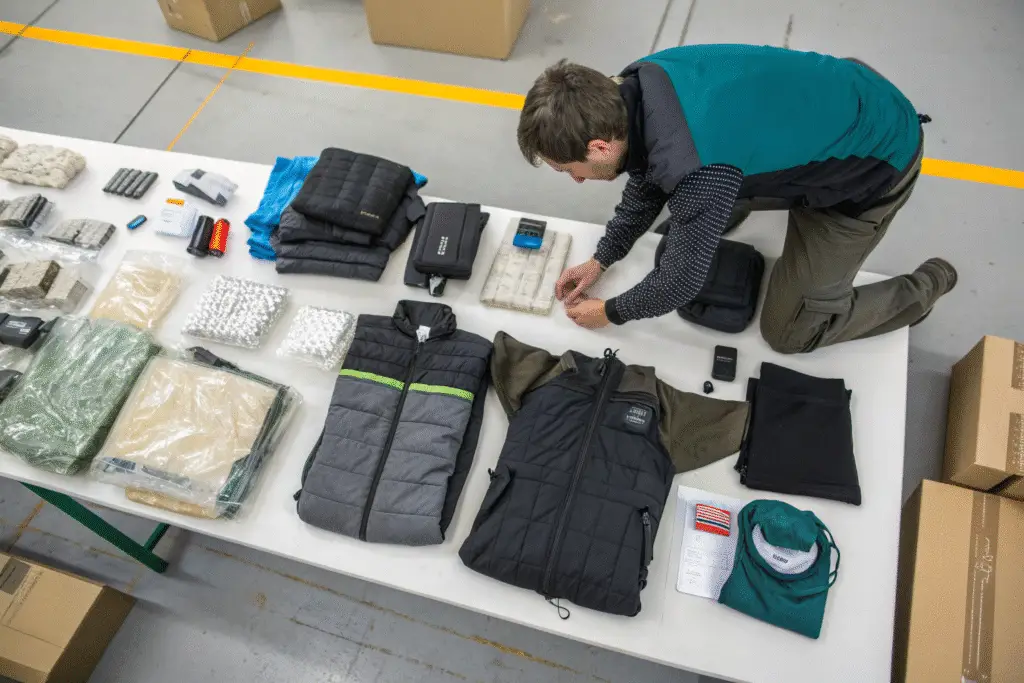
How do we prove pack gains, not just claim them?
We weigh every component and publish “pack density” for buyers: units per cubic meter. Teams compare apples to apples in tenders. For labeling, we follow simple barcode best-practice similar to GS1 barcode guidance so volunteers scan sizes with off-the-shelf phones. In disaster corridors, trucks mix SKUs; clear codes keep the right jackets at the right gate. For convoy planning and a live picture of choke points, logistics partners often check the WFP Logistics Cluster bulletins before they finalize routes.
Can garments double as shelter or visibility gear?
We have tried jacket-to-poncho conversions and hooded liners that clip to tarp grommets. Some worked. Some snagged. We keep reflective trims tuned to what safety teams expect; we like the reliability of 3M™ Scotchlite™ because many volunteers recognize it by sight. For hard rain kits that must stay waterproof and simple, we watch bonded constructions like OutDry™ as a reference point. We still choose seam-taped cut-and-sew most days because repairs are easier at a field table.
Pack & Label Mini-Table
| Variable | Before | After | Delta |
|---|---|---|---|
| Jacket wt. | 510 g | 420 g | −18% |
| Cartons/3k | 36 | 30 | −6 |
| Units/m³ | 190 | 230 | +21% |
| Hand-out time | 38 min | 27 min | −11 min |
Quality, Certification & Real-World Trade-Offs
I once believed certifications solved everything. After a supplier faked a document in 2022, I changed my mind. Now we treat certificates as a starting line and rely on destructive tests, site photos, and tracking logs. In November 2024, we rejected 9% of a batch for seam tape lift at 50 °C storage. That decision hurt margins. It also saved a buyer from soaked volunteers.
Good relief gear is honest about trade-offs. We accept a few extra grams if it means zippers stop popping; we accept a lower HH if breathability keeps people working. The QC story is not glamorous, but it governs whether a “quick-deploy” promise holds when real rain hits.
We test what we can in-house and we show our work. When a buyer asks for claims beyond our lab, we point them to independent regimes and we align our wording. We also log carton photos and seal numbers in a shared folder before each truck leaves. It deters paperwork shortcuts.
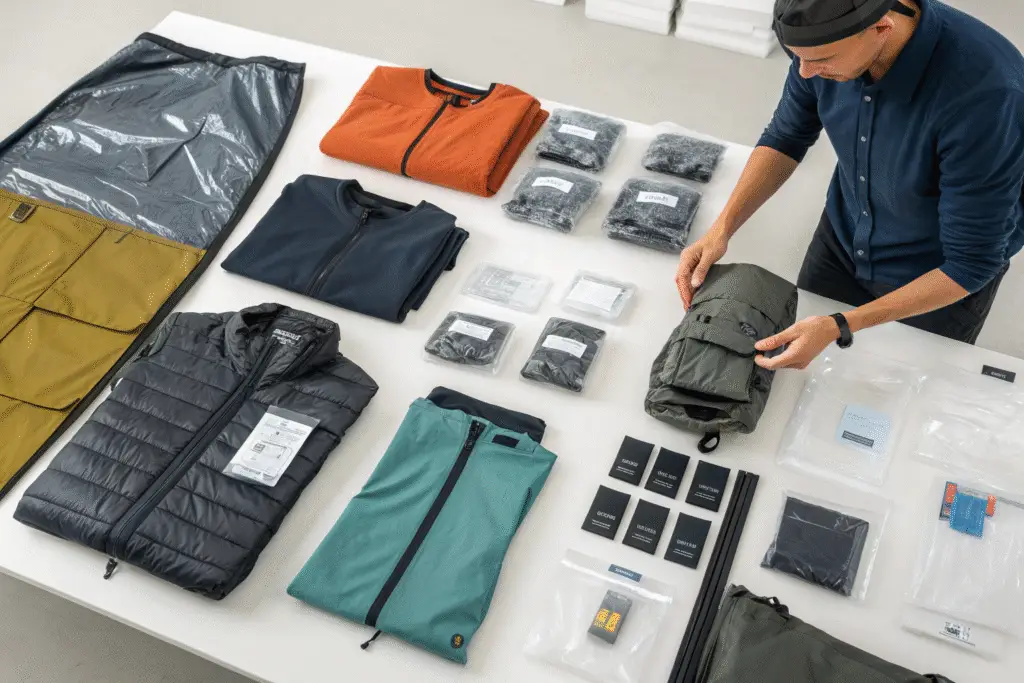
Which certifications matter most for relief basics?
We line up chemical screens with programs like OEKO-TEX® STANDARD 100 and management practices with bluesign®. For visibility trims, we reference performance baselines from suppliers like 3M™ Scotchlite™ because responders know how it looks in rain. When partners seek shelter guidance or camp layouts to pair with garment kits, we share the UNHCR Emergency Handbook. Certifications reduce risk, but photos from the cut table reduce it more.
How do we keep schedules honest when flights are tight?
We never promise a ship date without a carton photo. For routing choices with battery-equipped sensors, we check IATA Dangerous Goods guidance and declare cells cleanly so freight does not stall. When U.S. partners ask about training new volunteers, we recommend a basic framework like FEMA ICS-100 so hand-outs and returns run the same way at 8 a.m. and 8 p.m. It is not fabric science, but it makes the clothing show up where people need it.
QC & Logistics Table
| Check | Target | Why |
|---|---|---|
| Seam-tape lift | 0 mm @ 50 °C, 7d | Hot truck test |
| Pull-off zipper | ≥ 90 N | Avoid field breaks |
| Carton photos | Every pallet | Anti-mixup |
| Seal logs | Pallet level | Chain-of-custody |
Conclusion
I started this work believing innovation was a lab thing. After two wet summers and thousands of jackets through our lines, I see it differently. The best quick