
Noise—it’s everywhere. Trains rumble, cars honk, offices hum. To be honest, sometimes it feels like silence is the rarest luxury in modern life. And yet, fashion is stepping into this space. Personally I think that’s fascinating: clothes are no longer passive, they’re becoming tools to filter our senses.
Actually, noise-canceling hoodies are at the center of this shift. Built from sound-absorbing textiles, fitted with micro ANC modules, and shaped for acoustic isolation, these garments aim to give people a pocket of calm—without bulky headphones.
So… let’s dive into the top innovations that are making this possible. Some sound futuristic, some are here now, but all are shaping what we’ll wear tomorrow.
Advanced Sound-Blocking Fabrics
Fabric alone can do more than most expect. Rarely is it appreciated how much a tightly woven knit or laminated layer can absorb sound. Designers now build multi-layer structures with dense knits, elastomers, or acoustic foams.
These passive fabrics reduce mid-to-high-frequency noise without electronics—making them washable, durable, and practical.
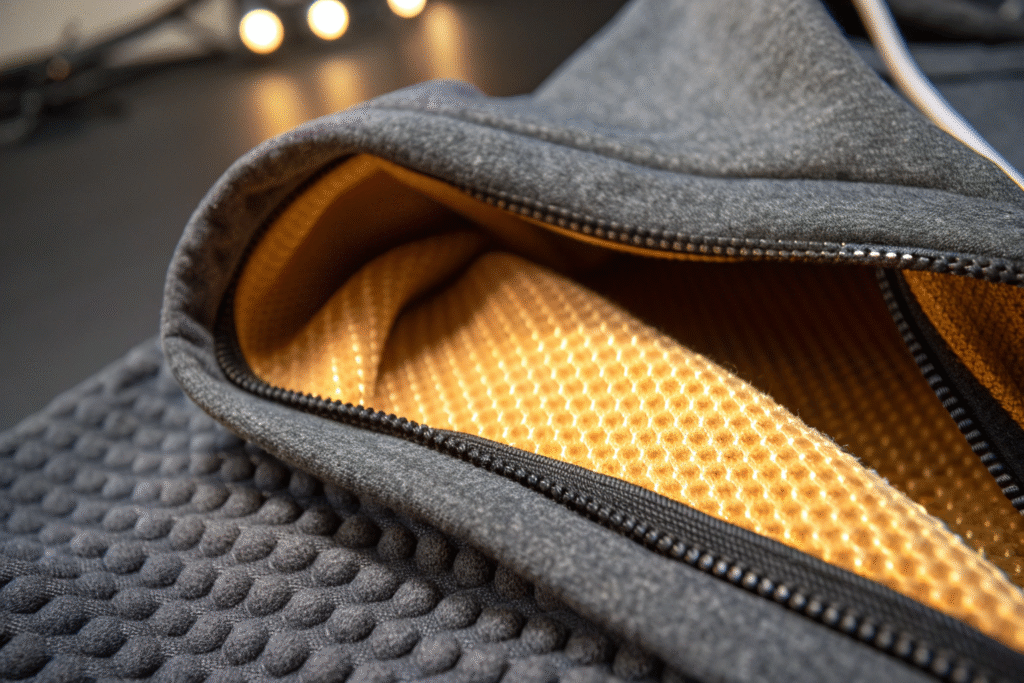
How do dense knits cut noise?
Air pockets within thick yarn traps dissipate sound energy. It’s simple physics. For context, see Soundproofing basics and studies on acoustic textiles.
Are fabric-only solutions enough?
At higher pitches, yes. But for low-frequency hums—engines, subways—fabric alone struggles. And that’s why hybrid approaches exist… bridging passive and active.
Active Noise-Canceling Modules
Electronics hidden in a hood—it sounds like science fiction, yet it’s already here. Tiny microphones capture ambient noise, processors invert it, and embedded speakers emit “anti-noise.” The result: silence, or at least something close.
Actually, active noise-canceling (ANC) is the only reliable way to cancel low-frequency rumble in a wearable garment.
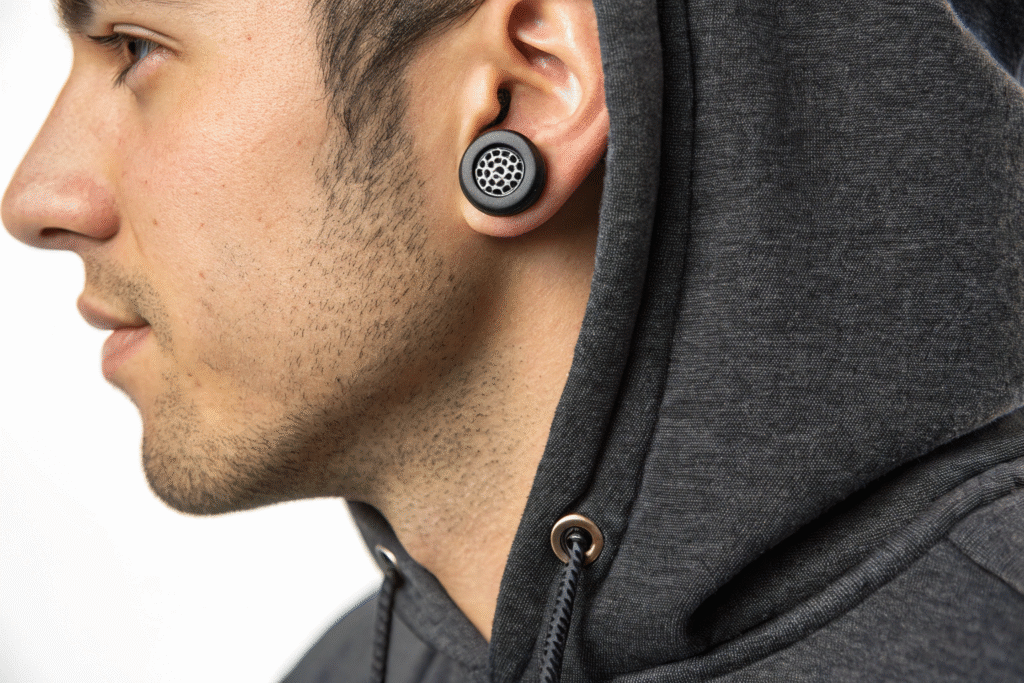
What is ANC in plain words?
Microphones detect sound, circuits flip it, and tiny drivers play it back to neutralize. Learn more at Active noise control.
What are the problems still?
Power supply, washability, comfort. Batteries must be small yet long-lasting, modules removable. Lenovo’s Tab Wear “Me-Time Pod” jacket is one example experimenting with integration.
Smart Acoustic Fabrics
What if the fabric itself could cancel sound? That’s the dream. MIT’s piezoelectric silk-cotton blends detect vibrations and cancel them. ETH Zurich’s SonoTextiles weave glass fibers that respond to ultrasonic waves.
Personally I think adaptive textiles are the most exciting frontier—fabrics that tune themselves, reacting as environments change.

How do piezo fibers work?
They generate or absorb vibration, turning cloth into both a sensor and an actuator. Details at MIT’s acoustic fabric research.
Can they survive daily wear?
Not always—durability is the challenge. But progress is coming, as ETH’s SonoTextiles show, surviving more wash cycles than earlier versions.
Ergonomic Hood Designs
Sometimes, innovation is geometry. Deeper hoods, layered collars, adjustable seals—all block sound without electronics. Not total silence, but noticeable relief.
Isolation designs create a personal bubble of quiet, even without ANC chips or power packs.

Why does hood shape matter?
Because sound enters through openings—narrow the opening, and less sound leaks in. Think of it like doors in architectural acoustics.
What’s the trade-off?
Comfort versus silence. Too sealed, and it overheats or limits awareness. Designers experiment with mesh vents to strike a balance.
Hybrid Hoodie Systems
Here’s where things converge. Hybrid hoodies blend dense fabrics, ANC modules, adaptive fibers, and ergonomic shapes. They try to do it all. And while bulky now, they point to the future.
Actually, this is the same principle used in aviation noise control—layered solutions working together.

Who is experimenting?
From Lenovo’s prototypes to Kickstarter startups, hybrid hoodies are popping up. Crowdfunding often reveals early ideas—see Kickstarter campaigns for wearable noise reduction.
What blocks mass adoption?
Cost, durability, and cleaning. Electronics in apparel are fragile. Yet as modules shrink and fabrics evolve, barriers are falling.
Conclusion
Noise-canceling hoodies are not gimmicks anymore—they’re genuine innovations. From dense acoustic fabrics to ANC chips, from adaptive piezo fibers to carefully shaped hoods, each idea moves us closer to wearable silence. To be honest, some will stay niche, but others could become as common as water-repellent finishes in jackets.
At Shanghai Fumao Clothing, we explore how to integrate such functional fabrics into real-world garments. Personally I think the winning formula will mix comfort, aesthetics, and just enough technology. If your brand wants to prototype or source advanced hoodies, contact our Business Director Elaine at elaine@fumaoclothing.com or visit shanghaigarment.com.