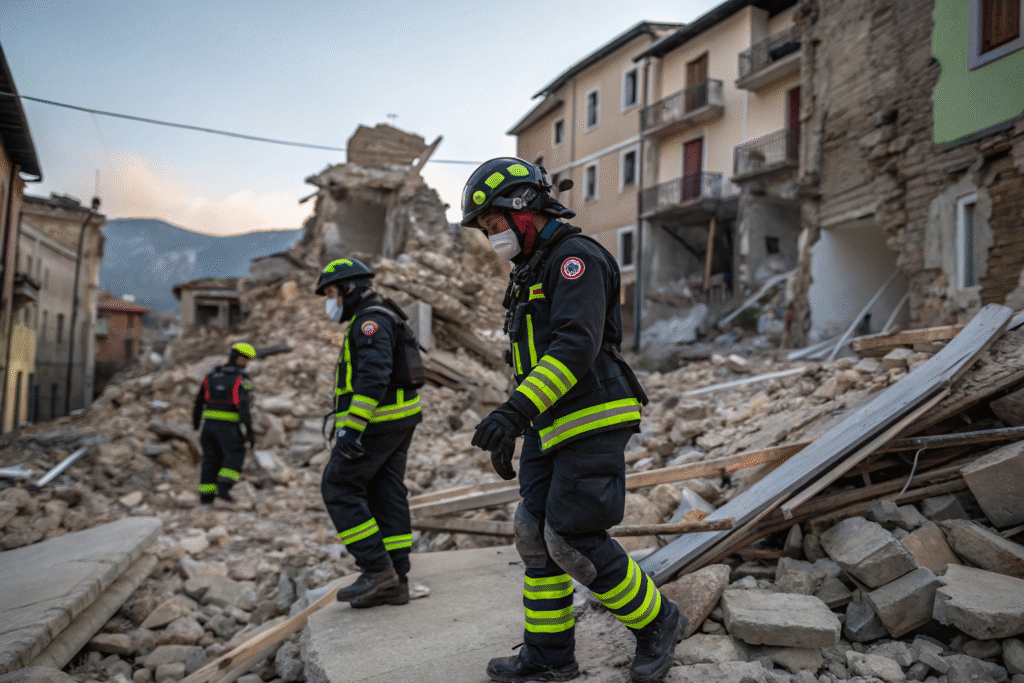
When earthquakes strike, uniforms stop being just clothes—they become lifelines. To be honest, the term “earthquake-responsive” might sound futuristic at first. Actually, earlier this year at the Tokyo Disaster Response Expo 2024, I noticed several prototypes that showed how quickly this field is maturing. You might be wondering—why should uniforms matter when the whole environment is collapsing? Personally I think what needs to be emphasized here is simple: the right gear keeps responders safer, faster, and more effective in chaotic conditions.
Earthquake-responsive uniforms integrate shock-absorbing textiles, dust-repelling finishes, smart sensors, modular systems, and visibility features. Let’s take a moment to think this through together: if uniforms can absorb impacts, resist dust, track vitals, and glow in the dark, they directly improve survival and rescue outcomes.
Protective Textiles & Shock-Absorbing Design
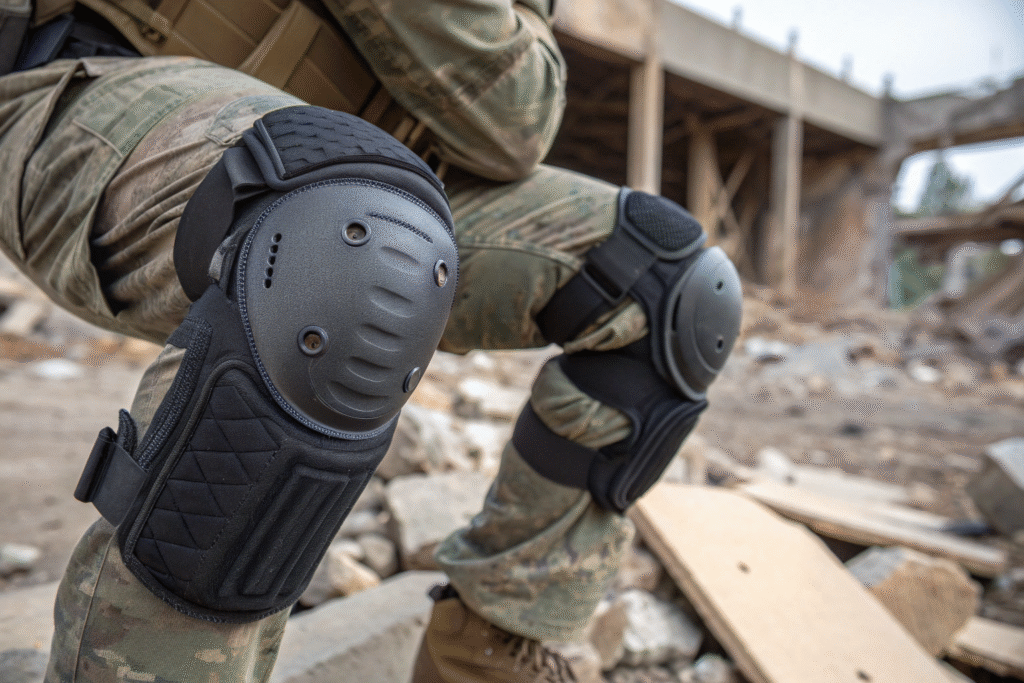
You might be asking—what protects a rescuer crawling through collapsed walls? Recently, engineers started embedding viscoelastic foams and composite pads into critical zones.
Actually, these zones—knees, elbows, shoulders—absorb shocks while remaining flexible.
Key points
- Lightweight composites protect without restricting mobility.
- Kevlar or aramid blends extend abrasion resistance (DuPont Kevlar).
- Ergonomic placement ensures comfort during long missions.
What needs to be emphasized here is that over-protection can hinder movement; the best innovations balance safety with agility.
Dust, Moisture & Self-Cleaning Finishes
Think of earthquakes: dust clouds, wet rubble, mold. You might be wondering—can uniforms really fight this environment?
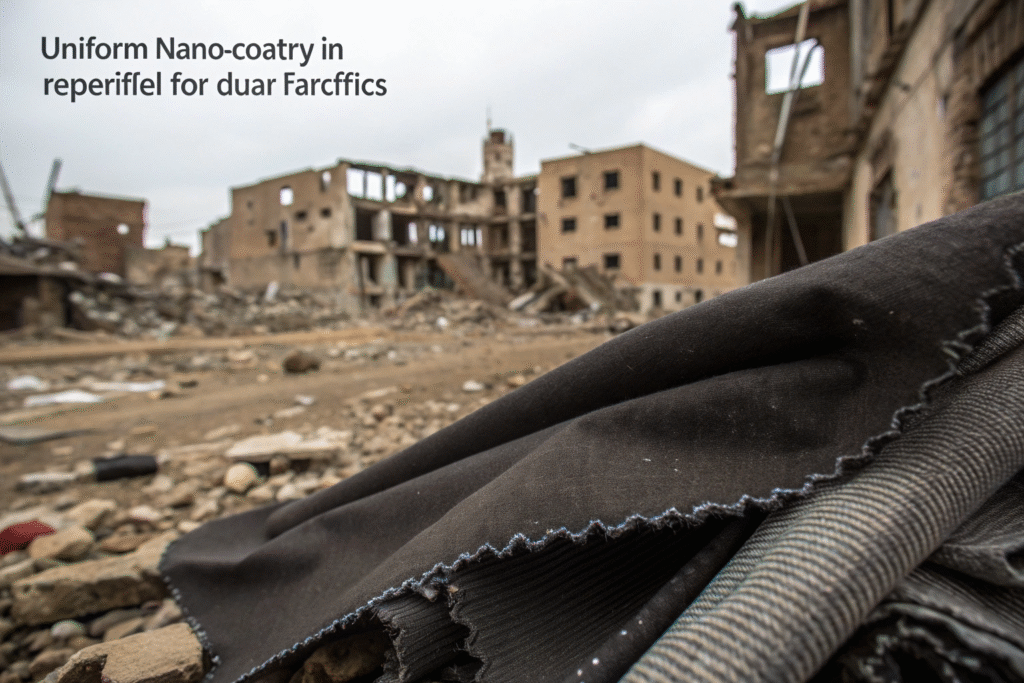
Actually, nanocoatings and hydrophobic finishes are now being tested to repel dust and resist water.
Current approaches
- Hydrophobic finishes shed dust and mud.
- Antimicrobial treatments reduce infection risk.
- Inspiration comes from lotus-leaf effect textiles (ScienceDirect lotus effect).
Let’s take a moment to think this through together: uniforms that stay cleaner directly protect health and extend mission time without constant replacement.
Smart Sensors & Communication Integration
You might be asking—isn’t wearable tech too fragile for disaster zones? Actually, that’s changing.
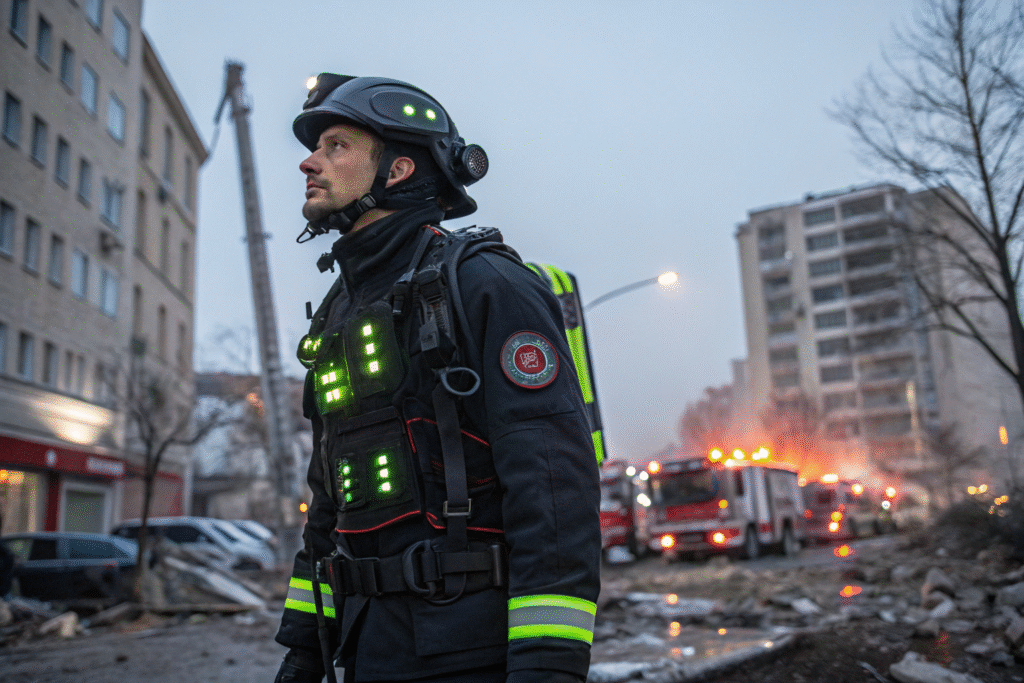
Smart uniforms now integrate ruggedized sensors for vitals, GPS, and air quality monitoring.
Examples
- LEDs integrated into sleeves for low-light signaling.
- Air-quality modules detect CO, dust, toxic gas.
- Embedded GPS ensures teams don’t lose track of each other (Garmin wearable GPS).
What needs to be emphasized here is durability: sensors must survive heat, dust, and water. Let’s take a moment to think this through together—real-time data may save lives when seconds count.
Modular & Rapid-Deploy Layering Systems
You might be wondering—why modularity? Why not one fixed design? To be honest, earthquake response is unpredictable.
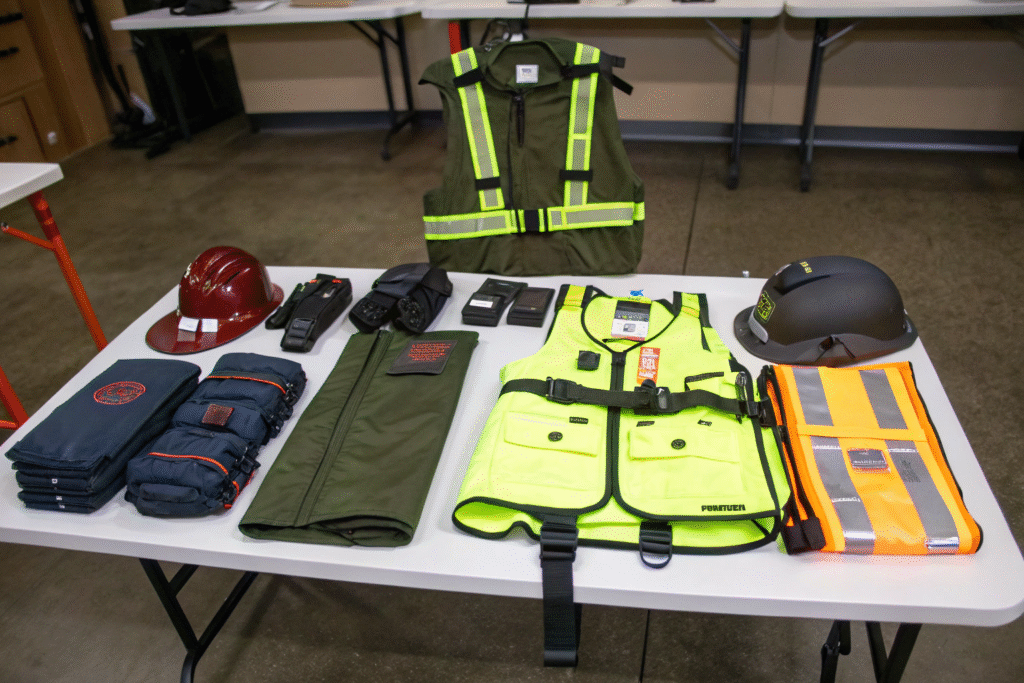
Actually, modular uniforms allow responders to adjust layers and attachments quickly depending on mission stage.
What’s new here?
- Zip-off or Velcro vests for sudden climate shifts.
- Integrated loops for tethering or carrying tools.
- Detachable pouches for first-aid kits or flashlights.
What needs to be emphasized here is adaptability. Let’s take a moment to think this through together: a modular uniform means fewer gear changes, more efficiency, and faster response.
High-Visibility & Signaling Enhancements
Imagine total blackout after a quake. You might be wondering—how do rescuers stay visible in dust and darkness?
Actually, high-visibility fabrics, reflective trims, and LED panels make responders stand out even in chaotic conditions.
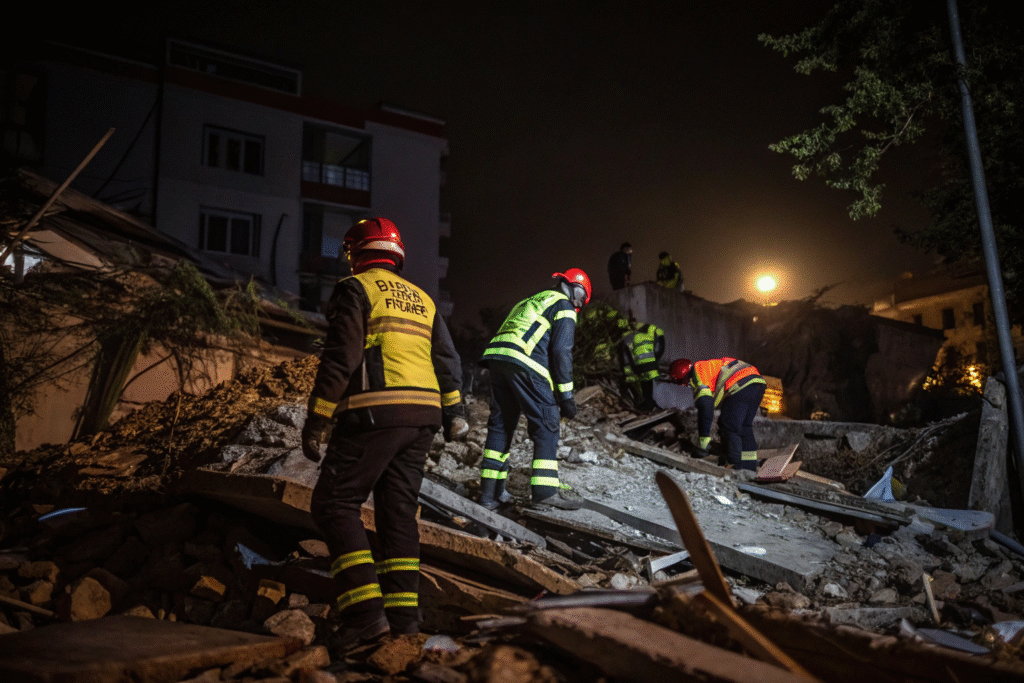
Examples
- ANSI/ISEA 107 reflective strips for safety (ANSI/ISEA 107).
- Phosphorescent fabrics glowing after light exposure.
- Rechargeable LED shoulder patches with flexible solar input.
Let’s take a moment to think this through together: even if batteries fail, passive glow or reflective elements still offer visibility and reduce risk.
Conclusion
Earthquake-responsive uniforms combine protective textiles, dust-resistance, smart sensors, modular design, and visibility systems. To be honest, the trend is clear—gear is evolving beyond fabric into integrated life-support systems. Actually, while editing this article, I realized that what needs to be emphasized here is not the technology itself, but how it’s tested and scaled affordably. You might be wondering—who will lead adoption? Personally I think emergency services, NGOs, and governments will pave the way before mass rollout.
At Shanghai Fumao Clothing, we develop advanced protective uniforms and explore textile innovations for extreme environments. Let’s take a moment to think this through together: if your organization wants to co-develop earthquake-responsive uniforms, contact our Business Director Elaine at elaine@fumaoclothing.com or visit shanghaigarment.com.