The global fashion industry is shifting rapidly as consumers demand ethical and sustainable products. In markets like the U.S. and Europe, vegan clothing is no longer a niche but a growing standard. For apparel buyers, distributors, and brand owners, the challenge is not only sourcing vegan garments but also proving authenticity to retailers and consumers. Certifications are the most effective way to build trust, avoid compliance risks, and secure long-term partnerships with reputable suppliers.
This article explores the top five certifications that matter most for vegan clothing: PETA-Approved Vegan, Vegan Society Trademark, Global Organic Textile Standard (GOTS), OEKO-TEX Standard 100, and USDA Organic. Each certification covers a different aspect of vegan and sustainable fashion, from cruelty-free textiles to environmentally safe production processes.
When buyers understand these certifications, they can confidently choose reliable suppliers, differentiate their brands in competitive markets, and meet evolving consumer expectations. Let us explore each certification in detail.
PETA-Approved Vegan Certification
PETA’s certification is one of the most recognized vegan fashion labels across global retail markets. It assures buyers that no animal-derived components—such as wool, silk, leather, or down—are used in certified apparel.

Why is PETA-Approved Vegan important?
The PETA-Approved Vegan label is highly visible to both retailers and end consumers. In North America and Europe, it is often the first certification recognized by customers seeking cruelty-free apparel. For brand owners and distributors, it simplifies communication and reduces disputes about animal-free claims.
How do brands get certified?
The certification process is straightforward. Brands submit detailed documentation of materials, confirm the absence of animal-based inputs, and sign PETA’s assurance statement. Compared to other certifications, the process is faster, making it suitable for fashion companies needing quick market access. Learn more through PETA’s official certification guide.
Vegan Society Trademark
The Vegan Society Trademark, established in 1990, is one of the most trusted certifications across multiple industries. It ensures that textiles, dyes, glues, and other components contain no animal ingredients or derivatives.

Why does the Vegan Society Trademark matter?
This certification provides comprehensive assurance beyond textiles. Buyers in the U.S. and Europe value its strict review process. The Vegan Society also promotes certified brands on its global platform, helping suppliers expand visibility in the vegan market.
What makes it different from PETA?
While both certifications confirm vegan standards, the Vegan Society Trademark includes broader coverage, such as packaging and adhesives. This depth reduces risk for international buyers. More details are available in Vegan Trademark standards, where specific industry requirements are explained.
Global Organic Textile Standard (GOTS)
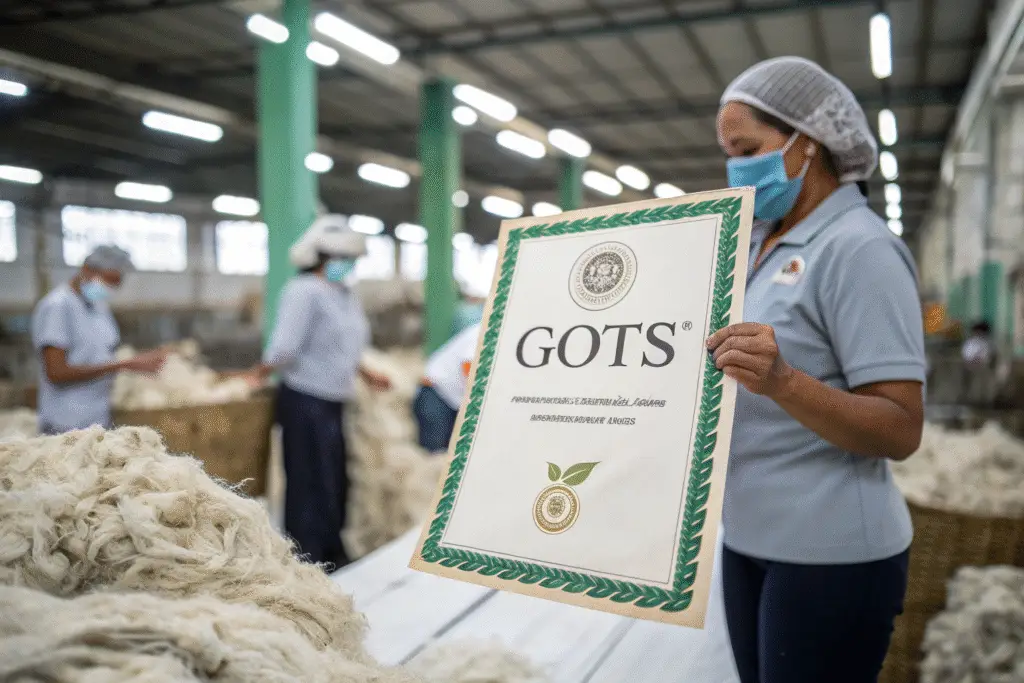
Although GOTS is not exclusively vegan, it is a gold standard for sustainable textile production. It certifies organic fibers and enforces strict criteria for ecological and social responsibility.
Why is GOTS included in vegan certifications?
Many vegan fashion buyers prefer products that combine cruelty-free with sustainability. GOTS certification proves that textiles are organic, processed without toxic chemicals, and manufactured under safe labor conditions. This aligns with market demands in North America and Europe.
What does GOTS cover?
It regulates the entire supply chain—from organic fiber harvesting to responsible chemical management. The GOTS supplier database helps buyers source reliable partners worldwide, reducing risks of non-compliance and reputational damage.
OEKO-TEX Standard 100
OEKO-TEX focuses on consumer safety by testing textiles for harmful chemicals. For vegan clothing brands, this ensures garments are safe for end users while supporting sustainable production.

Why does OEKO-TEX matter for vegan clothing?
Consumers choosing vegan apparel often demand non-toxic textiles. The OEKO-TEX Standard 100 ensures clothing is safe for skin contact, even for sensitive groups like children. This certification complements vegan claims with human-health protection.
How can brands use it in marketing?
By highlighting OEKO-TEX along with vegan certifications, brands can appeal to a wider customer base. More information is provided in the OEKO-TEX certification guide.
USDA Organic
For plant-based textiles like cotton, hemp, or bamboo, USDA Organic certification proves that fibers are grown using certified organic farming methods.

Why is USDA Organic relevant to vegan clothing?
USDA Organic is critical in the U.S. apparel market. Certified fabrics meet strict farming regulations, making them ideal for sustainable vegan collections. Learn more through USDA Organic standards.
How does it benefit international trade?
For exporters, USDA Organic certification provides strong credibility with U.S. distributors. Buyers can confirm details in the USDA Organic Integrity Database, reducing risk when selecting international suppliers.
Conclusion
Vegan fashion is more than replacing leather or wool with plant-based alternatives. It involves proving ethical practices across the supply chain through certifications that buyers can trust. The top five certifications—PETA-Approved Vegan, Vegan Society Trademark, GOTS, OEKO-TEX Standard 100, and USDA Organic—address different but complementary aspects of cruelty-free and sustainable clothing.
For U.S. apparel brands, distributors, and company owners, partnering with certified suppliers ensures compliance, enhances market credibility, and speeds up entry into competitive markets. At Shanghai Fumao Clothing, we specialize in vegan-friendly, customizable garments for global buyers. To explore production opportunities and wholesale collaboration, please contact our Business Director Elaine at elaine@fumaoclothing.com.