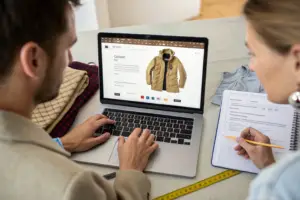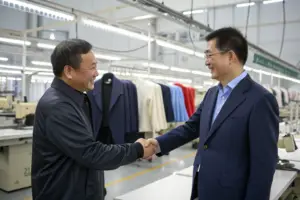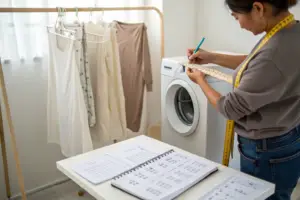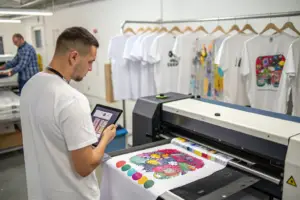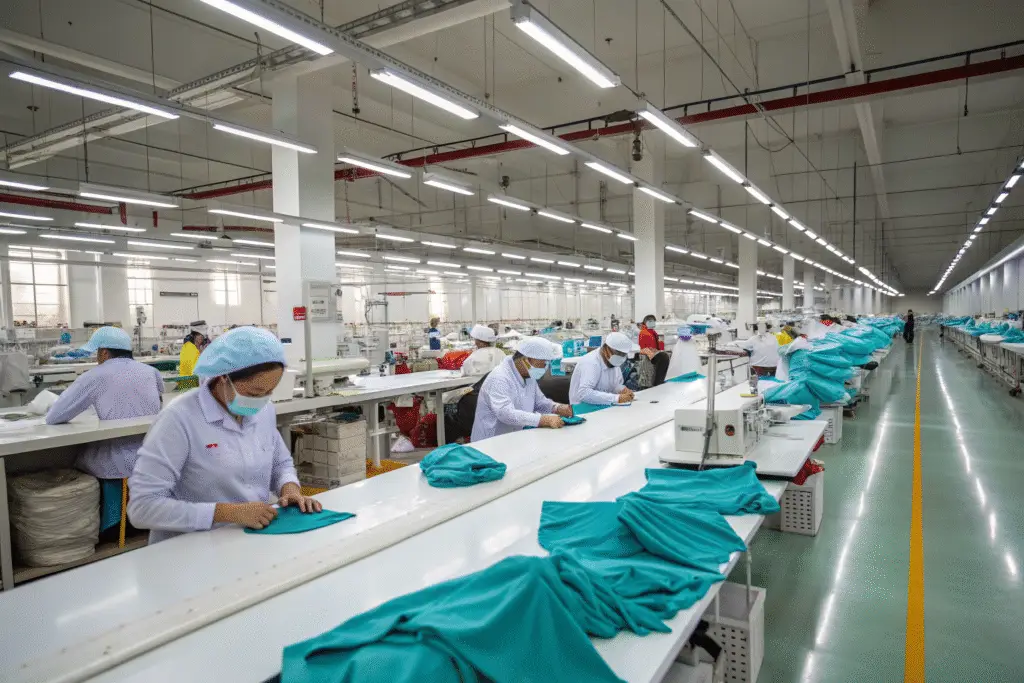
When I meet with overseas buyers, one of their first concerns is whether our apparel factory meets their compliance, quality, and delivery standards. A factory audit is the tool they use to make sure they are choosing the right partner. This process can decide if we start working together or not.
Factory audits are a critical checkpoint in the apparel sourcing process. They help buyers evaluate quality systems, ethical practices, and production readiness before signing contracts. By knowing what questions to ask, buyers can quickly see whether a factory can meet their expectations.
In this article, I will share the top 10 questions I believe every apparel buyer should ask during a factory audit. I will also give you insights from my experience running Fumao Clothing, so you can understand the real value behind each question.
How to Assess Apparel Factory Compliance
Many buyers begin with compliance because it is the foundation of trust. Without meeting international and local regulations, a factory risks customs issues, brand reputation damage, and even legal trouble.
Compliance audits ensure a factory can legally produce and export goods. This means checking licenses, export permits, and compliance with U.S. or EU standards, especially for textile safety and labor laws.
When you assess compliance, you are not only checking documents but also verifying how the factory applies those standards in daily operations. This includes chemical safety, restricted substances, and environmental policies.

What certifications should an apparel factory have?
Buyers should ask for certifications like OEKO-TEX® Standard 100 and ISO 9001, as they show commitment to quality and safety. These documents prove the factory’s products are safe for consumers and its operations meet internationally recognized standards.
I always recommend that buyers also confirm validity by contacting the issuing body. Some suppliers have been known to present outdated or falsified documents, which can cause problems later. Certifications like BSCI are also important for social responsibility.
How can buyers verify legal export capability?
One way is to check the factory’s business license and export license directly with Chinese government databases. Buyers can also use services like QIMA to run a background check. These steps make sure the supplier can ship without delays caused by missing paperwork.
Key Quality Control Questions to Ask
Quality is where the real partnership is tested. If the garments do not meet the agreed standards, the whole project fails, no matter how fast the delivery is.
Asking the right quality questions during the audit reveals whether the factory can consistently meet your specifications. It’s about processes, not promises.
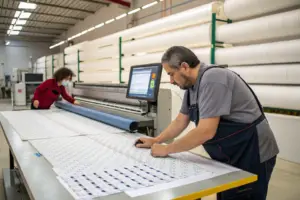
Inspectors will often start at the raw material stage and follow the process to the final packed product. Buyers should look for systems that catch defects early rather than at the end.
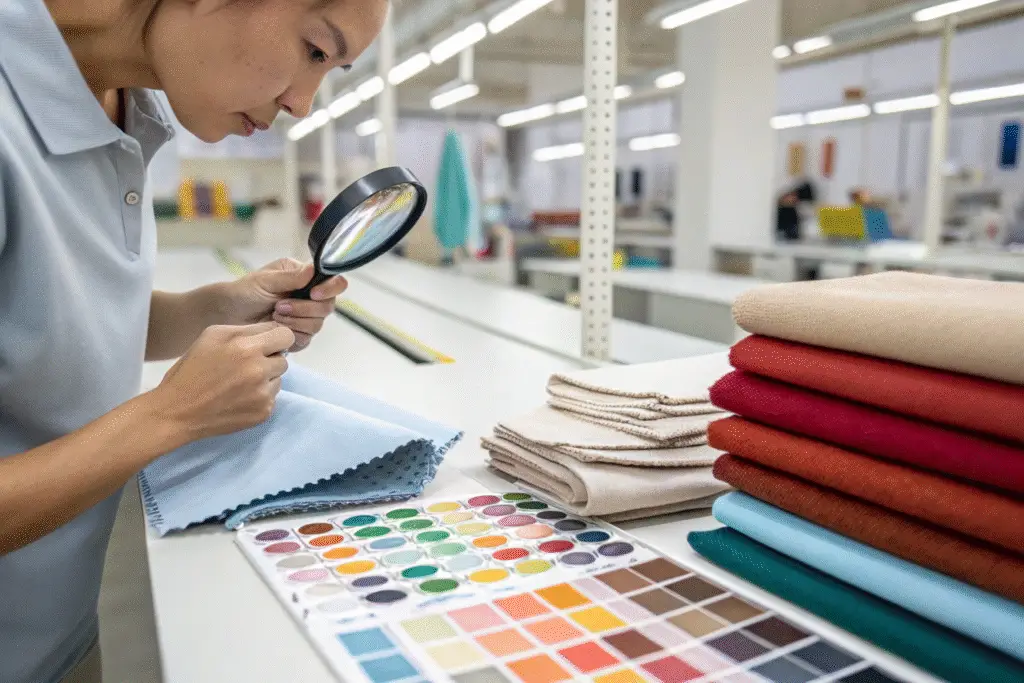
What quality control process is in place at each production stage?
Good factories use systems like AQL (Acceptable Quality Limit) and keep detailed inspection reports. At Fumao Clothing, for example, we have in-line QC teams and final random inspections. This ensures defects are caught before shipping.
Factories that skip in-process checks often end up with bulk defects, which are expensive to fix and can ruin a season’s sales. Platforms like SGS can verify if the factory’s QC procedures are reliable.
How does the factory handle defective products?
A professional factory has a clear defective handling policy: quarantine, rework, or scrap. Buyers can ask to see records of defect rates and how they were resolved. If a supplier avoids this question or cannot produce records, it’s a red flag. You can also request references from past clients through services like Made-in-China.com.
Evaluating Labor and Ethical Practices
Ethical sourcing is now a major part of buyer decisions. A factory can produce high-quality products but still fail an audit if it mistreats workers.
Labor and ethical practices are essential for brand reputation. Many U.S. brands require proof of fair wages, safe working conditions, and no child labor before placing an order.
An ethical audit also protects the buyer from PR disasters and helps ensure the workforce is motivated and productive.
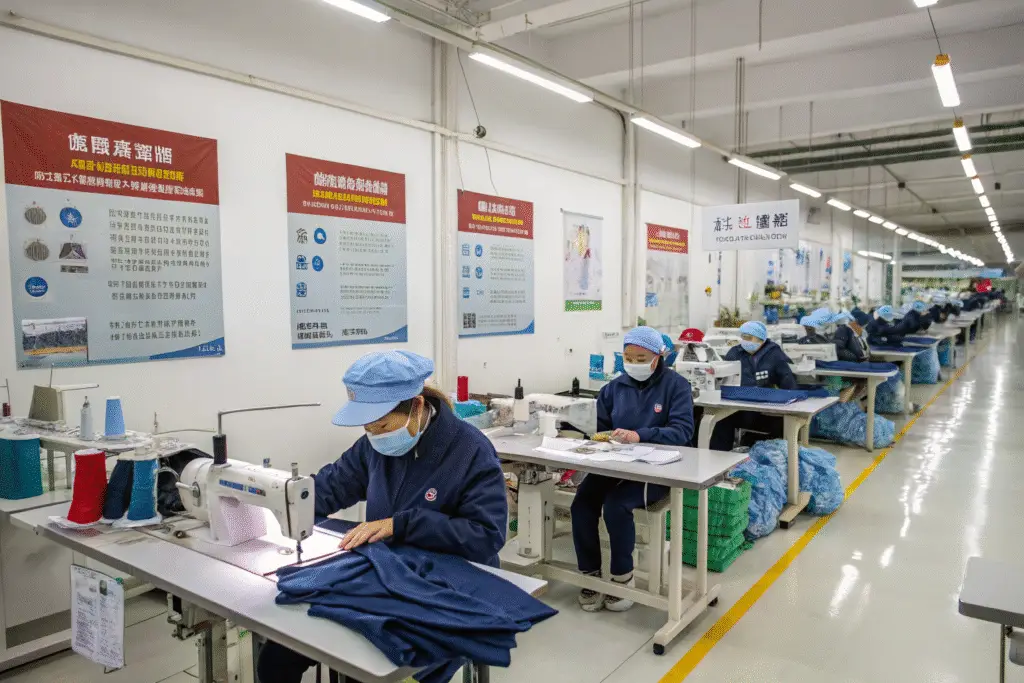
What steps are taken to ensure fair wages and safe conditions?
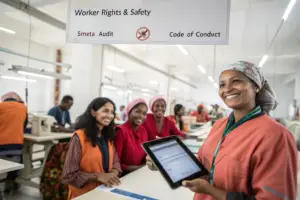
Factories should follow national labor laws and preferably exceed them. In China, this includes paying minimum wage or above, providing overtime pay, and ensuring safe, clean work areas. Auditors may use Sedex standards to verify this.
As a buyer, you can request anonymized payroll samples and safety inspection logs. Partnering with agencies like Intertek helps confirm these claims.
How can buyers verify there is no child or forced labor?
Reputable factories keep detailed employee records, including age verification. Auditors may also interview workers privately to check for coercion. Buyers can use independent audits via WRAP for added assurance.
Checking Production Capacity and Timelines
Even if a factory meets quality and compliance standards, it must still be able to produce your order in the required time. This is where capacity checks come in.
Capacity and timeline audits prevent late shipments and missed seasons. They help buyers know whether a factory can handle their volume without sacrificing quality.
We often meet buyers who underestimated production lead times and ended up missing their sales windows.
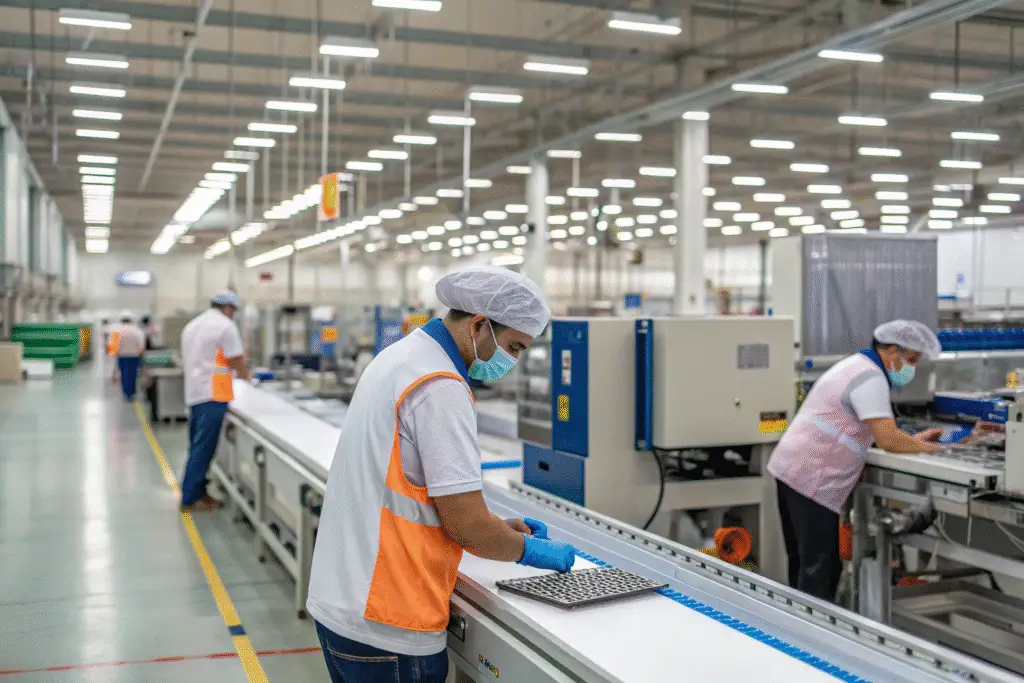
How many production lines and workers are dedicated to my order?
Factories may have many lines, but if they are fully booked, your order might get pushed back. Buyers should request a confirmed production slot in writing. Services like Alibaba.com allow you to compare factory capacities before committing.
It is also wise to ask about the factory’s peak and off-peak seasons to plan orders strategically.
What is the average lead time from order to delivery?
Lead time depends on product type, customization, and season. A transparent factory will give realistic timelines and factor in possible delays. You can cross-check this with freight forwarders like Flexport to make sure logistics match the production schedule.
Conclusion
A successful apparel factory audit is about more than ticking boxes. It’s about asking the right questions to understand a supplier’s true capabilities and values. From compliance and quality control to labor practices and capacity planning, each question helps you reduce risk and build a reliable partnership.
If you are ready to work with a factory that meets the highest standards in compliance, quality, ethics, and delivery, we at Shanghai Fumao Clothing are ready to partner with you. Contact our Business Director Elaine at elaine@fumaoclothing.com to start your next apparel order with confidence.