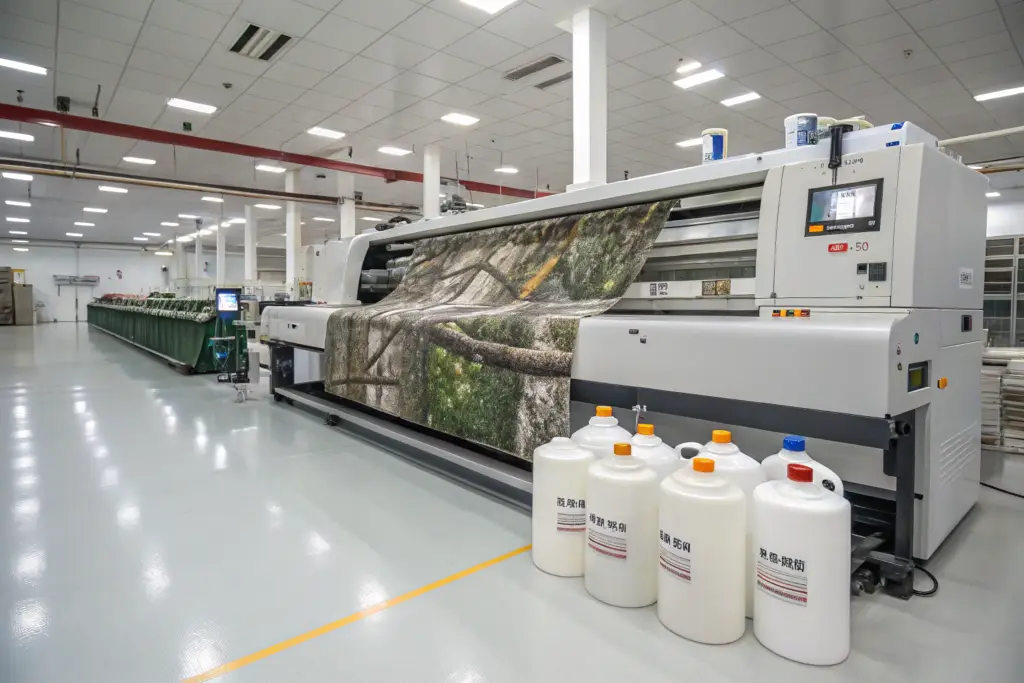
The demand for sustainable apparel is no longer a niche trend but a core market expectation, even for performance-driven hunting and outdoor wear. For brands sourcing Realtree garments, the question of environmental responsibility extends beyond the design to the very process of creating the iconic camouflage pattern. Many assume that printing, especially in large-scale facilities, is inherently wasteful and polluting. However, leading licensed manufacturers in China are actively implementing advanced sustainable practices to minimize their environmental footprint while meeting strict licensor standards.
Modern Chinese facilities printing Realtree fabric implement sustainability through three key areas: adopting water-based and low-impact pigment inks, utilizing advanced water recycling and treatment systems in the printing process, and optimizing energy efficiency and material yield through digital printing technology and precise planning. These practices are driven by both environmental responsibility and the economic imperative to reduce waste and cost.
Sustainability in licensed fabric printing is a complex balance of chemistry, technology, and process management. It's not about a single "green" solution but a holistic approach to reducing impact at every stage. Let's examine how progressive factories are putting this into practice.
How are eco-friendly inks transforming the printing process?
Traditional textile printing, especially for patterns like camo, often relied on plastisol or solvent-based inks containing PVC and phthalates. These inks require harsh chemicals for cleaning and can release volatile organic compounds (VOCs). The shift to newer ink technologies represents one of the most significant sustainability advances.
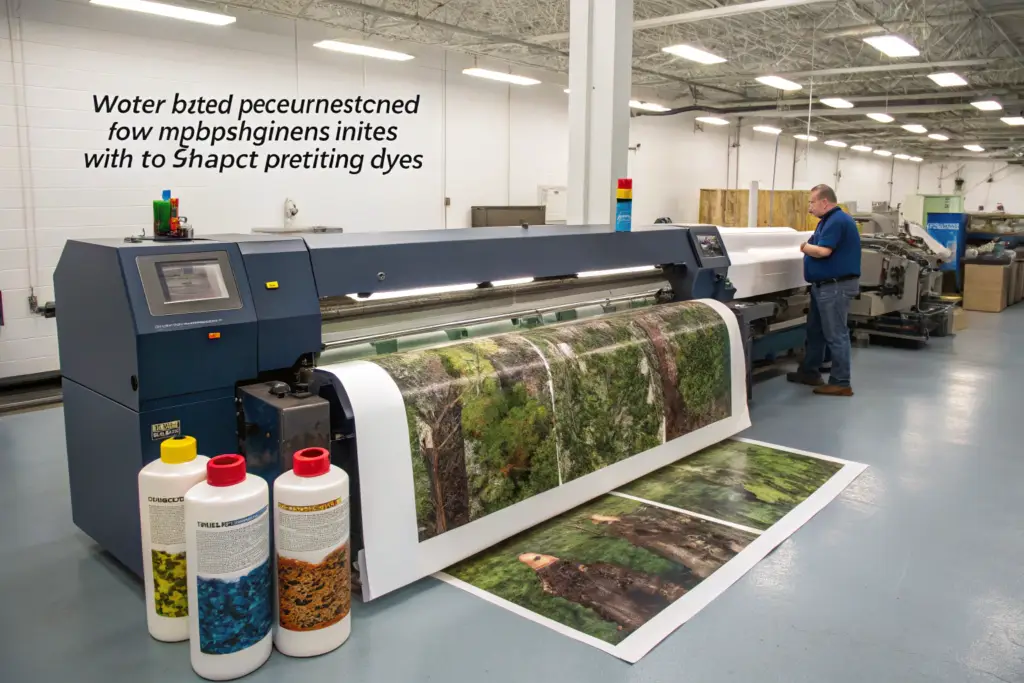
Leading facilities now primarily use water-based pigment inks or low-impact reactive dyes for Realtree printing. These inks significantly reduce VOC emissions, eliminate the need for hazardous plasticizers, and often require less water and energy in the curing process compared to older systems. They provide the colorfastness and durability required for outdoor apparel while being more environmentally benign.
What are the specific benefits of water-based pigment inks?
Water-based inks use water as the primary carrier instead of solvents. Their advantages include:
- Reduced Air Pollution: They emit minimal VOCs, improving factory air quality and reducing environmental release.
- Softer Hand Feel: The print sits on the fabric without a heavy plastic layer, preserving the natural feel of the material—a key factor for comfort in hunting gear.
- Easier Fabric Recycling: Garments printed with water-based inks are more compatible with textile recycling streams as they don't contain PVC.
For Realtree patterns, achieving the precise, muted color palette is critical. Advanced pigment ink systems now offer the color gamut and opacity needed to match licensor standards perfectly. At our facility, we completed a two-year transition to a proprietary water-based system, which reduced our VOC output by over 70% while maintaining the exact color matching required for brand compliance.
How do low-impact dyes differ?
For certain fabric types (like cotton poplin), low-impact reactive dyes are used. These dyes have a high absorption rate (often over 70%), meaning less dye is washed out during the post-print rinsing process, drastically reducing contaminated effluent. They also require less salt in the dye bath, further reducing water pollution. The Global Organic Textile Standard (GOTS) certifies many of these dyes, and while Realtree fabric itself may not be organic, using these dyes reflects a commitment to cleaner chemistry.
What water and waste management systems are in place?
Textile printing is historically water-intensive, from washing fabric before printing to rinsing screens and cleaning equipment. The environmental impact lies not just in water consumption, but in the treatment of wastewater containing inks, dyes, and chemicals. State-of-the-art facilities address this with closed-loop thinking.
Sustainable practices center on water recycling and advanced effluent treatment. This involves capturing, treating, and reusing water within the printing process, and ensuring all discharged wastewater meets or exceeds local and international environmental standards before release.
How does a water recycling system work in printing?
A modern setup might include:
- Counter-Current Rinsing: In screen printing, screens are washed in a series of tanks where cleaner water flows opposite to the movement of the screens, maximizing cleaning efficiency and minimizing fresh water use.
- Membrane Filtration Systems: Technologies like Reverse Osmosis (RO) and Ultrafiltration (UF) treat used water, removing suspended solids and ink particles. The cleaned water is then recirculated for non-critical processes like initial rinses or floor cleaning.
- Condensate Recovery: Steam used in fabric pre-treatment or curing dryers is captured, condensed back into water, and reused.
Implementing such a system in our printing department reduced our freshwater intake for printing operations by approximately 40% over three years, a saving that benefits both the environment and operational costs.
How is wastewater treated before discharge?
All process wastewater is channeled to an on-site Effluent Treatment Plant (ETP). Here, it undergoes a multi-stage process:
- Primary Treatment: Physical removal of solids and floating materials.
- Secondary Treatment: Biological processes where microorganisms break down organic pollutants.
- Tertiary Treatment: Advanced chemical or filtration processes to remove specific contaminants like heavy metals or residual color.
The treated water is regularly tested to ensure parameters like Chemical Oxygen Demand (COD) and pH are within strict limits, often aligned with standards from the International Finance Corporation (IFC). This treated water is either safely discharged or further purified for reuse. This rigorous process is audited by third parties and is a non-negotiable part of our operational license.
How does technology drive energy and material efficiency?
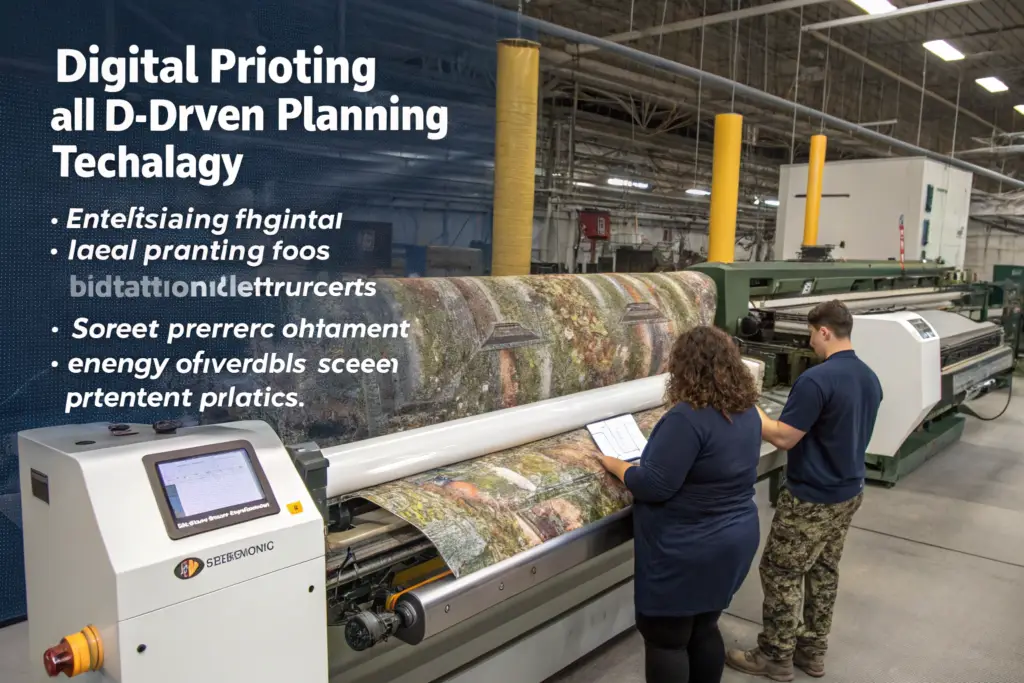
Sustainability is also about doing more with less—less energy, less fabric, less waste. Digital printing technology and AI-driven planning tools are revolutionizing the efficiency of producing patterned fabrics like Realtree, moving away from the waste-heavy practices of traditional screen printing.
The adoption of digital textile printing and computer-aided manufacturing (CAM) drastically reduces waste in energy, water, and raw materials. Digital printing eliminates the need for physical screens for each color, while smart nesting software maximizes fabric utilization from every roll.
What are the sustainability benefits of digital printing vs. screen printing?
While rotary screen printing is still common for very long runs, digital printing is gaining ground for its flexibility and efficiency:
| Aspect | Traditional Screen Printing | Digital Textile Printing | Sustainability Gain |
|---|---|---|---|
| Setup Waste | High. Requires screen engraving, test runs, and fabric/ink waste to align colors. | Minimal. No physical screens; setup is digital. | Reduces chemical & fabric waste in sampling. |
| Water Usage | High for screen washing. | Very low. Most systems are inkjet-based with no screens to wash. | Dramatically lowers water consumption. |
| Energy Use | High for curing plastisol inks (high temps). | Lower. Pigment inks often cure at lower temperatures. | Reduces greenhouse gas emissions. |
| Material Efficiency | Fixed pattern repeat; less flexible for optimization. | On-demand printing; allows for mass customization and reduced overproduction. | Minimizes deadstock and inventory waste. |
For Realtree patterns, digital printing allows for precise, on-demand printing of multiple camo variations without the cost and waste of creating new screens, supporting smaller, more responsive production runs.
How does smart cutting reduce fabric waste?
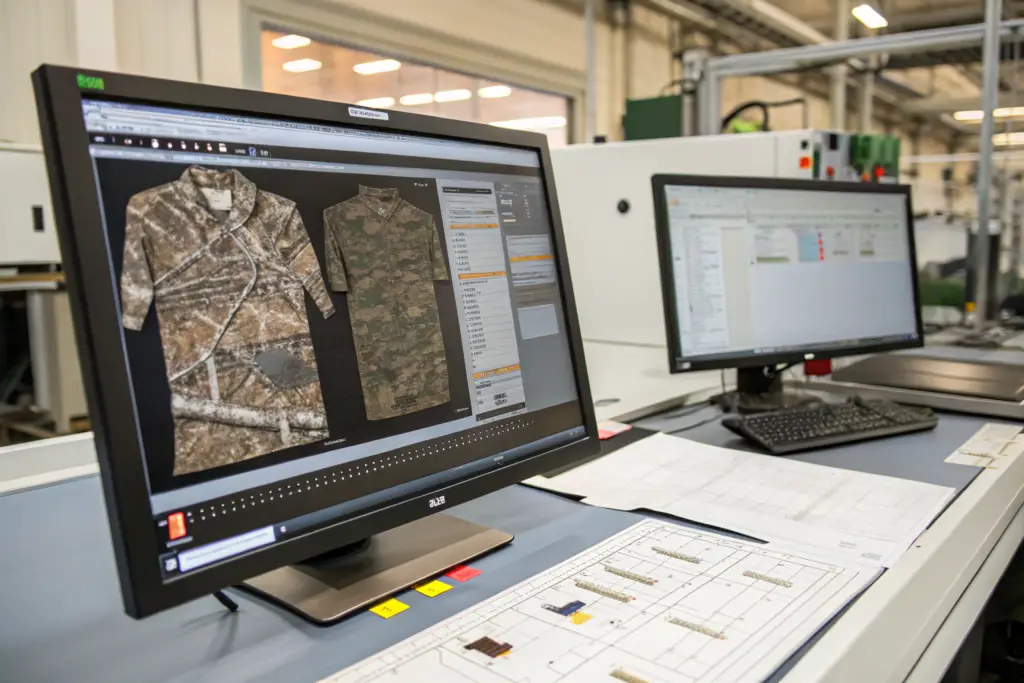
After printing, fabric is cut into garment panels. Computer-aided design (CAD) software is used to create cutting markers—digital layouts of pattern pieces. Advanced software uses algorithms to "nest" these pieces with absolute minimal space between them, especially important for expensive licensed fabric. It also factors in pattern matching requirements to ensure visual continuity while still optimizing yield. This software can improve fabric utilization by 3-8%, which on a scale of thousands of yards represents significant cost saving and resource conservation.
Are there certifications that verify these sustainable practices?
For US brands and distributors, claims of sustainability require verification. Trust is built through transparent, audited certifications that provide an objective benchmark for a factory's environmental and social performance.
Reputable facilities hold international certifications such as ISO 14001 (Environmental Management Systems), the OEKO-TEX® STeP certification for sustainable production, and undergo audits for the Higg Index Facility Environmental Module (FEM). These frameworks ensure that sustainable practices are systematically managed, measured, and continuously improved.
What does ISO 14001 certification signify?
ISO 14001 is not a performance standard but a management system standard. A factory with this certification has a structured, documented process for identifying, managing, monitoring, and improving its environmental impact. It means sustainability is integrated into business operations, from senior management down. It requires regular internal audits and management reviews, ensuring that the water recycling, waste treatment, and energy efficiency measures we've discussed are not one-off projects but part of a living system.
How do OEKO-TEX® and the Higg FEM provide specific assurance?
- OEKO-TEX® STeP: This certification focuses specifically on textile production facilities. It assesses environmental performance (energy, water, waste), chemical management, and social responsibility. It provides a scored, transparent report on exactly how a factory performs.
- Higg FEM: Used by many major global brands, this tool measures a facility's environmental impact across categories like energy, GHG emissions, water, wastewater, and waste. A good Higg FEM score is increasingly a prerequisite for supplying large, sustainability-focused brands.
Holding these certifications demonstrates that a facility like Fumao Clothing is committed to measurable, verified improvement, giving partners confidence that their Realtree products are made with responsible stewardship.
Conclusion
Sustainable practices in Realtree fabric printing at leading Chinese facilities are a sophisticated integration of clean chemistry, water stewardship, high-tech efficiency, and third-party verification. It moves far beyond basic compliance to embrace systems that protect the environment while also enhancing operational resilience and cost-effectiveness. For brands, partnering with a manufacturer that prioritizes these practices is no longer just an ethical choice—it's a business imperative that aligns with consumer values and future-proofs the supply chain.
Choosing a partner with proven sustainable systems ensures your brand's products carry a story of responsibility from the ground up. If you are looking to source Realtree apparel with a verified lower environmental impact, it's essential to ask the right questions and look for the certifications that matter.
To explore how our specific sustainable printing and manufacturing processes can align with your brand's values, contact Fumao Clothing. Speak with our Business Director, Elaine, at elaine@fumaoclothing.com to request our latest sustainability report or schedule a virtual tour of our facilities. Let's build a greener legacy together.