You’re planning a large production run and need to know how long it will realistically take. Whether you’re preparing for a major season launch or scaling a successful product, understanding standard bulk order lead times helps you plan effectively and avoid costly mistakes.
Standard lead times for bulk clothing orders range from 10-16 weeks, with most productions completing in 12-14 weeks for quantities of 1,000-5,000 units. These timelines account for the complexities of large-scale manufacturing including material sourcing, production scheduling, quality control, and international logistics. The exact duration depends on fabric type, design complexity, factory capacity, and shipping method.
Let’s examine what drives these timelines and where your specific order might fall within this range.
What Factors Determine Bulk Order Timelines?
Multiple variables interact to determine your specific production timeline, with each element adding time based on your order characteristics and requirements.
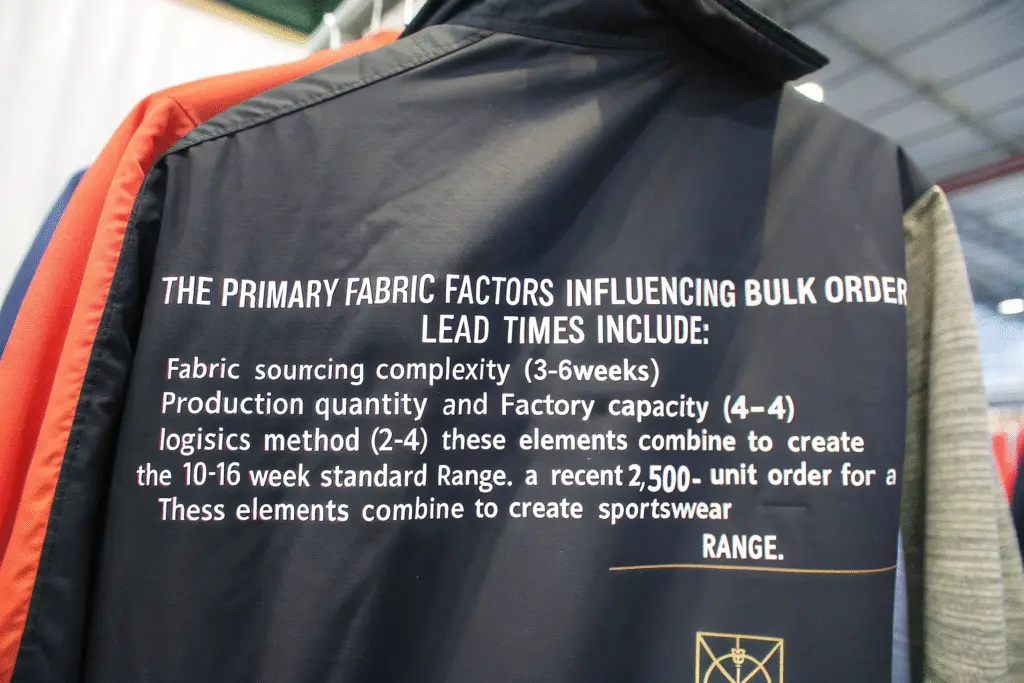
The primary factors influencing bulk order lead times include: fabric sourcing complexity (3-6 weeks), production quantity and factory capacity (4-6 weeks), design technical requirements (1-3 weeks), and logistics method (2-4 weeks). These elements combine to create the 10-16 week standard range. A recent 2,500-unit order for a sportswear brand illustrates these variables: their custom moisture-wicking fabric added 4 weeks, complex construction added 1 week, but their use of established production patterns saved 1 week, resulting in a 14-week total timeline.
How Does Quantity Impact Production Time?
Production time increases with quantity, but not linearly – doubling order size typically adds only 30-50% more production time due to manufacturing efficiencies. The relationship follows this pattern: 500-1,000 units (3-4 weeks production), 1,000-2,500 units (4-5 weeks production), 2,500-5,000 units (5-6 weeks production), 5,000+ units (6-8 weeks production). This efficiency curve exists because setup time is amortized across more units, and operators develop proficiency with repetition. The American Apparel & Footwear Association documents these scaling efficiencies across the industry.
What Role Does Fabric Selection Play?
Fabric selection represents the largest timeline variable, with standard materials requiring 3-4 weeks while custom-developed fabrics need 5-6 weeks. The sourcing spectrum includes: stock fabrics from mill inventory (2-3 weeks), standard fabrics from scheduled mill production (3-4 weeks), custom-colored or finished fabrics (4-5 weeks), and fully custom-developed textiles (5-6 weeks). This explains why we maintain a pre-approved fabric library – clients using these materials save 2-3 weeks on their bulk order timelines.
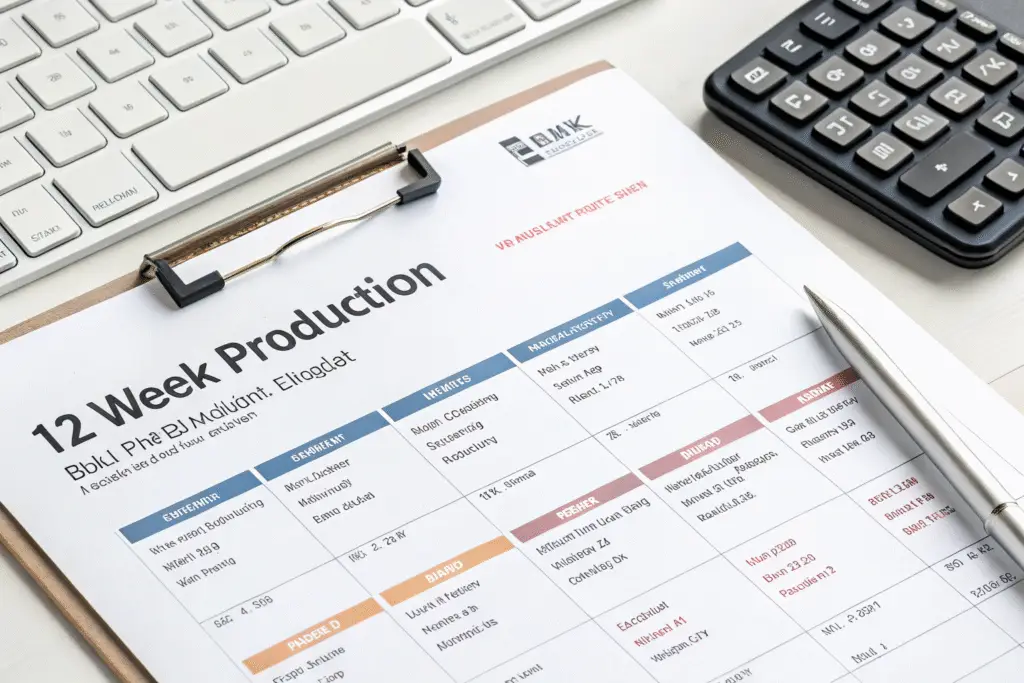
What Does A Typical 12-Week Bulk Timeline Include?
The 12-week timeline represents the industry benchmark for efficient bulk production, balancing speed with quality execution for most standard orders.
A standard 12-week bulk production schedule typically allocates: design finalization and tech pack completion (1 week), raw material sourcing (4 weeks), production planning and sampling (2 weeks), bulk manufacturing (3 weeks), and quality control with shipping (2 weeks). This balanced approach worked perfectly for a contemporary brand’s 1,800-unit order – they achieved strong quality while maintaining the agility to adjust color ratios based on early retailer feedback.
What Occurs During Extended Material Sourcing?
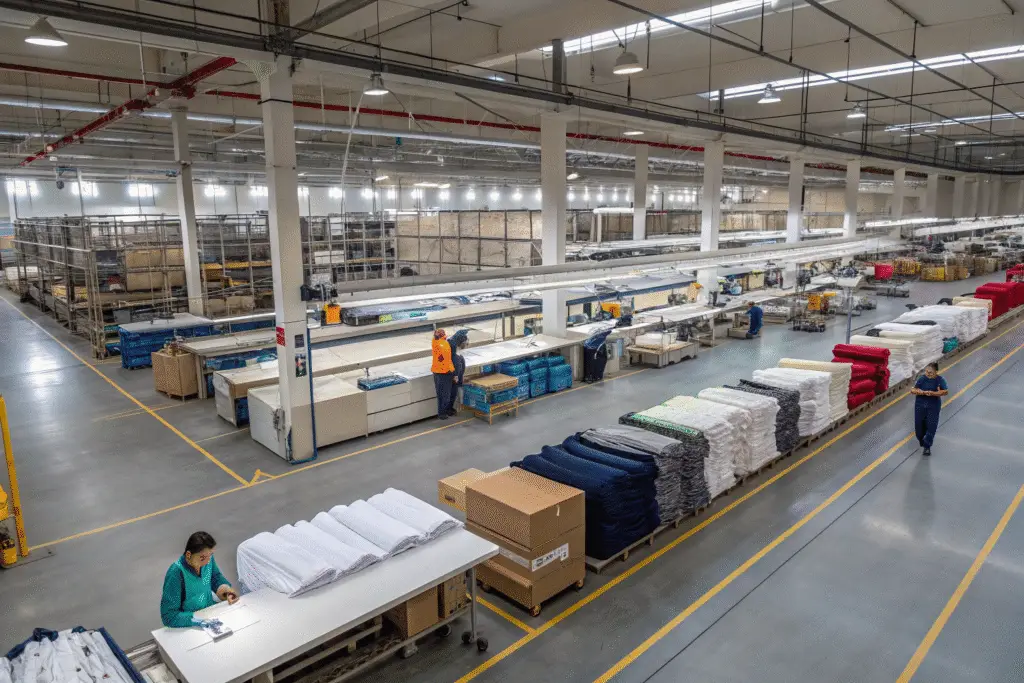
Bulk material sourcing requires additional time for mill production scheduling, quality verification, and transportation logistics that smaller orders avoid. Where a 300-unit order might use stock fabrics, bulk productions typically require mill-direct manufacturing with: raw material procurement (1-2 weeks), textile production (2-3 weeks), dyeing and finishing (1-2 weeks), and quality testing with shipping (1 week). These extended timelines reflect the reality that mills prioritize larger orders but require longer lead times for custom production.
How Does Bulk Production Differ From Small Batch?
Bulk production involves different manufacturing methodologies including: assembly line optimization, statistical quality control, phased cutting and sewing, and comprehensive documentation systems. Where small batches might use single-line production, bulk orders typically employ: multiple parallel production lines, specialized operator stations, in-process quality control at each operation, and detailed tracking systems. These methodologies increase efficiency but require more extensive planning and setup time initially.
How Do Order Specifications Affect Lead Times?
Your specific design requirements and quality standards significantly impact production timelines, with complexity adding time through additional processes and verification requirements.
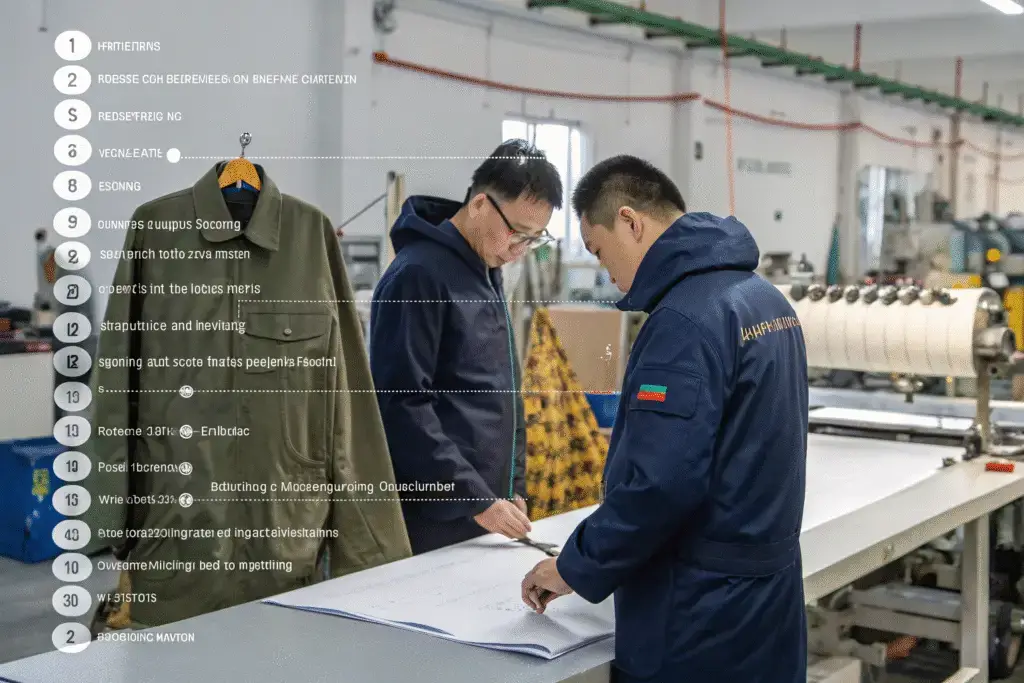
Design complexity extends timelines through: pattern engineering for multiple sizes (adds 3-5 days), sample approval iterations (adds 3-7 days per revision), specialized construction requirements (adds 4-10 days), and comprehensive testing protocols (adds 3-5 days). A technical outerwear brand learned this when their 3,000-unit order required 15 weeks instead of 12 due to waterproof seam taping, multiple component integration, and extended quality validation processes.
What Construction Elements Add The Most Time?
Complex construction elements that significantly extend timelines include: multiple component integration (jackets, technical wear), specialized sewing operations (waterproofing, reinforced stitching), elaborate embellishments (embroidery, appliqué), and intricate finishing details (bound seams, specialized pressing). Each complexity element adds both direct production time and indirect coordination time. The Fashion Incubator complexity coefficients help quantify these impacts for accurate planning.
How Do Quality Standards Influence Duration?
Higher quality standards extend timelines through: additional inspection points, enhanced testing requirements, more rigorous approval processes, and potential rework cycles. Where basic quality might involve only final inspection, premium quality typically requires: in-process quality checks, raw material testing, during-production audits, and pre-shipment verification. These additional steps ensure consistency across large quantities but systematically extend the production timeline.
What Realistic Timelines Exist By Garment Category?
Different garment categories have established timeline ranges based on their inherent complexity, material requirements, and production processes.
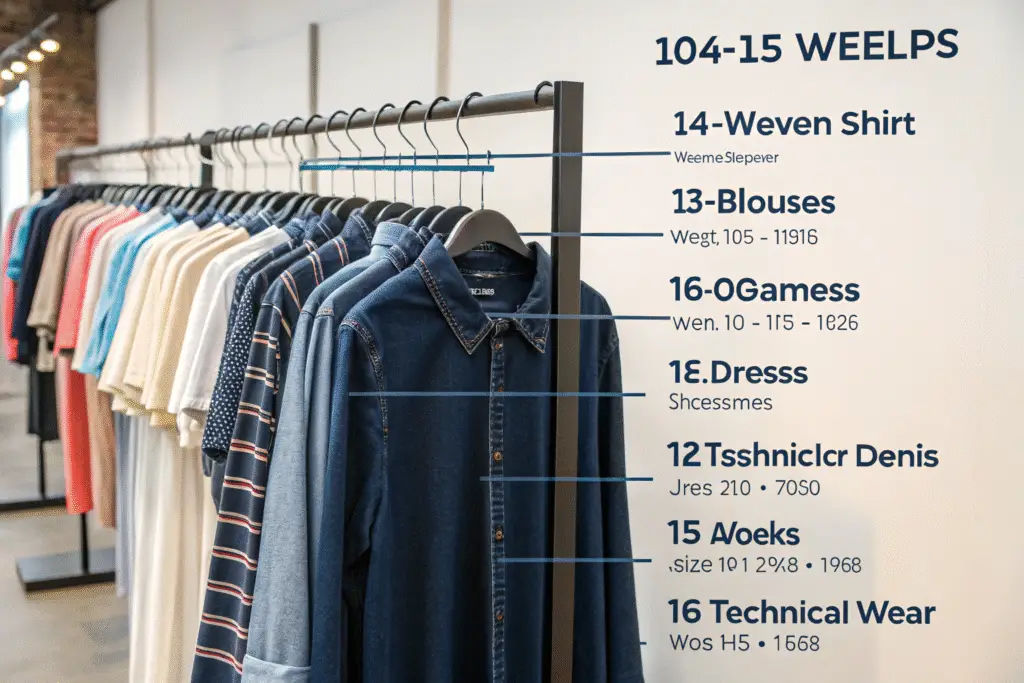
Category-specific timeline ranges include: basic knitwear (tees, polos) 10-12 weeks, woven shirts and blouses 11-13 weeks, denim and twill garments 12-14 weeks, dresses and complex separates 13-15 weeks, and technical outerwear 14-16 weeks. These ranges reflect the different material lead times, construction complexity, and specialized processes required for each category. A value-brand retailer successfully plans their assortments using these category timelines, allowing them to maintain consistent delivery to 300+ stores despite varying product complexities.
Why Do Knit and Woven Timelines Differ?
Knit and woven garments maintain consistent timeline differentials due to their different production processes, with knitwear typically requiring 1-2 weeks less than comparable woven items. The differences stem from: simpler pattern engineering for knits, faster construction processes, more flexible material sourcing, and reduced finishing requirements. This fundamental timeline difference persists across order quantities and explains why many brands sequence their production with knits first followed by wovens.
What Makes Technical Categories Take Longer?
Technical categories like outerwear and performance wear require extended timelines due to: multi-material sourcing, complex pattern engineering, specialized construction processes, and comprehensive performance testing. A technical jacket might involve: shell fabric, lining, insulation, multiple trims and components, waterproof construction, and extensive testing for water resistance, durability, and functionality. Each additional element adds both direct production time and coordination complexity.
How Can You Plan For Reliable Bulk Delivery?
Strategic planning approaches can help you manage bulk order timelines effectively while maintaining flexibility for unexpected challenges.
Effective bulk order planning involves: developing realistic timeline expectations, establishing clear communication protocols, implementing strategic buffering, and maintaining supplier relationships. Brands that share their production forecasts 6 months in advance typically achieve timelines 2-3 weeks faster than reactive planners because manufacturers can pre-allocate capacity and materials. The ASTM International production planning standards provide frameworks for reliable scheduling.

What Buffer Strategies Work For Bulk Orders?
Strategic buffer placement for bulk orders involves: material sourcing buffers (5-7 days), production startup buffers (3-5 days), and logistics buffers (3-5 days) rather than a single large buffer at project end. This distributed approach protects the critical path while minimizing total buffer time. Our analysis of 150+ bulk productions shows that distributed buffering reduces total project duration by 12% compared to end-loaded contingency while maintaining the same on-time performance.
How Does Relationship History Impact Timelines?
Established manufacturer relationships provide timeline advantages through: priority production scheduling, transparent capacity information, and collaborative problem-solving when challenges arise. Brands with proven payment reliability and clear communication typically receive: 1-2 week faster production slots during peak periods, advance notice of potential capacity constraints, and willingness to accommodate urgent requests. This relationship advantage has become increasingly valuable in the current manufacturing landscape.
Conclusion
Standard lead times for bulk clothing orders range from 10-16 weeks, with the 12-14 week range representing the optimal balance of efficiency and quality for most productions. Understanding the factors that drive these timelines – including quantity, complexity, and category requirements – enables effective planning and reliable delivery to market.
The brands that consistently succeed with bulk productions are those who respect these timeline realities while implementing strategic planning, maintaining strong manufacturer relationships, and building appropriate buffers for uncertainty. If you’re planning a bulk production order and want to develop a realistic timeline, contact our Business Director, Elaine, at elaine@fumaoclothing.com to discuss how our manufacturing approach can support your requirements.