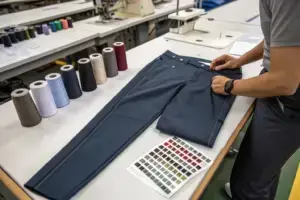
I've watched brands lose entire seasons—and sometimes their entire business—over one bad sourcing decision on ski jumpsuits. The allure of a lower price per unit from a factory that skips certifications is powerful, especially when you're calculating thin margins. But in our industry, that lower price is a loan, and the repayment comes due in the form of delayed shipments, destroyed inventory, and shattered brand trust. Let's break down the real, multi-layered risks you accept when you source non-certified technical apparel.
Sourcing non-certified ski jumpsuits exposes your business to a cascade of severe operational, financial, and legal risks. These include regulatory seizures at customs, catastrophic product failures leading to mass returns, irreversible brand reputation damage, and vulnerability to liability lawsuits. The initial cost saving is overwhelmingly negated by the high probability of incurring one or more of these costly consequences. Certification is not a luxury; it's your primary risk mitigation strategy.
A painful case from last year involved a mid-sized brand that sourced 2,000 non-certified kids' ski jumpsuits. The suits passed a basic factory water resistance test. However, after three wears and one wash, the waterproof membrane delaminated completely. The resulting 95% return rate and social media backlash from angry parents not only wiped out the profit from that line but also damaged sales across their entire brand for the subsequent season. A proper certification process would have included durability testing (like ISO 6330 for washing) and caught this failure before production.
Financial Catastrophe: The True Cost of Failed Shipments & Recalls
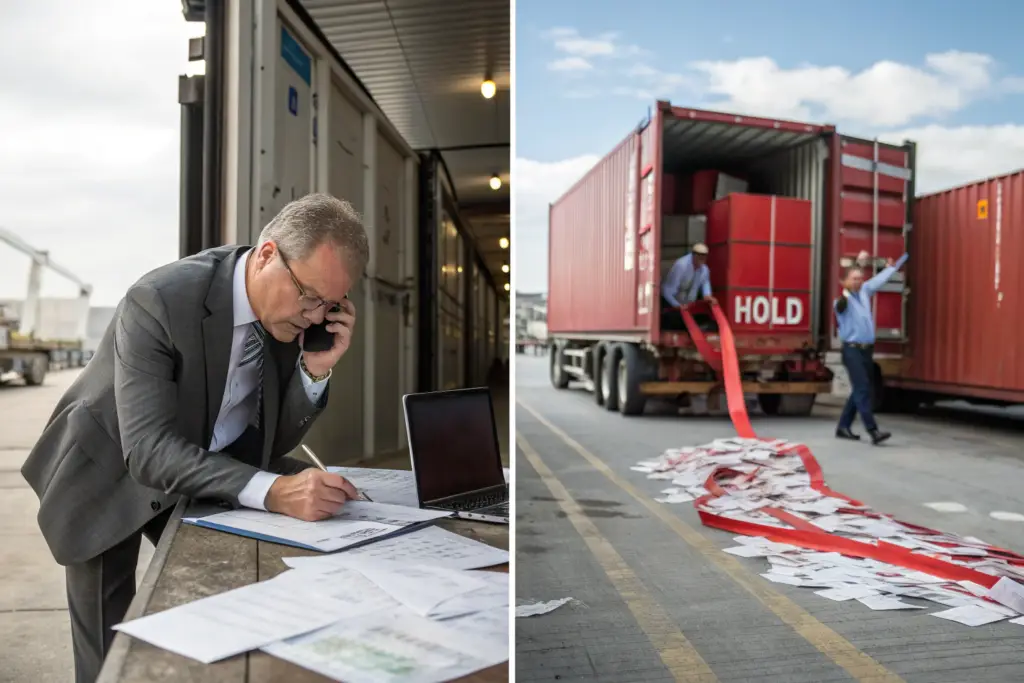
The most immediate and quantifiable risk is financial. When a non-certified shipment fails a compliance check, the costs escalate rapidly from demurrage fees to the total loss of goods. For ski jumpsuits—a bulky, seasonal product—missing your 8-week shipping window can mean missing the entire selling season, turning inventory into dead stock.
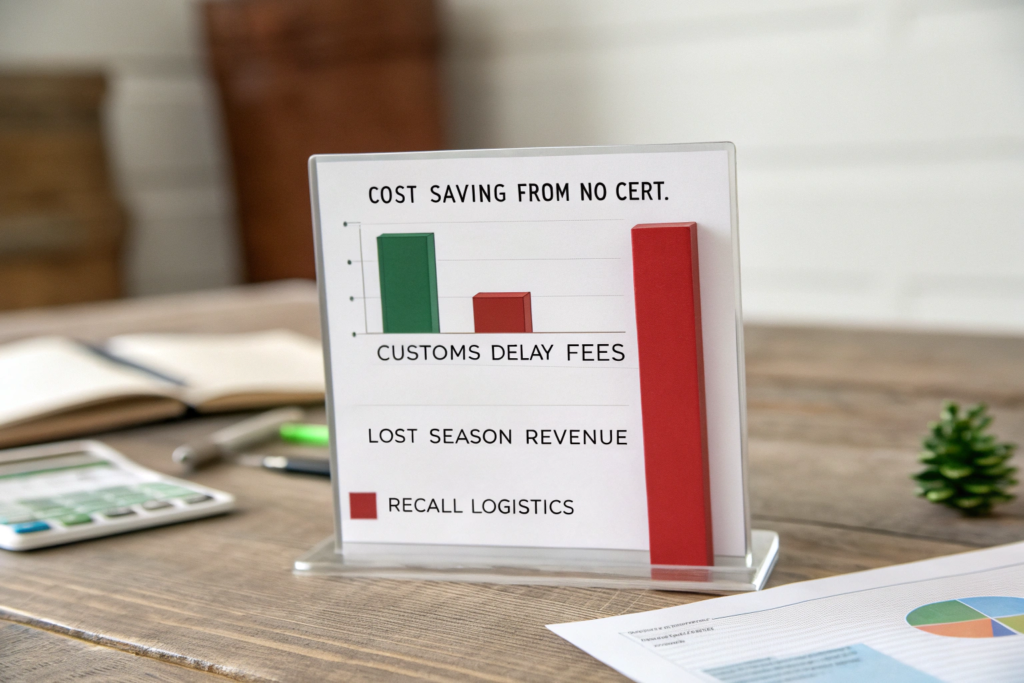
The financial risk manifests in three escalating stages: 1) Logistical Paralysis: Customs holds and testing delays incur daily storage fees (demurrage) that can exceed the value of the goods. 2) Corrective Action Costs: If goods fail, you pay for re-testing, re-working, or destroying the inventory. 3) Total Write-Off: If the failure is irreparable (e.g., chemical contamination), the entire order is seized and destroyed, a 100% loss on goods, shipping, and duties. The initial 5-15% "savings" from skipping certification evaporates in the first day of a customs hold.
We had a client who learned this the hard way. They shipped a container of non-certified ski bibs to Europe. EU customs, performing a random check, tested for perfluorinated chemicals (PFCs) used in some durable water repellent (DWR) treatments. The bibs contained a non-compliant level. The container was held for 45 days while negotiations and retests occurred. The final tally: $18,000 in demurrage and storage fees, a $5,000 testing bill, and the complete miss of the pre-Christmas sales window. The $12,000 they "saved" on certification cost them over $35,000 in losses and lost revenue. This is a common story tracked by organizations like the American Apparel & Footwear Association (AAFA), which monitors regulatory changes.
How do customs holds and testing delays work?
When a shipment is flagged, the process is entirely out of your control:
- Hold Notice: Customs authorities (e.g., US CPSC, EU RAPEX) detain the shipment.
- Sample Selection: They take samples for laboratory testing, which can take 2-8 weeks.
- Fee Accumulation: During this period, port storage and handling fees accrue daily (demurrage), often $100-$300 per day.
- Decision: If the product fails, it may be refused entry, forced to be re-exported, or destroyed.
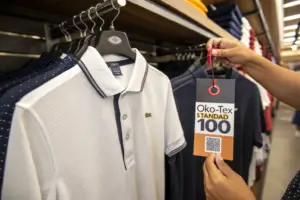
Without a pre-existing certificate like OEKO-TEX to demonstrate due diligence, you have no evidence to expedite release. Your capital is literally locked up in a shipping container.
What are the direct costs of a product recall?
If non-compliant goods slip through and are recalled, costs explode:
- Logistics: Reverse shipping, warehousing, and handling of returned goods.
- Refunds: Full reimbursements to retailers or consumers.
- Public Relations: Crisis management fees.
- Destruction: Cost of ethically disposing of faulty goods.
For a ski jumpsuit with an FOB cost of $50, a recall of 1,000 units can easily incur over $150,000 in direct costs, not including brand damage.
Product Failure & Brand Destruction: When Performance Promises Break
Ski jumpsuits are performance gear. Consumers trust them to be waterproof, breathable, durable, and safe. Non-certified production lacks the independent verification that these core promises will be kept. The resulting product failures lead directly to a collapse in consumer trust, which is far more expensive and longer-lasting than any financial penalty.
The brand risk is existential. A single viral social media post about leaking suits, fading colors, or skin irritation can define your brand for years. In the outdoor community, trust is the primary currency. Once spent, it is nearly impossible to regain. Certifications like OEKO-TEX (safety) and ISO standards (performance) are your publicly verifiable guarantees that your product will perform as advertised. They are a shield against reputational damage.
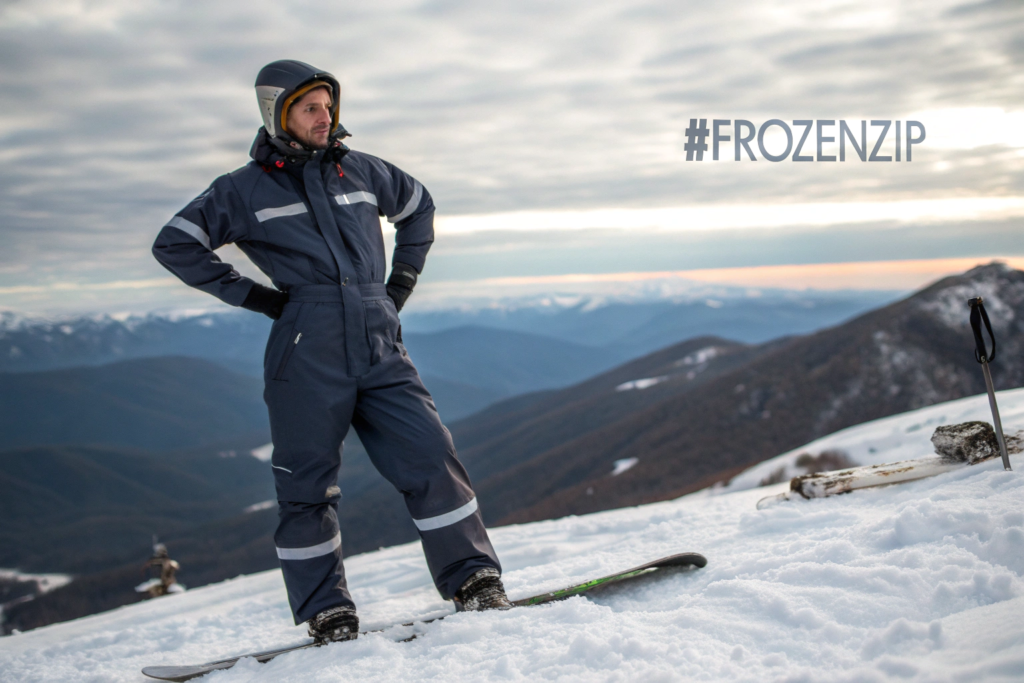
A specific brand we now work with came to us after a disastrous launch. Their previous, non-certified jumpsuits used a cheap zipper that failed in cold temperatures (below -10°C). Skiers were stranded on mountains with suits they couldn't zip up. The hashtag #FrozenZip trended among winter sports enthusiasts. It took them three years and a complete rebrand to recover. Now, they insist on ISO 6006 (cold flex) testing certificates for all zippers, which we provide as part of our full-package service at Shanghai Fumao. This is a core lesson in garment quality assurance.
What are the common performance failures in non-certified suits?
| Failure Point | Cause (Often Due to Lack of Testing) | Consumer Consequence |
|---|---|---|
| Waterproof Failure | Poor laminate bonding or substandard membrane. ISO 811 (hydrostatic pressure) test would catch this. | Soaked, cold, and unhappy skier. |
| Seam Leakage | Incorrect seam tape application or low-quality tape. | Water ingress at stitches. |
| Color Bleeding | Use of non-colorfast dyes. Lacks ISO 105-C06 (colorfastness to washing) test. | White base layers stained; suit looks old quickly. |
| Insulation Clumping | Low-fill-power down or poor baffle construction. Lacks IDFL or RDS certification. | Cold spots, loss of warmth. |
How does social media amplify brand damage?
A product failure is no longer a private complaint. It's a public review, a tweet, a TikTok video. The narrative shifts from "I had a bad product" to "This brand sells dangerous or faulty gear." Recovery requires immense investment in marketing and product redemption, far exceeding the cost of proper certification from the start. Your brand equity is your most valuable asset; don't gamble it to save pennies on cost.
Legal Liability & Regulatory Traps: The Hidden Legal Minefield
This is the most underestimated risk. When you import and sell a product, you assume legal liability for its safety and compliance. If a non-certified ski jumpsuit causes harm—whether chemical burns from fabric, a zipper injury, or a hypothermia incident due to waterproof failure—you are personally and corporately liable. Regulatory bodies are also increasingly aggressive in pursuing penalties for non-compliance.
The legal and regulatory minefield includes: 1) Product Liability Lawsuits: If injury occurs, you must prove due diligence in ensuring product safety—impossible without independent certification. 2) Regulatory Fines: Agencies like the US CPSC can levy significant fines for selling non-compliant products, especially children's items. 3) Breach of Contract with Retailers: Most retailer agreements have indemnity clauses holding you responsible for all costs of a compliance failure. Operating without certifications strips you of your primary legal defense.
A distributor client shared a cautionary tale. They sourced non-certified children's ski gloves. A child developed a severe rash. The family sued, alleging harmful chemicals in the fabric. The distributor had no test reports to defend the product's safety. They settled out of court for a confidential sum that nearly bankrupted the business. Their lawyer's first question was: "What independent safety certifications did you obtain?" They had none. This scenario is becoming more common, as noted in updates from the United States Fashion Industry Association (USFIA).

What regulations specifically target ski apparel?
Key regulations you are responsible for meeting include:
- US CPSIA: Limits lead and phthalates, especially critical in children's ski wear (jumpsuits often have printed graphics, plastic zippers).
- EU REACH: Restricts hundreds of substances (e.g., PFAS, certain dyes).
- Flammability Standards: Though less common for outerwear, some components may be subject to rules like CPSIA's flammability standards for children's sleepwear, which can be referenced in lawsuits.
Without certification, you are relying on the supplier's unverified word that they comply—a legally precarious position.
How do retailer agreements increase your liability?
Standard retailer vendor agreements state that the brand (you) guarantees the product meets all applicable safety laws and standards. If a retailer faces a customs fine or a lawsuit because of your product, they will seek full indemnification from you. Your contract with a non-certified factory will likely not protect you in this chain of liability. You are the liable party in the market.
The Competitive Disadvantage: Losing Market Access & Premium Positioning
Finally, sourcing non-certified jumpsuits cripples your growth. It systematically closes doors to the most profitable sales channels and confines your brand to a low-margin, high-risk commodity segment. In today's market, certification is the price of admission to serious retail and the key to premium positioning.
The competitive disadvantage is twofold: 1) Market Access Denied: Major retailers, specialty outdoor shops, and premium marketplaces (like Backcountry.com or relevant European chains) require proof of certifications like OEKO-TEX or specific performance tests as part of their vendor onboarding. No certificate, no purchase order. 2) Inability to Command Price: You cannot justify a premium price or a compelling brand story without third-party validation of your product's safety, quality, and ethics. You become trapped in a race to the bottom.
We helped a brand pivot from this trap. They had been selling non-certified suits on Amazon, competing solely on price and struggling. We guided them to develop a new, OEKO-TEX and bluesign® certified line with us. With these certifications in hand, they:
- Secured a meeting with a major outdoor retailer.
- Increased their wholesale price by 40%.
- Used the certifications in marketing to highlight safety and sustainability.
Within two seasons, their new certified line became their core business, dwarfing the old commodity line. The certification was their ticket out of the competitive basement.
Which sales channels will be closed to you?
- Specialty Outdoor Retailers: (e.g., REI, MEC, European independents) have strict, non-negotiable compliance lists.
- Department Stores: Their compliance departments are risk-averse and demand documented proof.
- Corporate & Rental Programs: Ski resorts and corporate gift buyers require safety documentation for liability reasons.
- Influential Marketplaces: Premium platforms often curate based on brand ethos and certifications.
How does this affect long-term brand value?
Investors and potential acquirers conduct due diligence on your supply chain. A history of non-certified sourcing is a massive liability on your balance sheet. It shows poor risk management and limits future growth potential. Building a brand with certified products from the outset creates tangible, defensible asset value.
Conclusion
The risks of sourcing non-certified ski jumpsuits are not isolated possibilities; they are interconnected probabilities that threaten the very survival of your business. The initial cost saving is a mirage that vanishes when confronted with the first real-world test—be it at customs, on the slopes, or in a courtroom.
The safe, profitable, and scalable path is to partner with a manufacturer who views certification as the foundation of quality, not an optional add-on. This partner will have the systems, expertise, and transparency to guide you through the process, turning compliance from a cost center into your most powerful brand asset and risk mitigation tool.
If you are reevaluating your sourcing strategy and want to build a ski wear brand that is protected, premium, and poised for growth, let's build it on a certified foundation. At Shanghai Fumao, our entire operation is structured to deliver certified quality. We manage the certification process for you, providing the documented safety and performance proof that protects your investment and powers your growth. Contact our Business Director, Elaine, to discuss moving your production to a fully certified and secure supply chain. Reach her at: elaine@fumaoclothing.com.