In today's apparel sourcing landscape, a buyer's role extends far beyond selecting styles and negotiating prices. You are the frontline guardian of your company's profitability, reputation, and legal compliance. Each sourcing decision carries inherent risks: financial, operational, and reputational. The complexity of global textile supply chains, with their opaque processes and varying regulations, makes these risks difficult to manage. A proactive strategy is no longer optional; it's essential for survival and growth.
OEKO-TEX certification serves as a powerful, multi-layered risk mitigation tool for garment buyers. It systematically reduces the probability and impact of costly failures by providing verified safety assurance, enforcing supply chain transparency, ensuring regulatory compliance, and protecting brand equity. It transforms unknown variables into managed, auditable controls.
For a buyer managing multiple product lines and suppliers, OEKO-TEX is not just a "nice-to-have" for marketing; it's a strategic shield. Let's dissect the specific risks it mitigates and how that translates directly to your bottom line and peace of mind.
1. Mitigating Financial Risk: Preventing Costly Rejections, Recalls, and Penalties
Financial risk in garment sourcing often materializes as sudden, unplanned costs that erase thin margins. The most severe of these are shipment rejections at port due to failed safety tests, product recalls triggered by consumer complaints or regulatory action, and financial penalties from retailers for non-compliant goods.
OEKO-TEX certification directly addresses this. By requiring that every component of a garment—from fabric and thread to zippers and prints—is tested for a comprehensive list of harmful substances, it drastically reduces the chance of a batch failing a customs inspection or a retailer's compliance audit. The certification is your pre-emptive proof of due diligence. For example, a buyer for a mid-sized apparel brand once faced a nightmare: a 20,000-unit shipment of children's pajamas was held by EU customs for suspected excessive levels of a restricted flame retardant. The testing and delay cost over $80,000 and missed the key selling season. After switching to OEKO-TEX certified production with a partner like Shanghai Fumao, they have eliminated such incidents, as every shipment travels with its internationally recognized test report.

How does it protect against retailer chargebacks?
Major retailers have strict Restricted Substances Lists (RSLs). Non-compliance can result in hefty chargebacks, sometimes amounting to the value of the entire order. An OEKO-TEX Standard 100 certificate, especially for the correct product class (e.g., Class I for babies), is widely accepted as proof of compliance with most RSLs. It simplifies the approval process with retailers and provides a defensible document if a dispute arises, effectively transferring the testing risk and cost to the certified supplier.
Does it reduce liability insurance costs?
While variable, demonstrating a systematic approach to product safety through recognized certifications like OEKO-TEX can positively influence a company's risk profile in the eyes of insurers. It shows proactive risk management, which can lead to more favorable insurance terms or be a factor in mitigating liability in the event of a lawsuit.
2. Mitigating Reputational Risk: Safeguarding Brand Trust and Consumer Confidence
Reputational risk is the most damaging and hardest to quantify. A single viral social media post about a "toxic" garment or a news report linking your brand to poor factory conditions can cause long-term brand damage and consumer abandonment. In the age of conscious consumerism, trust is your most valuable asset.
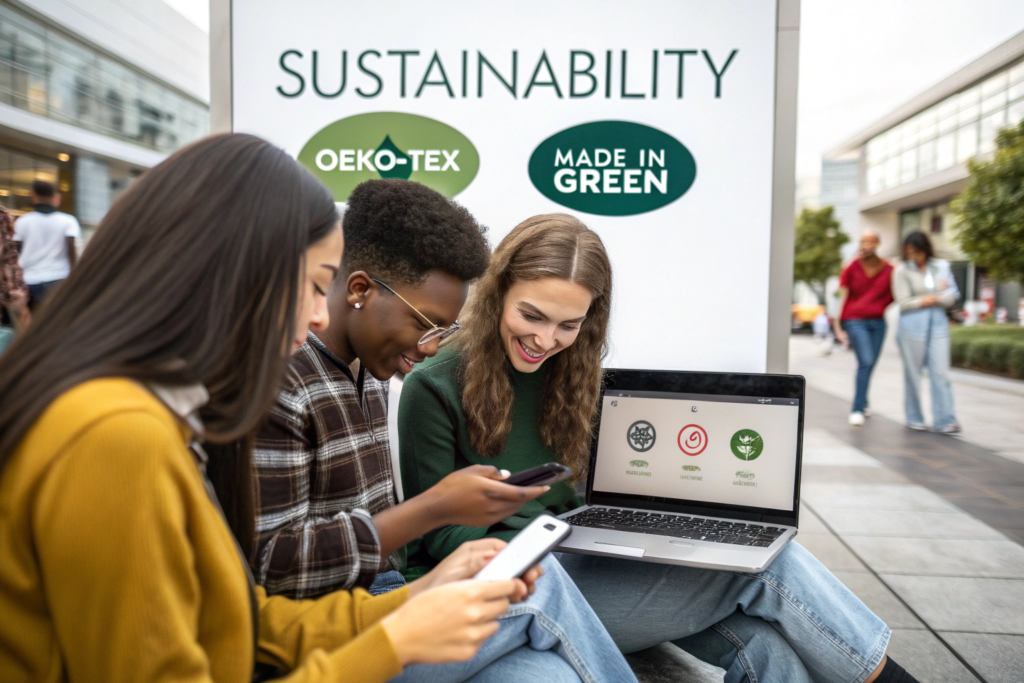
OEKO-TEX certification, particularly the MADE IN GREEN label, is a verifiable trust signal. It demonstrates to consumers that you have invested in independent, scientific verification of product safety. It also shows a commitment to socially responsible manufacturing (for MADE IN GREEN), as the certification audits working conditions. This proactive transparency makes it exponentially harder for activists or competitors to launch credible attacks on your supply chain ethics. A contemporary case involved a direct-to-consumer brand accused of using "chemical-laden" fabrics. Because they could immediately point to their OEKO-TEX Standard 100 certification and publicly share their test reports, they defused the crisis within days, turning it into an opportunity to educate customers about their standards.
How does it protect against greenwashing accusations?
Vague claims like "eco-friendly" or "non-toxic" are increasingly scrutinized. OEKO-TEX provides the specific, third-party evidence needed to back up such claims. This protects your brand from accusations of greenwashing, which can be as damaging as a product failure. It allows your marketing to be both aspirational and accurate.
Can it enhance brand value and customer loyalty?
Absolutely. By consistently delivering certified products, you build a reputation for reliability and responsibility. This fosters deep customer loyalty, as consumers feel they can trust your brand without having to conduct their own research. This loyal customer base is more resilient during market downturns and more valuable over their lifetime, directly contributing to long-term brand equity.
3. Mitigating Supply Chain Risk: Enforcing Transparency and Operational Consistency
Supply chain risk involves disruptions, inconsistencies, and a lack of visibility. You may face delayed shipments because of quality reworks, receive inconsistent quality between batches, or simply not know where or how your goods are truly made. This operational uncertainty makes planning impossible and exposes you to constant firefighting.
OEKO-TEX certification imposes a framework of discipline and transparency on the supplier. To achieve and maintain certification, a factory must have controlled processes, documented sourcing, and regular audits. This inherently leads to more consistent quality and reliable production schedules. For a buyer, this means fewer surprises. When you partner with a certified manufacturer like Shanghai Fumao, you gain access to this controlled system. You can request material traceability documents and have confidence that the blue fabric in your October order will match the blue fabric from July. One of our clients, a buyer for an outdoor brand, stated that after moving production to our OEKO-TEX certified facility, their defect rate dropped by 60% and their on-time delivery rate improved to 98%, solely due to the procedural rigor the certification demands.

How does it simplify supplier management and vetting?
Vetting a new supplier is time-consuming and risky. An existing OEKO-TEX certification is a strong initial filter. It tells you the supplier is already operating at a certain level of professionalism and has passed independent scrutiny. This reduces the due diligence burden and lowers the risk of onboarding a problematic partner.
Does it help in crisis management within the supply chain?
If a problem does arise—for instance, a specific dye is globally banned—a certified supply chain is easier to manage. Because material sources and chemical inventories are better documented, a buyer can work with the supplier to quickly identify and isolate affected batches, preventing a small issue from becoming a catastrophic recall.
4. Mitigating Legal and Regulatory Risk: Ensuring Proactive Global Compliance
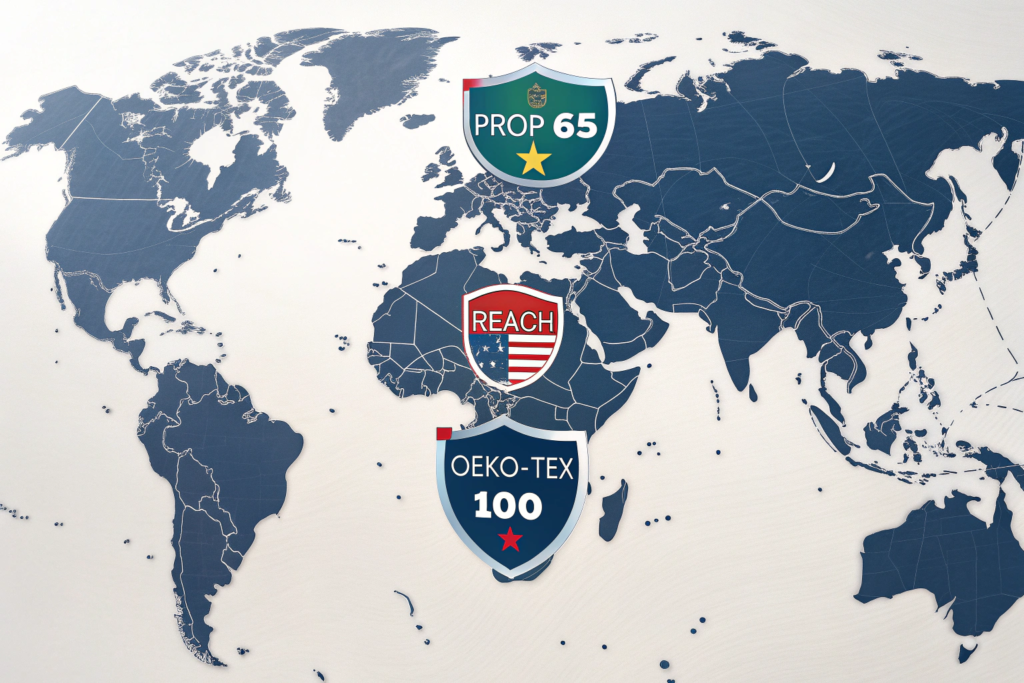
Navigating the global patchwork of product safety regulations (like EU REACH, US CPSIA, California Prop 65) is a monumental task for any buyer. These regulations are complex, constantly evolving, and carry severe penalties for non-compliance. The risk of inadvertently violating a regulation in one of your sales markets is high.
OEKO-TEX Standard 100 is designed to be a globally harmonized standard that meets or exceeds the core requirements of most national regulations. By sourcing OEKO-TEX certified garments, you are effectively outsourcing a significant portion of your regulatory compliance monitoring. The certification bodies continuously update their test criteria to align with new legal requirements. This means your products are consistently updated to meet the latest standards without you having to track every legislative change worldwide. A buyer for a company selling in both the US and EU told us that using OEKO-TEX as their baseline compliance tool cut their internal legal review time for new products by 70%, as they could rely on the certificate to cover the foundational safety requirements.
How does it protect in markets with strict liability laws?
In many jurisdictions, importers and brands can be held legally liable for defects, even if the fault lies with the overseas manufacturer. OEKO-TEX certification provides documented evidence that you exercised "due care" in selecting and specifying your products. This can be a crucial defense in product liability lawsuits, potentially limiting your financial exposure.
Does it future-proof your product portfolio?
Regulations only get stricter. By building your supply chain on the robust, regularly updated OEKO-TEX standard, you are future-proofing your products against upcoming bans or restrictions. This proactive approach prevents the frantic and expensive scramble to reformulate products at the last minute when a new regulation takes effect.
Conclusion
For the modern garment buyer, OEKO-TEX certification is a strategic imperative, not a discretionary expense. Its primary value lies in comprehensive risk mitigation. It directly protects your financial bottom line by preventing catastrophic rejections and recalls. It safeguards your brand's priceless reputation by providing verifiable proof of safety and ethics. It brings order and transparency to complex supply chains, enabling predictable operations. Finally, it simplifies the daunting challenge of global regulatory compliance.
In essence, OEKO-TEX certification transforms uncertainty into managed certainty. It empowers you to buy with confidence, knowing that a layer of independent, scientific verification stands between your company and the multitude of risks inherent in global apparel sourcing.
Ready to transform your sourcing strategy from reactive risk management to proactive assurance? Partner with a manufacturer for whom OEKO-TEX is a foundational operating principle. Let Shanghai Fumao be your partner in building a secure, compliant, and trustworthy supply chain. Contact our Business Director, Elaine, at elaine@fumaoclothing.com to discuss how our certified production can become your most effective risk mitigation tool.