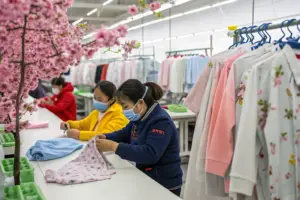
As you vet a new apparel manufacturer, especially in a competitive sourcing landscape like China or Vietnam, seeing “OEKO-TEX Certified” on a supplier’s profile is a good start. But it’s just the beginning. For a brand owner, this certification is a cornerstone of product safety and brand trust. The real test lies in uncovering the depth and authenticity of their compliance. Asking the right questions separates true partners from those who merely have a certificate to show.
You must ask new suppliers specific, probing questions that move beyond the certificate itself to explore its scope, validity, integration into their quality systems, and their upstream supply chain control. Focus on uncovering the how and who behind the label to assess risk and ensure your products are genuinely compliant from the first stitch to the final shipment.
A vague or defensive answer to these questions is a major red flag. Your goal is to determine if OEKO-TEX is a marketing checkbox for them or an operational backbone.
How to verify the authenticity and scope of the certificate?
The first line of questioning must dismantle any ambiguity about what is certified and if the certificate is even real. Assume nothing.
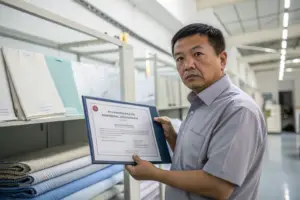
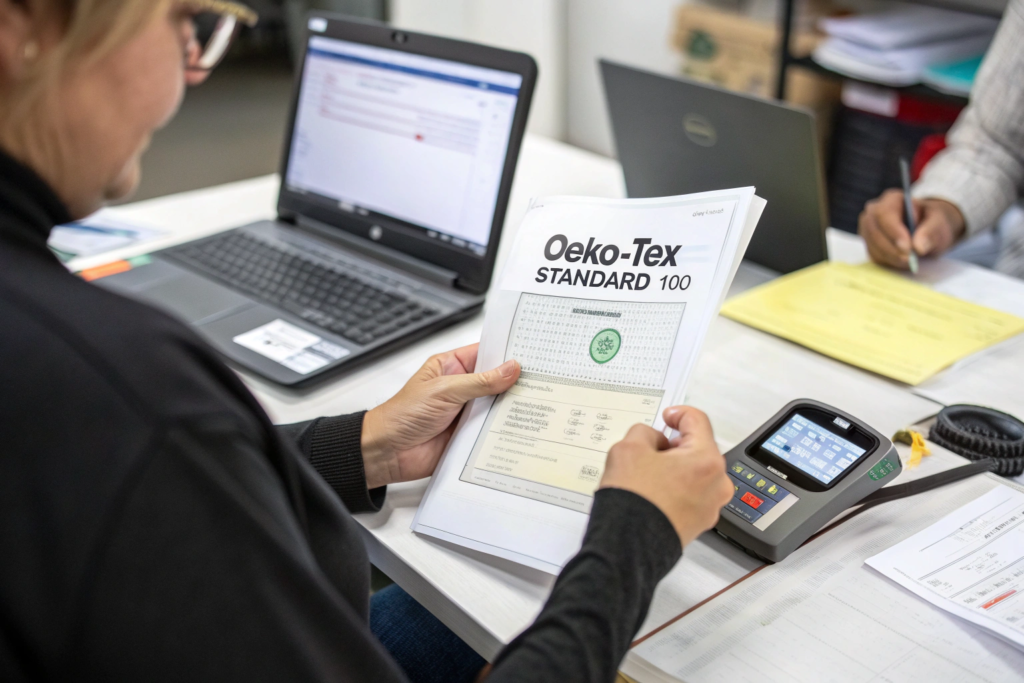
Start by asking for the specific OEKO-TEX STANDARD 100 certificate number and a copy of the certificate itself. Then, you must verify this number independently on the official OEKO-TEX certification database. This step alone can expose “certificate fishing”—where a supplier uses a generic certificate from a fabric mill that doesn’t apply to their finished garment production. Next, drill into the scope: “Does this certificate cover the finished garment we are discussing, or just the base fabric?” Many suppliers obtain certification for greige (raw) fabric, but the dyes, finishes, and trims used later may not be covered.
Is the certificate product-specific and still valid?
A certificate is not a permanent license. It is issued for specific products and has an expiration date. Your questions must be: “Is this certificate specifically for the product category we are ordering (e.g., knitted polyester activewear top)?” and “What is the expiration date of this certificate?” A responsible supplier will have a system to track certificate validity and renewals. At Shanghai Fumao, we provide clients with a valid certificate for each product style and proactively communicate renewal timelines, which forms a part of our reliable delivery promise by preventing compliance-related delays.
Does it cover all components and chemical treatments?
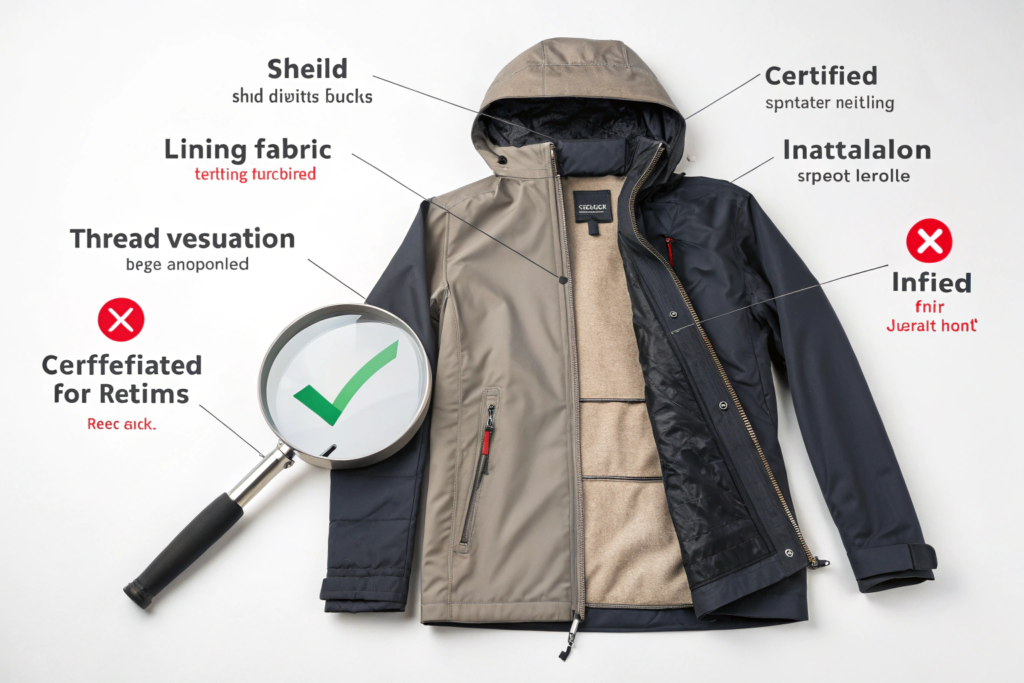
This is critical. A ski jacket’s shell fabric might be certified, but the waterproof membrane, insulation, zippers, threads, and DWR coating are separate components. Ask: “Can you provide OEKO-TEX compliance documentation or certificates for every component in the Bill of Materials?” Also, inquire about chemical treatments: “Are the dyes and auxiliaries used in the dyeing and finishing processes from OEKO-TEX compliant chemical suppliers?” The answer reveals their control over the entire apparel manufacturing process. We once audited a competitor for a client and found their jackets failed due to non-compliant adhesives in seam tape—a component the primary certificate didn’t cover.
How is OEKO-TEX compliance managed and enforced in production?
A certificate on the wall doesn’t guarantee certified goods in the box. You need to understand the supplier’s internal systems for ensuring batch-to-batch compliance.
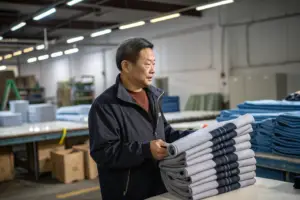
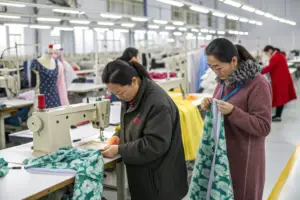
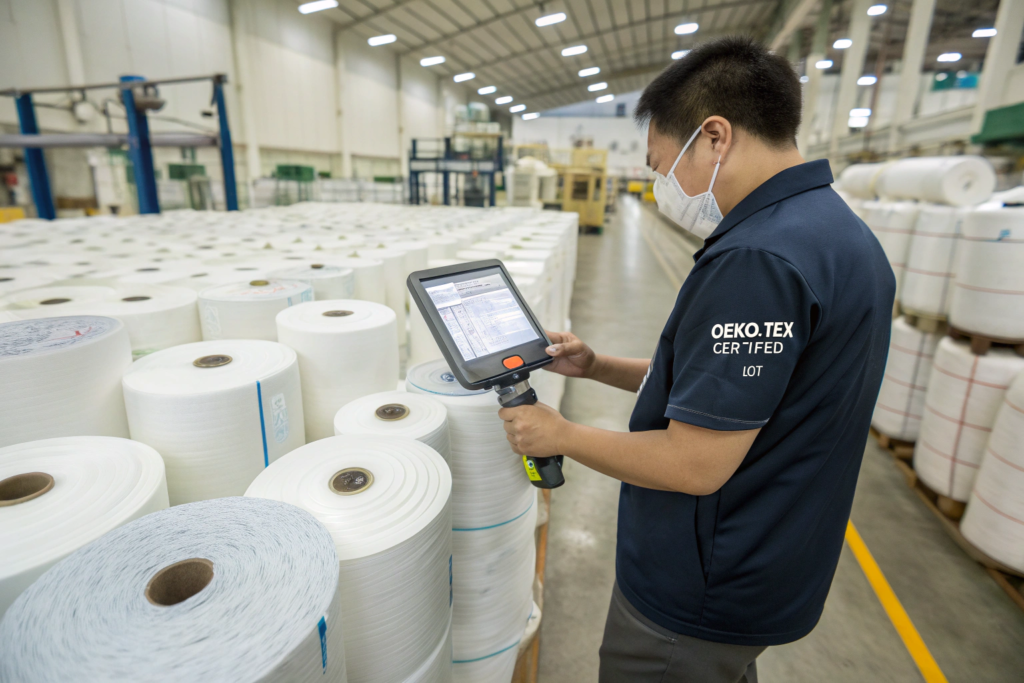
Ask operational questions: “What is your process for verifying that incoming fabric rolls match the certified lot?” and “How do you segregate OEKO-TEX certified materials from non-certified materials in your warehouse and on the production line to prevent cross-contamination?” Their answers should describe a documented procedure, not guesswork. A strong supplier will have a quality control protocol that includes checking material certification documentation against purchase orders and physical lot numbers.
What is your testing and audit protocol?
Reliance on a year-old certificate is risky. Ask: “Do you conduct periodic in-house or third-party testing on random finished goods to verify ongoing compliance?” Also, “Are you open to us conducting a third-party audit or commissioning an independent lab test on pre-shipment samples at your cost if non-compliance is found?” The response to this last question is telling. A confident, transparent supplier will agree, often incorporating such terms into the supplier agreement. This directly addresses the pain point of suppliers occasionally falsifying certificates.
Do you have OEKO-TEX STeP certification for your facility?
This is a game-changing question. While STANDARD 100 certifies the product, STeP certification assesses the sustainability of the manufacturing facility itself—its chemical management, environmental impact, and worker safety. A “yes” indicates the supplier has embedded responsible practices into their operations, greatly reducing the risk of process-based contamination. It shows a deeper, systemic commitment. Our STeP certification at Shanghai Fumao is a key differentiator that gives brands confidence in our full-package manufacturing integrity.
What is your policy with sub-suppliers and material traceability?
No manufacturer is an island. Their fabric mill, trim suppliers, and accessory providers are part of your extended supply chain. Their control over these partners is your control.
Ask: “How do you vet and ensure your fabric mills and component suppliers are OEKO-TEX compliant?” The best practice is to have approved supplier lists and to collect valid certificates from each sub-supplier for each component. Follow up with: “Can you provide a full bill of materials (BOM) with corresponding OEKO-TEX certificate numbers or statements of compliance for each listed item?” This request for traceability is powerful. It forces transparency and reveals if their compliance is superficial or deeply rooted.
How do you handle material substitutions?
A common cause of failure is last-minute material substitution. Your question must be: “What is your change control procedure? If a certified material becomes unavailable, what is your process for sourcing, testing, and approving an alternative before using it in our order?” A professional supplier will require your written approval for any substitution and will provide the new component’s certification data. This procedure should be stipulated in your contract to avoid delayed shipments due to last-minute compliance failures.
Can you support a digital product passport or transparency request?
Forward-looking brands are building digital product passports. Ask: “Are you equipped to provide the necessary material composition and certification data in a structured digital format to support our transparency initiatives?” This question tests their technological readiness and commitment to long-term partnership in an era of growing supply chain transparency regulations.
Conclusion
Vetting a new supplier on OEKO-TEX is a due diligence process that protects your brand from immense financial and reputational risk. The must-ask questions are designed to peel back layers, moving from the certificate to the system, and from the factory floor to the sub-supplier.
The right supplier will welcome these questions with detailed answers, documentation, and transparency. They will prove that their certification is a living, breathing part of their operation, not just a framed document.
Don’t leave the safety of your products to chance. Partner with a manufacturer who has the systems in place to guarantee compliance at every level. Shanghai Fumao is built to answer all these questions with confidence and evidence. Let us demonstrate how we can be your secure, compliant manufacturing foundation. Contact our Business Director Elaine to start a truly transparent conversation: elaine@fumaoclothing.com.