In my daily conversations with American brand owners and buyers, I hear a lot about OEKO-TEX. Many see it as a valuable badge, but just as many have deep misunderstandings that hold them back from using it effectively. These misconceptions can lead to missed opportunities, unnecessary costs, or even failed partnerships. Let's clear the air and separate fact from fiction in the golf apparel world.
The most common misconceptions are that OEKO-TEX is only about organic materials, that it's prohibitively expensive for small runs, that it guarantees overall product durability, and that once certified, no further action is needed. In reality, it's a focused chemical safety standard, scalable for various order sizes, unrelated to physical performance testing, and requires active maintenance.
Believing these myths can distort your sourcing strategy and marketing. Understanding the truth allows you to leverage the certification strategically and avoid pitfalls.
Is OEKO-TEX the Same as Organic or Sustainable?
This is the number one confusion we encounter. Brands, especially those new to eco-standards, often use "OEKO-TEX," "organic," and "sustainable" interchangeably. This can lead to inaccurate marketing claims and disappointed customers who expect something the certification doesn't cover.
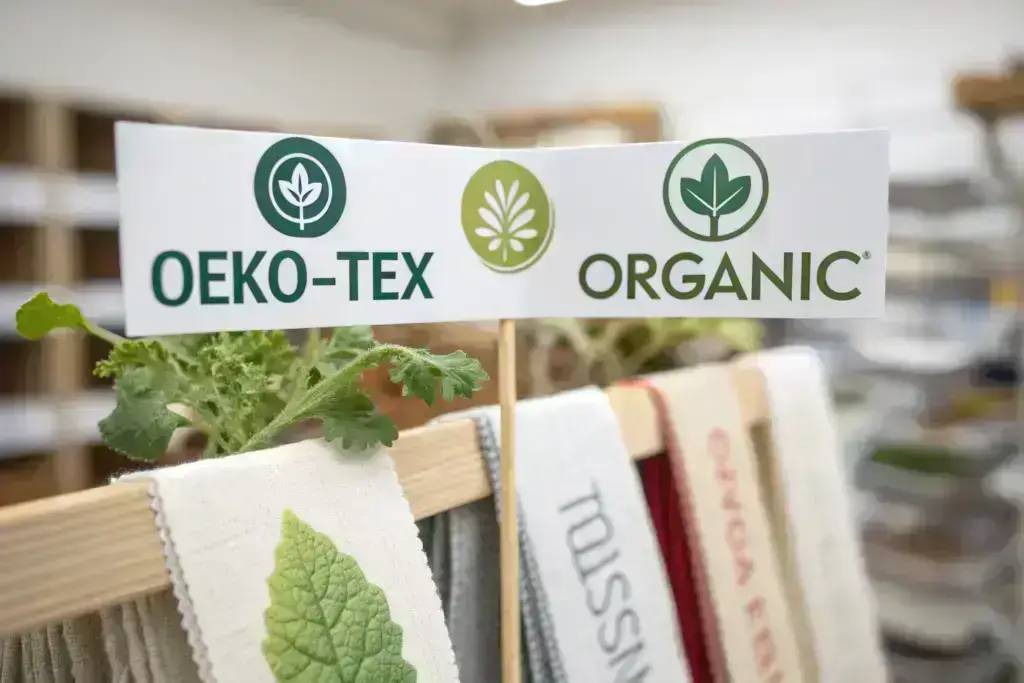
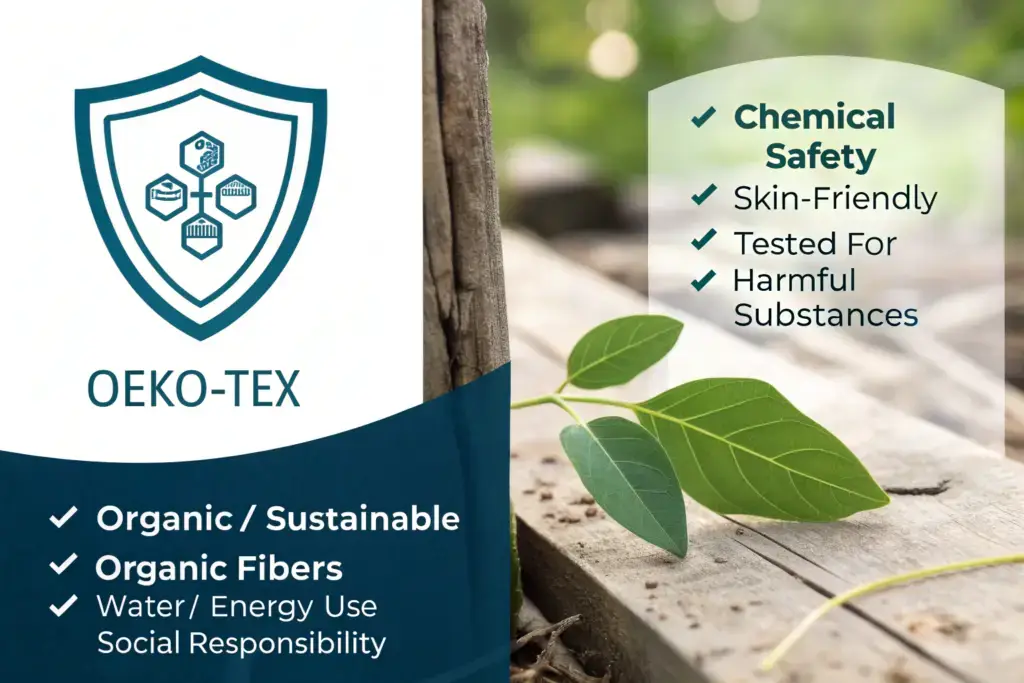
No, OEKO-TEX is not the same as organic or a blanket sustainability label. OEKO-TEX Standard 100 is specifically a human-ecological safety standard. It tests for harmful substances—like heavy metals, pesticides, or allergenic dyes—to ensure the final product is safe for human skin. It does not mandate the use of organic fibers, address water usage, carbon footprint, or labor practices.
Think of it this way: OEKO-TEX asks, "Is this product chemically safe for you?" It does not ask, "Was this cotton grown organically?" or "Was this made with renewable energy?"
What does OEKO-TEX actually test for, then?
The certification is incredibly rigorous within its scope. It screens for over 100 regulated substance groups, including:
- Illegal substances (like certain azo dyes)
- Legally regulated substances (like formaldehyde, nickel)
- Chemicals known to be harmful to health (but not yet legally regulated)
- Parameters like pH value and colorfastness for skin health
A golf shirt can be made from conventional polyester and still be OEKO-TEX certified if all chemicals used in its dyeing and finishing pass the strict limits. This is a key point for performance wear, where synthetic fabrics are common. We had a client who sourced a premium, non-organic pique cotton for polos, assuming it couldn't be certified. We guided them through the process, and the fabric passed OEKO-TEX easily, allowing them to make a legitimate "skin-safe" claim without misleading anyone about organic content.
How should brands communicate this correctly to avoid greenwashing?
Clarity is crucial. Correct marketing language would be:
- ✅ DO SAY: "Our golf polos are OEKO-TEX Standard 100 certified, ensuring they are free from harmful levels of over 100 substances for your comfort and safety."
- ❌ DON'T SAY: "Our polos are OEKO-TEX certified, meaning they're organic and sustainable."
For a truly holistic story, brands can combine certifications. For example, Shanghai Fumao often produces garments that are both GOTS (Global Organic Textile Standard) for the organic fiber and OEKO-TEX for the comprehensive chemical safety check. This layered approach is powerful and transparent.
Does OEKO-TEX Certification Make Golf Apparel More Durable?
Many buyers logically assume that a "higher quality" certification must also mean the garment lasts longer. They expect OEKO-TEX polos to withstand more washes, resist pilling better, or have stronger seams. This misconception can set up false expectations and lead to customer complaints about physical wear and tear.
No, OEKO-TEX certification does not directly test or guarantee the physical durability, abrasion resistance, or colorfastness to washing of golf apparel. Its primary focus is human-ecological safety. A garment can be certified as safe but still pill, fade, or have seam failures if the base fabric quality or construction is poor.
Durability comes from other factors: the quality of the yarn, the fabric construction (e.g., a dense knit), the sewing techniques, and the performance finishes applied (which themselves must be safe to be certified).
What specific performance issues are outside its scope?
Brands need to specify and test for these separately:
- Pilling Resistance: Tested by standards like Martindale or Random Tumble Pilling.
- Colorfastness to Washing/Rubbing: Part of OEKO-TEX, but only to a baseline level for skin safety. More rigorous levels are needed for retail requirements.
- Tensile & Seam Strength: Critical for activewear; tested via methods like ISO 13934-1.
- Water Repellency (DWR) & Moisture Wicking: Functional finishes that must be chemically safe (OEKO-TEX's role) but are evaluated for performance by other tests.
A case from last spring: A brand received customer complaints that their certified golf shorts were pilling after a few rounds. They initially questioned the certification's value. We explained that pilling was a mechanical issue related to the chosen yarn's staple length and twist. We then helped them upgrade to a longer-staple, combed cotton for their next order—which remained OEKO-TEX certified—and the pilling problem was resolved. The certification ensured safety; the material upgrade ensured durability.
How can brands ensure both safety AND durability?
The solution is a two-track quality control system with your manufacturer:
- Chemical Safety Track: Managed via OEKO-TEX certification of the entire supply chain.
- Physical Quality Track: Managed via Technical Specifications (Tech Pack) with clear performance benchmarks and in-house lab testing for durability metrics.
A reliable partner like Shanghai Fumao will have both capabilities. We maintain our OEKO-TEX certification for safety compliance while also operating a dedicated lab where we perform pilling, wash, and seam tests on new fabric submissions to ensure they meet our clients' durability standards before they are approved for production.
Is OEKO-TEX Too Expensive and Complex for Seasonal Lines?
The perception of high cost and bureaucratic complexity is a major barrier, especially for brands producing multiple, fast-changing seasonal collections. Many fear it will slow them down and eat into thin margins. This view often comes from a misunderstanding of how the certification is applied and managed at the factory level.
Not necessarily. While there are costs, they are often scalable and can be managed efficiently by an experienced manufacturer. The complexity is largely borne by the factory, not the brand. For seasonal lines, the key is working with a partner who has a pre-certified system and a "Qualified Materials List," minimizing additional testing and time for each new design.
The cost is not a flat, per-garment fee but a combination of factory license fees, material testing costs, and audit fees. At scale, this per-unit cost can become very small.

How do efficient factories keep costs and lead times under control?
At Fumao Clothing, we've systemized it for seasonal agility:
- Pre-Certified Production System: Our factory itself is certified. This is the foundational license.
- Qualified Materials Library (QML): We maintain a vast library of fabrics, threads, and trims that are already OEKO-TEX tested and approved. When a client chooses a fabric from our QML for their new Spring line, no new fabric test is needed—massive time and cost savings.
- Batch Certification: We group multiple client orders using the same certified materials under one annual certificate and issue individual Transaction Certificates per shipment.
For a client launching a capsule collection of three new polo designs, if they use our standard QML fabrics, the added cost for OEKO-TEX might be just a few cents per piece, and it adds zero days to the lead time. The complexity is invisible to them.
What is a real-world cost vs. benefit scenario for a seasonal brand?
Let's quantify with a hypothetical, real-based scenario for a DTC brand:
- Order: 5,000 golf polos for a Summer collection.
- Added Cost (using factory QML): ~$0.25 - $0.50 per piece.
- Total Investment: $1,250 - $2,500.
- Potential Benefits: Justifies a $5-10 higher retail price, reduces return rate from skin-irritation complaints by an estimated 3-5%, and enhances marketing conversion.
The ROI is clear. The upfront cost is not a barrier but an investment with measurable returns in customer satisfaction, brand equity, and potentially, higher margins. The complexity is managed by your manufacturer's compliance team.
Does a Factory's Certificate Cover All Materials Automatically?
This is a dangerous and widespread misconception. Brands often see that their manufacturer holds an OEKO-TEX certificate and assume every garment produced in that facility is automatically certified. This is false and can lead to serious legal and reputational risks if uncertified materials are used.
No, a factory's certificate does not automatically cover all materials or products. The certificate is issued for a specific "article group" (e.g., "garments for adults") using specific, tested materials. If the factory uses a new, untested fabric, trim, or dye, that specific article is NOT covered by the existing certificate until the new component is tested and the certification scope is formally updated.
The certificate is not a blanket approval; it's a precise license for a defined set of inputs and outputs.

How can brands verify true coverage for their specific order?
You must ask for and receive two documents:
- The Factory's Scope Certificate: This shows what general article groups they are licensed to produce.
- The Transaction Certificate (TC) for YOUR Shipment: This is the legal proof. It lists your company as the buyer, the exact product and quantity, and references all the tested material certificates used. No TC = No certified status for that batch.
A distributor client once came to us after a bad experience. Their previous supplier had a factory certificate but provided a discounted fabric for a large order without testing it. When the client asked for the TC, the supplier couldn't produce it, and the shipment was held up. We showed them our process: for any new material, we run the test, update our scope with the certifying body, and guarantee the TC upon shipment. This reliability is non-negotiable.
What questions should you ask your supplier to avoid this trap?
Be direct. Ask:
- "Is the specific fabric and all components (thread, buttons, zippers) for my order already part of your OEKO-TEX certified material list?"
- "If not, what is the process and timeline for getting them tested and included?"
- "Can you guarantee to provide a valid Transaction Certificate (TC) with my shipment?"
- "Can I see a sample TC from a previous order?"
A transparent manufacturer like Shanghai Fumao welcomes these questions. We provide material certificates and sample TCs upfront because we understand that our clients' brand reputation depends on this due diligence. We act as your safeguard against this critical misconception.
Conclusion
Misconceptions about OEKO-TEX can limit its value or lead to costly mistakes. Understanding that it is a focused chemical safety standard—not an organic, durability, or automatic factory-wide guarantee—allows golf apparel brands to use it strategically. When implemented correctly through a systematic factory partner, it is a scalable, cost-effective tool that builds undeniable trust with the end consumer.
Clearing up these myths empowers you to make informed sourcing decisions, craft accurate marketing messages, and build a stronger, more credible brand. The goal is not just to have a certificate, but to understand and leverage what it truly represents.
If you want to integrate OEKO-TEX into your golf wear line with clarity and confidence, avoiding these common pitfalls, partner with a factory that prioritizes education and systemization. At Fumao Clothing, we don't just provide the certification; we provide the understanding and reliable processes behind it. Contact our Business Director, Elaine, to discuss how we can help you navigate the realities—not the myths—of certified production: elaine@fumaoclothing.com.