OEKO-TEX certification has become a trusted badge for many ski apparel brands. It reassures customers that harmful substances are controlled. But as a designer or brand owner pushing the boundaries of performance and aesthetics, you might be asking: does this certification cover everything I need? The truth is, while OEKO-TEX is a crucial foundation, it is not a universal guarantee. Relying on it as your sole mark of quality or responsibility can lead to gaps in your product's integrity and your brand's promises.
OEKO-TEX certification has clear and important limits: it does not test for functional performance, overall environmental impact, long-term durability, ethical labor practices, or the safety of chemicals outside its restricted list. It is a specifically focused human-ecological safety standard for textiles, not a comprehensive assessment of a ski garment's total quality, sustainability, or ethical standing.
Understanding these boundaries is not about diminishing the value of OEKO-TEX. It's about using it correctly within a broader, more robust product integrity strategy. Let's explore these limits in detail so you can design and source with full awareness, building truly exceptional and trustworthy ski apparel.
What Performance and Functional Aspects Does OEKO-TEX NOT Cover?
This is the most critical limit for technical ski wear. OEKO-TEX Standard 100 certifies that a material is free from specified harmful substances at the time of testing. It makes no claims whatsoever about how well the garment will perform its intended functions on the mountain.
Think of it this way: OEKO-TEX ensures the fabric is "non-toxic," but it does not ensure it is "waterproof," "breathable," "insulating," "abrasion-resistant," or "durable." A fabric can pass OEKO-TEX with flying colors yet completely fail to keep a skier dry or warm. For example, we evaluated a recycled polyester fabric that was OEKO-TEX certified. However, when we subjected it to a simulated 20-hour abrasion test (mimicking backpack strap wear), its water-repellent coating degraded rapidly. The certification gave no indication of this functional shortcoming.
Which key ski apparel functions fall outside its scope?
- Waterproofness & Breathability: The certification does not test for hydrostatic head (e.g., 20K mm) or moisture vapor transmission rate (MVTR). A brand cannot claim "waterproof" based on OEKO-TEX alone.
- Thermal Insulation: It does not measure Clo value or any thermal retention properties.
- Durability: Resistance to abrasion, pilling, seam strength, colorfastness to washing/rubbing, and the longevity of water repellency (DWR) are not assessed.
- Fit & Construction Quality: Pattern engineering, stitching consistency, and overall craftsmanship are unrelated to the chemical testing.
Designer Takeaway: You must pair OEKO-TEX with specific performance tests. At Shanghai Fumao, we mandate separate lab tests for critical functions. For a client's premium ski shell, we provided the OEKO-TEX certificate alongside independent test reports for waterproofness (ISO 811), breathability (ISO 11092), and colorfastness to rubbing. This complete dossier is what retailers demand.
How Does OEKO-TEX Address (or Not Address) Environmental Impact?
A common misconception is that OEKO-TEX is an "eco-label." While it has environmental benefits—by restricting harmful chemical discharges from certified factories—its primary goal is human safety. The certification does not provide a holistic assessment of a product's environmental footprint.
An OEKO-TEX certified fabric could be made from virgin, non-renewable polyester with a high carbon footprint and significant water usage in production. The certification does not evaluate resource consumption, energy use, greenhouse gas emissions, microplastic shedding, or recyclability. This is a crucial gap as consumers increasingly seek truly sustainable products.
What are the key environmental metrics outside its scope?
| Environmental Aspect | OEKO-TEX STANDARD 100 Coverage | What's Needed Beyond It |
|---|---|---|
| Material Origin | No | Certifications like Global Recycled Standard (GRS) for recycled content, Organic Content Standard (OCS) for organics. |
| Carbon Footprint | No | Life Cycle Assessment (LCA) measuring CO2e emissions from cradle to gate. |
| Water Usage & Pollution | Indirectly (via restricted chemicals) | Assessment of water consumption and wastewater management in production. |
| Biodegradability/Compostability | No | Specific tests like OK Biodegradable or TÜV Austria certifications. |
Designer Takeaway: For a credible eco-story, combine OEKO-TEX with environmental certifications. We helped a brand create a ski jacket using OEKO-TEX certified fabrics that also carried the GRS for recycled content. The marketing message was layered: "Safe for you (OEKO-TEX), better for the planet (GRS)." Resources like the Sustainable Apparel Coalition’s Higg Index help measure these broader impacts.
What Are the Limits Regarding Social Responsibility and Ethics?
This is a non-negotiable limit. OEKO-TEX STANDARD 100 is a product safety certification. It does not audit or verify any social or labor conditions in the factory where the textile is made or the garment is sewn.
A fabric can be OEKO-TEX certified in a mill that violates basic worker rights. The final garment can be assembled in a factory with poor working conditions. For a brand, this creates a severe reputational risk. You cannot claim your product is "ethically made" based solely on OEKO-TEX. We witnessed this disconnect firsthand when auditing a potential fabric supplier. Their OEKO-TEX certificates were impeccable, but a follow-up visit revealed issues with worker contracts and safety equipment that would have failed a social audit.
How can you address this critical gap?
Social responsibility requires separate, dedicated verification. Brands must seek:
- Social Compliance Audits: Standards like BSCI, SMETA (Sedex), SA8000, or Fair Trade Certification.
- Brand-Led Codes of Conduct: Implemented and monitored through direct factory relationships.
At Shanghai Fumao, we maintain active BSCI audit reports alongside our OEKO-TEX certifications. We encourage our clients to review both. This integrated approach provides the complete picture: responsible production and safe products. Organizations like the Fair Labor Association (FLA) provide frameworks for this.
Does OEKO-TEX Guarantee Safety for All Use Cases and Over Time?
OEKO-TEX testing is based on scientific methods, but it has inherent limitations in simulating real-world, long-term use. The certification provides a snapshot of compliance at the time of testing, under controlled laboratory conditions.
It does not account for:
- Chemical Interactions: How substances in different layers (membrane, adhesive, face fabric, lining) might interact over time, especially under UV exposure, heat, and moisture.
- Degradation Over Time: Whether restricted substances could leach out after repeated washing, abrasion, or prolonged storage.
- "Regrettable Substitutions": The standard restricts specific chemicals. However, a manufacturer could replace a banned substance with a chemically similar, non-tested alternative that may have unknown health effects—a practice known as "regrettable substitution." OEKO-TEX updates its list annually to catch these, but there can be a lag.
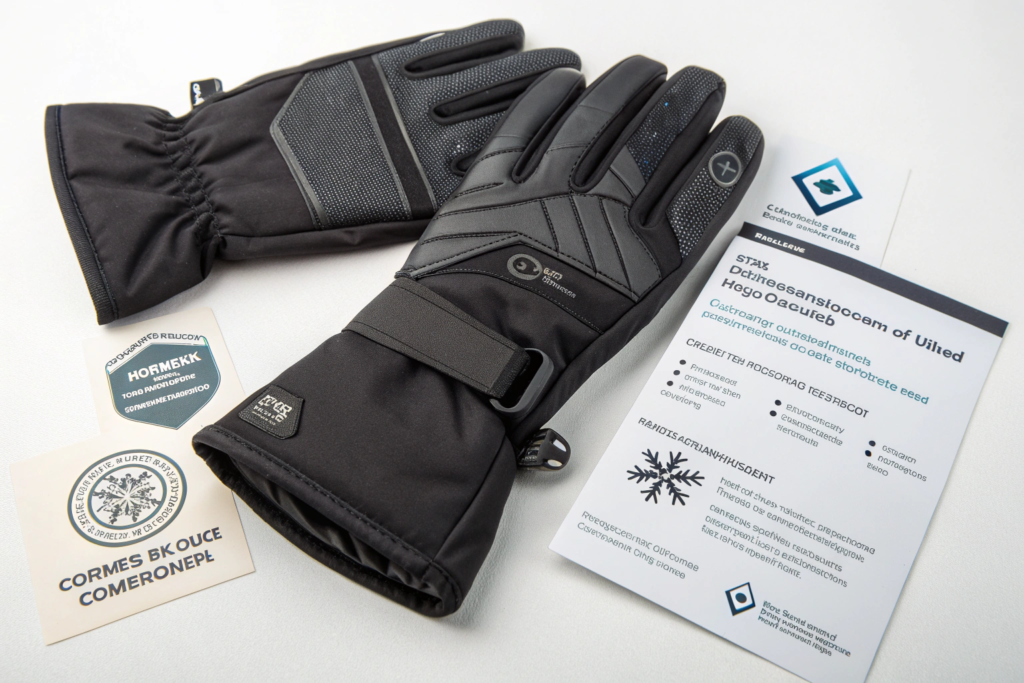
Designer Takeaway: OEKO-TEX is the best available baseline for chemical safety, but intelligent material selection is your first line of defense. We advise clients to choose materials from reputable mills with strong R&D, not just those offering the lowest-cost certified option. For a high-performance ski glove line, we sourced a specialized waterproof laminate from a supplier who provided not only OEKO-TEX but also exhaustive toxicological profiles for all new chemical compounds used, offering deeper transparency.
How Should Designers Use OEKO-TEX Within a Broader Strategy?
Understanding the limits of OEKO-TEX empowers you to use it correctly. It should be treated as a mandatory entry-level requirement for material safety, not the final goal of responsible design.
Your product integrity strategy should be multi-layered. Think of it as a pyramid:
- Base Layer (Non-Negotiable): OEKO-TEX for human-ecological safety + Social Compliance Audit for ethics.
- Mid Layer (Performance & Core Environment): Performance testing (waterproof, breathable, durable) + Key environmental certifications (GRS, OCS).
- Apex (Innovation & Leadership): Full Life Cycle Assessment (LCA), circular design for recyclability, and innovative material use.
By partnering with a manufacturer like Shanghai Fumao that understands and can navigate this full spectrum, you can design ski apparel that is not only safe and certified but also high-performing, durable, and progressively responsible. This comprehensive approach future-proofs your brand against evolving regulations and consumer expectations.
Conclusion
OEKO-TEX certification is an essential, powerful tool in the ski apparel designer's kit. It provides a critical, independent verification of material safety that builds consumer trust. However, its limits are real and significant. It is not a proxy for performance, a comprehensive eco-label, a guarantee of ethical production, or a promise of long-term stability.
The most successful and responsible brands will use OEKO-TEX as a foundational block within a larger fortress of product integrity. They will complement it with performance testing, environmental certifications, and social compliance verification. This holistic approach ensures that your ski apparel delivers on every promise: to perform in extreme conditions, to minimize environmental harm, to respect the people who make it, and above all, to be safe for the person wearing it.
Design with clarity. Source with depth. Use OEKO-TEX for what it is—a excellent safety standard—and build upon it with partners who share your vision for complete product excellence. For ski apparel that truly excels in every dimension, contact Shanghai Fumao. Let's discuss how our integrated manufacturing and compliance expertise can bring your most ambitious and responsible designs to life. Reach out to our Business Director, Elaine, at elaine@fumaoclothing.com.