Golf apparel brands face a new challenge in 2025. The latest OEKO-TEX certification updates are here, bringing stricter rules for chemical safety and sustainability. If you source or sell golf shirts, pants, or outerwear, these changes directly impact your supply chain and product compliance. Keeping up is not just about ethics; it's about market access, consumer trust, and avoiding costly delays.
The 2025 OEKO-TEX updates introduce significant changes, particularly in the new STANDARD 100 version, which expands the list of restricted substances, tightens limits for PFAS (forever chemicals), and enhances requirements for recycled materials and corporate due diligence. For golf apparel manufacturers and brands, this means mandatory adjustments in fabric sourcing, production processes, and documentation to maintain certification and marketability.
Navigating these updates can feel overwhelming. This guide will break down the key changes, explain their direct impact on golf clothing production, and provide actionable steps to ensure your next collection meets the new gold standard for responsible manufacturing. Let's dive into what your brand needs to know.
How Do the 2025 OEKO-TEX Changes Impact Golf Shirt Fabric Selection?
Choosing the right fabric is the first step in creating premium golf apparel. The 2025 revisions make this step more critical than ever. Brands that ignore the updated substance lists risk failing certification tests, leading to rejected shipments and lost sales. The core of the change lies in the specifics of what's now prohibited.
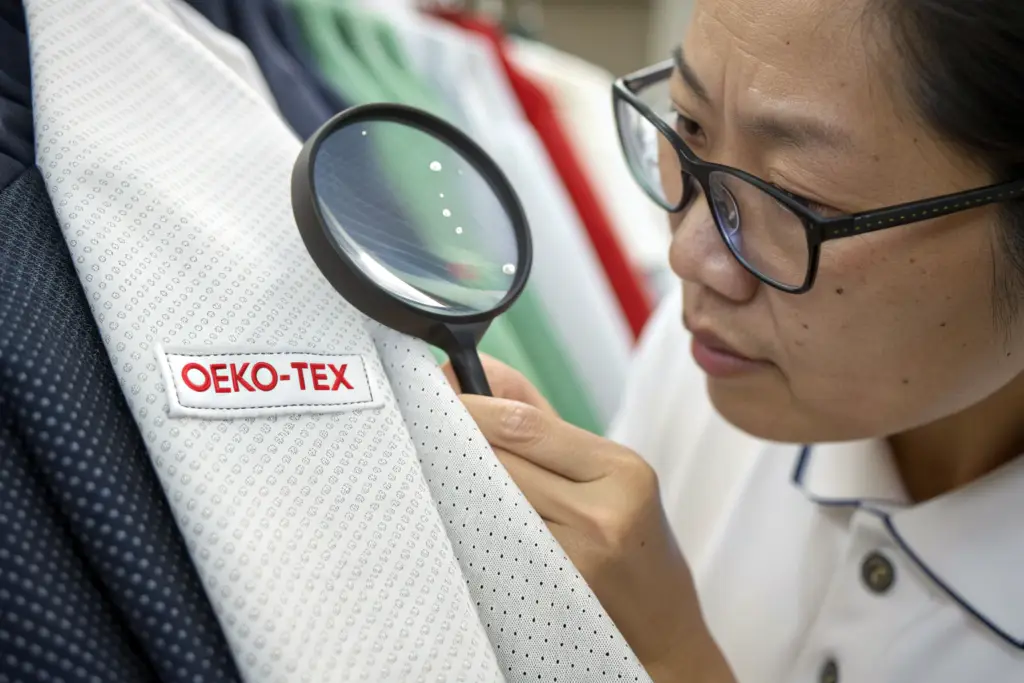
The impact is most significant on performance fabrics common in golf shirts. The updated STANDARD 100 standard has expanded its list of regulated substances to over 350 individual chemicals. For golf apparel, which relies on moisture-wicking, stretch, and UV protection, this affects the dyes, finishing agents, and polymer coatings used. You can no longer assume last year's approved fabric mill is compliant this year. You must request new test reports and verify that the mill's chemical management system is up to date. A fabric that passed in 2024 might fail in 2025 under the new, stricter limits for substances like aromatic amines from certain azo dyes or residues of pesticides.
What Specific Substances Are Now More Strictly Regulated?
The 2025 update places a sharp focus on per- and polyfluoroalkyl substances (PFAS), often used for durable water repellency (DWR) in golf windbreakers and some performance layers. While OEKO-TEX has regulated PFAS for years, the new limits are drastically lower. This pushes manufacturers towards PFAS-free alternatives, such as wax-based or dendrimer-based water repellents. Furthermore, new entries include specific allergenic disperse dyes and stricter controls on heavy metals like antimony, which can be present in polyester fibers. For example, we recently had to reformulate the finishing process for a line of men's golf polos for a Texas-based brand when our pre-test showed antimony levels near the new threshold. By working with our yarn supplier to adjust the catalyst, we secured certification ahead of production.
This shift requires proactive communication with your fabric supplier. Don't just ask for a certificate; ask for a detailed chemical inventory or a test report against the 2025 standard. It's an extra step that builds long-term reliability.
How Can Brands Verify Recycled Material Compliance?
Sustainability is a major selling point for modern golf brands. Using recycled polyester from PET bottles is popular. The 2025 OEKO-TEX update adds specific due diligence requirements for recycled materials. The standard now demands evidence tracing the recycled content and ensuring it is free from harmful contaminants that can be concentrated during the recycling process.
| Verification Requirement | Action for Brands | Potential Risk if Ignored |
|---|---|---|
| Material Traceability | Obtain supplier declarations on post-consumer or post-industrial content percentage. | Greenwashing claims, certification failure. |
| Contaminant Screening | Ensure supplier conducts enhanced testing for heavy metals and residual dyes. | Presence of regulated substances above new limits. |
| Documentation Chain | Collect and archive all certificates from recycler to yarn spinner to fabric mill. | Inability to prove compliance during brand audits. |
Last fall, we partnered with Shanghai Fumao to develop a golf apparel capsule collection for a eco-conscious brand. Our key challenge was ensuring the recycled polyester met the upcoming standards. We implemented a batch-testing protocol with our material partners, which not only secured OEKO-TEX certification but also provided a compelling story for the brand's marketing. Choosing a manufacturer with strong quality control systems is essential for navigating this aspect.
Why is Due Diligence Now a Core Part of OEKO-TEX Certification?
The 2025 updates move OEKO-TEX beyond just product testing. They formally integrate corporate due diligence into the certification framework, aligning with global trends like the German Supply Chain Act. This means your factory's social and environmental management practices are now part of the assessment. For a brand owner, this reduces risk across your entire supply chain.
This change addresses a common pain point: suppliers occasionally falsify certificates. The enhanced due diligence requires on-site audits and assessments of the manufacturer's processes for chemical management, wastewater treatment, and worker safety. It looks at the system, not just a single sample. Therefore, when you choose a manufacturing partner like Shanghai Fumao, you are not just buying their production capacity; you are leveraging their verified management systems to protect your brand.

What Does On-Site Audit Entail for Apparel Factories?
The due diligence component includes an evaluation of the factory's environmental and social practices. For apparel factories, this covers key areas like proper storage and handling of chemicals, training records for workers on safety procedures, and documentation of wastewater treatment. The auditor will check if the factory has a restricted substances list (RSL) and a manufacturing restricted substances list (MRSL) in place and how it ensures compliance through its supply chain management.
For instance, in our factory, we instituted a digital chemical inventory system last year. Every chemical entering our warehouse is logged, and its safety data sheet is checked against our RSL. This system was praised during a recent audit and directly contributed to a smoother recertification process. This level of internal control is what prevents the "falsified certificate" issue many buyers fear.
How Does This Build Stronger Brand-Retailer Trust?
For brand owners and distributors, this shift is ultimately beneficial. It provides a more holistic verification of your supplier. When you can tell your retail partners that your products are made in an OEKO-TEX certified facility that also passed due diligence audits, you are offering more than a safe product—you are offering a responsible partnership. This becomes a powerful tool in negotiations with large retailers who have their own stringent corporate social responsibility mandates. It turns compliance from a cost into a competitive advantage, ensuring reliable delivery of products that meet the highest ethical standards.
What Steps Ensure Seamless Certification for New Golf Apparel Designs?
Innovation in golf apparel shouldn't be stalled by compliance worries. With a structured approach from the design phase, you can integrate the new requirements seamlessly. The key is to treat certification as a design parameter, not a final inspection. This proactive mindset prevents last-minute surprises and delayed shipments.
Start by incorporating the OEKO-TEX STANDARD 100 requirement list into your tech pack. Specify approved fabric types, trims, and accessory suppliers from the beginning. For example, insist that all zippers, buttons, and even sewing threads come from OEKO-TEX certified sources. A common mistake is focusing only on the main fabric and neglecting small components, which can cause a whole garment to fail.

How to Integrate Compliance from the Tech Pack Stage?
Your technical package should have a dedicated section for compliance requirements. List the exact OEKO-TEX standard (e.g., STANDARD 100 by OEKO-TEX, 2025 version) and reference your internal RSL. Require your manufacturer to submit test reports for all proposed materials before bulk production begins. We call this a "pre-test" protocol. Last season, for a new line of moisture-wicking golf skirts, this process identified an issue with the elastic waistband's dye. We had time to source an alternative from a certified supplier, avoiding a major delay. This level of detailed product development planning is what separates reliable partners from the rest.
Engage your manufacturer early in the sourcing raw materials phase. A full-package manufacturer with in-house expertise can guide you toward compliant and cost-effective material choices, ensuring competitive pricing without sacrificing standards.
What is the Pre-Testing Protocol and Why is it Crucial?
Pre-testing involves sending sample components—fabric, prints, trims, and accessories—to an accredited lab for testing against the target standard. While it incurs a small upfront cost, it is insignificant compared to the risk of a failed audit on a full production batch. The protocol should be a non-negotiable clause in your manufacturing agreement. It gives you scientific data to make informed decisions and provides a clear paper trail for your own due diligence. This practice is a cornerstone of our quality assurance process at Shanghai Fumao, and it directly addresses the buyer pain point of uncertainty about final product safety.
How to Adapt Your Sourcing Strategy for Ongoing OEKO-TEX Compliance?
The 2025 updates are not a one-time event. Regulatory standards will continue to evolve. Building a flexible, informed sourcing strategy is your best defense against future disruptions. This means looking beyond price and evaluating suppliers on their ability to adapt and their commitment to continuous improvement in chemical management.
Your sourcing criteria must now include questions about the supplier's certification status, their internal testing capabilities, and their chemical management system. Do they have a dedicated compliance officer? How do they vet their own sub-suppliers? The goal is to form partnerships with factories that view compliance as integral to their business, not as a bureaucratic hurdle.

What Are the Key Questions for Your Potential Manufacturing Partner?
When evaluating a new apparel manufacturer, move the conversation beyond MOQ and price. Ask these specific questions:
- "Are your production facilities OEKO-TEX STeP certified?" (This covers the due diligence aspect).
- "Can you provide a valid STANDARD 100 certificate for a similar product, issued in 2025?"
- "What is your process for managing chemical inputs from your suppliers?"
- "Do you offer pre-testing services, and who are your partnered labs?"
- "How do you handle a situation if a material fails a compliance test?"
The answers will reveal the supplier's depth of understanding. A strong partner will have clear, documented procedures. For example, we at Fumao Clothing maintain active STeP certification for our facility and can guide clients through the entire certified sourcing process, from creative and technical design support to final lab testing.
Why is Long-Term Partnership More Valuable Than Ever?
Chasing the lowest cost per unit with unknown factories is a high-risk strategy in this new environment. A delayed shipment due to certification issues can cause you to miss a critical selling season. A long-term partnership with a reliable manufacturer creates efficiency. Over time, they learn your quality expectations and compliance needs. They can anticipate issues and suggest solutions. Their stability becomes your stability. This reliable partnership is the ultimate solution to the core pain points of inefficient communication and shipment delays. It transforms sourcing from a transactional headache into a strategic advantage for your brand.
Conclusion
The 2025 OEKO-TEX updates represent a significant step forward for textile safety and sustainability. For golf apparel brands, navigating these changes successfully requires a shift from reactive testing to proactive, integrated compliance management. The key takeaways are clear: focus on stricter substance lists, especially PFAS; embrace the new due diligence requirements; integrate compliance from the earliest design stages; and build sourcing strategies around transparent, adaptable manufacturing partners. By mastering these areas, you turn regulatory compliance into a powerful brand asset that resonates with retailers and conscious consumers alike.
Success in today's market depends on a trusted manufacturing partner who understands these complexities inside and out. If you're looking to develop or source your next line of OEKO-TEX certified golf apparel with a partner committed to transparency, quality, and on-time delivery, let's discuss your project. Contact our Business Director Elaine at Shanghai Fumao to explore how we can become your reliable extension in Asia. Reach her at elaine@fumaoclothing.com to start a conversation about bringing your compliant, high-quality golf apparel visions to life.