In today’s hygiene-conscious apparel world, anti-bacterial fabrics have transitioned from niche to necessity. For us at Fumao Clothing, this transformation has reshaped how we approach material sourcing, product development, and brand collaboration with U.S. and European buyers.
Recent innovations in anti-bacterial fabrics now combine biotech, sustainability, and long-term efficacy to meet market demand in healthcare, activewear, kidswear, and everyday apparel. U.S. apparel brands increasingly want garments that not only look good—but also protect.
As a Chinese factory serving bulk clothing buyers worldwide, I’ve seen firsthand which technologies work in real production and which certifications buyers are now demanding. Here’s a deep dive into the most critical innovations we’re helping brands bring to market.
What Are the Most Advanced Anti-Bacterial Technologies?
Anti-bacterial doesn’t just mean coating fabric with chemicals anymore. Today’s innovations are embedded deep into fiber or engineered with natural alternatives.
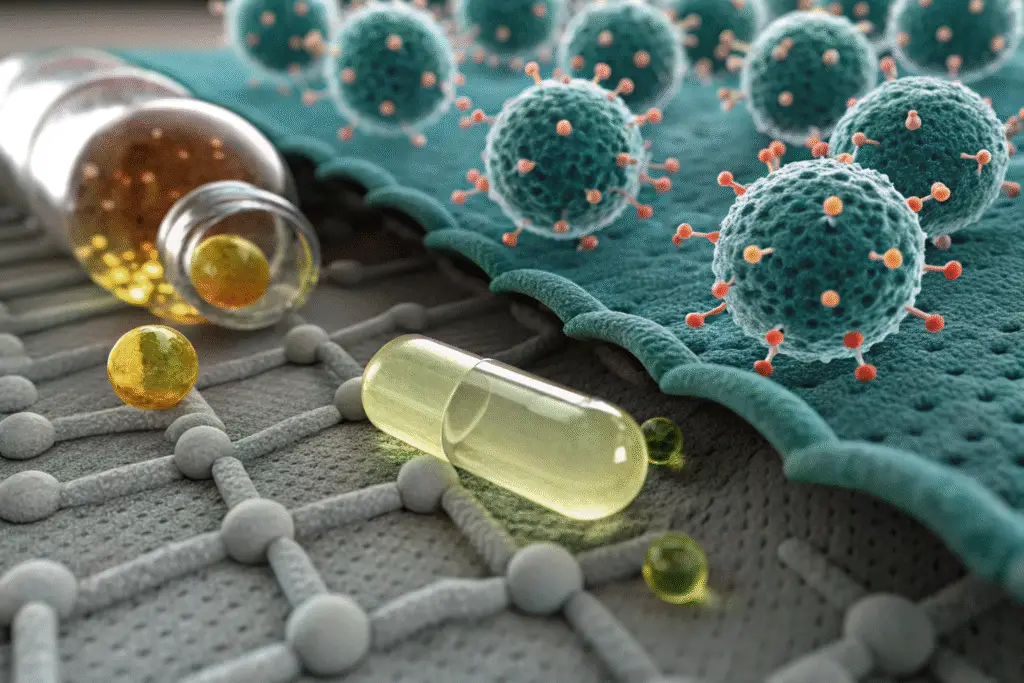
Silver ion infusion, zinc oxide nanoparticles, and bio-based finishes are leading anti-bacterial technologies in 2025.
Why Is Silver Ion Technology Still So Widely Used?
Silver ions have been proven to disrupt bacterial cell walls and reduce growth. They're now used in everything from hospital scrubs to performance underwear. What’s changed is how they’re applied.
Our partners use melt-spun yarns with silver nanoparticles that last through 50+ washes. We also partner with certified suppliers using Silvadur™ by DuPont, which has OEKO-TEX approval for skin safety.
Are Natural Anti-Bacterial Finishes Gaining Popularity?
Yes—especially among wellness-focused and children’s brands. Peppermint oil, chitosan (from crab shells), and even green tea extracts are now being used to treat fabrics naturally.
We tested a peppermint-finished jersey that retained over 80% effectiveness after 20 washes. These are ideal for eco-collections where customers prioritize low-chemical clothing.
Which Certifications Prove Anti-Bacterial Performance?
Claims are easy to make—but not all fabrics perform. For American buyers, test-backed certifications are critical for marketing and liability protection.
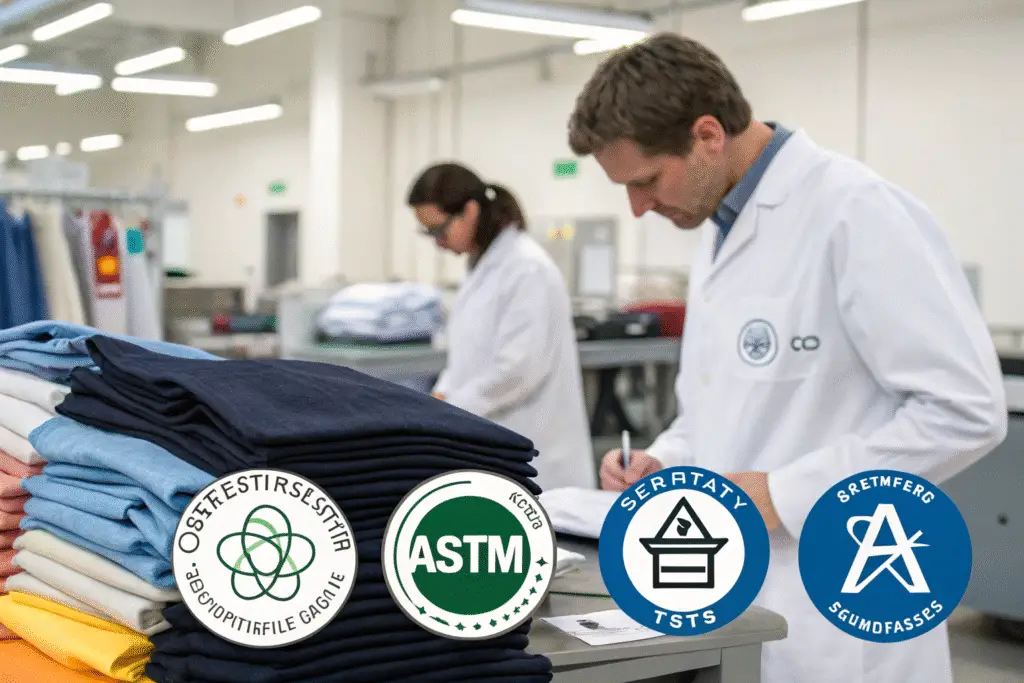
The most recognized certifications include ISO 20743 for anti-bacterial fabrics, OEKO-TEX Standard 100, and EPA or BPR compliance for treated textiles.
What Does ISO 20743 Actually Test?
ISO 20743 is a standardized lab method for measuring antibacterial activity on textiles. It evaluates how much bacteria grows on treated versus untreated fabric over 24 hours.
Many U.S. distributors request third-party ISO 20743 test reports to confirm performance before bulk ordering. We partner with SGS and Intertek to generate certified reports on demand.
Does OEKO-TEX Guarantee Anti-Bacterial Safety?
OEKO-TEX Standard 100 doesn't confirm performance—but it certifies the safety of anti-bacterial treatments. If a fabric is OEKO-TEX certified, it means harmful residues from the finish aren’t present on the textile.
For U.S. babywear and kidswear clients, OEKO-TEX is non-negotiable. We align all finishing and dyeing steps with Hohenstein Labs to meet this standard globally.
How Are Anti-Bacterial Fabrics Used in Real Clothing?
Anti-bacterial textiles aren’t just medical anymore. They’re now common in everyday apparel categories thanks to performance-focused brands and post-pandemic hygiene awareness.
Top applications include activewear, children’s clothing, intimate apparel, and uniforms. Each use case requires specific balance between function and comfort.

Why Is Activewear a Key Use Case?
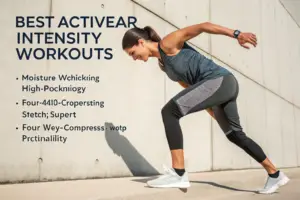
Sweat = bacteria. That’s why athletic clothing is one of the biggest growth areas for anti-bacterial fabrics. Brands like Lululemon and Outdoor Voices use treated synthetics to reduce odor and skin irritation.
In our factory, we produce anti-bacterial poly-spandex blends with 3% elastane stretch and silver-embedded fibers. These are especially popular among U.S. gymwear wholesalers.
Are Kidswear Buyers Demanding This Now?
Absolutely. Parents are seeking extra hygiene assurance—especially for school uniforms and babywear. We’ve developed soft anti-bacterial interlock knits with plant-based finishes for one of our U.S. boutique clients targeting daycares.
These fabrics must also pass CPSIA and OEKO-TEX for children’s safety, which we ensure through test batching at Bureau Veritas. It’s a growing niche and shows no signs of slowing.
How to Source Anti-Bacterial Fabrics from China?
For American and European buyers, sourcing the right anti-bacterial textile can feel overwhelming. Many factories overstate their capabilities or lack proper certification.
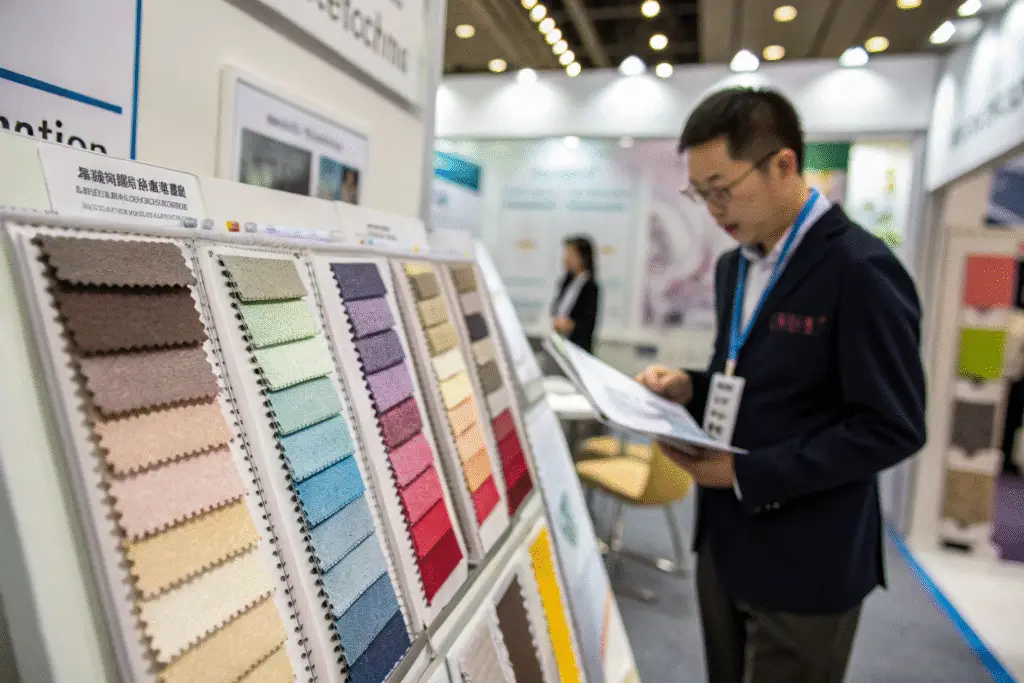
We recommend verifying lab reports, visiting key trade shows, and working with suppliers offering in-house testing and flexible MOQ on treated fabrics.
Which Questions Should You Ask the Supplier?
Start with:
- What anti-bacterial agent is used and how is it applied?
- Can you show an ISO 20743 test report?
- Is the treatment permanent or wash-off?
Also ask if the factory uses their own dye house or outsources. At Fumao, we do all finishing in-house, which helps us maintain control and transparency for our U.S. buyers. For tips, we often refer new clients to the China Textile Info Center or Canton Fair sourcing list.
How Can Small Brands Order Treated Fabrics?
MOQ used to be a hurdle, but now many mills—including ours—offer small-lot runs of anti-bacterial jerseys, twills, and mesh under 300 meters per color.
We also offer treated fabric swatchbooks for clients to test before ordering. Most of our U.S. buyers begin with 3-5 SKUs and expand based on customer feedback. We recommend using platforms like TexIndex to compare supplier quotes and specs.
Conclusion
Anti-bacterial fabric innovation is evolving fast—blending science, fashion, and functionality into one value-driven solution. Whether it’s silver ions in gymwear, peppermint oil in baby rompers, or certified uniforms for hospitals, the opportunities for apparel brands are expanding.
At Fumao Clothing, we help clients navigate this fast-changing landscape by offering certified fabrics, flexible MOQ, lab-backed performance, and integrated garment production. Ready to explore anti-bacterial lines with us? Reach out to our Business Director Elaine at elaine@fumaoclothing.com—let’s make your next collection cleaner, smarter, and future-ready.