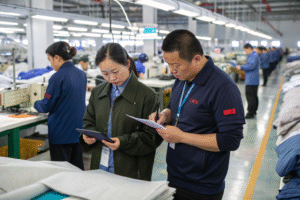
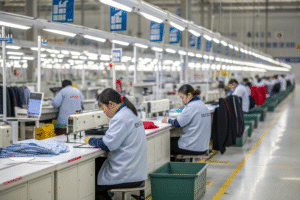
Labor costs have long been a key reason why global brands source apparel from China. But in recent years, rising wages, new employment laws, and workforce shifts have quietly transformed the pricing landscape.
Labor cost trends in China now play a major role in shaping garment production pricing. Brands must adapt to regional wage increases, factory automation, labor migration, and regulatory updates to maintain margins.
As a factory owner, I’ve helped buyers like Ron—from midsized U.S. labels—navigate how labor dynamics impact garment unit pricing. Let me show you what’s driving the changes and how to adjust your sourcing strategy for long-term success.
Why Are Labor Costs Rising in China’s Garment Industry?
For over two decades, China’s low labor costs powered its dominance in global fashion manufacturing. But those days are fading fast.
Wage increases across major garment hubs like Guangdong and Zhejiang, along with stricter labor laws and shrinking young workforce participation, have driven labor costs steadily upward.

What Are the Regional Minimum Wage Increases?
China’s minimum wage varies by province and city tier. In 2024-2025:
- Shenzhen: RMB 2,360/month
- Hangzhou: RMB 2,200/month
- Dongguan: RMB 2,150/month
That’s a 7–10% increase from just two years ago. Some local governments also introduced new overtime and shift pay policies.
For official updates, see the China Labour Bulletin wage database or Trading Economics China Wage Tracker.
How Do Labor Law Updates Affect Costs?
In addition to minimum wage, factories now must:
- Offer formal contracts to all workers
- Pay into five social insurance categories
- Limit overtime hours (max 36/month legally)
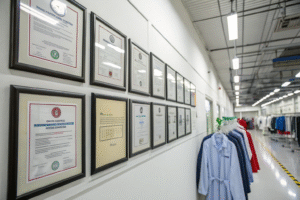
- Maintain safety training and compliance documentation
These requirements, outlined by China’s Labor Contract Law and monitored by AmCham China reports, increase indirect labor costs by 20–30% depending on the factory's region and scale.
How Is Worker Demographics Changing in China?
Once a magnet for young migrant workers from rural areas, China’s garment sector now faces a demographic crisis. Fewer young people want to work on sewing lines, especially in Tier-1 cities where tech or gig jobs offer higher pay and better lifestyle.
As the labor pool ages and shrinks, factories are forced to increase wages to attract and retain staff—especially during peak seasons.

Why Are Young Workers Avoiding Garment Jobs?
Younger generations in China prefer:
- Flexible gig work (e.g., food delivery)
- Urban service jobs
- E-commerce entrepreneurship
According to Statista and SCMP labor reports, the manufacturing sector is no longer appealing due to long hours, repetitive work, and low social status.
What Does the Aging Workforce Mean for Buyers?
With many workers over 40, productivity becomes more variable and training new recruits takes longer. Plus, aging workers demand more stable benefits—adding to the total cost per worker.
Studies from ILO and China Daily show factories in cities like Ningbo and Suzhou offering free dormitories or meal plans to retain skilled aging labor.
What Is the Role of Automation and Efficiency in Labor Costs?
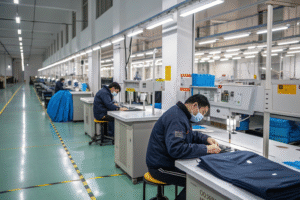
Rather than replace labor outright, many Chinese garment factories are turning to partial automation to boost productivity and reduce labor reliance.
From digital cutting tables to semi-automated folding machines, these upgrades allow factories to maintain output with fewer staff—stabilizing prices even as base wages rise.

Which Tasks Are Being Automated in Garment Production?
Most automations focus on:
- Fabric cutting (CAM systems)
- Logo printing and sublimation
- Pocket/fly stitching
- Folding and tagging
Companies like Richpeace and Jack Sewing Machine Co. lead the way in Chinese sewing tech. These systems cut labor needs by 15–30% per line depending on complexity.
How Can Brands Benefit from Factory Automation?
For buyers like Ron, factories with automation provide:
- Faster lead times (15–20% shorter)
- More consistent quality
- Stable pricing over multiple seasons
You can filter by automation capability using sourcing platforms like Fibre2Fashion or ask for a factory’s automation percentage during audits (ideally 20–40% for mid-scale garment suppliers).
How Can Buyers Adjust Sourcing Strategy Around Labor Costs?
While labor costs in China have risen, they’re still competitive compared to advanced economies—and often better balanced than low-wage but less reliable alternatives.
Smart buyers manage pricing shifts by optimizing design complexity, building seasonal flexibility, or shifting basic orders to satellite regions within China or Southeast Asia.

Should You Shift Orders to Cheaper Countries?
Vietnam, India, and Bangladesh offer cheaper labor but have trade-offs:
| Country | Labor Cost ($/hour) | Lead Time | Stability |
|---|---|---|---|
| China | $3.50–$4.00 | 30–45 days | Very High |
| Vietnam | $2.20–$2.80 | 40–60 days | High |
| Bangladesh | $1.20–$1.80 | 60–75 days | Medium-High |
| India | $1.50–$2.50 | 45–65 days | Medium |
(Source: McKinsey Global Fashion Index)
Shifting isn’t always cheaper in the long run—especially when considering DDP, QC, or IP risks. Check comparative quotes at Tridge or Common Objective.
How Can You Work With Chinese Factories to Manage Labor Costs?
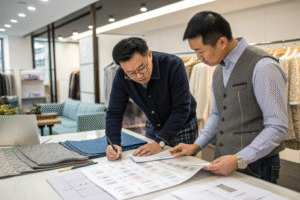
- Co-develop simplified product lines
- Use longer-term PO agreements for pricing protection
- Ask for transparent cost breakdowns (labor, fabric, trim)
- Negotiate flexible MOQ-based pricing
Platforms like Alibaba RFQ or GlobalSources allow you to request detailed labor rate data from factories. At Fumao, we even offer Excel-based breakdowns per unit for full transparency.
Conclusion
Labor costs in China are no longer the rock-bottom figures they once were. But with automation, skilled workers, and robust infrastructure, China still provides incredible value—especially for brands looking for quality, reliability, and scalable production.
As labor trends evolve, smart buyers adjust—not just by chasing the lowest wages but by forming deeper, more collaborative relationships with their suppliers. You don’t need to switch countries—you need to switch strategies.
At Fumao Clothing, we guide clients through these shifts, offering solutions that balance labor cost with speed, compliance, and quality. If you're ready to secure pricing in a fast-changing market, we're here to help you build a better path forward.