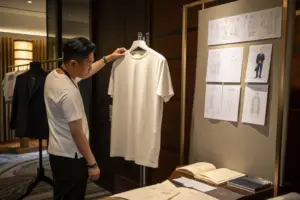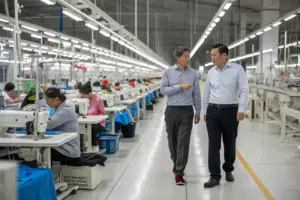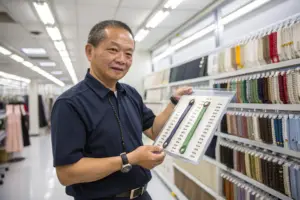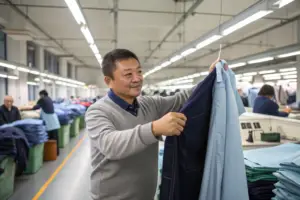
A productive apparel development meeting sets the stage for smooth production. This meeting transforms creative ideas into actionable plans. Without proper preparation, meetings often lead to misunderstandings. Delays and costly errors can result from poor planning. How can you ensure your next meeting succeeds?
Successful apparel meetings require clear vision and concrete documents. These documents translate concepts into technical specifications. Good preparation bridges design and manufacturing. It ensures alignment on quality, cost, and timeline from the start.
Unprepared meetings pose serious risks for brands. I have witnessed projects stall for weeks. Missing information causes significant delays. Proper documents show professionalism to your factory. They build trust and enable efficient collaboration. Let us explore the essential documents you need.
What should be in a tech pack for clothing manufacturing?
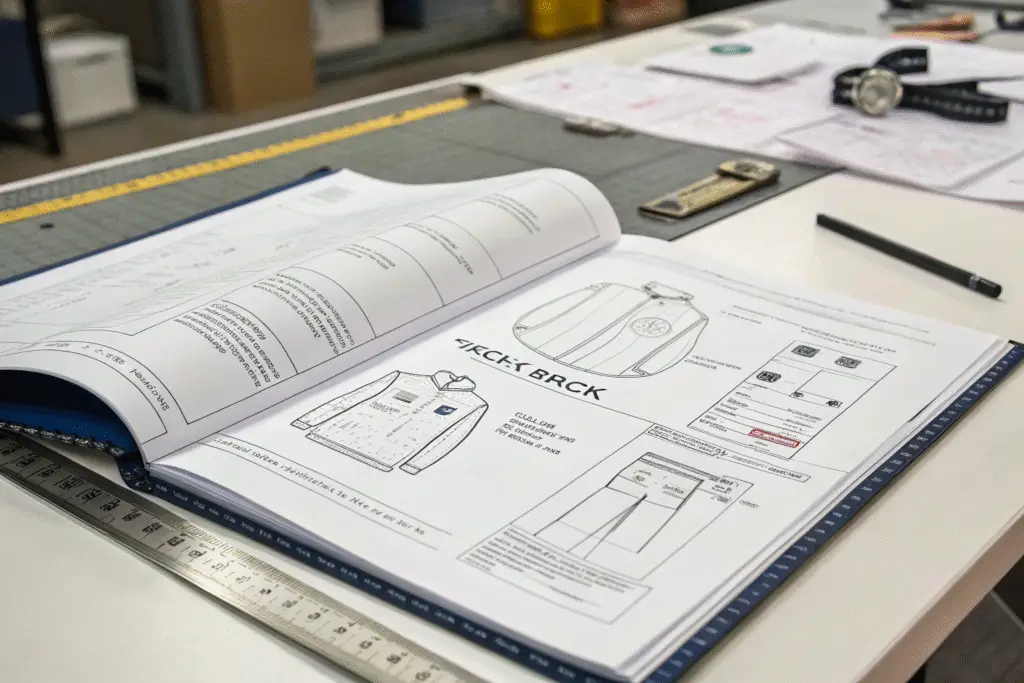
A tech pack serves as the most important document in apparel production. It acts as the blueprint guiding every manufacturing step. Without detailed tech packs, manufacturers must interpret vague instructions. This often leads to garments that miss the design vision. A comprehensive tech pack aligns brand expectations with factory capabilities.
Consider your tech pack as the garment's instruction manual. It should provide absolute clarity to skilled manufacturers. Good tech packs prevent unnecessary clarification questions. They enable accurate cost calculations from factories. Consistent quality across production runs depends on good tech packs.
Why is a detailed spec sheet non-negotiable?
The spec sheet forms the core of any tech pack. It contains precise measurements for each garment size. Manufacturers use these measurements to create patterns. They also establish grading rules for different sizes. Unclear spec sheets frequently cause fit problems. For example, incorrect sleeve length specifications can ruin entire garment batches. Clear garment specification sheets ensure perfect fit outcomes. Detailed spread needle loom knitting specifications prevent manufacturing defects in sweaters.
How do design flats and BOM prevent errors?
Design flats provide technical drawings of garments. They show front, back, and side views clearly. These drawings illustrate specific design details thoroughly. Seam placements, pockets, and zippers appear in precise detail. Design flats create common visual language for teams. The Bill of Materials (BOM) lists all garment components completely. This list includes main fabrics and all trims. Buttons, zippers, and labels must appear in the BOM. Detailed BOMs prevent sourcing mistakes during production. Specifying YKK zippers by part number guarantees component quality.
How to prepare effective fabric and trim samples for review?
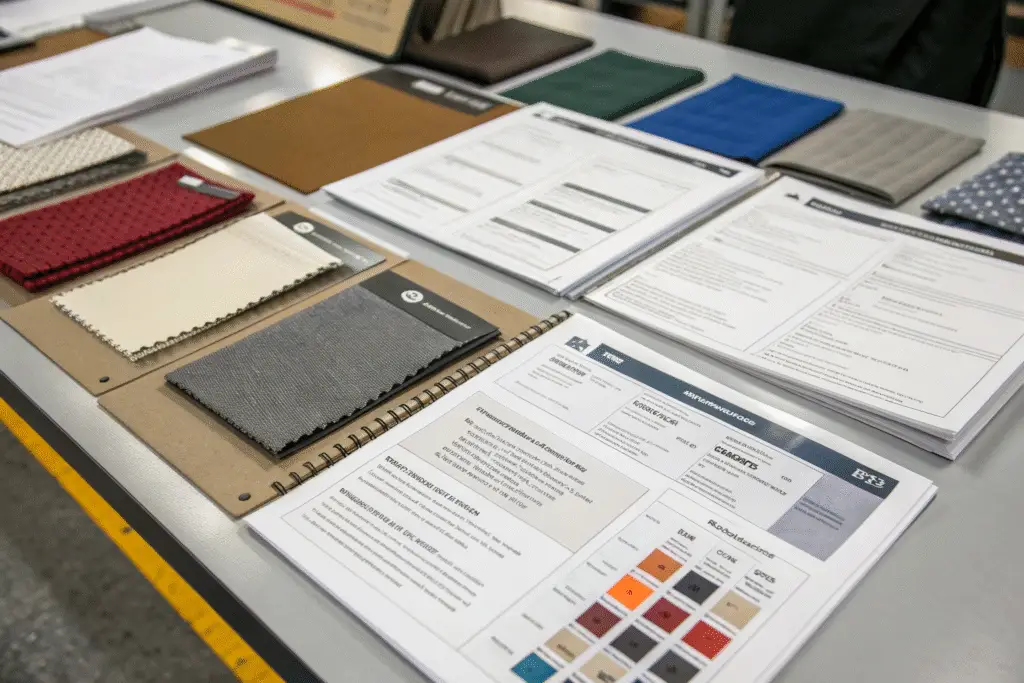
Documents provide crucial information for manufacturing. However, tactile material experience remains equally important. Physical samples make design concepts tangible. They enable assessment of hand-feel, weight, and drape. Digital images cannot replace physical sample evaluation.
Physical samples accelerate decision-making in meetings. They allow immediate feedback on material suitability. This step proves crucial for quality-focused brands. Surprises during bulk production can be avoided this way.
What is the role of a fabric performance test report?
Fabric performance test reports provide objective quality data. This information becomes critical for U.S. market exports. Consumers in this market have high quality expectations. Certified laboratories conduct these performance tests. They examine pilling, colorfastness, and shrinkage thoroughly. Tensile strength testing ensures fabric durability. Test reports build confidence in material selections. They prove fabrics can withstand washing and wearing. Factories understanding AATCC test methods ensure standard compliance.
Why should you create a physical trim library?
A trim library collects approved non-fabric components. Buttons, zippers, and labels belong in this library. Physical samples prevent color miscommunication. Digital color representations often mislead manufacturers. Physical thread samples provide unambiguous color reference. Maintaining libraries with manufacturers ensures seasonal consistency. Future order development becomes faster with established libraries. Sourcing reliable plastic poly bags from certified suppliers protects products.
Why is a reference sample critical for new apparel production?
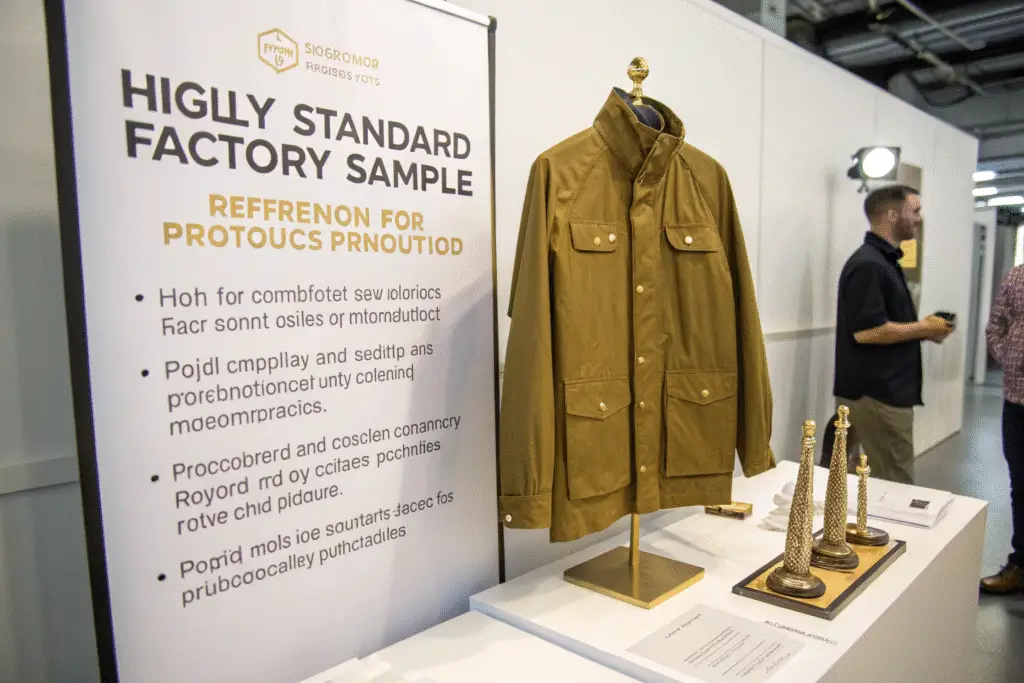
A reference sample embodies your quality standards practically. It sets the "gold standard" for factory production. This sample could be a previous successful style. Competitor garments sometimes serve as good references. Proto samples from tech packs also work well. Reference samples provide physical benchmarks for evaluation.
I consistently advise clients to bring reference samples. These samples instantly clarify quality expectations. Stitching quality and finishing details become clearly communicable. Abstract descriptions transform into concrete targets through samples.
How does a fit sample de-risk bulk production?
Fit samples represent the first tech pack prototypes. Their primary purpose involves fit evaluation on live models. Meeting discussions should cover fit sample performance. Drape, seam placement, and comfort require thorough assessment. This stage offers the best opportunity for fit correction. Bulk fabric cutting investments should follow fit approval. Structured garment fit review processes ensure final product success.
What should you look for in a production quality benchmark?
Reference samples establish production quality benchmarks. You should identify specific liked and disliked details. Clear instructions about stitch density expectations help manufacturers. Preferred printing techniques should be explicitly stated. Direct feedback provides invaluable guidance to factories. Sample dissection reveals construction techniques effectively. Early benchmark establishment ensures mass production consistency. Following AAFA compliance guidance maintains quality standards.
What commercial documents ensure a smooth manufacturing process?
Creative and technical alignment requires commercial finalization. Clear commercial documents protect both brands and factories. These documents ensure transparent professional relationships. They outline financial and logistical responsibilities clearly. Later disputes can be prevented through proper documentation.
Document review during meetings streamlines processes greatly. Final sample approval can trigger immediate production. Contract negotiation delays are avoided this way.

Why is a detailed purchase order (PO) a must-have?
A Purchase Order (PO) is your formal factory instruction document. It should list every ordered item completely. Style numbers and color codes must appear clearly. Size breakdowns require precise specification. Agreed prices per unit should be documented. Detailed POs prevent order discrepancies effectively. They ensure factories produce exactly what brands want. Correct quantities and prices are maintained through POs. Commercial order foundation relies on proper POs. Effective apparel inventory management depends on accurate POs.
How does a proforma invoice clarify financial terms?
Factories provide Proforma Invoices (PIs) responding to POs. PIs outline all involved costs comprehensively. Goods costs and freight charges appear separately. Additional fees should be clearly itemized. Payment terms require explicit statement in PIs. Common terms include 30% deposits with orders. Balance payments typically occur before shipment. PI review prevents hidden cost surprises. Incoterms 2020 clarification is crucial in PIs. FOB or EXW terms define shipping responsibilities clearly. Customs clearance and insurance responsibilities are established. Final landed cost calculation requires this clarity. Smooth logistics processes depend on clear Incoterms.
Conclusion
Successful apparel meetings prioritize structure over spontaneity. Comprehensive tech packs provide essential foundations. Physical samples ensure material understanding. Reference samples establish quality benchmarks. Commercial documents finalize business agreements. This preparation demonstrates professional commitment. It builds manufacturer trust effectively. Production risks are significantly reduced through preparation. Common goals are established for all parties. High-quality apparel production requires this alignment. Efficient timelines are maintained through proper preparation.
Are you ready to implement these principles practically? Fumao Clothing values preparation matching yours. Let us transform your apparel vision into reality. Clear communication and precision guide our processes. Contact our Business Director Elaine for successful partnerships. Reach her at elaine@fumaoclothing.com for project discussions.