When sourcing apparel for international markets, understanding the distinct characteristics of men's and women's wear is crucial. Many brand owners, especially those new to the industry, assume that sourcing both categories involves similar factory processes, fabric choices, and cost structures. This assumption often leads to shipment delays, fit complaints, or inflated development costs.
The reality is that men’s and women’s wear differ significantly in design complexity, fit tolerance, fabric behavior, MOQ requirements, and even factory specialization. A factory that excels in men's structured shirts may not be the best partner for women's asymmetrical tops or pleated skirts.
In this article, I’ll break down the essential sourcing differences between the two categories. This knowledge helps importers and private label brands like yours choose the right partners, ask smarter questions, and reduce costly mistakes.
How Does Design Complexity Differ Between Categories?
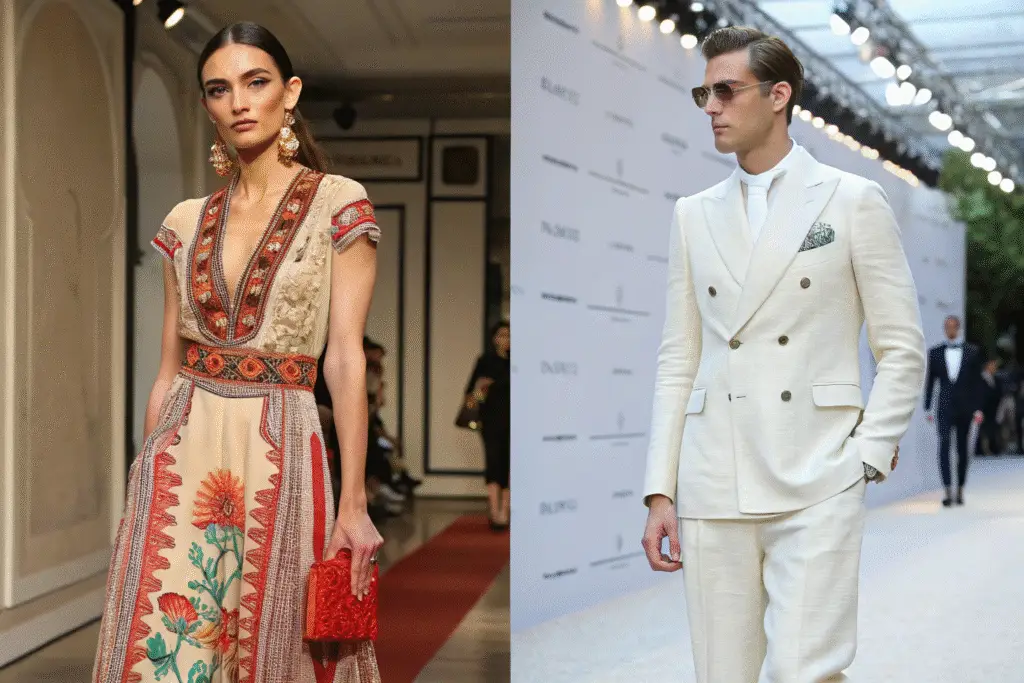
When it comes to design, women’s wear typically features more styling elements, fabric manipulation, and seasonal variation. Men’s fashion leans toward functional and timeless cuts with minimal styling.
This affects everything from sampling timelines to how factories allocate sewing specialists. Women’s wear sourcing often involves higher risk and longer lead times due to complexity.
Why Is Women’s Wear Often More Labor-Intensive?
Women’s garments usually feature ruffles, darts, gathers, pleats, cut-outs, and asymmetrical hemlines. These require more stitching steps and pressing operations. One women's blouse might involve 35–40 sewing steps, compared to 20–25 for a men’s shirt.
Tools like Techpacker help structure tech packs with detailed sewing operations, especially for intricate women’s styles.
Are Men’s Styles Easier to Scale?
Yes. Men’s basic tees, polos, trousers, and jackets often maintain the same pattern with seasonal fabric changes. This repeatability makes them ideal for automation, laser cutting, and standard sewing machines—allowing you to scale cost-efficiently.
When sourcing, consider factories using Gerber Technology or Lectra CAD systems for repeat patterns.
How Do Fit Standards and Sizing Expectations Vary?
Fit is one of the top return reasons in eCommerce fashion. Understanding how men’s and women’s garments are sized and adjusted is key to minimizing returns and customer complaints.
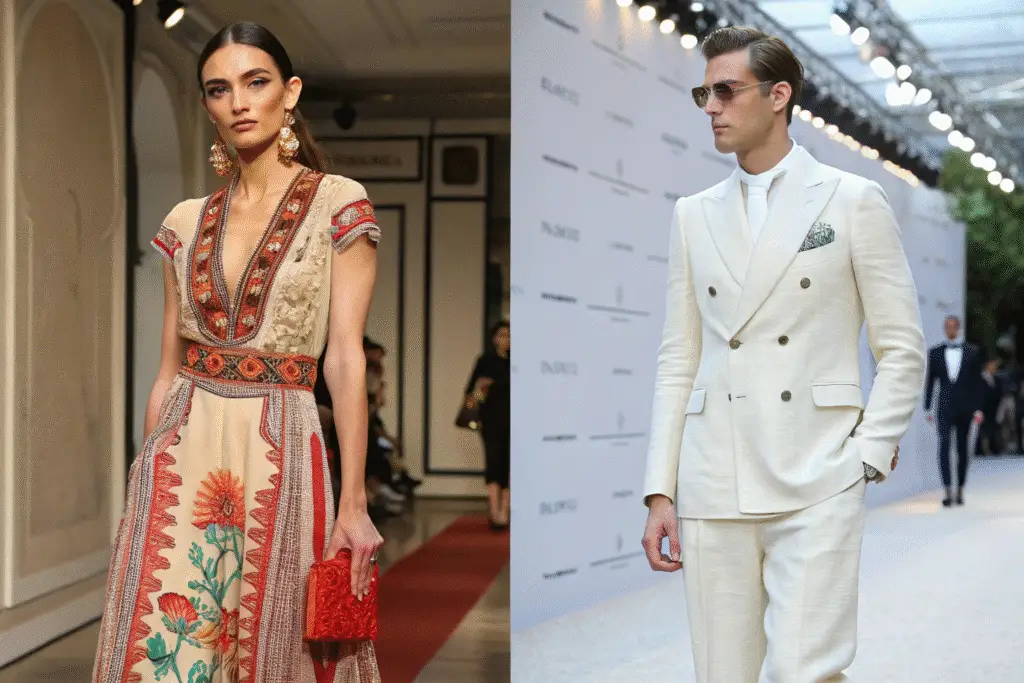
Men’s wear follows standardized body blocks and tolerances, while women’s fit involves more shaping and region-specific preferences.
How Is Men’s Fit More Standardized?
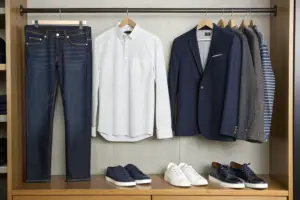
Men’s sizing typically follows numeric chest-waist-hip ratios. A size L across U.S., EU, and China standards doesn’t vary drastically. Factories use standard blocks and apply size grading consistently.
According to Size Stream, this allows brands to minimize sampling rounds and reduce fit risk for male consumers.
Why Does Women’s Fit Require More Sampling?
Women’s wear must account for:
- Bust cup variations
- Hip curve shaping
- Style fit (tight vs. flowy)
- Cultural modesty
A single fit model can’t represent all customers. This is why brands sourcing women’s clothing should budget for 1–2 extra fit revisions and ensure their factory provides a qualified in-house patternmaker.
How Do Fabric Choices Affect Sourcing Strategy?
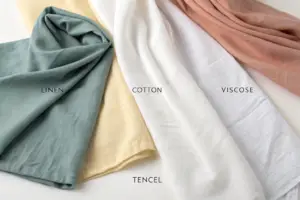
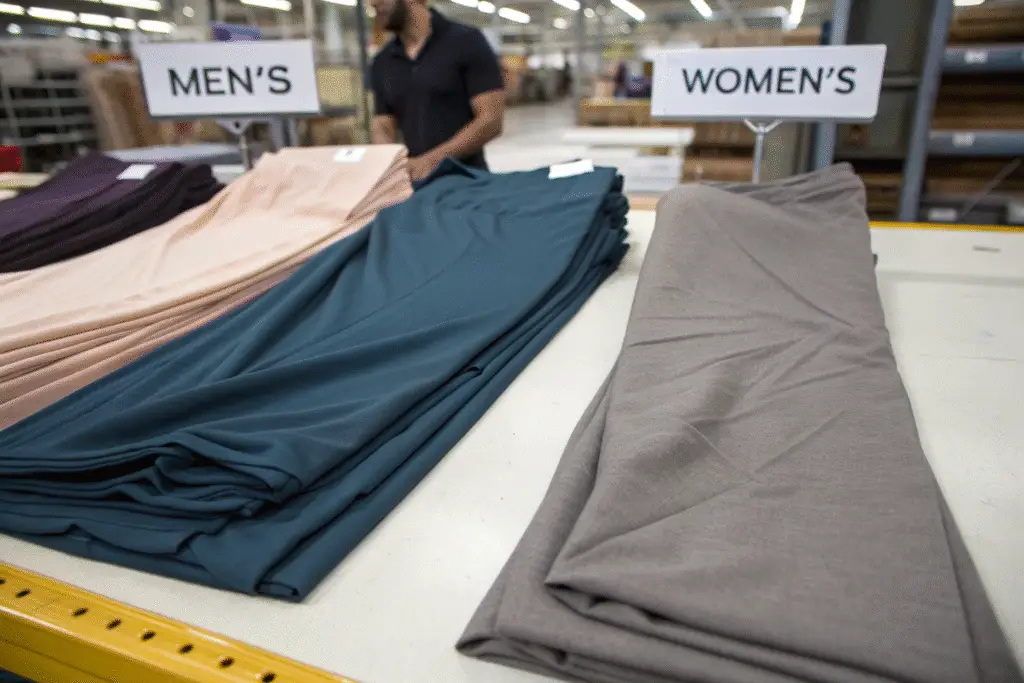
The fabrics used for men's and women's garments differ in drape, opacity, stretch, and seam performance. This influences not only cost but also factory capability.
Women’s wear uses more delicate, stretch-prone, and dye-sensitive fabrics—requiring experienced handling and specialty sewing equipment.
Which Fabrics Are More Common in Men’s Wear?
- Cotton twill and poplin (shirts, chinos)
- Denim (jeans, jackets)
- Wool blends (suiting)
- Performance polyesters (sportswear)
These fabrics are generally stable, easy to cut, and require fewer handling issues. They suit high-speed production.
Use certified suppliers like Testex OEKO-TEX to verify fabric safety for both categories.
What About Women’s Wear?
Women’s lines use:
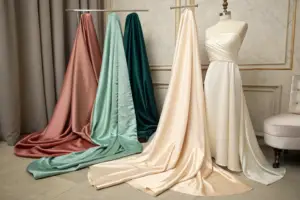
- Chiffon, silk, satin (blouses, dresses)
- Spandex/viscose blends (bodycon styles)
- Lace and embroidered mesh (eveningwear)
These materials need fabric tension control, roll alignment systems, and manual sewing in key areas. Factories that produce lingerie or modestwear are typically better equipped.
Ask your factory if they have walking-foot machines or auto-thread trimmers—features common in women’s wear production lines.
How Do MOQs and Production Timelines Differ?
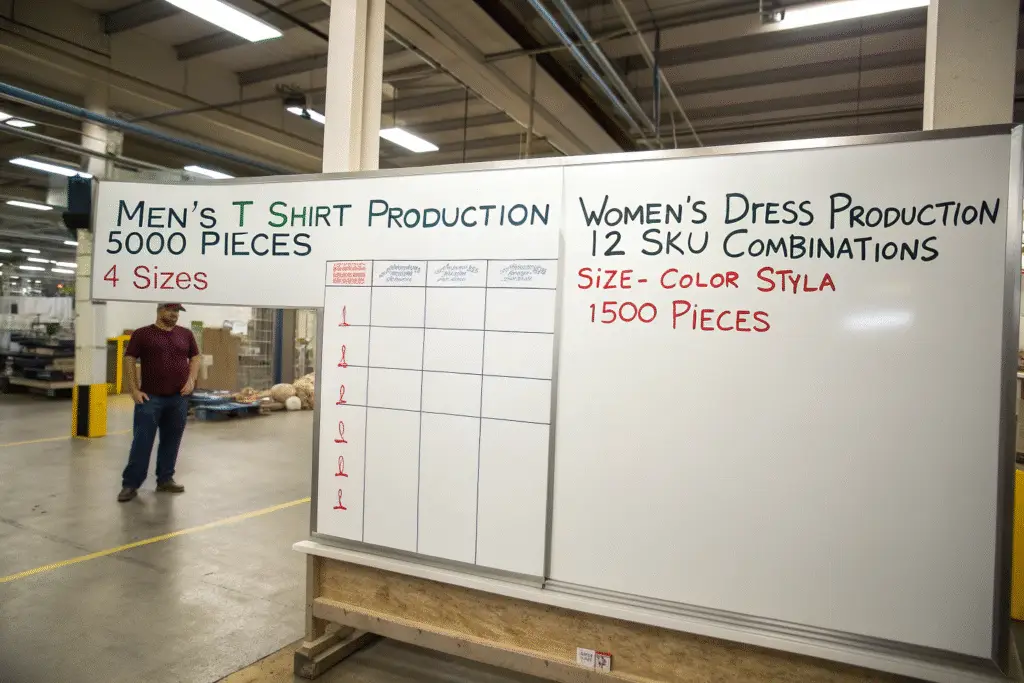
MOQs (Minimum Order Quantities) vary greatly depending on SKU complexity and raw material requirements. Women’s wear often requires more fabric colors, trims, and small-batch flexibility.
Men’s sourcing typically involves higher per-style volume. Women’s sourcing prioritizes style diversity and smaller runs.
Are Men’s Garment Orders More Bulk-Oriented?
Yes. Many buyers place 3000–10,000 pcs per men’s SKU, especially for basics. This allows you to negotiate lower unit prices and cut lead times by 20% with experienced factories.
Tools like IncoDocs help manage FOB/DDP breakdowns and compare cost-per-unit across volumes.
Why Are Women’s MOQs More Fragmented?
Because fashion trends shift quickly, women’s styles change seasonally. Buyers often order:
- Multiple silhouettes (wrap, A-line, pleated)
- More colors (seasonal palettes)
- More sizes (XS–XXL + Plus)
At Fumao, we offer modular MOQ: 300 pcs/style spread across 3–5 colors. This helps buyers like Ron test more styles per season.
Conclusion
Sourcing men’s and women’s wear isn’t a one-size-fits-all process. From design to fit, fabric to volume, each category demands a different factory setup and sourcing strategy. Understanding these differences empowers you to ask better questions, select the right suppliers, and ultimately improve sell-through and profit margins.
At Fumao Clothing, we operate dedicated production lines for both men's and women's apparel, with patternmakers, merchandisers, and QC teams who understand the unique needs of each. Whether you're launching a minimalist menswear brand or a trend-driven women’s collection, we can help bring your vision to life with consistency and care.
Contact our Business Director Elaine at elaine@fumaoclothing.com to get your quote or request development samples.