Trims and elastics may be small in size, but they have a big impact on the look, fit, and durability of apparel. For sourcing professionals, selecting the right trims means balancing cost, performance, and design intent—especially when scaling for bulk production.
Key considerations when sourcing elastic and trims include material composition, durability standards, compatibility with garment design, sourcing MOQs, regulatory compliance, and logistical efficiency.
At Fumao, we help global clients integrate elastics, cords, tapes, and trims directly into their garment POs—saving both time and quality risks from multi-vendor coordination.
1. What Types of Elastics and Trims Are Common in Apparel?
The world of elastics and trims is vast, spanning both functional and aesthetic purposes. Choosing the correct type for your product ensures comfort, visual cohesion, and resilience over time.
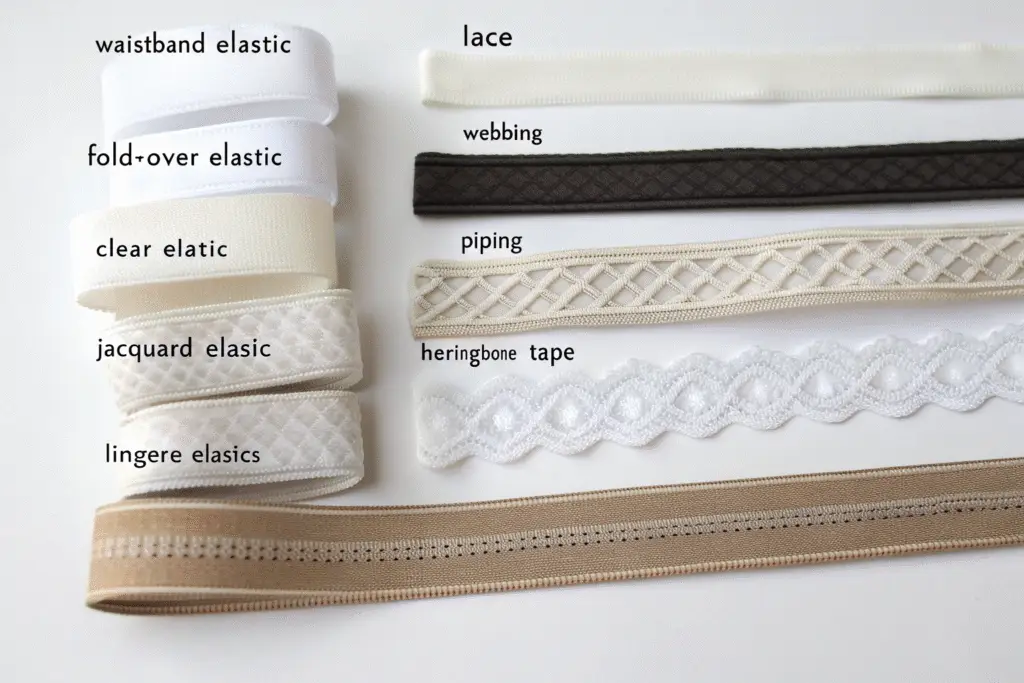
Common Elastic Categories:
- Knitted elastic – soft, ideal for underwear or kidswear.
- Woven elastic – firmer and more stable, good for waistbands.
- Braided elastic – lightweight and inexpensive, best for casing applications.
- Jacquard elastic – custom branded elastics with logos.
- Clear elastic – used to stabilize shoulder seams and sheer garments.
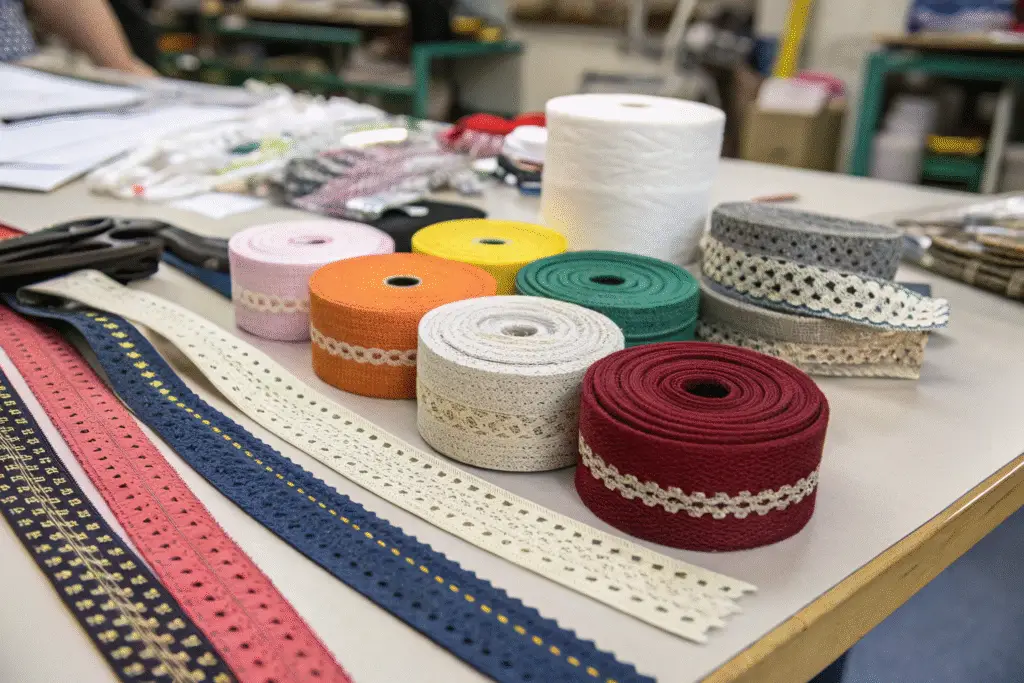
Common Trim Types:
- Lace trims – decorative, used in lingerie and resortwear.
- Binding tapes – finish armholes, necklines, and seams.
- Piping – adds structure or contrast to seams.
- Twill and herringbone tape – sturdy, used for drawstrings or labels.
Learn more about types of trims in garment production or elastic differences here.
2. What Performance Qualities Should You Look For?
When sourcing for performance apparel or high-wear zones (waistbands, cuffs, straps), not all elastics perform equally. Material stretch, recovery, resistance to washing, and softness all matter.
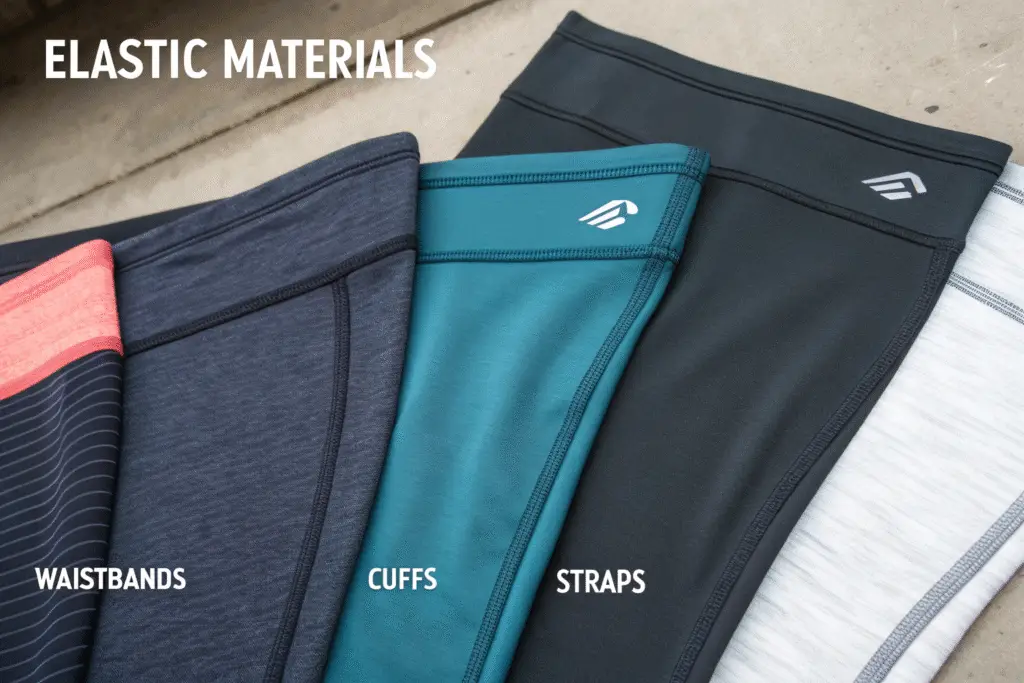
Key Technical Metrics:
- Stretch ratio & recovery – Should return to shape after repeated wear.
- Shrinkage resistance – Must maintain length post-laundering.
- Colorfastness – Should not bleed or fade after wash cycles.
- Elastic modulus – Measures tension; affects comfort and fit.
Elastics should be tested under ISO or AATCC standards. We provide third-party elastic testing for bulk orders above 5,000 meters.
Explore how to test elastic performance.
3. What Design and Compatibility Issues Matter?
Sourcing trims isn't just about buying what looks good—it's about ensuring the right fit between garment fabric, construction method, and target audience.
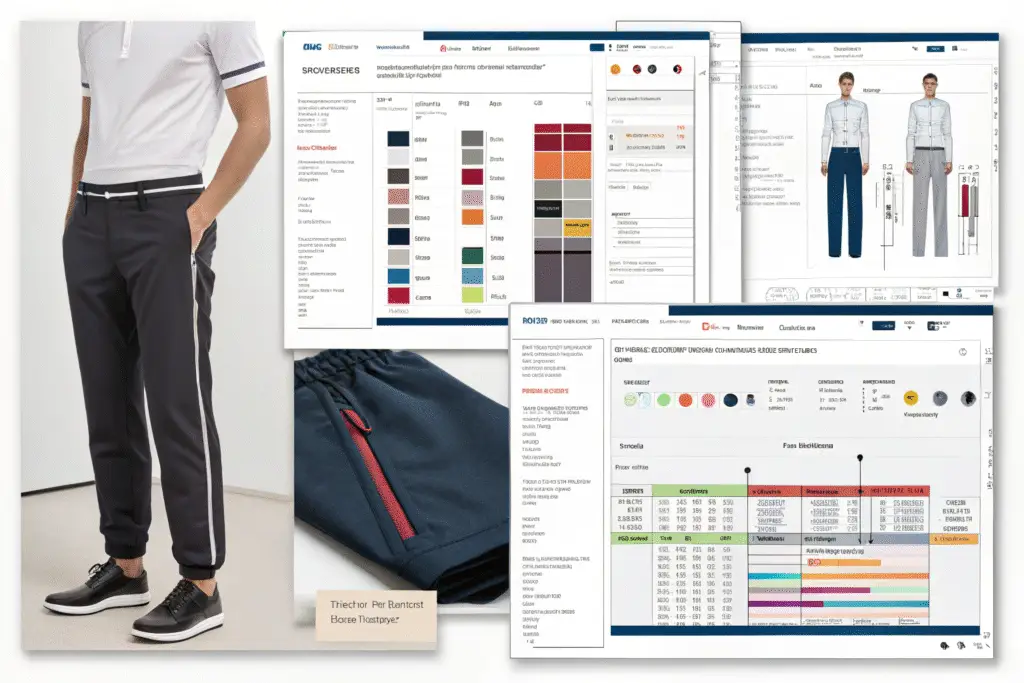
Design Considerations:
- Width and tension – Waistbands need firmer elastics than sleeve hems.
- Color matching – Dye-to-match options may require lab dips or Pantone references.
- Sewing compatibility – Soft elastics need flatlock or zigzag stitching to prevent edge curling.
- Transparency – Use clear elastics for sheer/mesh fabrics to avoid visible lines.
Many brands now incorporate decorative elastics as statement pieces in activewear or intimates. Our in-house sourcing team works with over 40 elastic mills to match aesthetic and technical goals.
For color accuracy, refer to Pantone color tools.
4. What Are the MOQ and Lead Time Realities?
Elastic and trim suppliers often have different MOQs from garment factories, which can complicate production timelines. Understanding this helps avoid last-minute stock issues.
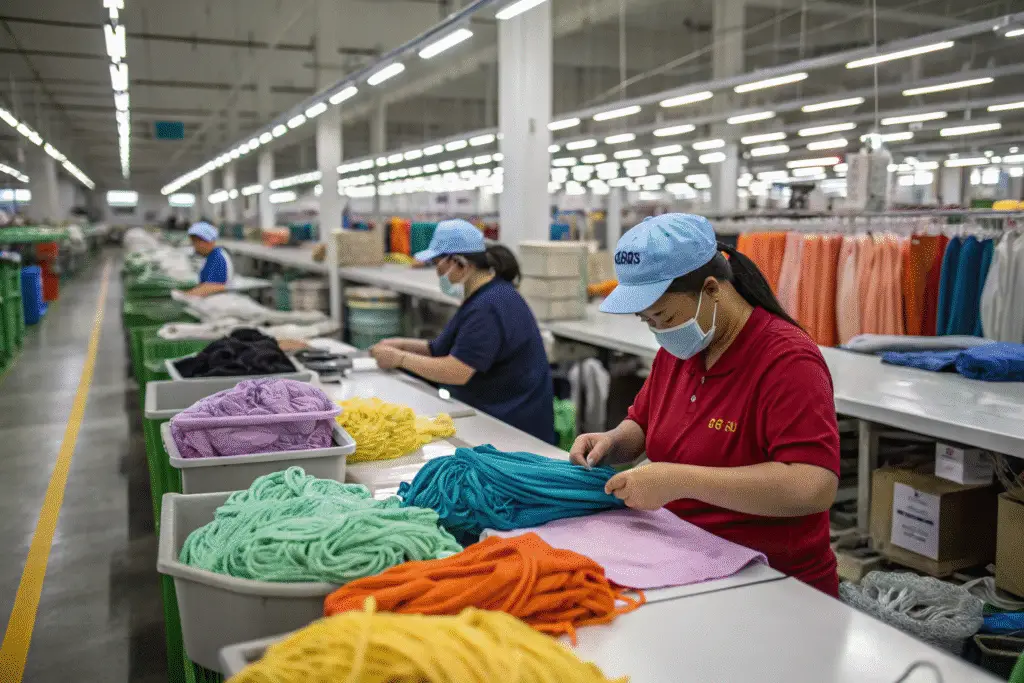
MOQ Guidelines (Typical Ranges):
- Solid color elastics: 1,000–3,000 meters
- Jacquard elastics: 5,000–10,000 meters (custom logo setup required)
- Lace trims: 800–1,500 meters
- Binding tapes: 2,000+ meters
At Fumao, we offer stock trims for fast sampling and support smaller MOQs by consolidating across clients or combining with garment POs.
Learn about small MOQ elastic sourcing or custom elastic production timelines.
5. What Certifications and Compliance Rules Apply?
For children’s wear, lingerie, and eco-conscious brands, compliance is not optional. Trims and elastics must meet safety and sustainability criteria.
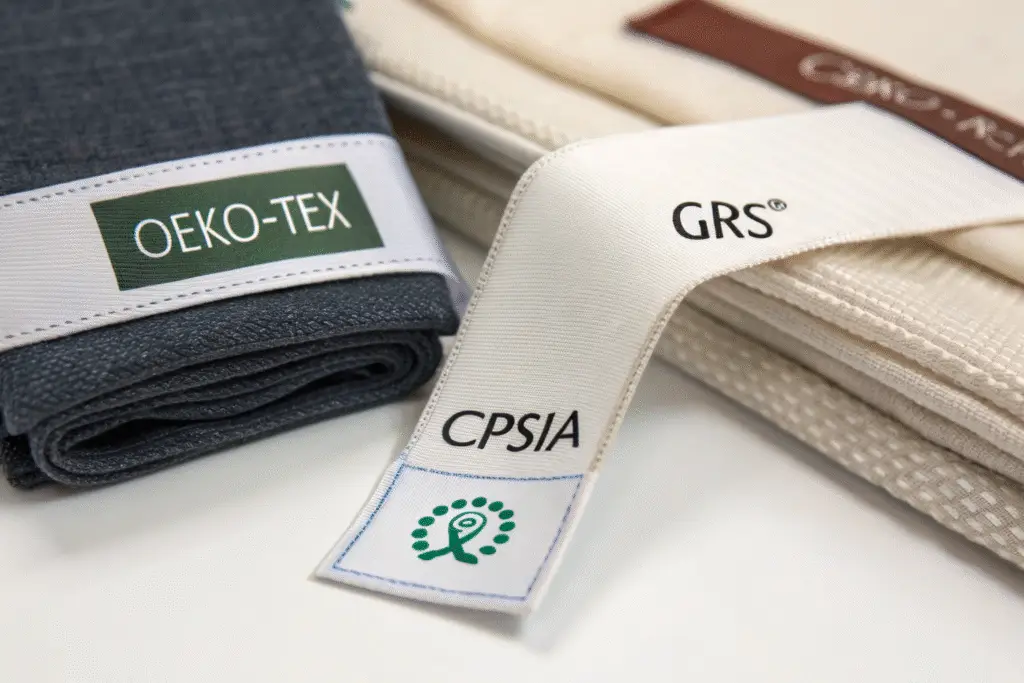
Common Certifications:
- OEKO-TEX Standard 100 – Confirms materials are free from harmful chemicals.
- GRS (Global Recycled Standard) – Applies to recycled polyester/spandex blends.
- CPSIA – For U.S. children’s wear: trims must pass lead/phthalate limits.
- REACH – EU chemical safety compliance.
We only work with OEKO-TEX certified trim suppliers and can supply GRS elastics for sustainable lines. All kidswear trims undergo third-party testing before shipping.
View the full OEKO-TEX supplier database or learn about CPSIA garment regulations.
Conclusion
Sourcing elastic and trims isn’t just an accessory task—it’s central to product quality, fit, and customer satisfaction. By focusing on fabric compatibility, technical resilience, color accuracy, and regulatory compliance, you can avoid production headaches and elevate your garments from basic to premium.
At Fumao Clothing, we offer integrated elastic and trim sourcing with full BOM visibility, flexible MOQ support, and reliable compliance documentation. Whether you're creating activewear, loungewear, lingerie, or kidswear, we help you stitch the perfect finish. Contact our sourcing team today at elaine@fumaoclothing.com to get swatches or request your next quote.