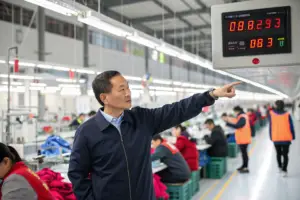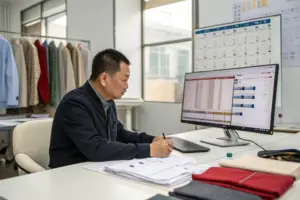
I remember a client from Miami who thought he had found the deal of a lifetime. He found a factory in Vietnam that quoted him 30% less than any other supplier. He was thrilled. He placed a large order for his new summer collection. He calculated his profits. He was going to make a fortune. Then the reality hit. The fabric arrived and it was not what he ordered. The quality was poor. He had to pay for a third-party inspection to reject half the shipment. The factory demanded extra money for "unexpected" costs. The shipping was delayed, and he had to pay for air freight to meet his deadlines. By the time the goods arrived, his "deal" had cost him more than if he had paid the higher price upfront. He learned the hardest lesson in our industry: the cheapest quote is often the most expensive.
The hidden costs in garment manufacturing are the expenses that are not included in the initial factory quote but appear throughout the production and delivery process. They include sampling and development fees, raw material fluctuations, quality control failures, shipping surcharges, customs duties, currency exchange losses, and the cost of delays. These hidden costs can add 20% to 50% or more to your total landed cost if you do not plan for them.
As the owner of Shanghai Fumao, I have spent decades in this industry. I have seen every hidden cost imaginable. I have also helped countless clients avoid them. The key is transparency and planning. You need to know what questions to ask and what to look for. Let me share the hidden costs I have seen, so you can protect your margins and your sanity.
What Development And Sampling Costs Are Often Overlooked?
Many new brands think the budget starts when production begins. It does not. The money starts flowing the moment you have an idea. Development and sampling costs can add up quickly. And they are often not included in the per-unit price the factory quotes you. If you do not plan for them, you will be over budget before you cut a single piece of fabric for your bulk order.
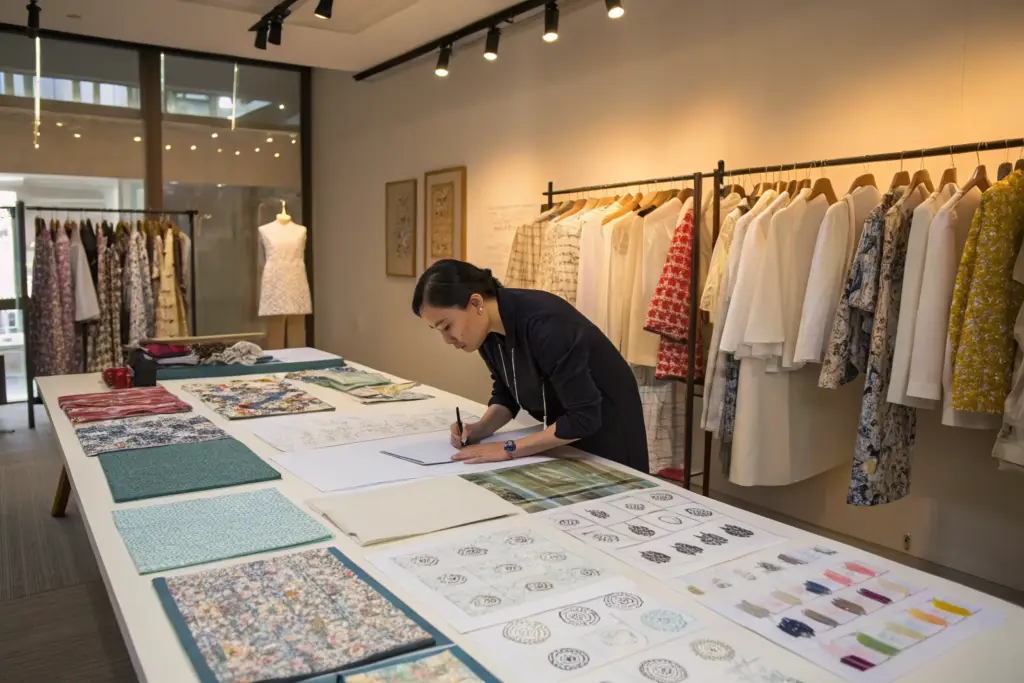
Hidden development costs include pattern making, grading, and multiple rounds of samples. A typical development process might require a proto sample, a fit sample, and a pre-production sample. Each round has costs for materials and labor. If you make changes, you pay for new samples. If you work with multiple factories to compare, you pay for samples from each. These costs can easily reach thousands of dollars per style.
How Many Sample Rounds Should I Really Budget For?
For a new, complex style, you should budget for at least three rounds of samples. Round one is the proto sample. It proves the concept and shows the silhouette. Round two is the fit sample. You test it on a real person and adjust the pattern. Round three is the pre-production sample. It is made with the actual production fabric and trims, on the actual production line, to ensure everything works. For simpler styles, you might do it in two rounds. But planning for three gives you a buffer. A client in Denver once tried to save money by approving a style after just one sample round. When the bulk order arrived, the fit was wrong. The fabric had behaved differently at scale. They had to remake the entire order at a huge loss. Now, they always budget for proper sampling. For guidance on the product development process, organizations like the Council of Fashion Designers of America (CFDA) offer resources for emerging designers.
What Are The Hidden Costs In Pattern Making And Grading?
Pattern making is a specialized skill. A pattern maker takes your design and creates the templates used to cut the fabric. Grading is the process of scaling that pattern up and down to create different sizes. These are professional services, and they cost money. A simple pattern might cost a few hundred dollars. A complex, multi-size pattern can cost over a thousand. These are one-time costs for each style. Once you have the pattern, you own it. You can use it for future orders. Some factories include pattern making in their sampling fee. Others charge it separately. Always ask for a clear breakdown. At Shanghai Fumao, we provide detailed quotes that include all development costs. We want our clients to know exactly what they are paying for. A client in Austin once assumed pattern making was included. When she got the invoice, she was shocked. Now, she always asks upfront. For more on the technical side of pattern making, resources from the Fashion Institute of Technology (FIT) or other design schools can be very educational.
How Do Raw Material Costs Create Hidden Expenses?
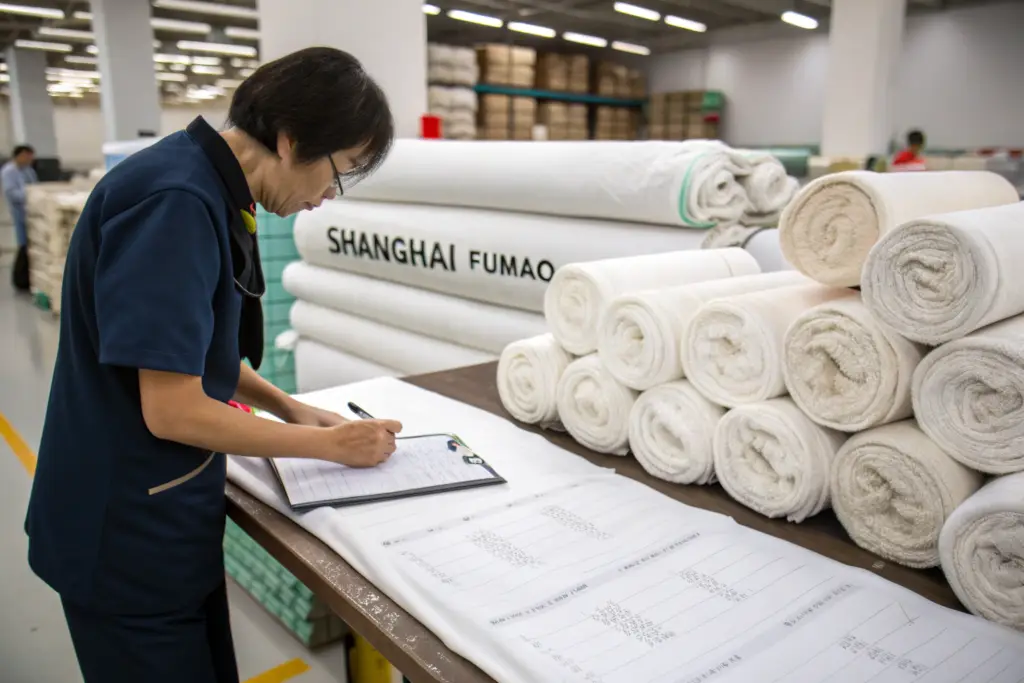
Fabric prices are not fixed. They change based on global commodity markets. Cotton prices can spike because of weather. Polyester prices move with oil prices. If you get a quote in January for a March production run, the fabric mill might charge a different price in March if the market has shifted. This is a real risk that many buyers do not consider.
Hidden material costs come from price fluctuations, minimum order quantities, and waste. Fabric prices can change between quote and order. Mills often have minimum order quantities that may be larger than you need, forcing you to buy excess. And cutting waste, which can be 5% to 10% or more, adds to your effective cost per garment if not accounted for.
How Do I Protect Myself From Fabric Price Increases?
One option is to book fabric early. We can place a provisional order with the mill at a fixed price, even if production is months away. This costs a small deposit, but it locks in your cost. Another option is to build a buffer into your budget. Assume material costs might rise by 5% to 10% and plan for it. A client in New York learned this the hard way. She got a quote for a cotton jersey program. By the time we were ready to order the fabric, cotton prices had jumped 15%. Her budget was blown. Now, she either books early or builds in a buffer. For tracking global commodity prices, resources like The World Bank's Pink Sheet provide monthly data on raw material prices, including cotton and other fibers.
What Is "Waste" And How Does It Affect My Cost?
Waste is the fabric that is left over after cutting the garment pieces. It is inevitable. The pattern pieces do not fit together perfectly on the fabric like a puzzle. There are gaps. The amount of waste depends on the fabric, the pattern, and the skill of the marker maker. A typical waste factor is 5% to 10%. But for complex patterns or striped fabrics that need matching, waste can be much higher. If you do not account for waste in your budget, you will underestimate your fabric needs. You will run out of fabric, and then you will have to pay for a rush reorder at a higher price. A client in Miami forgot to account for pattern matching on a striped fabric. The matching required extra fabric, and she ran out halfway through production. We had to rush order more fabric at a higher price, and she had to pay for air shipping to meet her deadline. Her profit margin disappeared. For fabric consumption calculators and guides, resources from Textile School can be very educational.
What Logistics And Shipping Surprises Should I Expect?
This is where many budgets fall apart. You get a great price from the factory, but you forget to account for everything that happens after the goods leave their loading dock. Shipping, insurance, duties, and trucking can add 20% to 40% to your total cost. And these costs are volatile. They can change dramatically between your quote and your shipment.
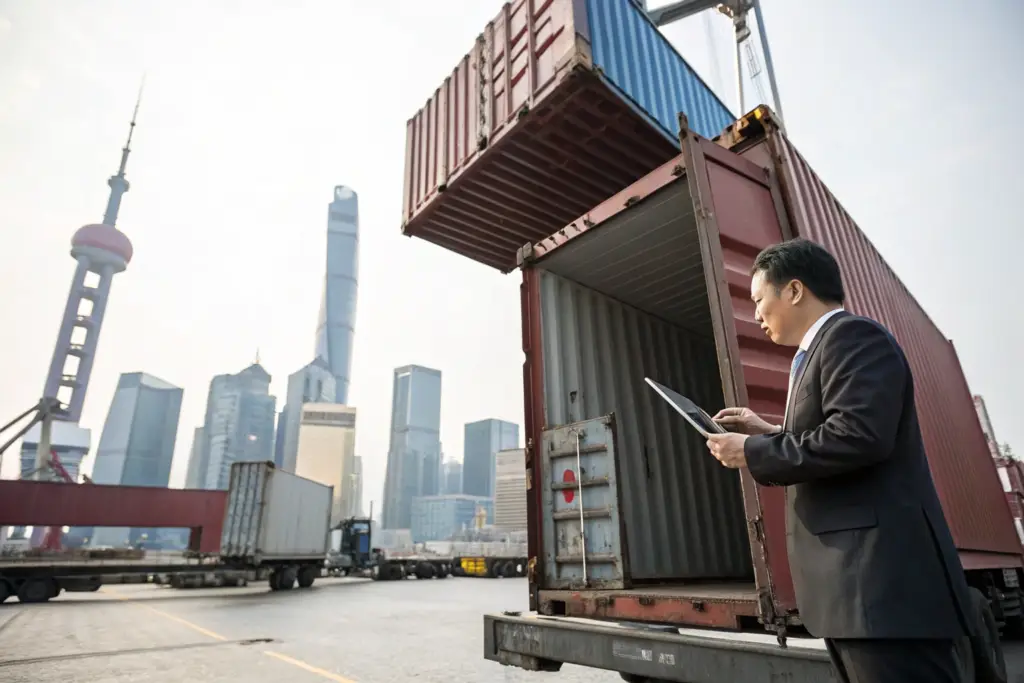
Hidden logistics costs include freight rate fluctuations, fuel surcharges, demurrage and detention fees, customs brokerage fees, and unexpected inspections. Freight rates can double or triple depending on global events. A container that cost $3,000 can suddenly cost $15,000. If your goods are held at the port, you pay daily fees. If your shipment is randomly selected for inspection, you pay for that too.
What Are Demurrage And Detention Fees?
Demurrage and detention are fees charged by shipping lines when cargo stays at the port or terminal longer than the free time allowed. Free time is usually a few days. If your goods arrive and you are not ready to pick them up, the clock starts ticking. The fees can be hundreds of dollars per day per container. These fees can add up fast. A client in Seattle had a shipment arrive, but her warehouse was not ready. She had a new facility and the shelving was delayed. The containers sat at the port for two weeks. The demurrage fees were over $5,000. She had not budgeted for that. Now, she always coordinates her delivery dates carefully. For more on demurrage and detention, the Federal Maritime Commission has resources and guidelines.
How Do I Budget For Volatile Shipping Rates?
The best way is to use DDP shipping. DDP stands for Delivered Duty Paid. It means the factory handles everything, including shipping, insurance, duties, and delivery to your door. You pay one price, and the goods arrive at your warehouse. The factory takes the risk of rate fluctuations. For budgeting, DDP is the simplest option. You have one number. No surprises. At Shanghai Fumao, we offer DDP to our U.S. clients. We have a logistics team that manages the entire process. A client in Boston told me, "I used to lie awake at night worrying about shipping costs. Now I just wait for the truck to arrive." If you handle your own shipping, you need to get quotes from freight forwarders and build in a buffer. For current freight rate data, resources like the Freightos Baltic Index provide real-time indices for container shipping rates.
What Quality Control Failures Cost You?
Quality control is not free. But the cost of poor quality is much higher. A bad shipment can destroy your brand reputation, cost you retail accounts, and leave you with worthless inventory. Many buyers do not budget for quality control. They assume the factory will get it right. That is a dangerous assumption.
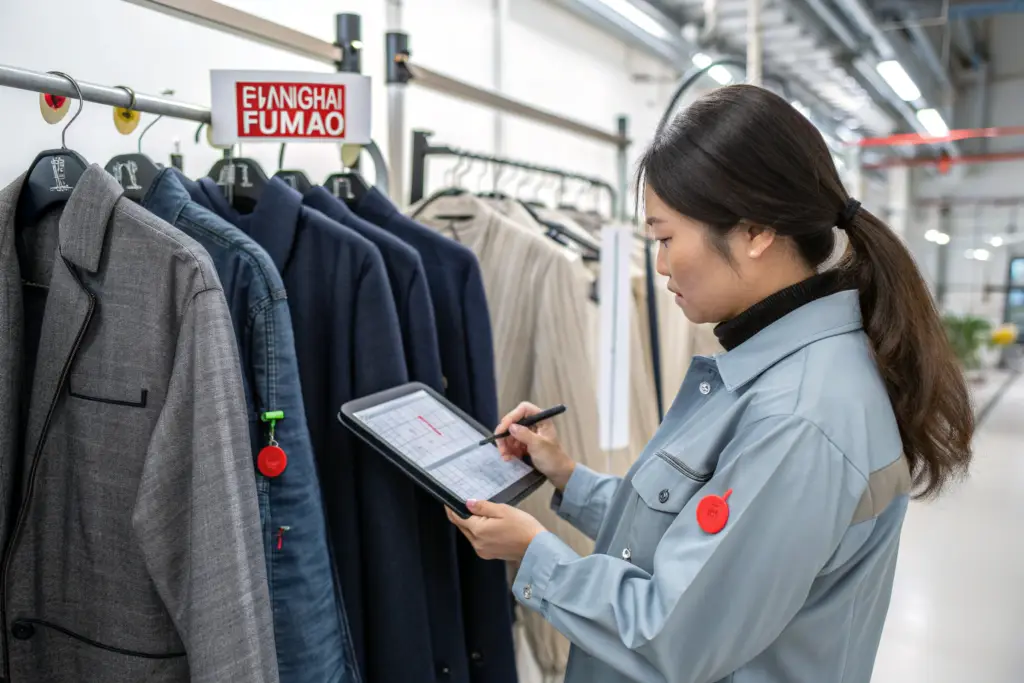
Hidden quality costs include the price of third-party inspections, the cost of rework, the cost of rejected goods, and the cost of returns and lost customers. A single inspection might cost a few hundred dollars. A rejected shipment can cost tens of thousands. Investing in quality control is the cheapest insurance you can buy.
What Is The Cost Of A Failed Inspection?
The direct cost is the price you paid for the goods. But the indirect costs are often larger. You have missed your sales window. You have lost the revenue. You may have to offer discounts to clear the defective goods. Your brand reputation suffers. Retailers may not order from you again. A few years ago, a client in Chicago ordered a large run of jackets. She skipped the final inspection to save $500. When the jackets arrived, she discovered that the zippers were all defective. Half of them broke after one wear. She had to refund hundreds of customers. She lost thousands of dollars and damaged her brand. She told me later, "That $500 inspection would have saved me $50,000." For third-party inspection services, companies like SGS, Bureau Veritas, and QIMA are widely used in the industry.
How Does Rework Impact My Timeline And Budget?
Rework means fixing defective garments. It takes time and money. The factory has to pull the garments off the line, fix them, and then re-inspect them. This delays your shipment. Delays can lead to missed sales windows, air freight costs, and angry customers. The cost of rework is often hidden because the factory may not charge you directly. But you pay for it in delays and stress. A client in Los Angeles had a production run where the stitching on a style was inconsistent. We caught it during in-line inspection. We stopped production, retrained the operators, and reworked the affected garments. It cost us time and money, but we did not charge the client. We absorbed the cost because we value the relationship. But the delay meant the client missed their initial ship date. They had to air freight a portion of the order to keep their retail partners happy. The air freight cost them thousands. For more on quality management, the American Society for Quality (ASQ) offers extensive resources.
What Financial And Payment Hidden Costs Exist?
Money is not simple when you are dealing across borders. Currency fluctuations, bank fees, and payment terms can all add hidden costs to your order. If you do not understand these, you can lose money without even realizing it.
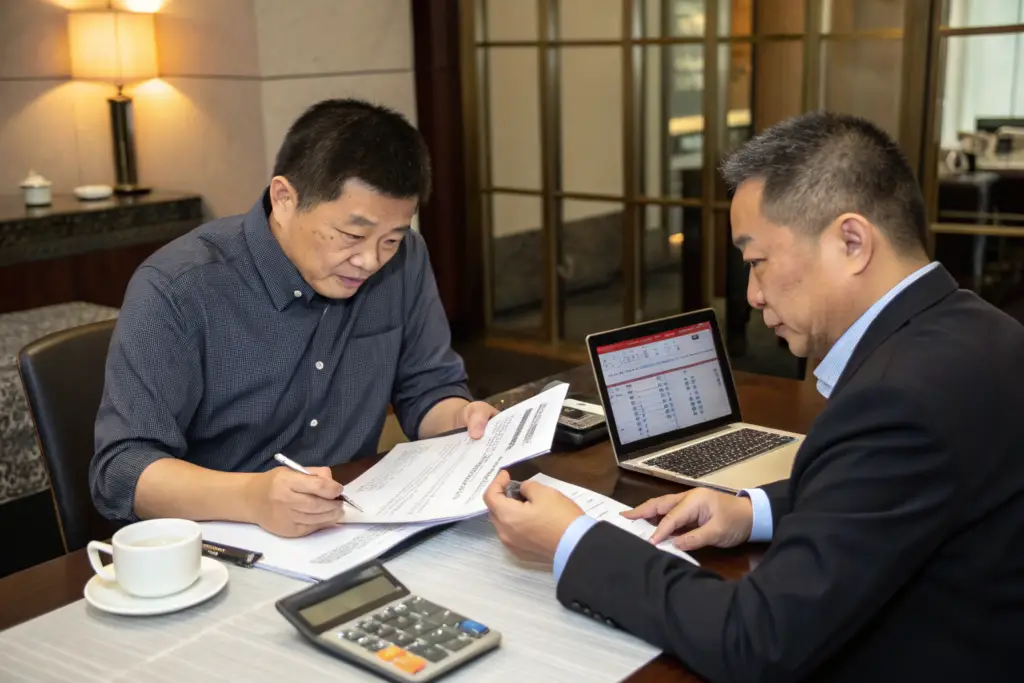
Hidden financial costs include currency exchange losses, international wire transfer fees, and the cost of financing. If you are paying in a different currency, exchange rates can move against you. A 5% swing can wipe out your margin. Bank fees for international transfers can be $30 to $50 per transaction, which adds up over many payments. And if you use financing, the interest and fees are an additional cost.
How Do Currency Fluctuations Affect My Costs?
If your factory quotes you in Chinese Yuan or Vietnamese Dong, and you are paying in U.S. Dollars, the exchange rate matters. The rate can change between the quote and the payment. If the dollar weakens, you pay more. A client in Boston learned this the hard way. She agreed to a price in Chinese Yuan. By the time she paid, the dollar had weakened by 7%. Her cost went up by 7%. She had not accounted for this. Her profit margin on that order was only 10%, so she lost most of her profit. Now, she either negotiates prices in U.S. Dollars or builds a currency buffer into her budget. For currency risk management, resources from XE.com and OANDA provide tools and information.
What Are The Costs Of Different Payment Methods?
The standard payment terms in our industry are often a 30% deposit and 70% before shipment. This requires you to have cash tied up for months. If you use a letter of credit, there are bank fees, often hundreds of dollars. If you use a credit card for smaller payments, there are processing fees of 2% to 3%. If you use purchase order financing, the fees can be substantial. Each of these has a cost. You need to factor them into your budget. At Shanghai Fumao, we work with our long-term clients to offer better payment terms. This helps their cash flow and reduces their financing costs. For more on payment methods in international trade, resources from the International Trade Administration explain the options.
Conclusion
Hidden costs are everywhere in garment manufacturing. They lurk in development and sampling. They hide in raw material fluctuations and waste. They jump out in shipping and logistics. They emerge in quality failures and rework. They creep in through currency and payment terms. If you do not plan for them, they will destroy your margins and your peace of mind.
But hidden costs do not have to be a mystery. With the right partner and the right questions, you can uncover them before they hurt you. A transparent factory will show you where every dollar goes. They will help you plan for the unexpected. They will work with you to find savings and avoid surprises.
At Shanghai Fumao, we believe that transparency is the foundation of trust. We provide detailed, itemized quotes. We explain every cost. We offer DDP shipping to simplify logistics. We share our quality control reports. We work with our clients to build realistic budgets that account for the real costs of production. We have nothing to hide because we are proud of the value we provide.
If you are tired of hidden costs and nasty surprises, and you are looking for a manufacturing partner who will be honest and transparent from the first conversation, I would love to talk. Let's discuss your upcoming collections and how we can help you build a budget that works. Please reach out to our Business Director, Elaine, to start that conversation. Her email is elaine@fumaoclothing.com. Together, we can build something that lasts.