You're sourcing French Terry for your new line of eco-conscious hoodies and joggers. The fabric feels great, but you're thinking bigger than just comfort. You want to know its real environmental impact. You see suppliers offering "sustainable" French Terry and others with official OEKO-TEX labels. Is OEKO-TEX certification just about chemical safety for the wearer, or does it actually benefit the planet? The answer might surprise you.
OEKO-TEX certification, particularly standards like STANDARD 100 and STeP, provides significant, verifiable environmental benefits by restricting harmful substances at the source, reducing toxic effluent from dye houses, promoting cleaner production processes, and encouraging better waste and water management. While its primary goal is human-ecological safety, this focus creates a powerful ripple effect that protects ecosystems, conserves resources, and pushes the entire textile chain toward more responsible practices.
Choosing OEKO-TEX certified French Terry isn't just a choice for a safer product; it's a vote for a cleaner manufacturing process. The certification acts as a gatekeeper, ensuring that from the yarn stage to the finished fabric, environmental hazards are systematically identified and controlled. This leads to tangible benefits that extend far beyond the factory walls.
From Chemical Inputs to Cleaner Outputs: The Ripple Effect
The most direct environmental benefit of OEKO-TEX certified French Terry begins with what it prohibits. The STANDARD 100 standard bans or severely restricts hundreds of substance groups known to be harmful to both human health and aquatic ecosystems. When a mill produces certified French Terry, it cannot use certain azo dyes (that can break down into carcinogenic amines), chlorinated phenols, or heavy metals like cadmium, lead, and mercury in its dyeing and finishing processes.
This restriction forces a positive change upstream. Chemical suppliers must develop and provide compliant auxiliaries and dyes. Dye houses must meticulously manage their chemical inventories and processes to avoid contamination. The result is wastewater with a significantly lower load of persistent, bio-accumulative, and toxic substances. Last year, we audited a potential fabric mill for our activewear line. Their standard French Terry process used a softening agent containing regulated APEOs (alkylphenol ethoxylates). To meet our OEKO-TEX requirement, they switched to a compliant alternative, directly reducing the toxicity of their effluent—a change they have now adopted for other non-certified orders, amplifying the benefit.
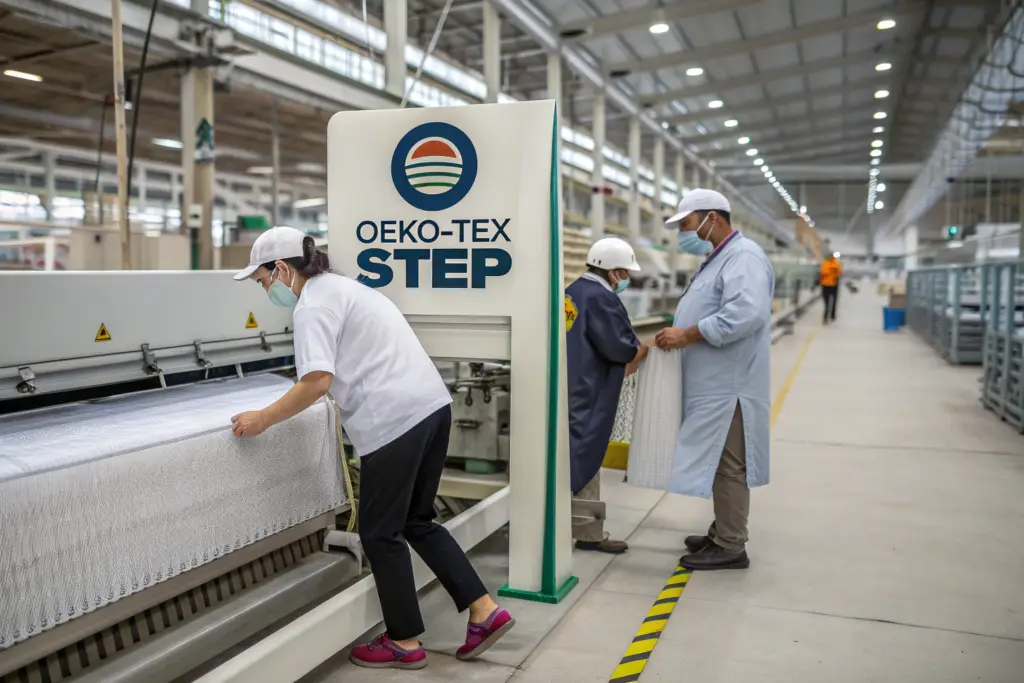
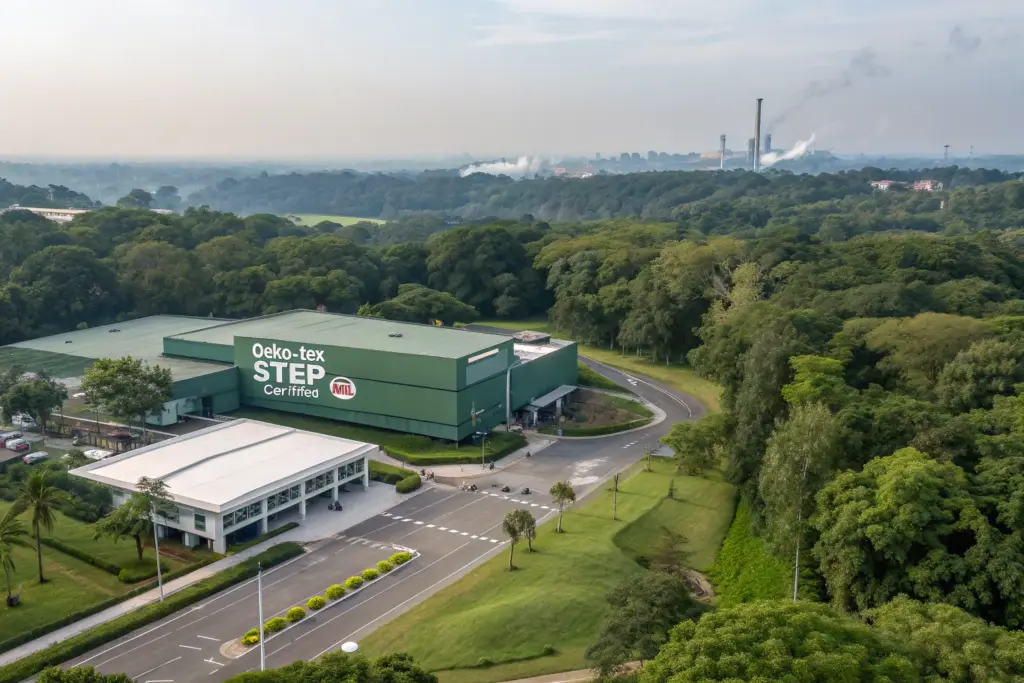
Furthermore, the OEKO-TEX STeP (Sustainable Textile Production) certification, which assesses manufacturing facilities, explicitly evaluates and scores environmental performance. A mill with STeP certification for its French Terry production will have measured and optimized its energy consumption, water use, wastewater treatment, and emission control. This systematic approach translates the chemical restrictions into broader operational eco-efficiency.
How Does This Reduce Water Pollution Compared to Conventional Terry?
Conventional cotton French Terry production is notoriously water and chemical-intensive. The dyeing and finishing stages are major pollution points. OEKO-TEX certification directly mitigates this. By outlawing the most hazardous substances, it prevents them from ever entering the wastewater stream. This means the water discharged from the treatment plant is less harmful to rivers and groundwater.
The benefit is measurable. While OEKO-TEX itself doesn't set numeric wastewater limits, compliant mills must adhere to local regulations and avoid banned substances. This often pushes them to invest in better wastewater management to ensure compliance. For instance, a key banned substance group is phthalates, often used as plasticizers in prints. Ensuring their absence requires precise process control, which reduces the risk of accidental contamination and leads to more consistent, less polluted water output. It’s a preventative approach to pollution.
Does Certification Encourage Water and Energy Conservation?
Indirectly, yes. The OEKO-TEX STeP standard has dedicated modules for environmental management. Facilities seeking a high STeP score must implement monitoring systems for water and energy use. While STANDARD 100 focuses on the product, factories that pursue both certifications are driven to holistically improve their resource efficiency to achieve a better rating.
For example, to reduce the risk of cross-contamination with non-compliant chemicals, a STeP-certified mill might reorganize its workflow. This can lead to shorter pipe runs between dyeing machines or optimized batch sizes, which saves both water and energy. When Shanghai Fumao partners with STeP-certified knitters for our French Terry, we review their environmental performance data. We’ve seen partners reduce water consumption per kilo of fabric by up to 15% after optimizing processes for certified production, benefits that stem from the initial drive for chemical compliance.
Beyond the Mill: Waste Management and Circularity Links
The environmental philosophy of OEKO-TEX certification extends to waste. By restricting hazardous substances in the French Terry fabric itself, the certification increases the safety and value of production waste and post-consumer textile waste. This is a crucial, yet often overlooked, benefit for the circular economy.
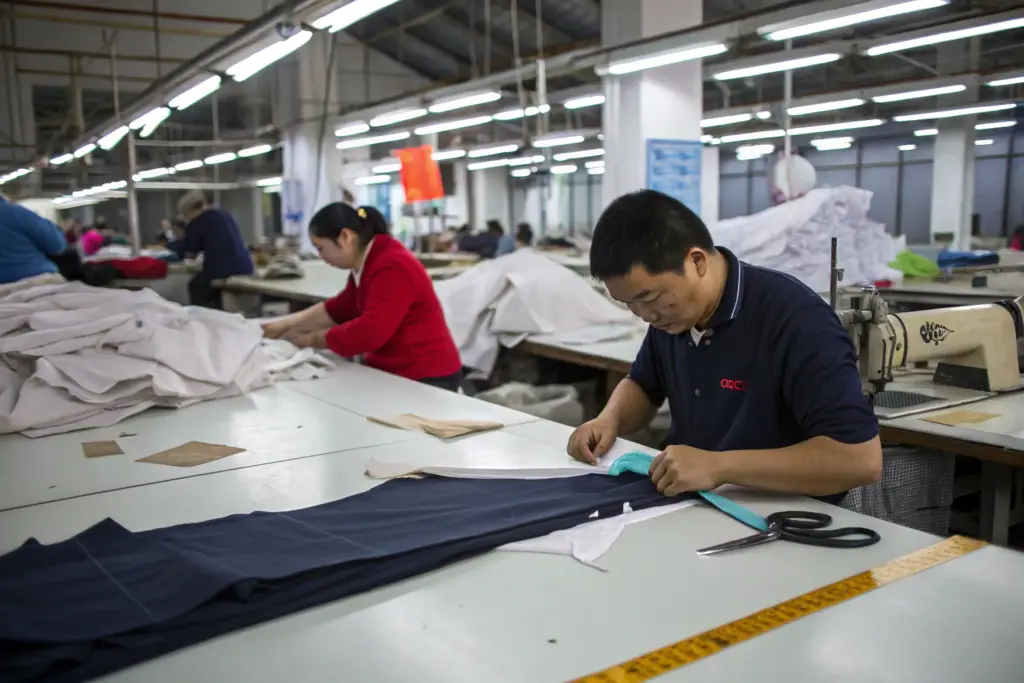
During cutting and sewing at a garment factory like Shanghai Fumao, 10-20% of fabric can become off-cuts. If the French Terry contains restricted heavy metals or persistent chemicals, these cuttings are classified as hazardous waste or are undesirable for recycling. OEKO-TEX certified fabric, however, produces cleaner waste. This makes it safer to handle in the factory and a better candidate for textile recycling initiatives. The cuttings can be more easily processed into shoddy, insulation material, or, with advanced technology, potentially back into fibers.
Moreover, at the product's end-of-life, certified French Terry garments are less likely to leach harmful substances if they end up in landfills or are incinerated. This reduces the long-term environmental burden. We advise our clients that using certified fabrics future-proofs their products against increasingly stringent waste regulations and supports their own sustainability storytelling about responsible product lifecycle management.
Can OEKO-TEX Certification Enhance a Garment's Recyclability?
Potentially, yes. As mechanical and chemical recycling technologies advance, feedstock purity is key. Recyclers are wary of fabrics with unknown or complex chemical profiles, as they can contaminate the entire recycling batch or damage equipment. OEKO-TEX certification provides a standardized, verified chemical profile. It tells a recycler that the French Terry is free from the worst substance groups, making it a more predictable and safer input material.
This is forward-thinking. While large-scale post-consumer recycling of blended French Terry is still developing, designing for end-of-life is a core principle of circular fashion. Specifying OEKO-TEX certified materials is a concrete step in that direction. It aligns with initiatives like the Ellen MacArthur Foundation's vision for a circular textile economy, where material health is paramount. By choosing certified fabrics today, brands are building a cleaner material pool for tomorrow's recycling infrastructure.
How Does This Affect Compliance with International Waste Regulations?
It provides a significant advantage. Global regulations like REACH in the European Union strictly control substances of very high concern (SVHCs) in products. OEKO-TEX STANDARD 100's limit values are often aligned with or stricter than these legal requirements. Therefore, French Terry certified to OEKO-TEX dramatically simplifies a brand's due diligence.
It ensures the product is less likely to be flagged or restricted under these laws, preventing costly recalls or disposal issues. For a brand buyer, this means reduced legal and financial risk associated with hazardous waste downstream. When we ship OEKO-TEX certified French Terry hoodies to our clients in North America and Europe, the accompanying documentation provides clear evidence of proactive substance management, facilitating smoother customs and compliance checks.
The Bigger Picture: Driving Industry-Wide Change
The environmental benefits of choosing OEKO-TEX certified French Terry amplify when viewed at scale. Every certified order sends a market signal. It tells chemical companies to innovate safer formulations, instructs fabric mills to invest in cleaner technology, and encourages other brands to raise their standards. This collective demand drives systemic change across the apparel supply chain.
Factories that achieve certification often upgrade their environmental management systems to maintain it. They train their staff on handling restricted substances, improve their record-keeping, and often implement better overall housekeeping. These improvements stick. The mill we partnered with for a major U.S. sportswear brand’s French Terry line didn't just clean up that one order; they used the OEKO-TEX framework to revamp their environmental policy, benefiting all their production. The certification acted as a catalyst for broader institutional change.
Furthermore, by providing a clear, globally recognized standard, OEKO-TEX helps brands cut through greenwashing. A claim of "sustainable French Terry" is vague. An OEKO-TEX label is specific and verifiable. This transparency is crucial for true environmental progress, as it allows for informed decision-making and accountability.
Does This Certification Complement Organic Cotton or Recycled French Terry?
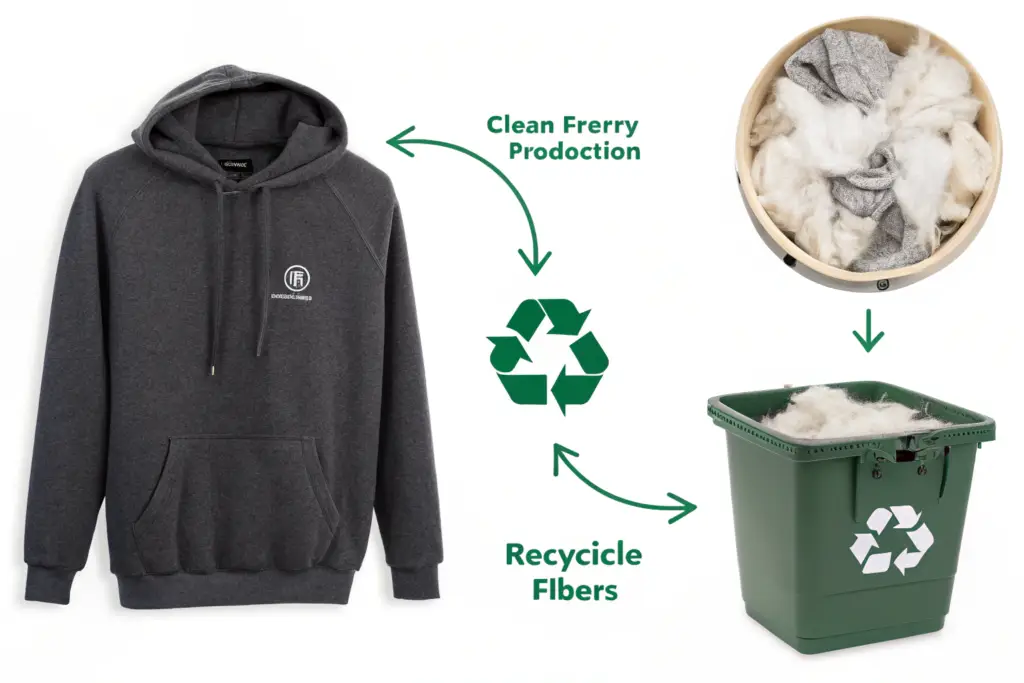
Absolutely, and it's highly recommended. OEKO-TEX certification fills a critical gap. Organic cotton ensures the raw fiber is grown without synthetic pesticides, but says nothing about the chemicals used in subsequent spinning, dyeing, and finishing. Similarly, recycled polyester in a French Terry blend addresses plastic waste but not chemical safety. OEKO-TEX certification covers these post-fiber processes.
Combining organic or recycled content with OEKO-TEX certification creates a genuinely more sustainable product. It addresses both agricultural/raw material impact and industrial processing impact. For example, we produce a French Terry fabric using GOTS-certified organic cotton and have it also certified to OEKO-TEX STANDARD 100. This gives our clients a powerful dual claim: "Made from organically grown cotton and processed under strict limits for harmful substances." It's a holistic approach.
What is the Carbon Footprint Connection?
The connection is indirect but real. The OEKO-TEX STeP standard includes an assessment of a facility's energy efficiency and greenhouse gas emissions. Mills striving for a good STeP rating are incentivized to track and reduce their carbon footprint. Additionally, by restricting certain chemical processes that are energy-intensive or require specific hazardous inputs, the standards can lead to the adoption of more efficient, modern methods.
While OEKO-TEX is not a carbon certification, its framework supports the operational efficiencies that underlie carbon reduction. For a brand calculating its Scope 3 emissions (indirect emissions in the value chain), sourcing from STeP-certified suppliers provides more reliable environmental data and indicates a partner engaged in continuous improvement, which is essential for credible carbon reporting.
Making the Responsible Choice: A Guide for Brands
Understanding the environmental benefits is the first step. The next is implementing a sourcing strategy that captures these benefits authentically and communicates them effectively to your customers. It requires moving beyond a checkbox mentality to a partnership approach with your manufacturer.
Start by specifying your requirements clearly. In your tech pack for French Terry products, state: "Fabric must be OEKO-TEX STANDARD 100 certified (Article Class I or II as applicable). Preference given to mills with OEKO-TEX STeP certification." This sets a clear baseline. Then, work with your manufacturing partner to trace the certification back to the knitting and dyeing mill. At Shanghai Fumao, we provide transparent supply chain information for our certified fabrics, so you know exactly where the environmental benefits are being realized.
Next, integrate this into your quality assurance. Don't just file the certificate; verify it. Use the OEKO-TEX online database to check the validity of the certificate number for the specific fabric lot used in your order. This ensures the environmental and safety claims are backed by current, legitimate testing. We experienced this diligence firsthand when a European client's auditor visited our facility and cross-referenced every OEKO-TEX fabric certificate with the online registry—a practice we now recommend to all our partners.
How to Communicate These Benefits Without Greenwashing?
Be specific and factual. Avoid vague terms like "eco-friendly." Instead, use clear, claim-based language supported by the certification:
- "Our French Terry is OEKO-TEX certified, meaning it's produced with limited harmful substances, resulting in cleaner manufacturing wastewater."
- "The OEKO-TEX standard ensures our fabric is free from over 100 regulated pollutants, protecting both your skin and the environment."
- "We choose OEKO-TEX certified materials to support safer chemical management and resource efficiency in our supply chain."
Use the official OEKO-TEX labels on your hangtags and link to explanatory content on your website. This transparency builds trust and educates your consumer, turning an environmental benefit into a compelling brand value.
What's the First Step with Shanghai Fumao?
Begin with a conversation about your sustainability goals. Share your target product—whether it's French Terry hoodies, joggers, or baby sets—and your desired environmental attributes. We will then present options from our library of OEKO-TEX certified fabrics, including those with organic or recycled content, and provide the full certification documentation. We can also share insights from our partners' STeP-certified mills on their environmental performance metrics.
Let us help you make a choice that feels good for your customer and does good for the planet. The environmental benefits of OEKO-TEX certified French Terry are real, measurable, and a smart step toward more responsible apparel production.
Conclusion
The environmental benefits of OEKO-TEX certified French Terry are profound and multi-layered. They begin at the molecular level with the restriction of toxic inputs, leading directly to cleaner water outputs and reduced industrial pollution. They extend to safer waste streams and enhanced potential for circularity. On a systemic level, the certification drives wider industry adoption of better environmental practices and provides transparency in a market rife with vague claims.
Choosing this certification is a tangible action that moves beyond product-centric thinking to process-centric responsibility. It acknowledges that true sustainability in apparel must address the hidden impacts of dyeing, finishing, and chemical management. For brands committed to reducing their environmental footprint, specifying OEKO-TEX certified materials is a strategic, evidence-based decision that protects ecosystems as surely as it protects consumer trust.
Ready to source French Terry that offers unparalleled comfort with a clear environmental conscience? Partner with Shanghai Fumao to integrate OEKO-TEX certified fabrics into your next collection. Contact our Business Director, Elaine, at elaine@fumaoclothing.com to explore our range of certified materials and learn how our manufacturing partnership can help you achieve your sustainability goals. Visit Shanghai Fumao to see our commitment to quality that respects both people and the planet.