You have a winning apparel idea, a clear vision, and a motivated team—but your factory just doesn’t “get it.” Production samples look off, timelines slip, and quality doesn’t match your brand. What’s missing?
A tech pack is your blueprint—it bridges your creative vision and the factory's execution. Done right, it eliminates confusion, delays, and costly revisions.
I’ve worked with dozens of U.S. brands and know how a complete, factory-ready tech pack accelerates bulk production and protects design integrity. This guide breaks down the best practices for making tech packs manufacturers love.
What Core Elements Must a Complete Tech Pack Include?
A tech pack isn’t just a sketch with notes. It’s a technical document that removes all guesswork from garment manufacturing.
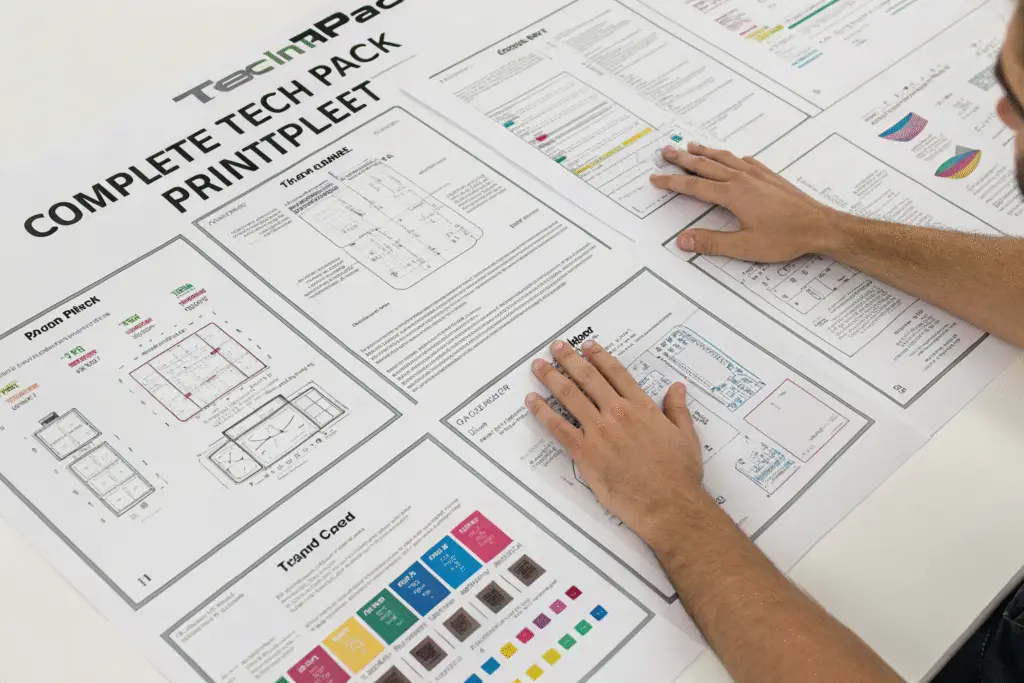
A complete tech pack includes visuals, dimensions, materials, and construction details that allow a factory to quote accurately and produce consistently.
What Pages Should Every Tech Pack Contain?
Here’s a basic breakdown of essential sections:
| Section | Description |
|---|---|
| Cover Page | Style name, brand, date, designer contact |
| Technical Sketches | Front/back view with stitching & trim lines |
| Measurement Specs | POM (Points of Measurement) with tolerances |
| Bill of Materials | Fabric, trims, labels with codes & sources |
| Construction Notes | Stitching type, seam allowance, finishings |
| Colorway Page | Pantone codes and placements |
| Label & Packaging | Tag artwork, fold type, bagging details |
Free templates from platforms like Techpacker and Zedonk can help standardize your formatting.
Why Is BOM Accuracy So Important?
If you list “cotton” but mean “organic single jersey cotton, 180 GSM, enzyme washed,” the price, feel, and lead time will vary. A detailed BOM avoids surprises in costing and quality. Always list exact suppliers or approved alternatives, especially for trims like zippers and buttons. We use this approach to ensure sample-to-bulk consistency.
How Should Measurement Specs Be Structured?
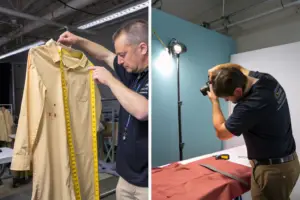
Even if your design is brilliant, the sizing will fail if the factory misinterprets specs. Precision is key.
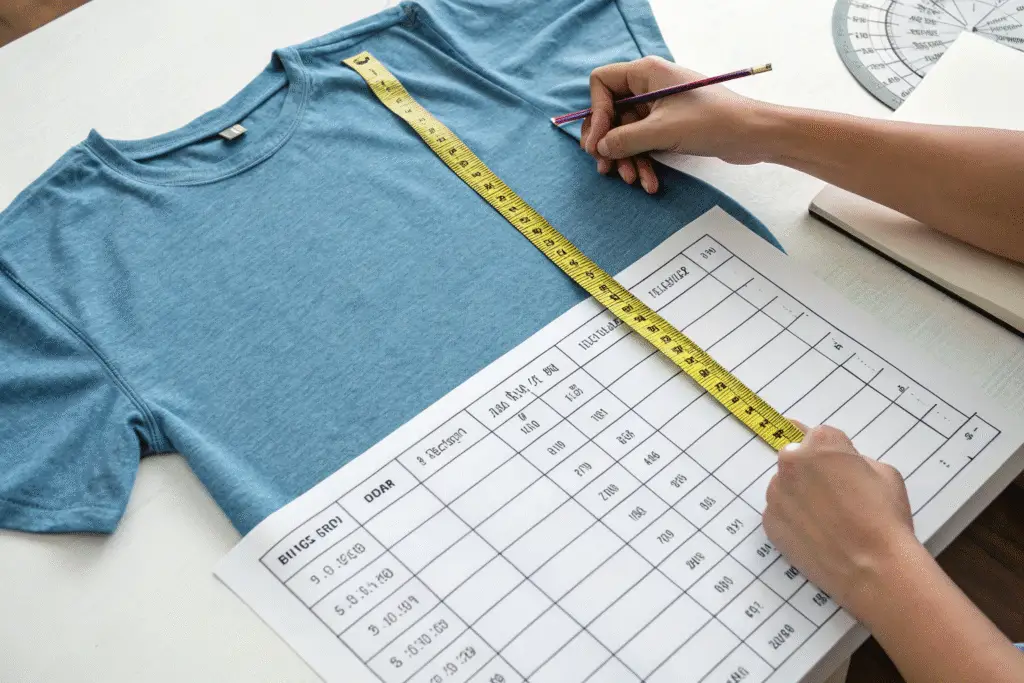
Well-structured measurement specs with clear POM illustrations ensure accurate grading and consistent fit across sizes.
What Is the Best Format for Spec Sheets?
Each row should cover one POM (e.g., chest width), with size columns (S, M, L, XL), base size highlighted, and tolerances (+/-). Add a reference drawing to define how the measurement is taken.
Use Excel templates or cloud tools like Fashtory for smart collaboration.
How Do Tolerances Affect Production Quality?
Factories won’t hit every size exactly, which is why tolerances matter. For example, a chest width of 52 cm ± 1 cm means 51–53 cm is acceptable. Tight tolerances raise QC cost and reject rate. We advise clients to set realistic ranges for mass production and highlight “critical” POMs.
Why Are Technical Sketches and Callouts Crucial?
A picture may be worth a thousand words—but only if it’s clear and annotated.
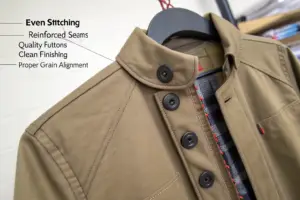
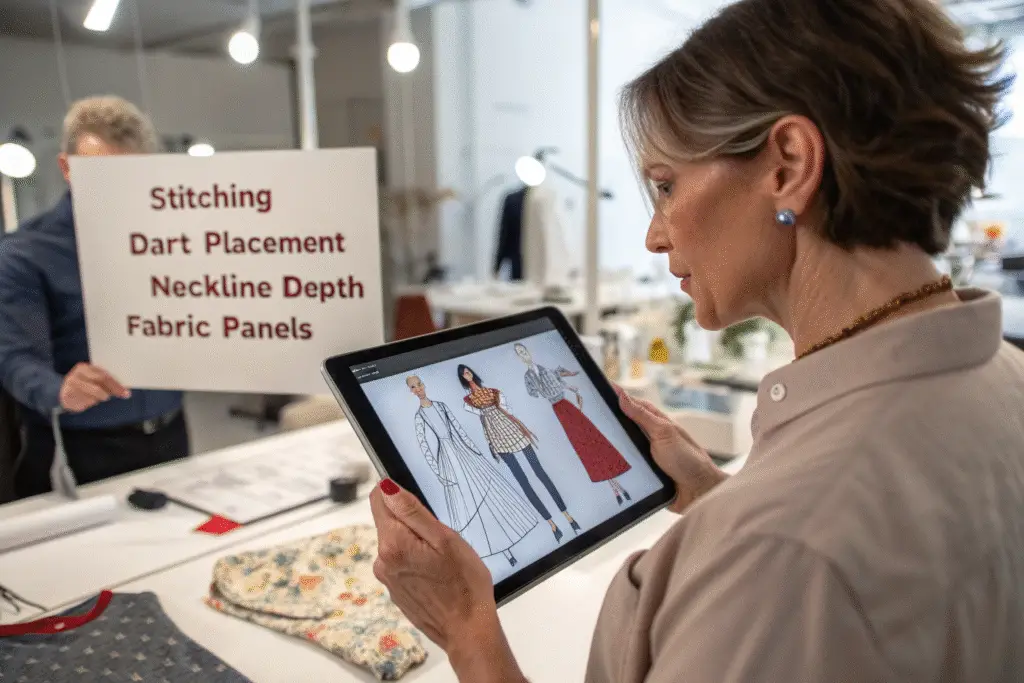
Technical sketches with labeled callouts help factories understand construction, not just aesthetics. They reduce back-and-forth communication and sample errors.
What Tools Help Create Effective Sketches?
We recommend tools like Adobe Illustrator for vector sketches or plug-ins like Fashionary to speed up design. Your sketch should include stitching, panel lines, dart placements, and pocket designs. Keep it to-scale and professional.
Photos are helpful too—but they must be accompanied by clear callouts and annotations.
Should You Include Stitch Type and Seam Finish?
Yes. These affect durability, cost, and look. For instance:
- Topstitching: Increases strength and adds a style element
- Overlock seams: Used for knits to allow stretch
- Flatlock: Preferred in activewear for comfort
Even if the factory has options, your tech pack should show your preference first. We once saved a client 2 weeks of rework by clearly specifying bartacks and twin-needle hem details upfront.
How Can Version Control Improve Sampling and Production?
Factories follow your tech pack like a recipe—so if it changes, everyone needs the latest version.
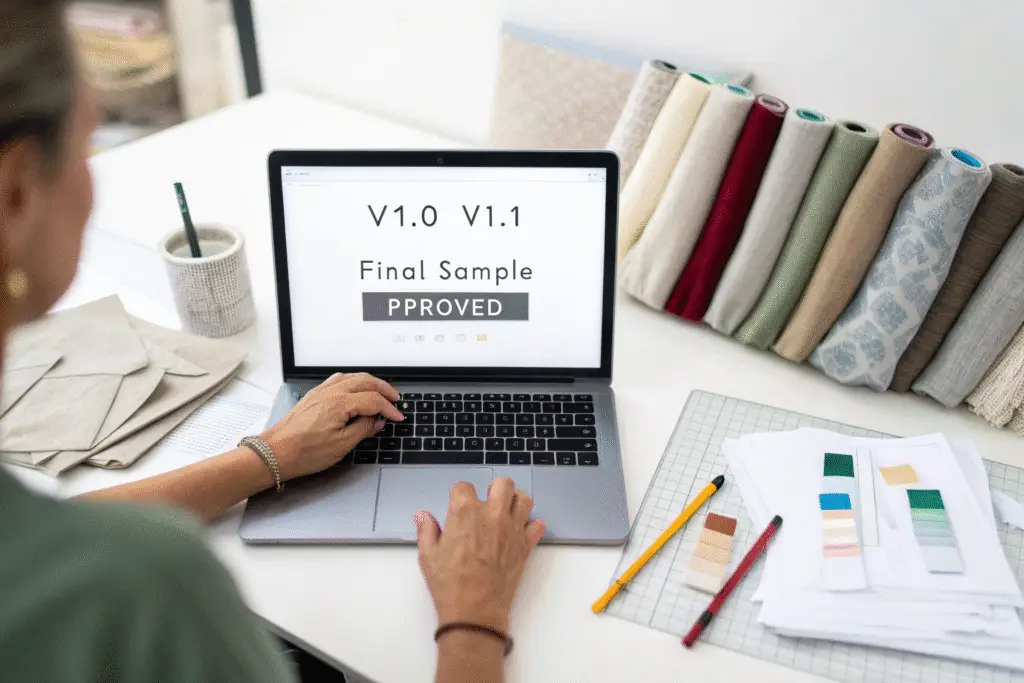
Version control ensures everyone is working from the same document. It prevents mistakes from outdated info and allows for tracking improvements.
How Do You Track Versions Properly?
Add version numbers to filenames (e.g., “T-shirt_v2.0_Apr12.pdf”) and keep a log of changes. We often include a revision history page inside the tech pack to highlight what changed. Google Drive or Notion can be great for cloud-based tracking.
Always notify the factory with every update and avoid “silent” edits.
Why Is Factory Feedback Valuable During Updates?
Tech packs are not one-way instructions. When factories suggest changes—due to machinery or sourcing limits—document them. Sometimes their suggestions reduce cost or improve output. We treat sampling as a two-way process and update the tech pack post-approval to match reality.
Conclusion
A professional, factory-ready tech pack is the difference between a smooth production run and a costly mess. By including all technical details, measurement specs, stitch types, fabric callouts, and revision control, you set your supplier up for success.
At Fumao Clothing, we not only help clients build their tech packs, we use them as the foundation for quality control, bulk approval, and long-term consistency. Ready to turn your designs into perfectly made garments? Start with a rock-solid tech pack.