Many apparel brands underestimate the impact of a small detail: the woven label. Yet this tiny piece of fabric is the silent ambassador of your brand—touching every consumer who interacts with your garment. But sourcing custom woven labels from overseas suppliers can be frustrating when you're unsure of specifications, production tolerances, or delivery timelines.
The key to ordering high-quality woven labels lies in mastering specification details, communicating clearly with your manufacturer, and verifying samples before bulk production. At Shanghai Fumao, we've produced tens of thousands of custom labels for U.S. and European fashion clients, and we've learned what works—and what doesn’t.
In this article, I’ll walk you through everything from label types to shipping logistics so you can avoid common mistakes and create branding that sticks—literally.
What Label Types and Materials Should You Choose?
The look, feel, and longevity of your woven label depend on both the weave density and material. But many clients come to us unsure of what type they actually need. Understanding the basics helps ensure your labels are on-brand and cost-effective.
Choosing the right label style and material can significantly impact your brand’s perceived quality.
What Are the Most Common Types of Woven Labels?
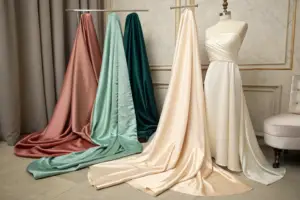
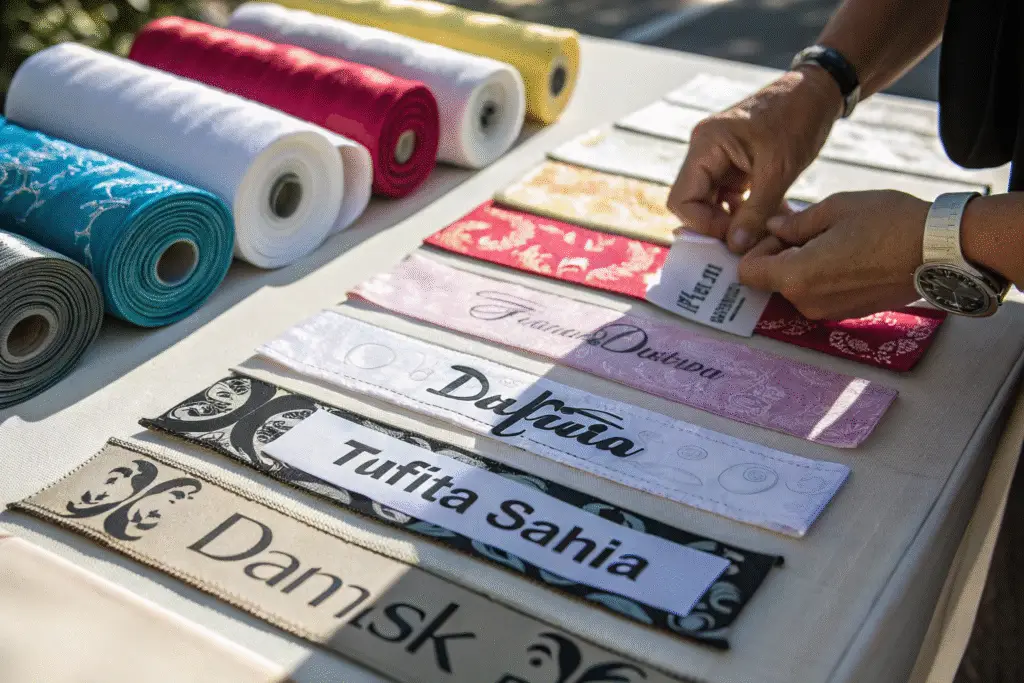
The three most common types of woven labels are damask, satin, and taffeta:
| Label Type | Texture | Durability | Price | Use Case |
|---|---|---|---|---|
| Damask | Smooth, fine weave | High | Medium-High | Luxury branding |
| Satin | Glossy, soft | Medium | Medium | Lingerie, children’s wear |
| Taffeta | Coarse, stiff | High | Low | Workwear, budget products |
Damask is our most recommended option because it allows fine detail and strong color contrast. Satin is ideal when softness matters. Taffeta suits rugged applications where cost is a factor.
You can read detailed comparisons at Apparel Search or get insights from the Wunderlabel blog.
How Should You Choose the Right Fold and Cut?
Fold type affects both the appearance and how your label sits on the garment. The most popular types include:
- Center Fold – Folded in the middle, sewn into a seam
- End Fold – Folded on both ends, stitched onto flat surfaces
- Loop Fold – Continuous loop, often for neck labels
- Straight Cut – No folds, sewn on all sides
Each label cut influences how your logo is seen and how the label behaves after washing. For example, end fold labels provide clean edge aesthetics, while loop folds add a minimalist premium feel.
You should always ask for digital renderings of folds during sampling.
How to Create an Accurate Label Tech Pack?
The number one reason for unsatisfactory woven label orders? A vague tech pack. When the artwork is blurry or dimensions are unclear, factories can’t read your mind. A label is a precision product—millimeters matter.
Building a detailed woven label tech pack helps avoid design misinterpretations, sampling delays, and wasted production.
What Key Details Should Be in Your Label Tech Pack?
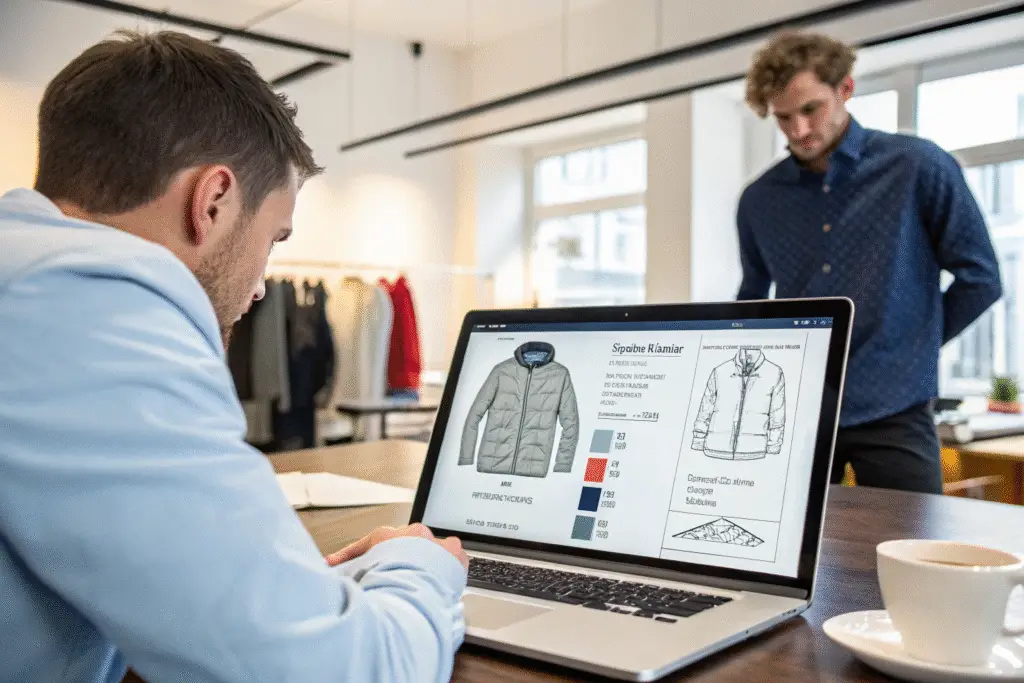
A solid label tech pack should include:
- Label size (e.g., 60mm x 15mm)
- Fold type (center fold, end fold, etc.)
- Pantone colors for thread selection
- Weave density (e.g., 100D or 50D yarn)
- Artwork file in vector format (.AI or .PDF)
- Placement mockups showing stitching location
Most U.S. clients use Pantone Matching System for thread selection. You can also simulate your label using online tools like Namelabel.com previewer or Wunderlabel Designer.
Include all information in a clear, editable file format and avoid sending screenshots only.
Should You Request Physical Samples or Digital Proofs?
Both are useful—but serve different purposes.
Digital proofs help verify design alignment, color breakdown, and spelling. But they don’t show texture or stitching feel. Physical samples are critical before mass production and allow you to test durability (e.g., wash tests, friction).
Our clients usually go through this 3-step process:
- Approve digital proof with factory watermark
- Receive 5–10 physical pre-production samples
- Run fabric + laundry compatibility testing
You can reference sample testing standards from SGS Lab or Intertek Textile Services.
Don’t skip sampling—it’s your insurance policy.
What Are the Common Mistakes When Ordering Labels?
Even experienced brand owners make preventable mistakes when ordering labels—especially if they’re doing it for the first time with a new supplier.
Knowing these mistakes ahead of time helps you prepare a better order and avoid production chaos.
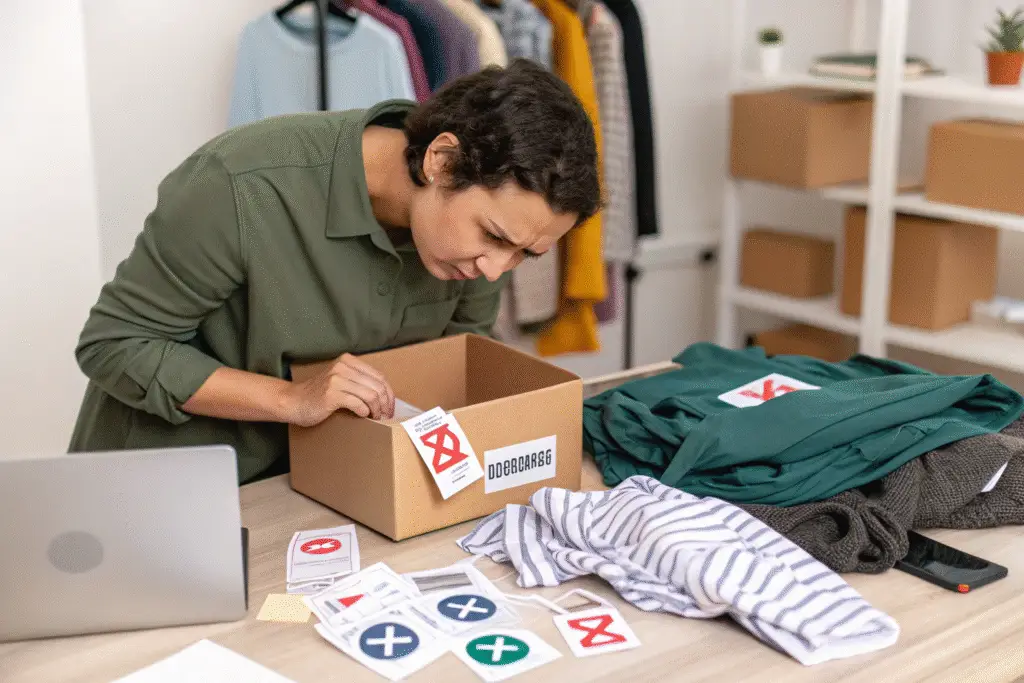
Why Is Miscommunication a Major Risk in Label Orders?
Language barriers, time zones, and incomplete tech packs are a recipe for miscommunication. Many Chinese factories may nod to your request but execute it based on assumptions.
Avoid these issues by:
- Using labeled visual mockups
- Confirming label orientation (front/back)
- Requesting detailed confirmation before approval
Tools like Slack with Notion embeds or ClickUp shared docs help keep everything centralized and visual.
At Fumao, we use a standardized woven label request form to align expectations clearly.
How Can You Prevent Logo Distortion or Thread Bleed?
Logos with fine lines or shadows can be problematic in woven format. Threads are physical, not pixels. If your logo includes gradients, small text, or thin outlines, it may appear “muddy.”
Here’s how to prevent it:
- Convert logos to solid color blocks
- Increase minimum letter height (2mm+)
- Ask your factory to test thread tension settings
Factories like ours use digital looms with adjustable DPI to enhance clarity. If you're unsure, review woven logo best practices or compare results on LabelWeavers FAQ.
How to Manage Shipping and Cost Effectively?
So your labels are approved and packed. Now what? Many brands lose time—and money—on poor logistics. Whether your labels ship separately or with your main garments, costs can spiral if you're not prepared.
Efficient shipping coordination ensures your labels arrive on time and on budget.
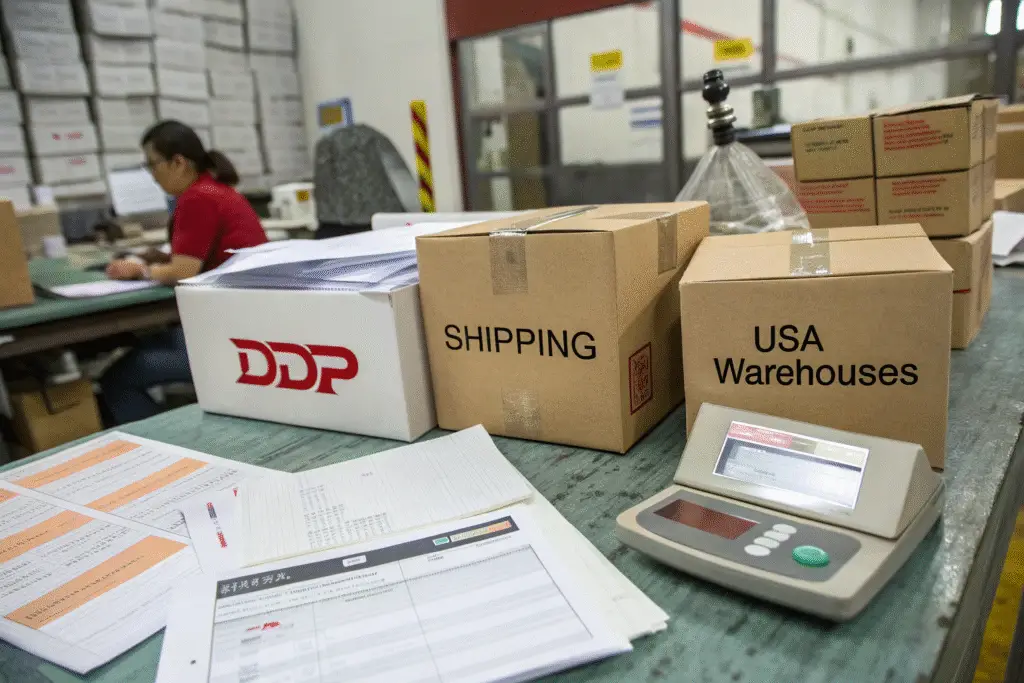
Should You Ship Labels Separately or With Bulk Apparel?
If you order labels weeks ahead of garment production, ship them separately via express air. This helps you insert them into the production line early. Typical shipping cost for 10,000 labels is under $100 by FedEx or DHL.
However, if you're ordering full-package clothing with Fumao, we recommend including labels in your DDP garment shipments. This minimizes customs headaches and documentation work.
For express-only needs, compare services at Easyship or calculate cost estimates via Freightos.
How Can You Reduce Label Order Costs at Scale?
Ordering 1,000 labels per style is common. But for long-term savings, bundle orders across SKUs.
Tips to save money:
- Use the same base label design across styles
- Increase quantity breaks for better pricing
- Choose damask over satin if budget-sensitive
- Reduce colors to limit thread count
Fumao offers volume-based tier pricing, and we provide inventory storage for labels if you place multi-month bulk orders. You can explore cost breakdown calculators on Dutch Label Shop or check UPrinting’s tips.
Conclusion
Custom woven labels may be small, but their impact on your brand identity is massive. By choosing the right label type, crafting a clear tech pack, and working with a reliable manufacturer like Fumao, you can eliminate costly surprises and build a scalable branding system.
If you're ready to create high-quality woven labels that match your garments perfectly and deliver on time, contact our Business Director Elaine at elaine@fumaoclothing.com. At Shanghai Fumao, we make branding seamless—literally.