If you’ve ever received production samples that looked nothing like your designs—or your factory unexpectedly ran out of zippers mid-run—you’ve likely experienced the pain of a poor or missing BOM. In the apparel industry, accuracy and clarity in the Bill of Materials is essential for smooth production and cost control.
The Garment BOM is the master document that outlines every physical component of a garment—from fabric and thread to buttons and care labels. A precise BOM is the foundation of quality control, pricing, sourcing, and repeatability.
In this article, I’ll walk you through BOM best practices that we use here at Fumao Clothing when serving our global clients. Whether you’re sourcing in China or managing a local design team, these methods will improve accuracy, reduce waste, and keep your factory operations tight.
What Core Elements Should a Garment BOM Include?
Every brand organizes BOMs slightly differently, but there are universal building blocks that every manufacturer expects to see. Without these, production errors and cost miscalculations are nearly guaranteed.
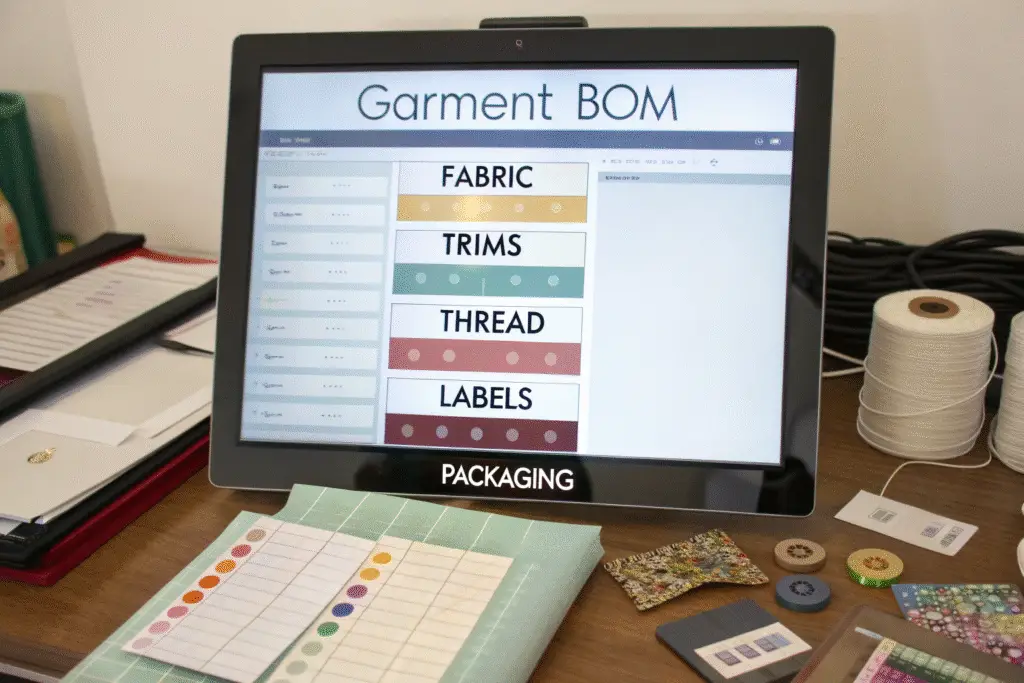
At its core, a garment BOM should list all materials, components, sources, colors, sizes, and placement details—leaving no room for assumptions.
What Are the Essential BOM Columns?
Your BOM should include:
| Field | Description |
|---|---|
| Component Name | Fabric, zipper, label, etc. |
| Description | Composition, weave, brand, color |
| Supplier | Who provides the component |
| Placement | Where on the garment |
| Quantity | Per piece usage (e.g., 0.7m, 2 pcs) |
| Color Code | If matching with Pantone or dye lot |
| Size Variant | If size impacts consumption |
| Remarks | Notes on testing, branding, etc. |
We recommend referencing Techpacker or WFX if you’re looking for digital tools that can auto-format and manage these fields for multiple styles.
Why Should BOMs Include Packaging Materials?
Many brands forget to include hangtags, polybags, silica gel, or even carton stickers in their BOMs. That often leads to shipment delays or customs confusion.
Our default practice is to separate the BOM into two sections: Production BOM and Logistics BOM, ensuring nothing is missed when the goods leave our factory.
How Do You Ensure BOM Consistency Across Styles?
If your brand is scaling SKUs, reusing base components (like elastic or care labels) across styles saves time and cost. But inconsistencies in how those components are listed across BOMs can cause duplication, confusion, and overstocking.
We use a master BOM library to manage shared materials across styles, ensuring consistency, easier reordering, and fewer purchasing errors.

Should You Use a BOM Template?
Absolutely. Using an editable BOM template is critical for clarity and traceability. You can find free apparel BOM templates from platforms like Maker’s Row or Fashion Workroom.
At Fumao Clothing, we provide our clients with editable Excel and Google Sheet templates, and we keep a digital record in our PLM system. This makes onboarding new styles faster and reduces discrepancies between tech packs and production.
How to Reuse BOM Data Across Colorways and Sizes?
Rather than rewriting BOMs for each SKU, use dynamic cells or linked databases. For example, if you’re making a linen shirt in three colors, we create one master BOM with color-coded trim rows.
Advanced teams often use Airtable to link SKUs, size consumption tables, and vendor codes. This prevents data silos and keeps everyone—from the merchandiser to the line manager—on the same page.
How to Prevent Errors During BOM Handover to Factories?
The BOM may look clear to you, but once it crosses time zones and language barriers, details can be lost in translation. BOM miscommunication is a top cause of late deliveries or material mismatches in B2B apparel production.
To prevent this, we adopt multi-format BOM sharing (PDF, Excel, PLM), visual annotations, and bilingual support when needed.
What Is the Best Format for Sending BOMs to Suppliers?
We recommend always sending BOMs in both:
- Editable format (Excel or Google Sheets)
- Non-editable format (PDF export)
This ensures manufacturers can enter the data into their ERP while referencing a locked visual version. Use color highlights and locked headers to guide the reader.
For brands working with multiple vendors, platforms like Zedonk or BlueCherry help automate BOM distribution and version control.
Should BOMs Include Product Images or Flat Sketches?
Yes, especially when communicating with factories that do not speak your native language fluently. Include:
- Flat sketches with material callouts
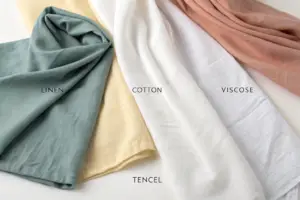
- Zoomed-in swatch photos
- Close-up of trims and placements
We embed all visual references beside each BOM component using cloud links hosted in Google Drive or Dropbox. This minimizes misinterpretation and allows inspectors to validate on the spot.
How to Connect BOMs to Costing and Inventory?
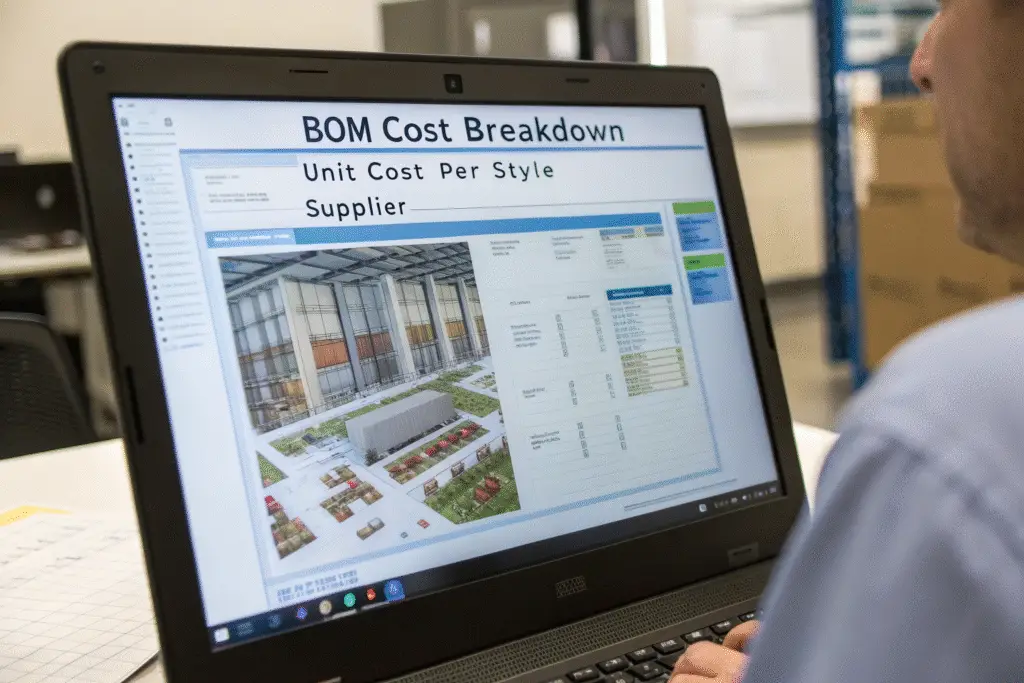
A great BOM isn’t just a materials checklist—it’s also the base for costing calculations, purchase orders, and inventory planning. If your BOM isn’t linked to these systems, you're flying blind on margins.
We integrate our BOMs with costing sheets and inventory platforms, which helps brands identify cost-saving substitutions and track consumption accurately.
How to Turn a BOM into a Costing Sheet?
Add unit cost columns to your BOM template and link them to supplier data:
| Component | Description | Qty | Unit Cost | Total Cost |
|---|---|---|---|---|
| Main Fabric | 100% cotton | 0.85m | $3.80/m | $3.23 |
| Thread | 100% polyester | 30m | $0.005/m | $0.15 |
| Buttons | Metal alloy | 2 pcs | $0.08 | $0.16 |
Sum these up to get your per-unit material cost. Add labor and overhead on separate tabs for total FOB pricing. For online calculation, check tools like Indie Source Calculator.
How Do BOMs Help With Inventory Forecasting?
Once the BOM is confirmed, you can multiply it by your production plan. For instance:
- BOM calls for 0.7m fabric per shirt
- You’re producing 8,000 shirts
- You need 5,600m, plus 5% buffer = 5,880m
We integrate this logic into our inventory platform so our sourcing team can issue timely POs and prevent material delays. It also allows us to alert clients about MOQ-based purchasing needs or leftover yardage for reuse.
Conclusion
The Bill of Materials is not just a document—it’s the DNA of your garment. A clear, complete, and consistent BOM saves time, prevents mistakes, and protects your margins. Whether you’re managing production locally or overseas, following BOM best practices can make or break your season.
At Fumao Clothing, we work closely with our clients to build bulletproof BOMs that integrate seamlessly with tech packs, costing tools, and production workflows. If you need help setting up or reviewing your BOM system, contact our Business Director Elaine at elaine@fumaoclothing.com. We’re ready to be your reliable production partner.