You’re scaling your clothing brand and facing the classic bottleneck: your fabric supplier blames the dye house for delays, the dye house points to the cutter, and the cutter says the sewing line is the problem. This fragmentation leads to finger-pointing, quality inconsistencies, and blown deadlines. What if one entity took full responsibility from yarn to carton? That’s the power of vertical integration.
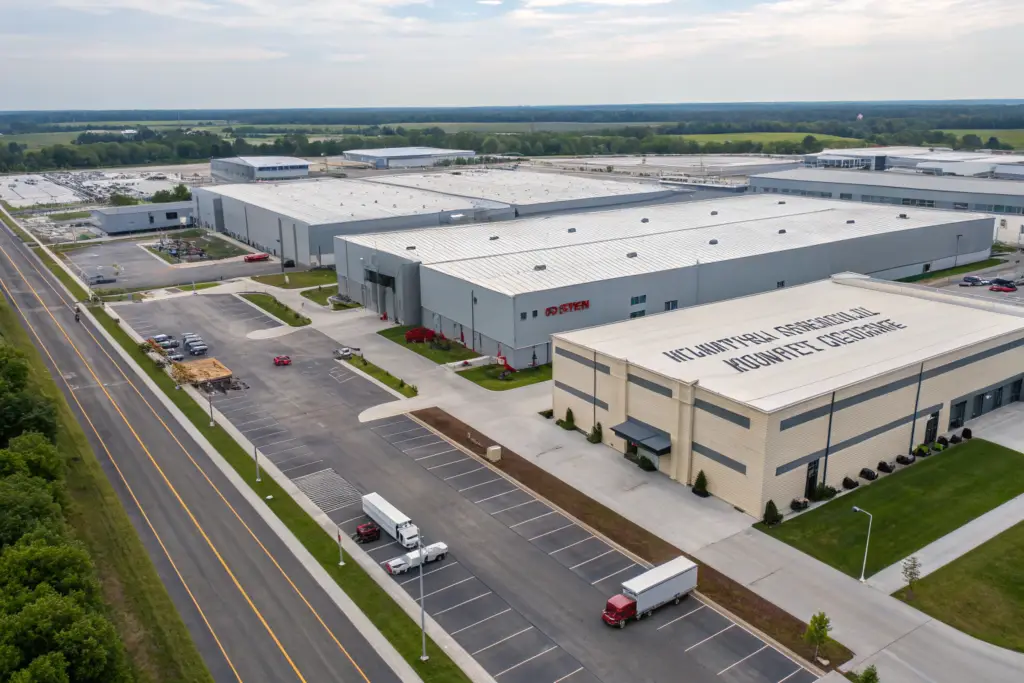
The core benefit of a vertically integrated clothing factory is end-to-end control. At Shanghai Fumao, our vertically integrated structure means we manage—and are accountable for—every critical stage of production under one coordinated management roof. This translates to shorter lead times, stringent quality control, cost efficiency, and unparalleled transparency for brand owners who can’t afford supply chain surprises.
Vertical integration isn’t just about owning more facilities; it’s about eliminating the friction and opacity between production stages. For a brand, this means partnering with a supplier that operates as a unified system, not a chain of loosely connected subcontractors. The result is predictability, agility, and a product that faithfully matches your original vision.
How Does Vertical Integration Drastically Shorten Production Lead Times?
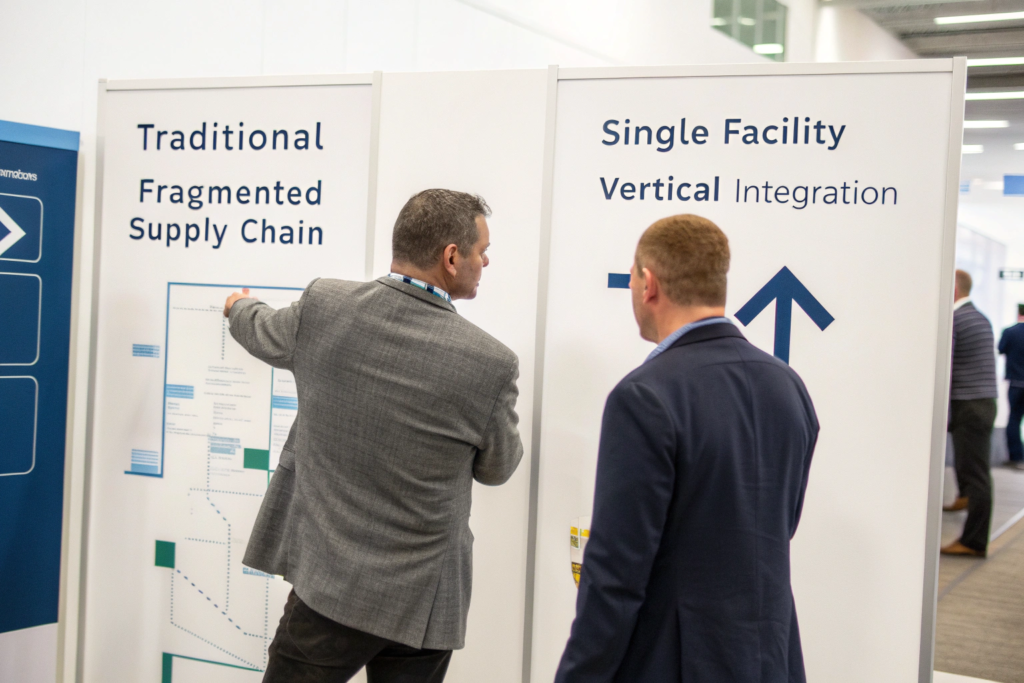
In a fragmented supply chain, goods and information must physically move between independent companies, each with its own schedule, priorities, and queue. Every handoff adds buffer time, transport days, and re-inspection delays. Vertical integration collapses this multi-company relay into a single, continuous flow.
By housing or directly controlling sequential processes—like fabric knitting/dyeing, cutting, sewing, and finishing—within one ecosystem, we eliminate intermediate logistics, waiting for supplier slots, and repetitive administrative tasks. This creates a streamlined pipeline where one stage feeds directly into the next, often on the same day.
Dive Deeper Paragraph: The time savings are realized through synchronized scheduling and eliminated transit.
How Does On-Site Process Synchronization Work?
When all departments report to the same management system, scheduling is centralized. The dyeing master, cutting manager, and production head have a daily integrated meeting. For example, when dyeing a lot of fabric for a 5,000-unit order, the cutting room is prepped to receive it the moment it passes quality check, and the sewing lines are scheduled to start the following morning. There’s no week-long wait for an external transporter or for the cutting contractor to have an open slot. This synchronization alone can reduce total lead time by 30-40%. We recently delivered a 15,000-piece capsule collection for an activewear brand in 45 days—a timeline their previous multi-vendor setup quoted at 70 days.
What is the Impact of Eliminating Intermediate Shipping and QC?
Think about the journey of fabric in a non-integrated model: Mill -> Truck to Dyer -> Wait & Dye -> Truck to Cutter -> Wait & Cut -> Truck to Sewing Factory. Each arrow represents days, fuel, handling, and a mandatory incoming quality inspection. In our model, the fabric moves from the dyeing department to the cutting floor via a forklift in minutes. There’s one inbound QC at the raw material stage. This not only saves 1-2 weeks but also dramatically reduces the risk of damage or contamination in transit, a key factor in supply chain optimization.
How Does It Provide Unmatched Quality Control and Consistency?
Consistency is the holy grail of branding, yet it’s elusive in a multi-vendor model where each party has different standards and incentives. Vertical integration allows us to implement and enforce a single, uncompromising quality standard across the entire production continuum.
From the moment raw yarn or fabric arrives to the final stitch and press, every process adheres to the same standardized operating procedures (SOPs) and is monitored by the same quality management system. There is no "quality loss" when moving between subcontractors.
Dive Deeper Paragraph: Control over inputs and processes is the foundation of output consistency.
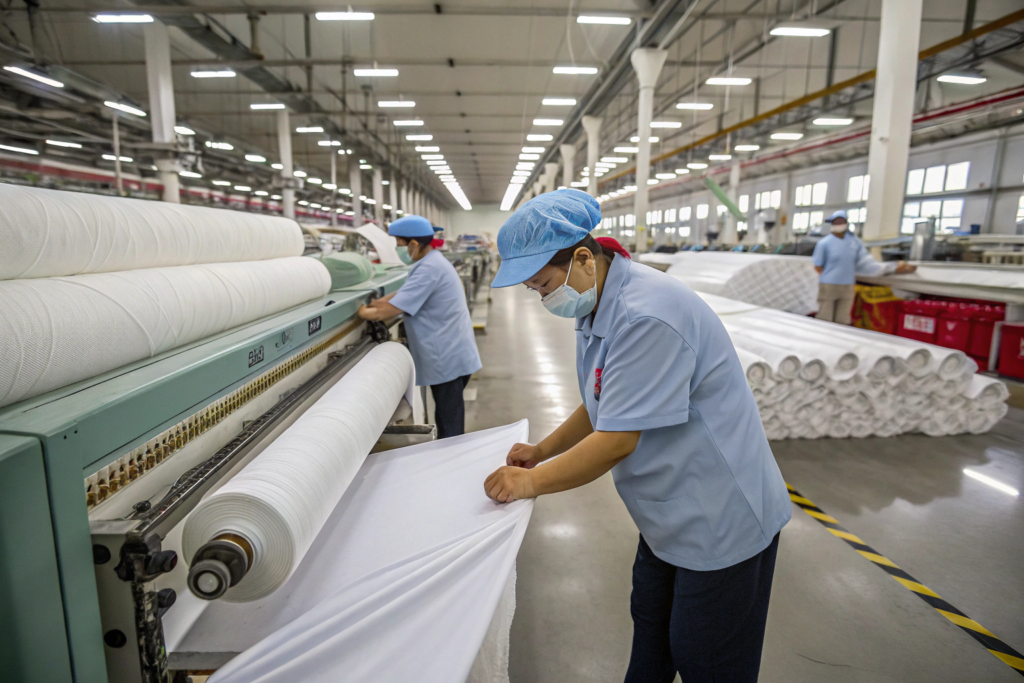
Why Is Controlling the "Input" Stage So Critical?
Quality is built in, not inspected in. By controlling or tightly partnering with upstream processes like knitting and dyeing, we can specify and verify the exact raw materials. For instance, for a line of premium polo shirts, our fabric team works directly with the spinning mill to set the yarn twist level for optimal pilling resistance. We then dye the fabric in-house to our precise color matching standards under controlled conditions. This means the sewing department receives a guaranteed-quality material, eliminating a major variable. A client once came to us after another factory delivered shirts with inconsistent shades across panels because the fabric was sourced from two different dye lots from an external supplier—a problem that simply cannot occur in our integrated system.
How Does Integrated Process Control Prevent Defects?
With all stages in-house, feedback loops are instantaneous. If the sewing team notices a fabric is more slippery than usual and causing seam distortion, they can walk to the cutting room and alert the manager within the hour. The issue can be traced and rectified at the source—perhaps a slight adjustment to the spreading tension—before thousands of pieces are cut. This level of real-time corrective action is impossible when the cutter is a separate company miles away. Our defect rate has dropped by over 25% since deepening our vertical integration, directly reducing our clients' return rates.
How Does Vertical Integration Lead to Better Cost Management and Transparency?
Cost opacity is a major pain point for brands. You receive a final price, but how much is fabric, labor, dyeing, and profit? Vertical integration demystifies this. More importantly, it creates opportunities for cost savings through efficiency and waste reduction that are shared with the client.
By internalizing margins that would otherwise go to external specialists and by reducing waste and inefficiency, a vertically integrated factory can offer more competitive and stable pricing. The savings come from elimination of middleman markups, reduced logistics costs, and leaner inventory.
Dive Deeper Paragraph: The financial benefits are both direct (cost savings) and strategic (value-added services).
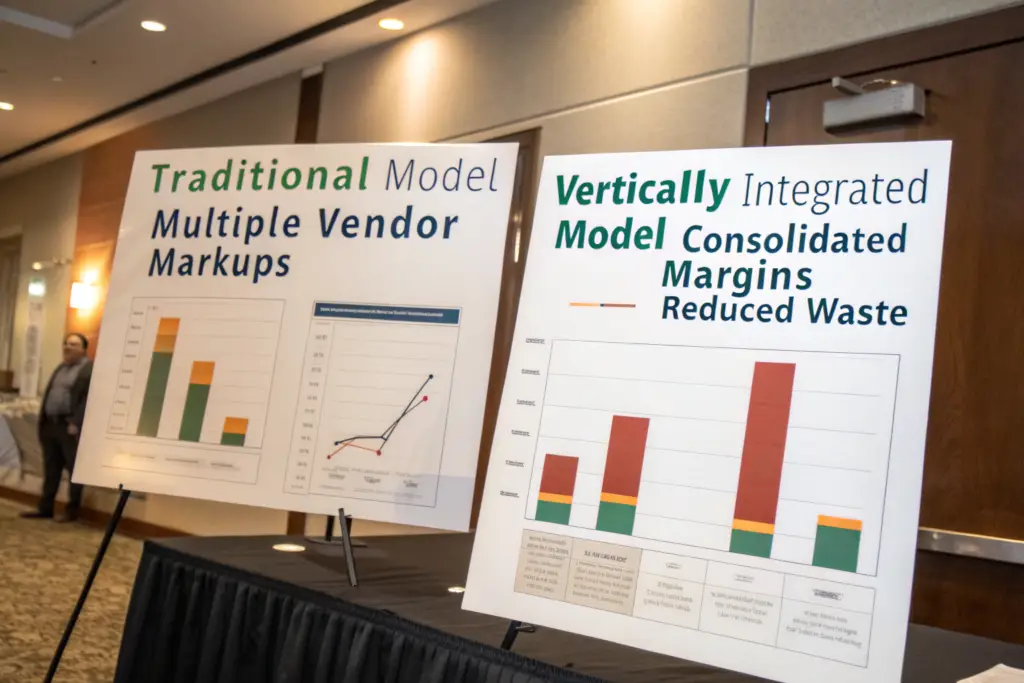
Where Do the Direct Cost Savings Come From?
- Eliminated Middleman Margins: We pay the base cost for raw materials and processing, not a marked-up price from a fabric trader or a dyeing agent.
- Lower Logistics & Handling: No multiple shipments between vendors means lower freight and handling expenses.
- Reduced Waste: Integrated material planning allows for optimal utilization. Fabric remnants from cutting can be collected systematically and repurposed into smaller items or recycled, rather than being discarded by an external cutter who has no use for them.
These savings allow us to offer more aggressive bulk pricing while maintaining healthy margins, or to invest in better materials at the same price point.
How Does It Enable Transparent Costing and Value Engineering?
Because we control each cost center, we can provide clients with an unprecedented level of cost transparency. We can show how switching from a jacquard to a pique knit might save $0.50/unit at the knitting stage, or how a minor design simplification could save 15 minutes of sewing time. This transforms the buyer-supplier relationship into a collaborative value engineering partnership. We helped a denim brand redesign a pocket flap, which simplified the cutting pattern and reduced fabric consumption by 3%, saving them over $8,000 on a single production run without affecting the aesthetic.
What Are the Advantages for Flexibility and Rapid Prototyping?
Market trends change fast. The ability to pivot quickly—to test a new fabric, adjust a design based on sample feedback, or produce a small batch for a flash sale—is a huge competitive advantage. Vertical integration turns your factory into a responsive innovation lab.
The tight coupling of design, sampling, and production teams under one roof drastically shortens the feedback and modification loop. There’s no need to ship a sample across cities or countries for a small adjustment and wait weeks for a new version.
Dive Deeper Paragraph: Agility is a byproduct of proximity and direct authority over all processes.
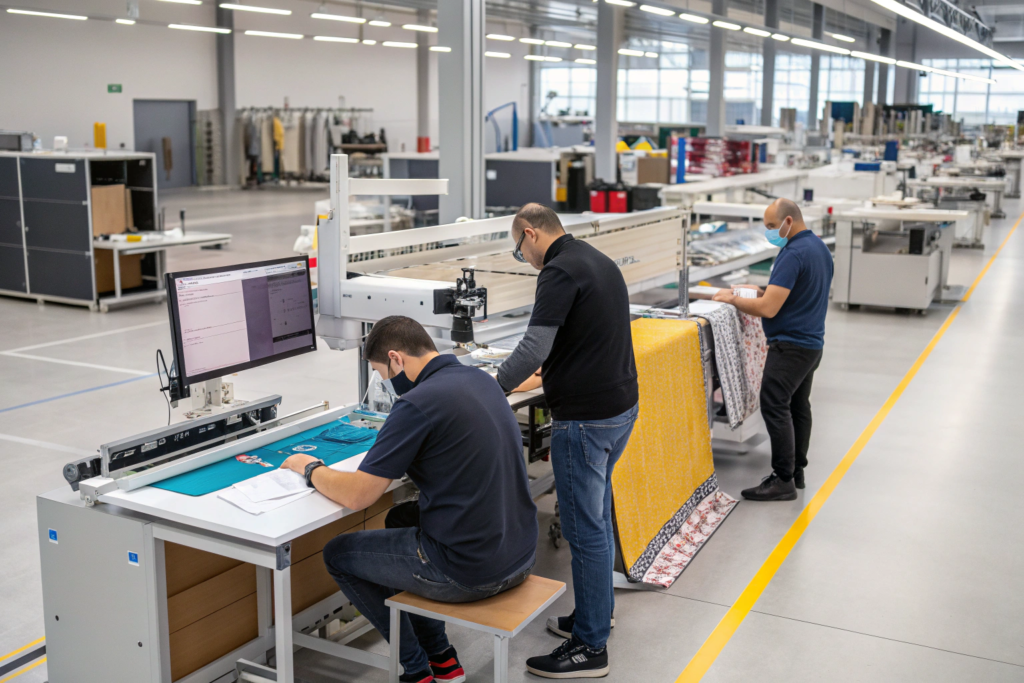
How Does Integration Speed Up Sampling and Development?
Our in-house sample room has direct access to the fabric warehouse, trim store, and pattern-making department. A designer’s request for a second prototype in a different weight of linen can be actioned the same day. We recently partnered with a DTC brand known for data-driven design; we produced three successive physical prototypes of a hoodie based on their online customer feedback in just 10 days, allowing them to finalize the winning version in time for a critical production slot. This pace is a function of concurrent engineering, where development stages overlap seamlessly.
How Does It Enhance Customization and Small Batch Capability?
Vertical integration makes small, customized orders economically and logistically feasible. We can dye a small lot of fabric specifically for a 500-piece custom order, cut and sew it without worrying about minimum order quantities from external partners. For a corporate client needing 200 branded jackets with a unique color, we managed the entire micro-run efficiently, something most large, non-integrated factories would decline or price prohibitively. This flexibility is key for modern direct-to-consumer (DTC) brands and those practicing on-demand manufacturing.
Conclusion
Choosing a vertically integrated clothing factory is a strategic decision that goes beyond unit price. It’s an investment in supply chain resilience, product integrity, and time-to-market speed. The benefits—compressed lead times through seamless workflow, ironclad quality control from source to finish, transparent and optimized costing, and unmatched flexibility—provide brand owners with a stable, responsive, and accountable foundation for growth.
At Shanghai Fumao, our vertically integrated operations are designed to give you control, clarity, and confidence. We eliminate the complexities and risks of a fragmented supply chain, allowing you to focus on what you do best: building your brand. If you are tired of managing multiple vendors and seeking a partner that offers true end-to-end accountability, let’s connect. To explore how our integrated model can benefit your next collection, contact our Business Director, Elaine, at elaine@fumaoclothing.com. Build with consistency, speed, and transparency.