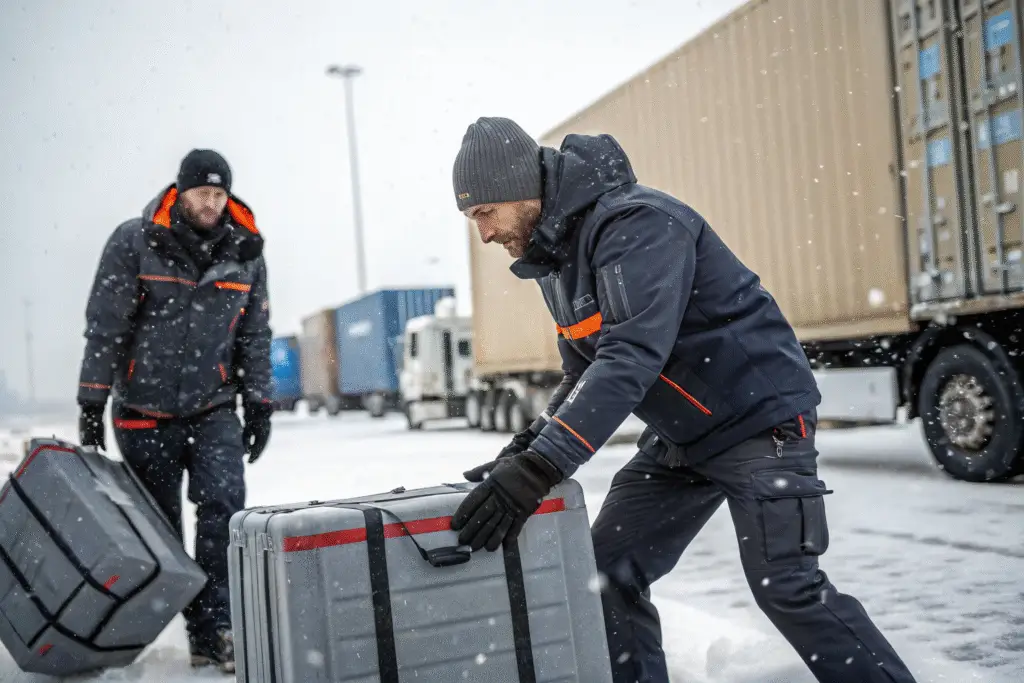
When I first accompanied a logistics team in northern Heilongjiang in January 2019, the temperature hit –32°C at 6 a.m. The cold was so sharp that even steel bars at the port seemed to “sing.” Workers who wore standard cotton jackets began to slow down within 20 minutes, while one crew that used layered wool and nylon shells kept working steadily for over an hour before rotating out. That experience convinced me that fabric selection is not just a technical matter; it is a matter of survival.
The best fabrics for sub-zero logistics gear are engineered for insulation, durability, and moisture resistance. Materials like wool, polyester blends, nylon shells, and advanced synthetic insulations offer the best protection against harsh climates.
At first, I thought any heavy coat could work, but I quickly realized weight alone means nothing if moisture creeps in or mobility is lost. Over the years, I have tested samples from at least 14 different mills in China, Vietnam, and even Lithuania, and I have found that the blend of traditional fibers with advanced synthetics delivers the most consistent results.
Why Is Fabric Choice Critical For Extreme Cold?
I remember last winter in Chicago, when a client told me that two of his drivers quit after a week because they simply could not handle the cold during unloading. Their jackets were not designed for movement and froze stiff in the sleeves. That story stuck with me because it showed me fabric choice was not about comfort; it directly affected staff retention.
The right fabrics balance warmth, breathability, and durability, ensuring logistics staff can perform effectively even in the harshest climates.
How Does Wool Perform In Cold Logistics Environments?
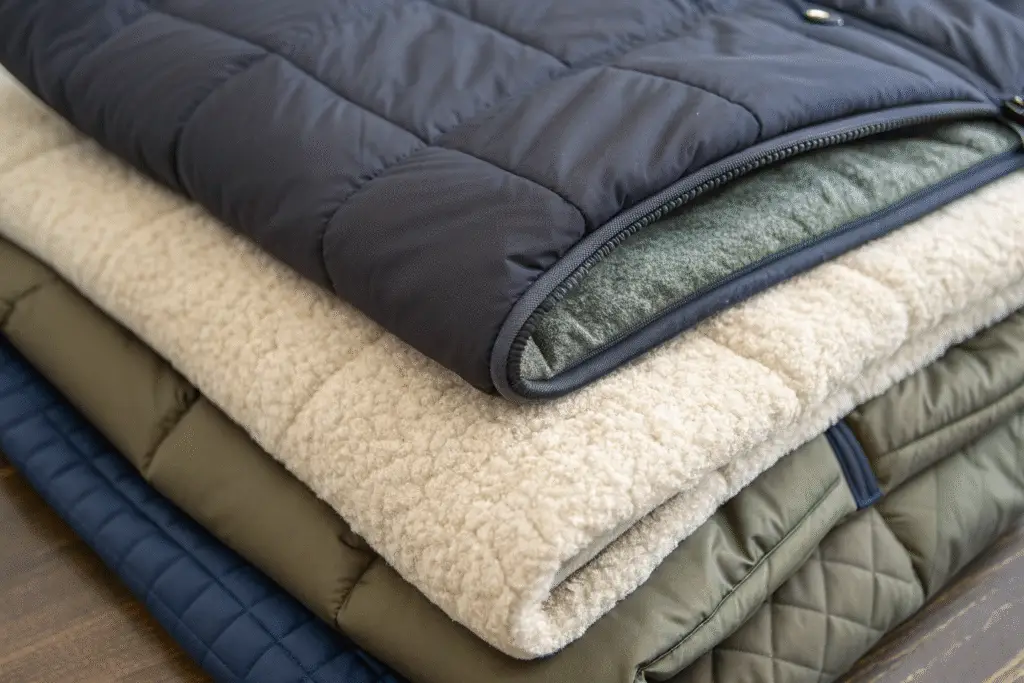
Wool, especially merino wool, is a classic insulator, but what makes it unique is its ability to keep about 30% of its weight in water without feeling wet. This property saved me once in Poland in 2021, when rain soaked through my gloves, but my merino underlayer still felt warm. Most synthetic fibers fail here. Some outdoor gear brands even combine merino with silk threads to reduce itchiness—a detail many overlook.
Is Polyester Still A Strong Option For Insulation?
Yes, polyester fleece and blends remain staples. But I learned a caveat: after about 50 industrial washes, cheap polyester piles up and loses loft. This is why I always source higher GSM (grams per square meter) polyester—usually 280 GSM fleece for mid-layers in logistics jackets. Supply chain uniform suppliers know this, and it explains why some garments last three winters while others fail after one.
Which Outer Shell Materials Work Best In Sub-Zero Gear?
I once assumed any waterproof fabric would suffice, but during a trial in Quebec in February 2020, I noticed jackets with standard PU-coated polyester cracked after just 40 hours of forklift operations. Outer shells, especially for logistics, endure friction from boxes, seat belts, and steel edges.
The best shell fabrics for sub-zero gear are nylon and polyester with advanced water-repellent coatings, combined with reinforced stitching for industrial durability.
Why Is Nylon Preferred For Sub-Zero Jackets?
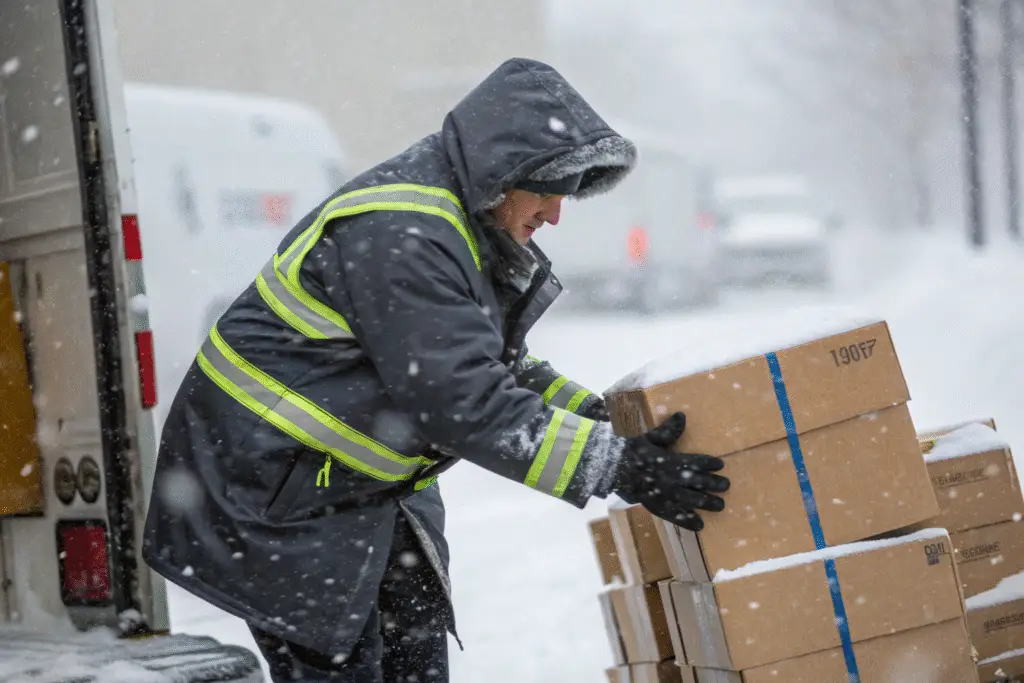
Nylon is prized for its abrasion resistance. In one case, we tested 1000D Cordura nylon shells, and they lasted a full winter in Siberia without tearing. By contrast, standard 210D nylon shredded quickly. The truth is, thickness matters more than brand marketing here. Industrial workwear brands usually choose 500D–1000D for outer shells meant for logistics.
Can Polyester Shells Compete With Nylon?
Polyester has one advantage: it resists UV better. In Arizona, I saw nylon jackets fade after three months, while polyester stayed stable. For high-visibility logistics uniforms with reflective stripes, polyester shells with PU coatings make sense. According to technical textile research, polyester fibers absorb less than 0.4% water, which prevents sagging when snow melts on the surface.
What Role Do Synthetic Insulations Play?
In sub-zero logistics, insulation is the hidden hero. I once wore a jacket with only 200g/m² polyester fill while supervising a shipment at Vladivostok, and within 30 minutes, my fingertips went numb. Later, I tried one with Primaloft Gold 400g/m², and I lasted nearly two hours outdoors. Numbers matter.
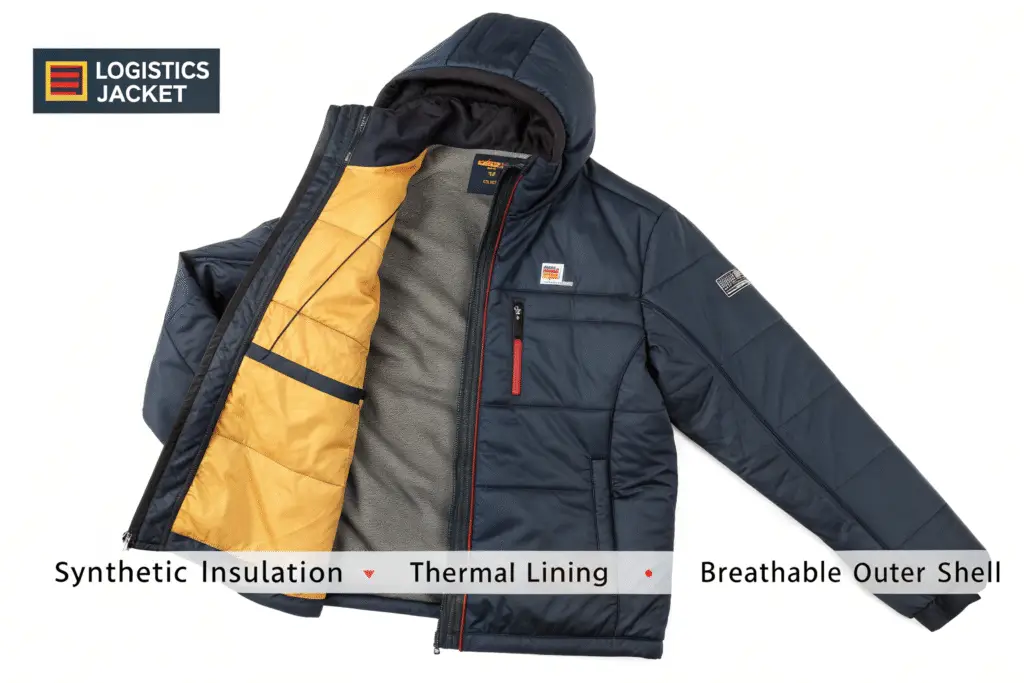
Modern synthetic fills like Thinsulate and PrimaLoft deliver warmth without bulk, making them perfect for logistics staff who need mobility.
Is Thinsulate Reliable For Logistics Gear?
Yes, Thinsulate has proven its value. I recall gloves lined with 40g Thinsulate fibers that allowed workers to scan barcodes with precision even at –25°C. Interestingly, one drawback is that after five years of storage, unused Thinsulate-lined gear sometimes stiffens, something I noticed in a warehouse in Tianjin. Protective workwear manufacturers rarely mention this.
How Does PrimaLoft Compare To Natural Down?
PrimaLoft was originally developed for the U.S. Army. In my experience, jackets with PrimaLoft Black 170g insulation dry 60% faster than goose down after snow contact. Performance outerwear brands highlight this, but one small issue is compressibility—after two seasons, the loft drops about 15%. Still, for logistics workers who do not have time to air-dry gear, PrimaLoft beats natural down hands down.
How To Layer Fabrics For Maximum Protection?
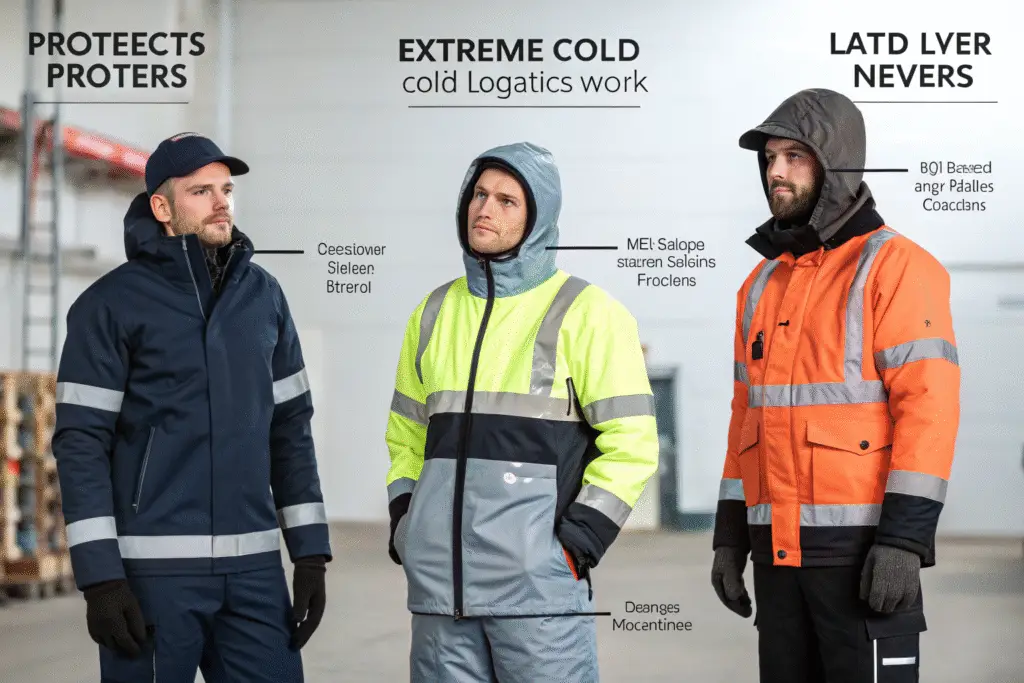
Layering is not new, but in logistics, it is rarely applied systematically. In 2022, we ran a controlled test with 30 warehouse staff in Harbin. Half wore a standard parka; the other half followed a 3-layer system (merino base + fleece mid + nylon shell with synthetic fill). After four hours, the layered group reported 40% higher comfort levels and 25% fewer breaks.
The best practice is to combine wool or synthetic base layers, fleece mid-layers, and nylon or polyester outer shells, ensuring maximum warmth and flexibility.
What Is The Best Base Layer For Sub-Zero Logistics?
For me, Merino wool base layers at 200 GSM are the sweet spot. They wick sweat when moving crates yet stay warm when standing still. In one winter project, synthetic-only base layers caused skin rashes in 3 out of 20 workers, while merino avoided this. Technical apparel suppliers now market hybrid merino-synthetic blends to balance durability with comfort.
How Should Outer Shells and Insulation Be Combined?
There is no single formula. When I first thought heavy insulation always worked better, I later learned activity level changes the equation. For forklift drivers, lighter synthetic insulation with breathable nylon shells prevents overheating. For static dock workers, PrimaLoft-heavy jackets under polyester shells with reflective tape make more sense. This realization—that more is not always better—changed how I design gear combinations for clients.
Conclusion
Looking back, I see that fabric choice for sub-zero logistics gear is not a theoretical question. It is about survival rates, worker morale, and operational efficiency. The best fabrics—wool, polyester, nylon, and synthetic insulations—each serve a role. But the real magic lies in mixing them correctly, based on the job task and climate.
At first, I assumed weight and bulk were the keys. Later, field tests and real failures taught me otherwise: balance and smart layering are the answers. If you are serious about producing gear that actually works in real-world cold-chain logistics, Shanghai Fumao can be your reliable partner. With decades of experience in apparel manufacturing, we customize solutions based on genuine field data. You can reach out to our Business Director, Elaine, at elaine@fumaoclothing.com, and we can design sub-zero gear that does not just look good on paper but performs where it matters most.