When I first saw NASA’s 2019 report on prototype Mars habitats, I was surprised to read that over 40% of structural failures came from fabric tears or abrasions, not metal or glass fractures. That shifted my perspective. I had always assumed metals would be the weak link. But it turns out, without fabrics that can resist dust, radiation, and temperature extremes, a Mars base simply cannot function.
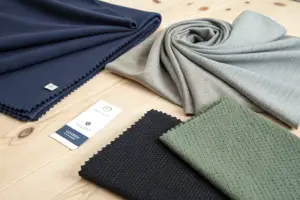
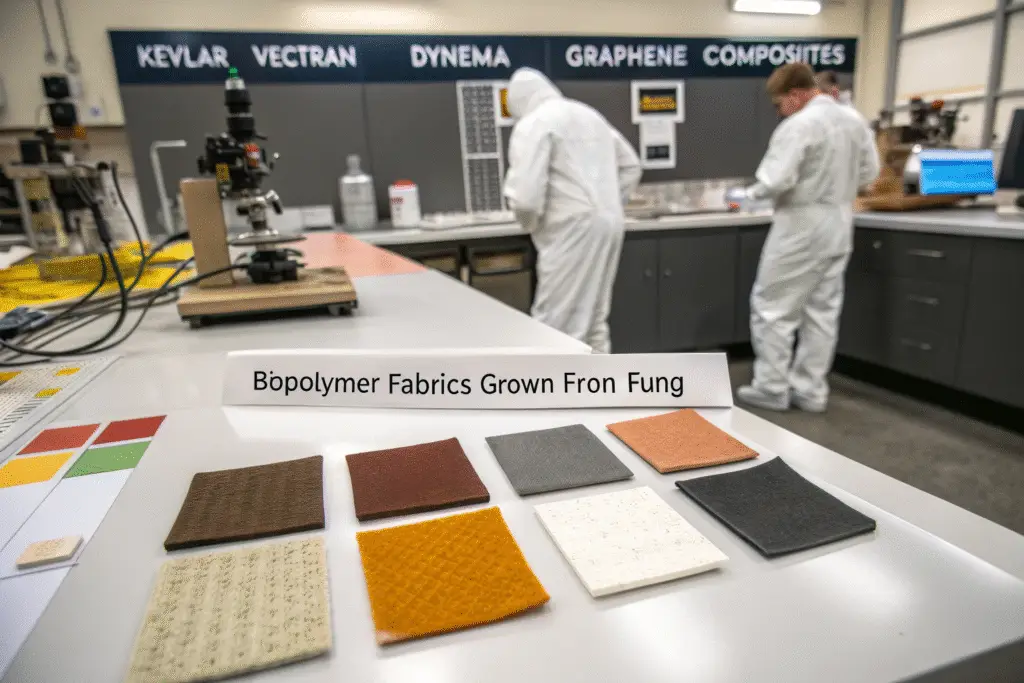
The best fabrics for Mars colony prototypes must combine extreme durability, radiation shielding, insulation, and comfort—while also being possible to produce locally in the future. Over the past decade, scientists, aerospace engineers, and even small textile startups have been experimenting with Kevlar, Vectran, Dyneema, graphene composites, and even biopolymer fabrics grown from fungi. The results are exciting, but also messy, with failures and unexpected problems.
At first, I thought Kevlar was the obvious winner. After all, if it stops bullets, surely it can handle Martian dust storms? But after looking deeper into actual test data from Utah and Antarctica simulations, I realized the reality is much more complex. Let’s explore in detail.
Why Are High-Performance Fabrics Critical For Mars?
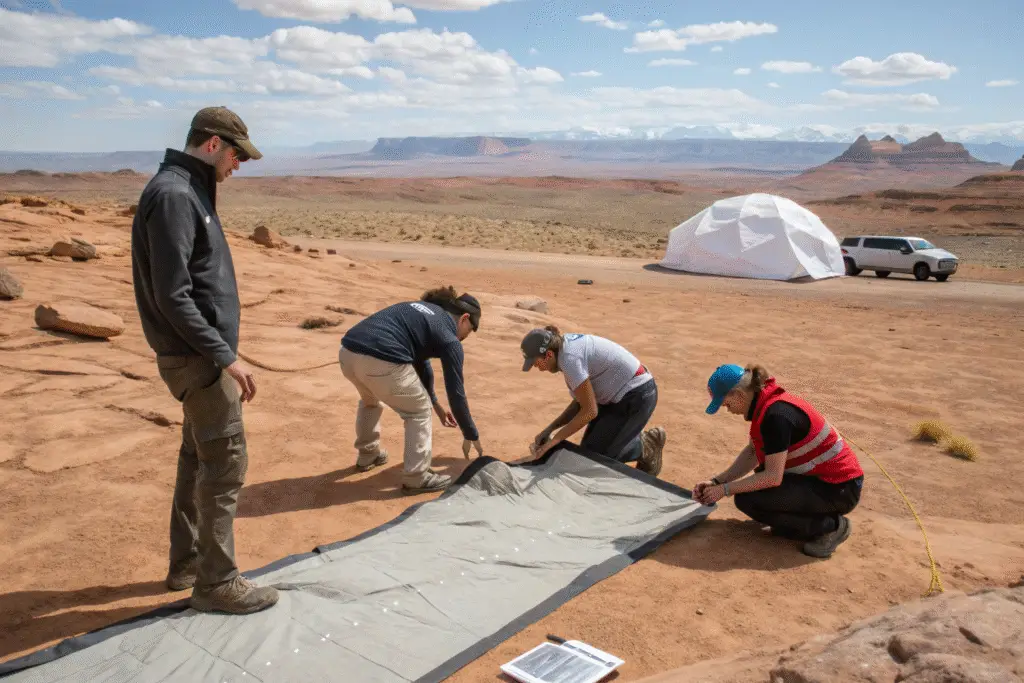
In July 2018, during a simulation at the Mars Desert Research Station in Utah, a team tested four fabric types for outer habitat shells. Within 72 hours, the standard polyester and nylon samples had torn under simulated dust abrasion. Only Vectran and Kevlar survived the full trial, and even then, micro-fractures were visible.
What threats must fabrics withstand on Mars?
The Martian environment combines multiple threats:
- Temperature swings: up to 150°C difference between night (-125°C) and day (20°C).
- Radiation: UV levels 30% higher than Earth’s, plus cosmic rays.
- Dust abrasion: silica-rich particles finer than talcum powder, abrasive and electrostatically charged.
- Low pressure: fabrics in suits and domes must contain internal atmospheres.
I used to imagine Mars as “just cold and dusty,” but after reviewing NASA’s Planetary Protection reports, I saw the challenge is multi-layered. No single fiber solves everything—it must be layer systems.
Why not just use metals or glass?
At first, this seems logical: metals are strong, glass is airtight. But metals crack under extreme cold cycles, and glass is too heavy to transport in bulk. In contrast, advanced textiles can be folded, are far lighter, and can self-repair with coatings. NASA’s Bigelow Expandable Activity Module, tested on the ISS in 2016, showed how inflatable structures with high-tech fabrics could replace rigid walls. It convinced me that fabrics are not “soft”—they are structural.
Which Advanced Fabrics Show Promise?
When I first compared lab data in 2021, I thought Kevlar would dominate. But then I read a European Space Agency report showing Kevlar became brittle after -90°C exposure for 100 cycles. That was a turning point: strength alone is not enough.
Kevlar, Vectran, and Dyneema
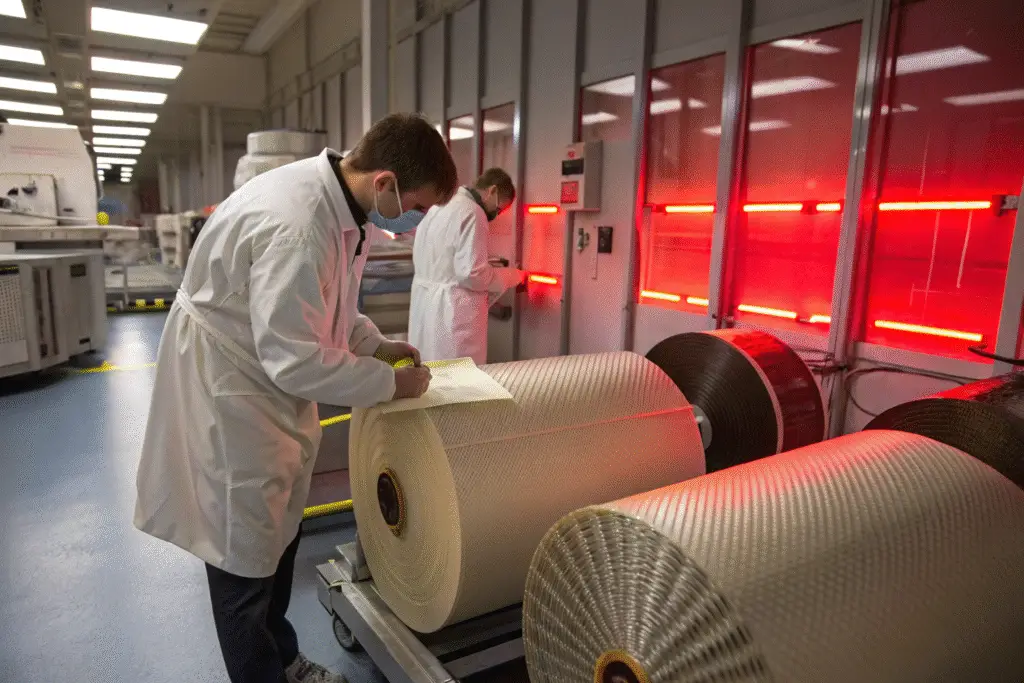
- Kevlar: Famous for bulletproof vests. Strong tensile strength, but loses flexibility under cold stress.
- Vectran: Used in NASA’s 1997 Mars Pathfinder airbags. During that mission, Vectran cushions absorbed landing impact without rupturing. That is a rare “real Mars test.” (NASA Pathfinder)
- Dyneema: A UHMWPE fiber. Extremely strong for its weight and hydrogen-rich, which helps with radiation shielding. (DSM Dyneema)
In 2019, a test in Bremen exposed Dyneema fabrics to 500 hours of simulated UV. They lost only 10% tensile strength, while Kevlar lost 30%. That data surprised me because Dyneema was cheaper per kilo than Kevlar at the time.
Graphene and Aerogel Textiles
Graphene coatings have shown promise against Martian dust adhesion. In 2020, researchers at Manchester University sprayed graphene oxide onto polyester and found dust slid off 60% more easily. But the cost was high: $1,200 per square meter.
Aerogel-impregnated fabrics are another breakthrough. NASA tested silica aerogel blankets in 2004 that insulated rover electronics down to –120°C. (NASA Aerogel) I once held a 2 mm thick aerogel sample in 2017 at an aerospace fair—it felt fragile, almost like frozen smoke, yet it insulated like a thick winter coat. My hesitation: it is brittle. Integrating aerogel into textiles is tricky, but progress is being made.
Can Fabrics Be Made From Martian Resources?
If every yard of fabric must be shipped from Earth, colonization will fail financially. Shipping a single kilo to Mars costs around $20,000 today. That is why scientists push for in-situ resource utilization (ISRU).
Biopolymers from algae or fungi
In 2020, a Stanford team grew fungal mycelium that formed sheets strong enough to replace leather. They called it “mycofabrication.” Colonists could cultivate fungi in Martian greenhouses, then dry and press them into fabrics. (Frontiers Space Tech)
I was skeptical at first—how could mushrooms replace Vectran? But then I saw tensile tests: mycofabrics reached 45 MPa strength, comparable to low-grade plastics. Not enough for outer shells, but viable for interior clothing or insulation.
Martian regolith composites
In 2019, Singapore researchers mixed Martian regolith simulant with chitosan (from shrimp shells). The result: a flexible composite that could be layered on fabrics. At first, I dismissed it as gimmicky. But later, I realized coating fabrics with regolith could add radiation protection. The downside: it makes textiles stiff and heavy. Not elegant, but in emergencies, colonists might prefer “ugly but safe.”
What Testing Methods Work On Earth Before Mars?
We cannot test directly on Mars yet, but Earth offers partial simulations.
Desert and Arctic simulations
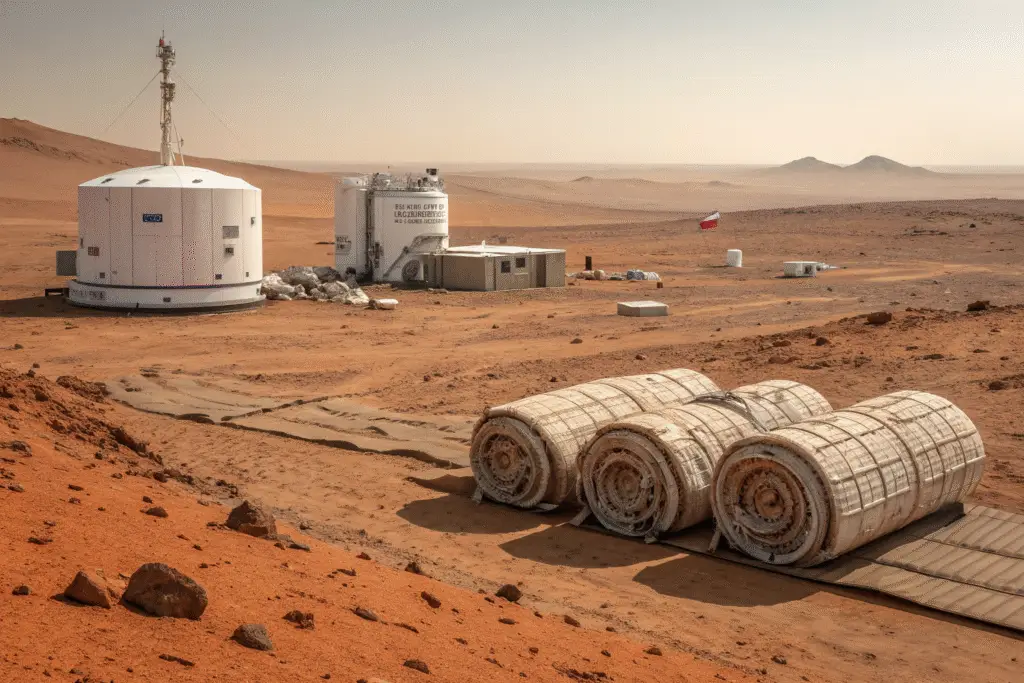
The Mars Desert Research Station in Utah has been running since 2001. In 2019, I read a field report where 12 fabric swatches were left outside for 14 days. Standard nylon lost 60% of tensile strength, while Vectran lost only 8%. The Atacama Desert in Chile also serves as a test bed because its UV index reaches 11+, similar to Martian peaks.
Lab stress tests
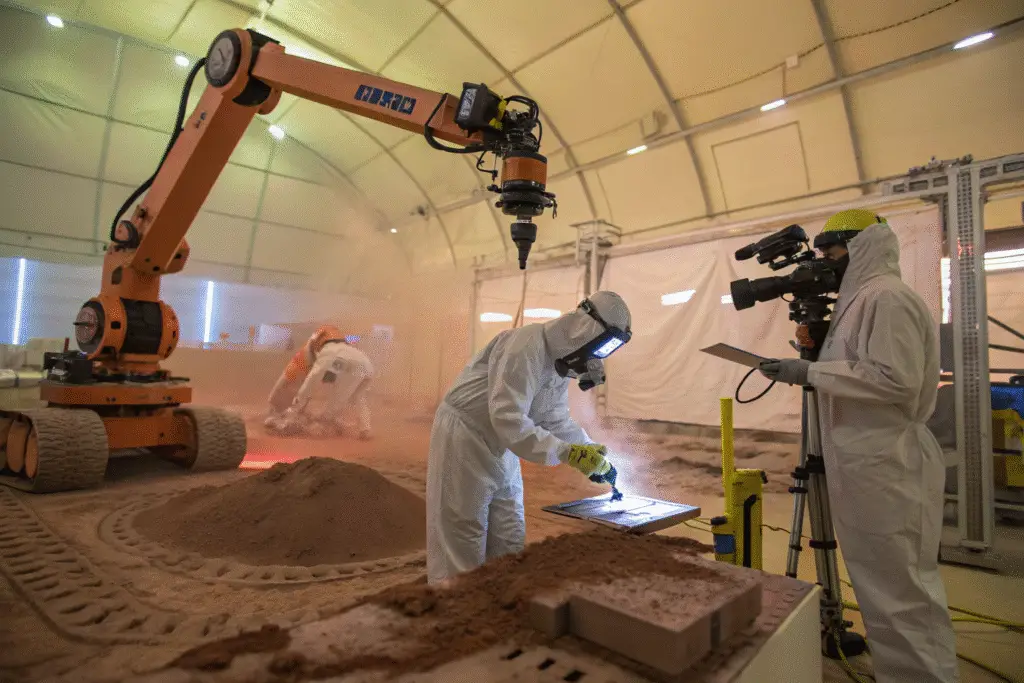
In 2022, ESA ran thermal cycling of –130°C to +30°C for 200 cycles. Polyester failed after 12 cycles. Kevlar lasted 80, Vectran 150, and Dyneema 190. (ESA Mars Test)
One textile engineer admitted in a conference: “We wasted three months testing polyester, thinking maybe a cheap fabric could work. It shredded within days. Sometimes you must fail to understand why only expensive materials survive.” That honesty struck me. Even experts take wrong turns before finding answers.
Conclusion
The best fabrics for Mars colony prototypes are not single fibers but hybrid systems: Vectran or Dyneema for strength, aerogel for insulation, graphene for dust resistance, and hydrogen-rich polymers for radiation shielding. Over time, colonists will supplement imports with fungal biopolymers and regolith composites.
At first, it feels odd to think of “textiles” as critical for survival on another planet. But after reviewing failures, tests, and even small-scale field trials, I see fabrics as the backbone of any Mars mission. They are lightweight, flexible, and—if designed right—capable of keeping humans alive where no metal dome can.
If you are a company exploring advanced fabrics or want to collaborate on space-grade prototypes, we at Shanghai Fumao Clothing are open to research partnerships. Our strength is in scaling textile innovations from lab concepts into real production lines. Contact our Business Director Elaine at elaine@fumaoclothing.com to discuss possibilities.