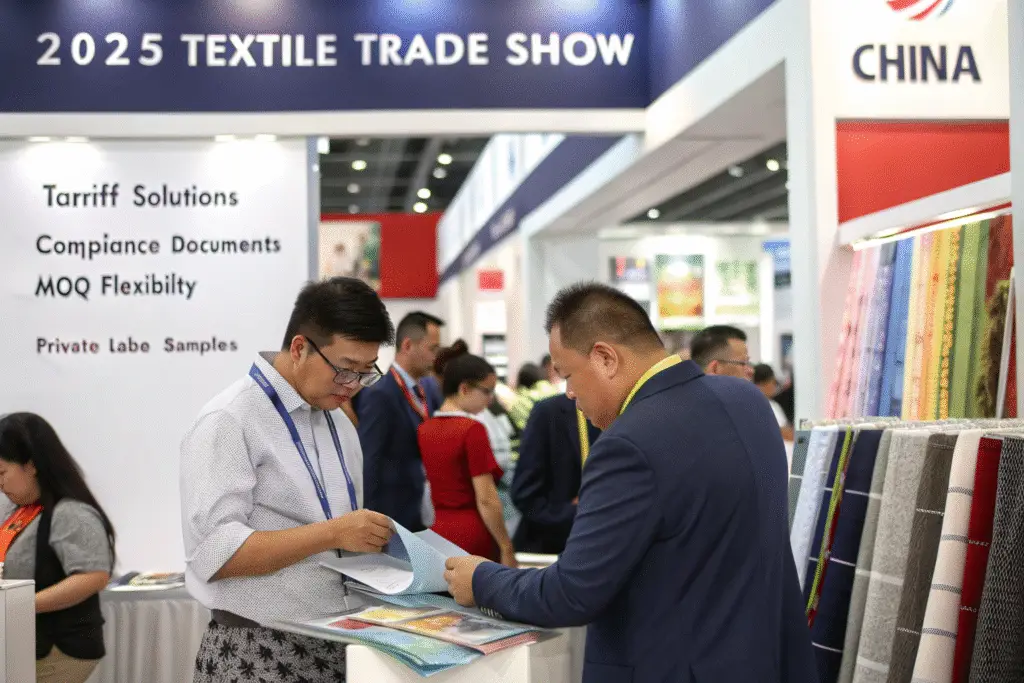
The 2025 trade show season is heating up—and so are import costs. With post-pandemic supply chain pressure and new tariff regulations reshaping sourcing landscapes, trade fairs remain one of the best places to find suppliers. But caution is the new currency.
At today’s shows, it’s not enough to spot trendy fabrics or low prices—you need to vet supplier reliability, tariff compliance, and delivery capability before signing that MOQ contract.
As a manufacturer who exhibits at fairs like Canton, CHIC, and Texworld, I meet dozens of American buyers like Ron each season. Many rush into deals, only to face delayed shipments or misclassified duties months later. Let’s walk through how to vet a truly reliable apparel supplier—starting from the trade show floor.
What Should You Check at Trade Shows Beyond Price and Style?
Trade shows offer a sensory overload—colors, conversations, pricing temptations. But under the surface, the most critical differences between suppliers won’t be visible in fabric samples.
To source successfully post-tariffs, you must evaluate operational reliability, compliance readiness, and supply chain control.
What Documents Should You Ask Suppliers for?
Bring this checklist to every serious booth conversation:
- BSCI or WRAP audit reports (amfori BSCI is most trusted)
- GOTS/OEKO-TEX/FSC certs (if dealing with eco-fabrics)
- Latest U.S. customs clearance history (can ask about past HTS codes used)
- Incoterm & MOQ flexibility (DDP options are a must in 2025)
- Production lead times by category
- List of past U.S. buyers (you don’t need names—ask for markets served)
Why Are Fabric Source and HTS Code So Important Now?
With duties varying by fiber and construction, suppliers must understand U.S. HTS classifications and be able to prove origin. Misdeclarations can cost you thousands.
We always have fiber test reports on-hand and reference recent CBP rulings during quoting—your supplier should too.
How Do You Spot Red Flags at a Trade Show Booth?
A fancy booth doesn’t equal trustworthy production. Many buyers are caught off guard by post-show reality: delayed responses, vague invoices, or worse—nonexistent compliance records.
You need to be alert for signs that a supplier may not be factory-direct, compliant, or ready for U.S. retail demands.
What Are the Key Red Flags?
Watch for these common issues:
| Red Flag | Meaning |
|---|---|
| No knowledge of HTS codes | They don’t ship regularly to the U.S. |
| Avoids giving MOQ | May lack real factory access |
| Can’t show past certificates | No audit trail = high compliance risk |
| Offers “any style you want” | May be a middleman or inexperienced agent |
| Pushes immediate deposit | Likely not used to structured B2B workflow |
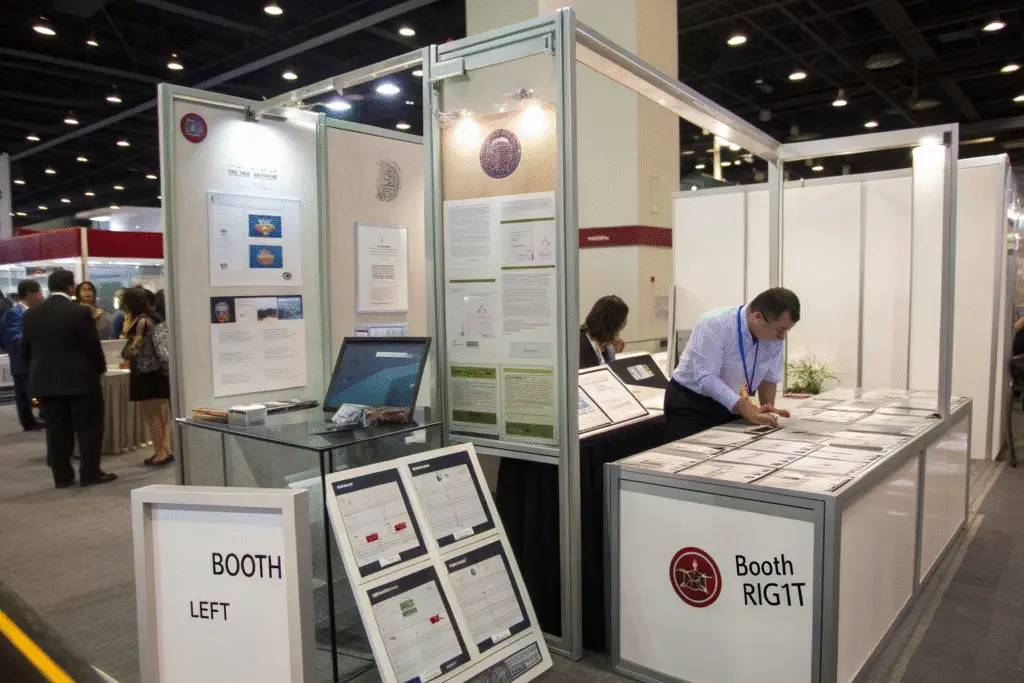
Ask to visit their factory post-show, or schedule a video call with the production team. A reliable partner welcomes transparency.
Can You Verify Supplier Background On-Site?
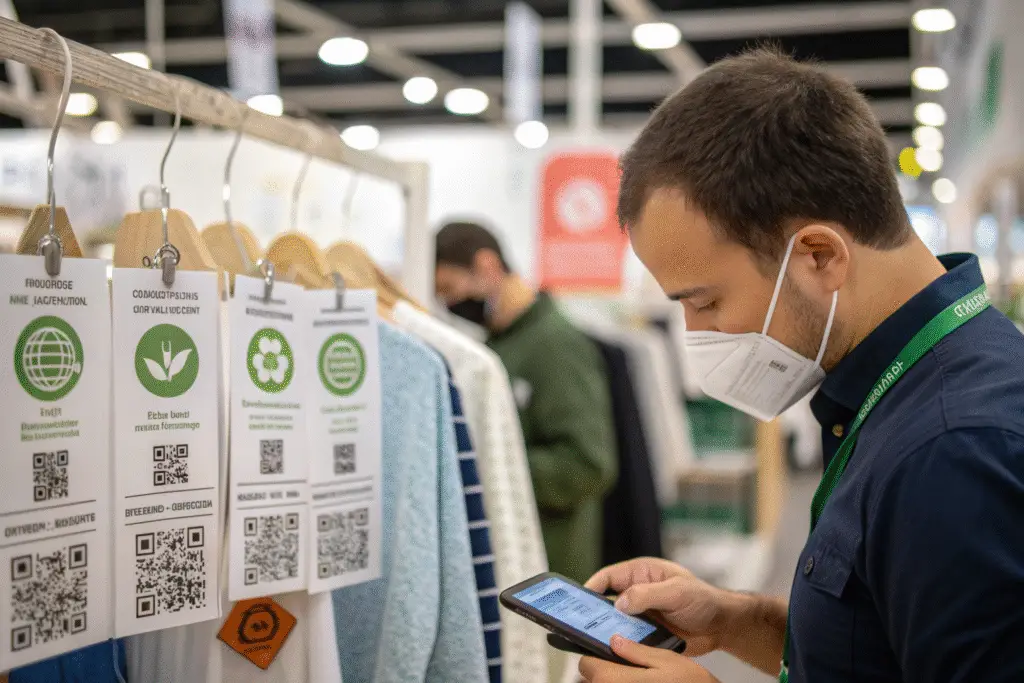
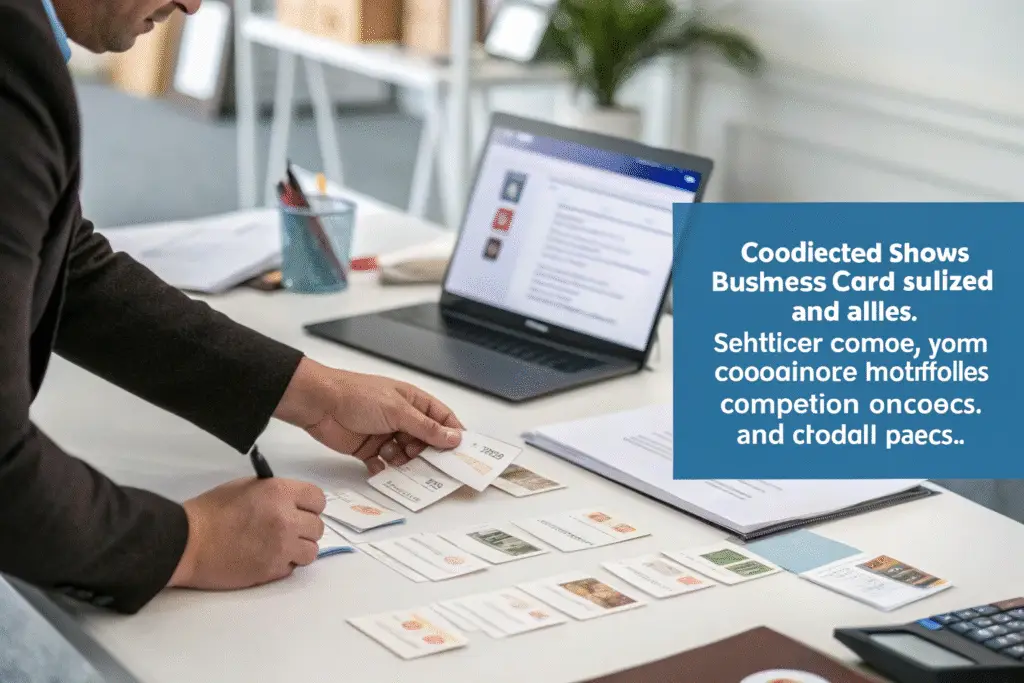
Yes. Tools like ImportYeti, Panjiva, or Alibaba’s verified profiles offer fast vetting. Some buyers scan QR codes on supplier business cards and match them against online shipping history.
If a supplier claims “we export to Walmart,” ask for proof—like packaging samples or label specs used. We always display our export cartons and GRS packaging as part of booth credibility.
What Post-Show Steps Confirm a Supplier’s Credibility?
The real work starts after the fair. Your supplier evaluation shouldn’t stop at the booth—use the next 1–2 weeks to qualify 3–5 shortlisted vendors.
Only after vetting samples, communication response, and audit trail should you proceed to trial order.
What’s the Ideal Post-Show Vetting Process?
Here’s our recommended checklist:
- Email follow-up within 48 hours (evaluate clarity & professionalism)
- Quote confirmation with HTS codes, Incoterm, MOQ, lead time
- Sample dispatch with full labeling and packing instructions
- Digital factory audit (photos, videos, certifications)
- Live call with merchandiser or production lead
We provide 3D mockups, AI-powered sample previews, and link clients directly to our line supervisors. If a supplier can’t provide real-time clarity within 5 business days—be cautious.
Should You Visit the Factory Before Placing an Order?
If possible, yes. If not, ask for a virtual tour or detailed line sheet. Post-pandemic, remote trust-building is common.
Buyers also use QIMA or SGS to audit unknown factories. We offer no-charge video walkthroughs and access to real-time production dashboards.
What Trade Show Trends Should You Watch in 2025?
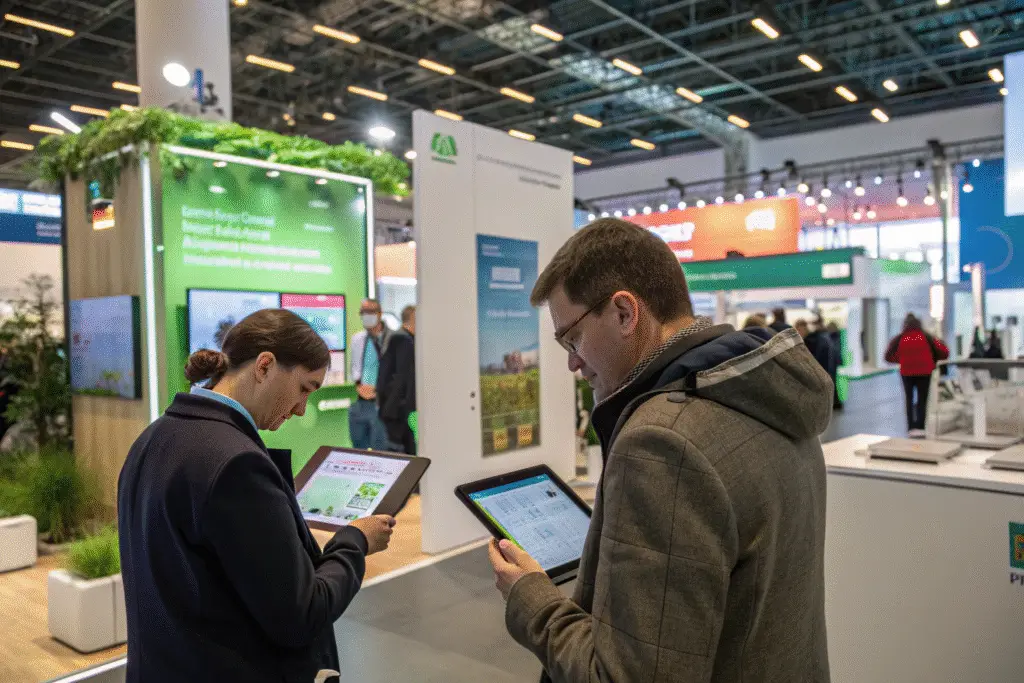
The trade show experience has evolved. Beyond booths, you’ll now see sourcing tech, compliance hubs, and tariff consultants on the floor. That’s because 2025 is the year of verified sourcing + digital-first supplier relations.
Smart buyers are prioritizing compliance, speed, and fiber transparency—not just low cost.
What Are the Key Show Themes This Year?
Top themes shaping supplier conversations:
- Tariff mitigation tactics (e.g., eco-fiber use, country-of-origin strategies)
- Small batch/private label enablement
- DDP logistics partners on-site
- Compliance-on-demand booths showing QR verifications
- AI/AR tools for live garment simulations and virtual fitting
At CHIC Spring 2025, we introduced a tool where buyers could scan a QR code and instantly access fiber origin, factory audit, lead time, and sample specs.
Which Shows Are Worth Visiting?
For U.S. buyers, these are top picks:
| Show | Location | Focus |
|---|---|---|
| CHIC | Shanghai | All apparel + compliance zones |
| Texworld USA | NYC | Fabric + private label sourcing |
| Canton Fair | Guangzhou | Large scale, FOB + MOQ buyers |
| Magic Las Vegas | USA | Trend research + white label |
| Intertextile | Shanghai | Fiber + garment innovation |
We attend both Texworld and CHIC to meet new U.S. partners—often helping them launch their first private label lines under DDP terms.
Conclusion
Trade shows are more than sourcing festivals—they’re your first checkpoint in a high-tariff, high-stakes sourcing environment. And in 2025, only suppliers with real compliance, fabric traceability, and MOQ flexibility will deliver real value.
At Shanghai Fumao, we don’t just show pretty samples—we bring full transparency. From HTS classification and fiber certification to DDP quotation and audit-ready processes, we’re your sourcing partner—not just a booth number.
If you’re planning to visit a show or need post-fair supplier screening, reach out to our Business Director Elaine at elaine@fumaoclothing.com. Let’s turn that handshake into a reliable, profitable partnership.