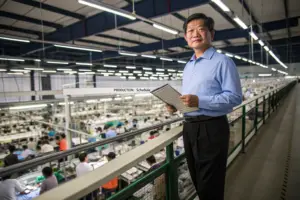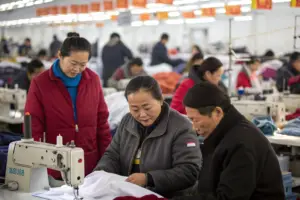
From factories to fitting rooms, the fashion industry is entering a new era—powered by precision, data, and smart automation.
In 2025, fashion manufacturing will be driven by digital twins, AI-powered demand planning, 3D sampling, and circular production technologies—all designed to reduce waste, boost speed, and meet changing consumer expectations.
At Fumao, we work with partners who are ready to evolve beyond traditional cut-and-sew operations. Here's what’s reshaping the manufacturing floor and the fashion supply chain right now.
What is tech infused fashion 2025?
It’s not just about wearable electronics—it’s about embedding technology into every stage of production, distribution, and user experience.
Tech-infused fashion in 2025 combines smart materials, automated manufacturing, and predictive systems to create clothing that’s more functional, sustainable, and consumer-centric.
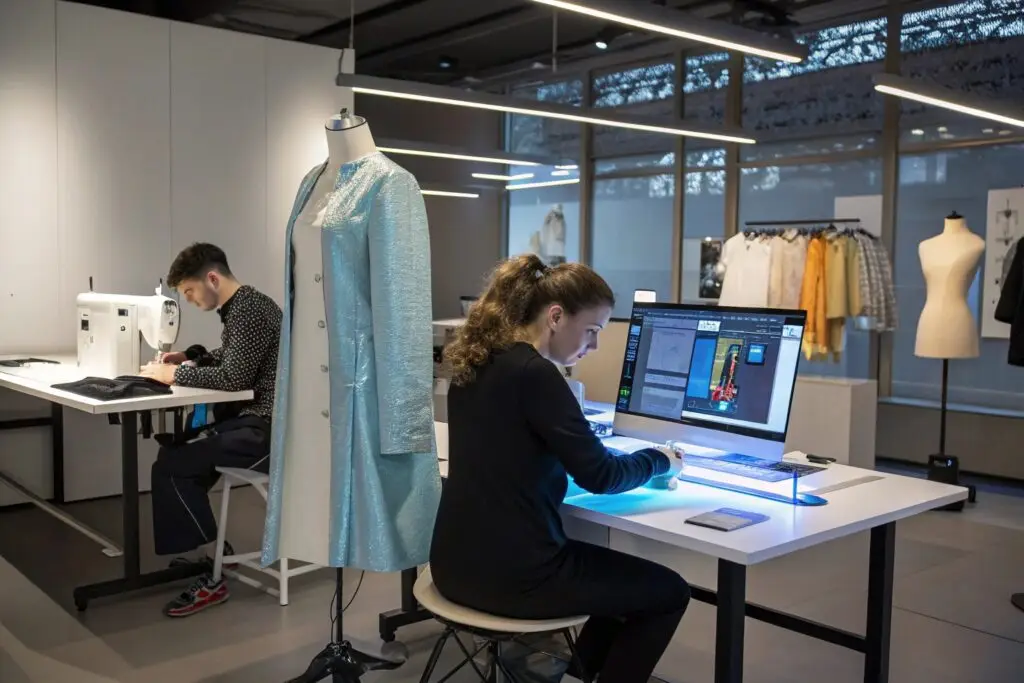
What defines tech-infused fashion today?
- 3D digital design and simulation1
- Custom fit-on-demand production
- Smart fabrics with sensors or memory functions2
- Real-time inventory visibility
- Seamless integration with e-commerce
At Fumao, we’ve implemented 3D prototyping3 and laser-cut systems to speed up sampling and cut fabric waste by 25%.
What is the future of fashion technology?
It’s leaner, faster, and far more connected. The future is about doing more—with less.
The future of fashion technology revolves around automation, personalization, sustainability, and cross-platform integration from concept to closet.
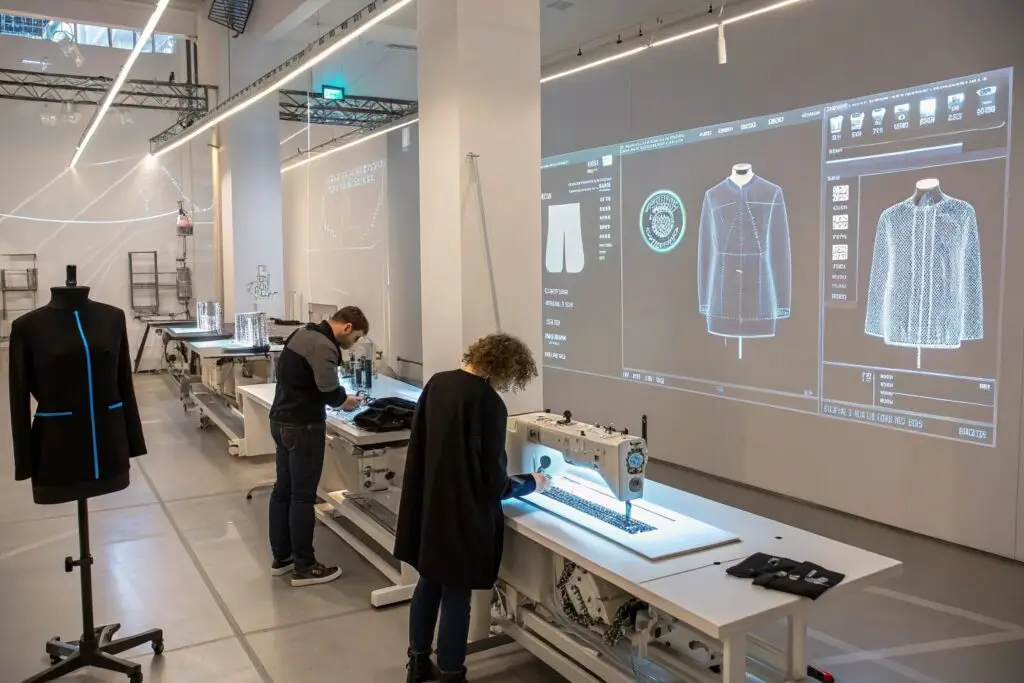
What tech will dominate fashion manufacturing in 2025?
1. AI-Driven Demand Forecasting4
Machine learning tools analyze trends, weather, and social media to predict what will sell.
→ Reduces overproduction and lowers unsold inventory.
2. 3D Virtual Sampling5
Garments are sampled digitally—no fabric, no shipping, no waiting.
→ Brands save time and resources while improving accuracy.
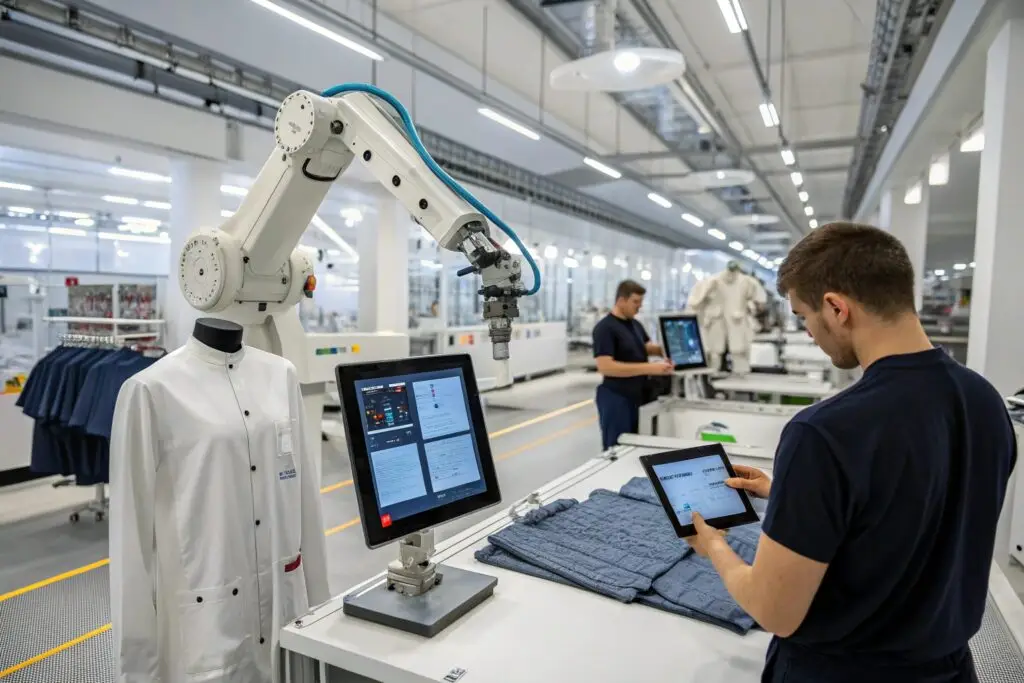
3. Robotics in Sewing and Finishing
Automated arms now assist with complex stitching and folding.
→ Cuts labor time while improving consistency.
4. Digital Product Passports6
Each garment has a digital ID showing its origin, material, lifecycle.
→ Meets EU regulations and improves consumer trust.
What are the latest trends in fashion?
Fashion isn’t just about looks—it’s now about logistics, tech, and speed.
The biggest trends in fashion include smart textiles, AI design assistants, modular construction, circular systems, and ultra-short supply chains.
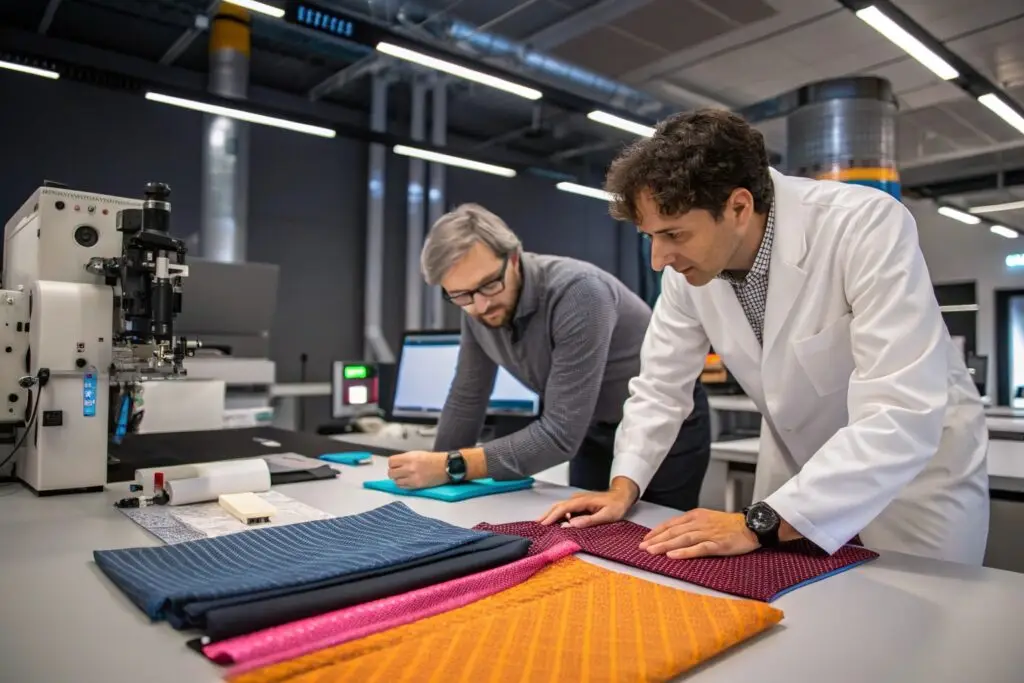
Top 5 Trends We’re Watching at Fumao
5. Circular Design Templates7
Products made for easy disassembly, recycling, and reuse.
→ Supports brand sustainability pledges.
6. On-Demand Microfactories8
Pop-up units near consumers or warehouses for small-batch production.
→ Speeds up trend-to-market time.
7. Augmented Reality (AR) Fitting Rooms
Users try on clothes virtually at home or in-store.
→ Reduces return rates and increases user confidence.
8. Blockchain Traceability9
Full visibility from raw material to shelf.
→ Verifies ethical sourcing and combats greenwashing.
9. AI-Generated Fashion Design
Algorithms suggest prints, cuts, and seasonal updates.
→ Designers shift from sketching to curating.
These technologies are no longer optional—they’re competitive necessities.
How can technology help the fashion industry?
From raw fabric to customer feedback, tech helps every step become smarter, faster, and more sustainable.
Technology helps fashion by optimizing production, reducing waste, enhancing design accuracy, personalizing user experience, and enabling real-time data sharing across the supply chain.
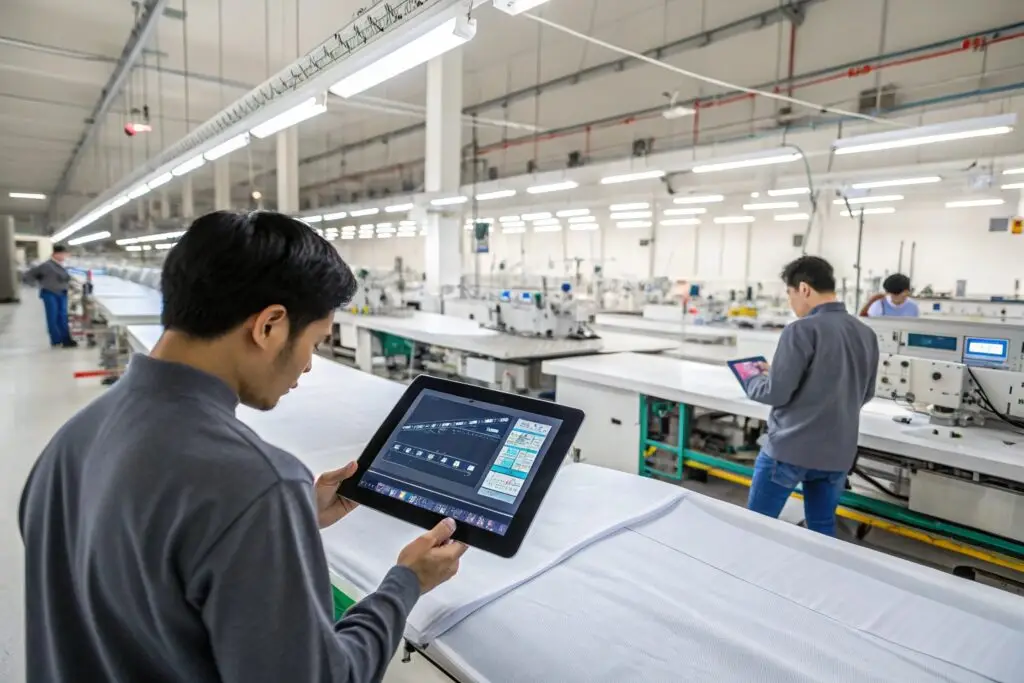
What measurable benefits has tech delivered to manufacturers?
| Area | Impact |
|---|---|
| Sampling Time | ↓ 70% with 3D digital prototyping10 |
| Waste Reduction | ↓ 30% with laser cutting + fabric layout AI11 |
| Lead Time | ↓ 50% using local microfactories |
| Sizing Accuracy | ↑ Fit success via body scan data |
| Energy Efficiency | ↑ Automation = optimized power cycles |
At Fumao, we’ve implemented:
- Digital twin technology to simulate bulk orders
- Fabric RFID tagging to improve inventory traceability
- DPP-compliant (Digital Product Passport12) tagging for EU clients
These systems create smoother operations—and higher customer trust.
Conclusion
The fashion world is changing faster than ever. Brands and factories that embrace 2025’s top technologies will produce smarter, cleaner, and faster—and stay ahead of demand. At Fumao, we’re not just adapting. We’re engineering fashion’s future, one innovation at a time.
-
Explore how 3D digital design revolutionizes fashion by enhancing creativity and reducing waste. ↩
-
Discover the innovative ways smart fabrics are transforming the fashion industry with technology. ↩
-
Learn about 3D prototyping and its impact on efficiency and sustainability in fashion design. ↩
-
Explore how AI can revolutionize fashion manufacturing by predicting trends and reducing waste. ↩
-
Discover the advantages of digital sampling in fashion, saving time and resources while enhancing accuracy. ↩
-
Learn about the importance of digital IDs for garments in ensuring transparency and compliance in the fashion industry. ↩
-
Explore how Circular Design Templates can enhance sustainability in product design and support eco-friendly practices. ↩
-
Learn about the advantages of On-Demand Microfactories in speeding up production and meeting consumer demands effectively. ↩
-
Discover how Blockchain Traceability provides transparency in supply chains and helps combat greenwashing in the fashion industry. ↩
-
Explore how 3D digital prototyping can drastically reduce sampling time and enhance product development efficiency. ↩
-
Learn about the innovative ways laser cutting and AI are transforming waste reduction in the textile industry. ↩
-
Discover the advantages of DPP-compliant tagging for manufacturers, especially in compliance and customer trust. ↩