I've faced this exact dilemma with hundreds of clients over the years. You have a great design idea and you're ready to move into production, but you're unsure whether to invest in creating a detailed tech pack or simply send a sample garment for your manufacturer to copy. This decision can make or break your production timeline and budget.
For most orders, a comprehensive tech pack is significantly better than relying solely on a reference garment. While a physical sample provides valuable visual and tactile reference, it cannot communicate all the technical specifications, tolerances, and material requirements that a proper tech pack contains. The tech pack serves as the complete instruction manual, while the reference garment is just one piece of the puzzle.
The ideal approach combines both elements: using the tech pack as your primary instruction tool and the reference garment as supplemental reference. Let me explain why this balanced approach delivers the best results, based on my experience managing thousands of production orders.
What are the limitations of using only a reference garment?
A reference garment seems like the easy solution—just send something you like and say "make this." However, this approach has significant hidden risks that often surface late in production, when fixes are most expensive.
The fundamental problem with relying only on a physical sample is that it shows you what to make but not how to make it. You're asking your manufacturer to reverse-engineer a product without understanding the original design intent, material specifications, or quality standards. Last quarter, a client sent us a $400 designer dress and asked us to reproduce it at a lower price point. Without construction details, we had to guess at the seam finishes and internal structure, resulting in three failed samples before we captured the proper drape and fit.
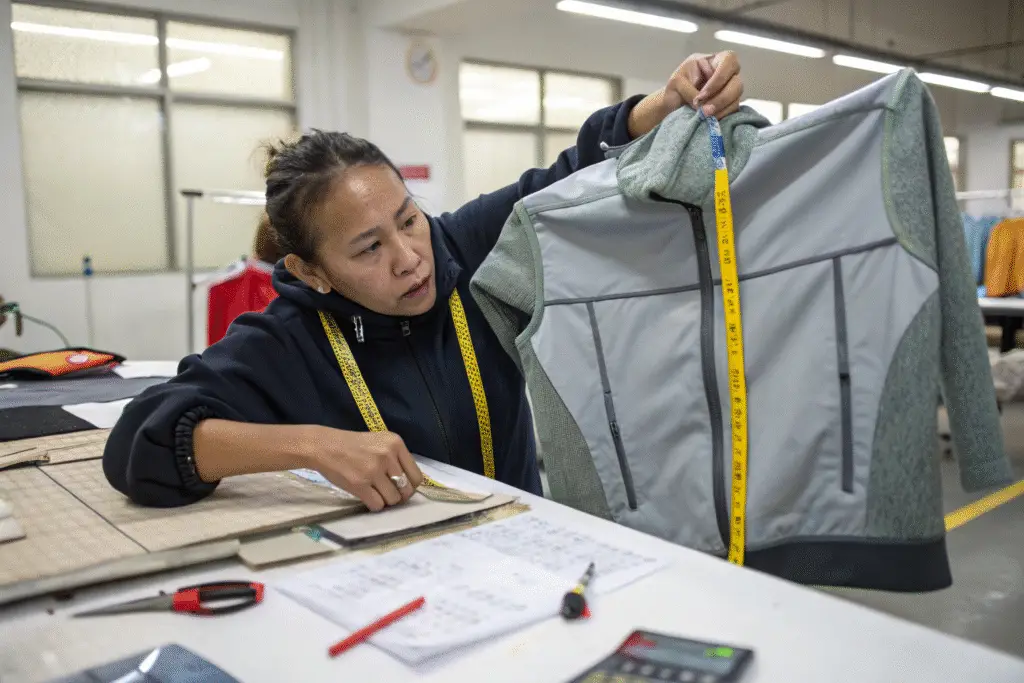
Many critical construction elements are invisible in a finished garment. Interlinings, seam allowances, stitch types, and internal reinforcements don't show in the final product but dramatically affect how the garment looks, feels, and wears over time. I recall a client who wanted to replicate their favorite vintage jacket. Our team had to carefully deconstruct the original to understand the internal canvas structure and pad-stitching techniques—a destructive process that wouldn't be possible with their only sample.
How does fabric specification become problematic?
A reference garment shows you what fabric was used, but not its exact composition, weight, or performance characteristics. We recently worked with a brand that provided a sample shirt made from a specific cotton blend. Without technical fabric specifications, we sourced a visually similar material that behaved completely differently during washing, resulting in unexpected shrinkage that ruined the first production run of 2,000 units.
What advantages does a tech pack provide?
A tech pack transforms subjective interpretation into objective instruction. It provides the precise specifications that enable consistent, efficient manufacturing and eliminate guesswork.
The tech pack serves as the single source of truth throughout the production process. It aligns your design team, our factory, and any other partners on exact requirements. The American Apparel Producers Network emphasizes that complete technical documentation reduces sampling cycles by up to 50% compared to working from reference samples alone.
How does a tech pack ensure size consistency?
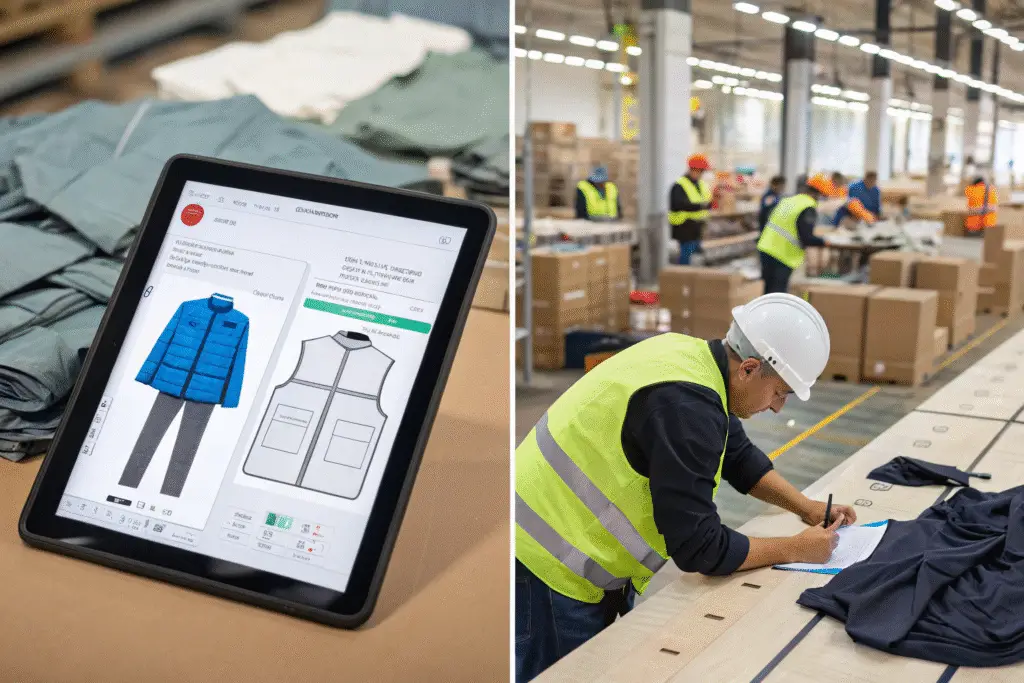
A detailed measurement spec sheet provides graded measurements for every size in your range, ensuring consistent proportion scaling. Without this, factories must grade based on the single sample size you provide, which often results in fit issues in extreme sizes. We implemented a new tech pack system for a children's wear brand last year that reduced their size-related returns by 35% through more precise grade rules.
Can a tech pack communicate construction details better?
Absolutely. Tech packs use standardized industry terminology and visual callouts to specify exact construction methods. This includes stitch types (lockstitch vs. chainstitch), seam finishes (French seam vs. overlocked), and specific operations like bar tacks at stress points. According to the ASTM International standards, standardized technical documentation reduces construction errors by up to 70% compared to verbal or sample-based instructions.
When is a reference garment actually beneficial?
Despite its limitations, a reference garment provides unique benefits that complement a good tech pack, particularly in specific scenarios.
A physical sample offers tangible qualities that are difficult to convey through documents alone. The handfeel, drape, and overall aesthetic impact of a garment are best understood by examining and handling an actual sample. The key is using the reference garment as a supplement to, not a replacement for, proper technical documentation.
| Situation | Benefit of Reference Garment |
|---|---|
| Complex surface textures | Shows exact fabric handfeel and drape characteristics |
| Unique dye effects | Demonstrates color variations and finishing treatments |
| Intricate embellishments | Provides physical examples of embroidery or appliqué work |
| Specific wash treatments | Shows distressed, bleached, or other specialty wash effects |
How does a reference garment help with fit evaluation?
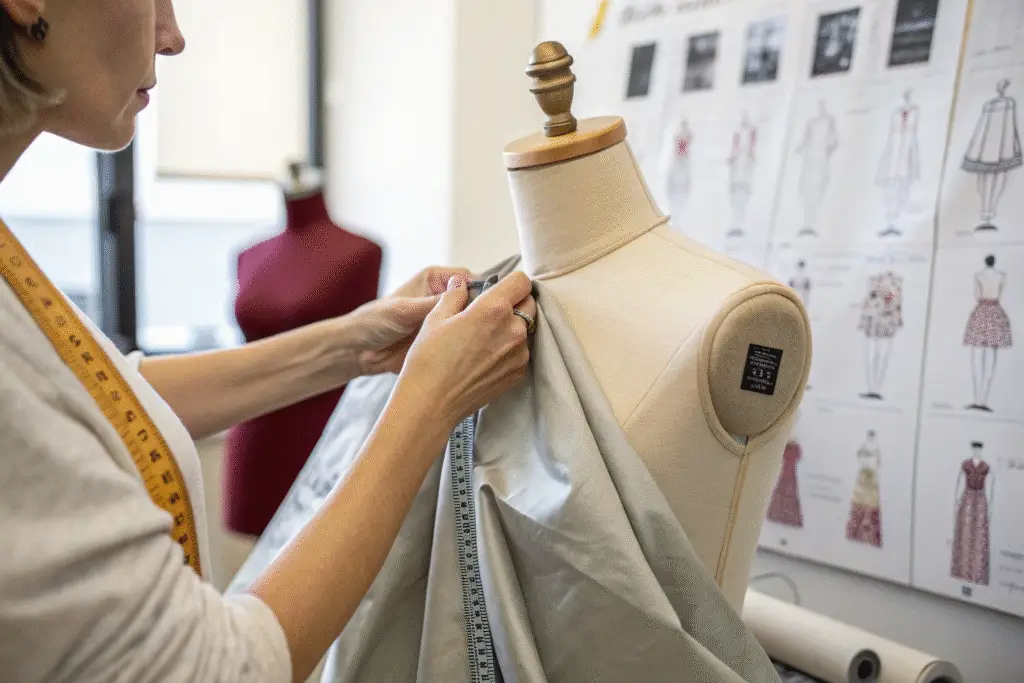
While tech packs provide measurements, a physical sample allows for 3D evaluation on a live model or mannequin. This helps identify issues with proportion, balance, and overall silhouette that might not be apparent from measurements alone. We recently worked with a dancewear brand where the tech pack measurements were technically correct, but seeing the garment on a moving body revealed restrictive seams that weren't visible in flat measurements.
Can reference garments speed up fabric selection?
Yes, particularly for complex fabrications. A physical sample allows our fabric team to immediately understand the weight, stretch, and handfeel you're targeting. For a recent activewear project, the client provided a reference garment with their ideal four-way stretch and recovery properties. This helped us identify the right fabric blend much faster than working from technical descriptions alone.
What is the ideal combination approach?
The most successful manufacturing partnerships use both tools strategically, with the tech pack serving as the primary instruction document and the reference garment providing supplemental visual and tactile reference.
This hybrid approach leverages the strengths of both methods while mitigating their individual weaknesses. The tech pack provides the objective, measurable specifications, while the reference garment offers subjective qualities and real-world performance examples. Implementing this combined approach reduced sampling cycles by 40% for our clients over the past two years.

How should I structure this combined approach?
Start with the tech pack as your foundation, then use the reference garment to illustrate specific qualities that are difficult to document. For example: use the tech pack to specify exact measurements, materials, and construction methods, then use the reference garment to show the desired drape, handfeel, and overall aesthetic. Mark areas on the physical sample with pins or tags that correspond to specific points in your tech pack for cross-reference.
What percentage of information comes from each source?
In our experience, approximately 80% of manufacturing instructions should come from the tech pack (measurements, materials, construction details), while 20% comes from the reference garment (aesthetic qualities, handfeel, subtle details). This balance ensures comprehensive communication while maintaining efficiency. The Technical Design Association recommends this ratio as optimal for most apparel categories.
How do costs compare between these approaches?
While creating a proper tech pack requires upfront investment, it typically saves money overall by reducing sampling rounds and preventing production errors.
Many brands focus on the immediate cost of creating a tech pack without considering the long-term savings. A complete tech pack might cost $300-$800 to develop, but multiple sample rounds can easily cost $2,000-$5,000 in direct expenses plus the opportunity cost of delayed market entry.

The true cost of working only from a reference garment includes multiple sample rounds, production errors, inconsistent quality across sizes, and potential complete production failures. We analyzed our client data last year and found that projects starting with comprehensive tech packs had 60% fewer sampling rounds and 45% lower overall development costs compared to reference-garment-only projects.
Is there a middle ground for smaller orders?
For smaller orders or startups with limited budgets, consider a simplified tech pack with key measurements, material specifications, and construction notes, supplemented by a reference garment with specific callouts. Many fashion incubator programs offer affordable tech pack development services specifically for emerging brands.
Conclusion
While both tools have their place, the tech pack provides the essential foundation for successful manufacturing. The reference garment serves as valuable supplemental reference but cannot replace comprehensive technical documentation. The most effective approach combines both: using the tech pack for precise specifications and the reference garment for aesthetic and tactile qualities.
Don't compromise your production success by choosing between these tools. If you need guidance developing a tech pack or want to discuss how to effectively use your reference samples, our technical team can help you create the right documentation strategy. Contact our Business Director Elaine to optimize your next production order at elaine@fumaoclothing.com.