The latest U.S. tariff waves are crushing margins for apparel importers. While many brands scramble to shift sourcing or pass on costs, smart manufacturers are tackling the problem from inside the factory walls. Ron, like many U.S. apparel buyers, asks me: “Can streamlining your factory operations actually save me from tariff damage?”
Yes—and it starts with lean manufacturing. Reducing just 10% waste in production can often offset the equivalent of a 10-15% tariff increase.
As a Chinese apparel factory owner, I’ve seen how lean principles—like reducing defects, trimming fabric offcuts, and shortening idle time—translate into real savings. And for buyers like Ron, these savings help preserve price competitiveness without sacrificing quality or delivery time.
What Is Lean Manufacturing in Apparel and Why Does It Matter?
The apparel industry has long accepted a certain level of inefficiency as "normal." But in today’s high-tariff climate, the pressure is on to cut every avoidable cost. That’s why lean manufacturing—originally popularized by Toyota—is now being retooled for fashion supply chains.
Lean manufacturing is a systematic method to eliminate waste without sacrificing productivity.
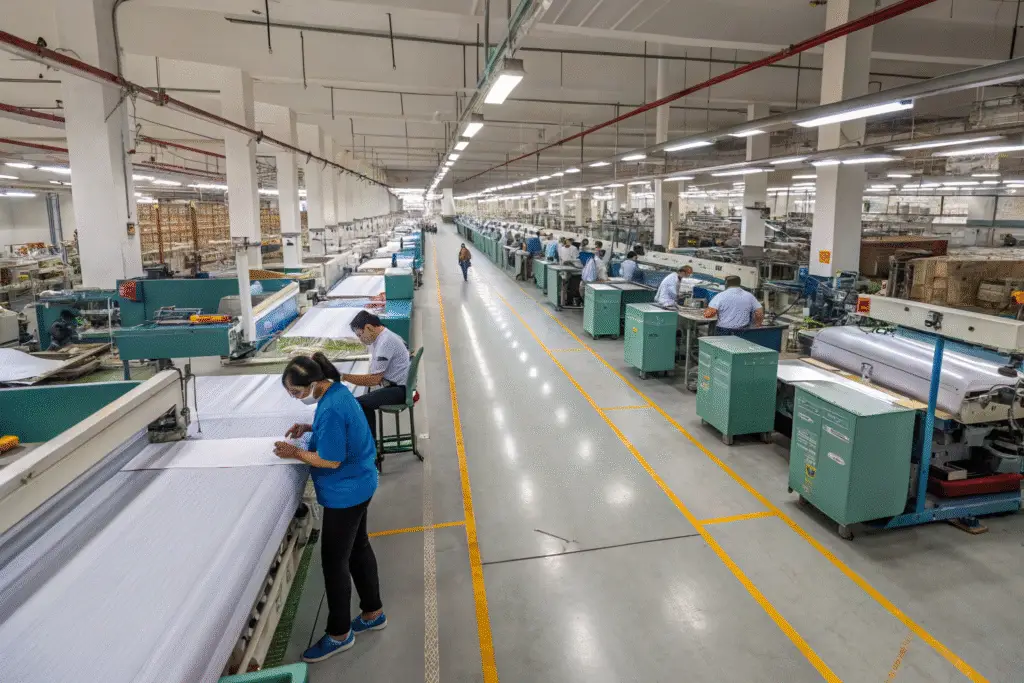
What Are the Core Wastes Lean Tactics Target?
The 7 wastes (also called “muda”) we focus on include:
| Waste Type | Apparel Example |
|---|---|
| Overproduction | Running 10% more units than ordered |
| Defects | Stitching errors causing rework or returns |
| Inventory | Overstocked fabric that ages out |
| Motion | Workers walking excessively between tasks |
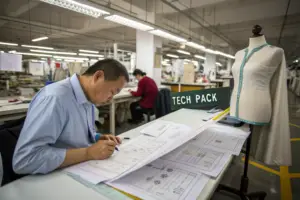
| Waiting | Idle time due to late trims or tech packs |
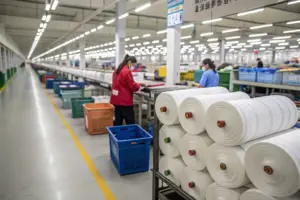
| Transport | Unnecessary movement of materials |
| Overprocessing | Redundant QC steps due to unclear SOPs |
According to Lean Enterprise Institute, cutting these wastes improves output, lowers per-unit cost, and boosts quality consistency—critical in B2B apparel manufacturing.
How Does This Impact Tariff-Sensitive Buyers?
Every $0.10 saved through waste reduction on a $2.50 FOB cost can be used to absorb part of the tariff hit. For instance, if the U.S. imposes a 15% duty, that $0.10 offsets about 2-3% of that.
And when applied across 100,000 units, these micro-savings turn into serious bottom-line buffers. Brands using our lean-optimized lines can often avoid raising U.S. resale prices even as duties climb.
Which Lean Apparel Techniques Save the Most Fabric and Labor?
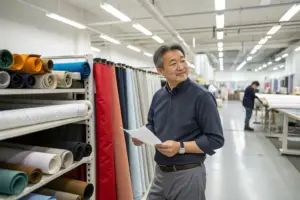
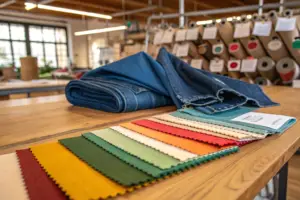
Buyers like Ron often ask us where lean methods make the biggest difference. The answer? Fabric utilization and labor optimization. Fabric is often 60-70% of unit cost, so even small gains matter.
The top two areas where lean saves most are in cutting efficiency and balanced line flow.
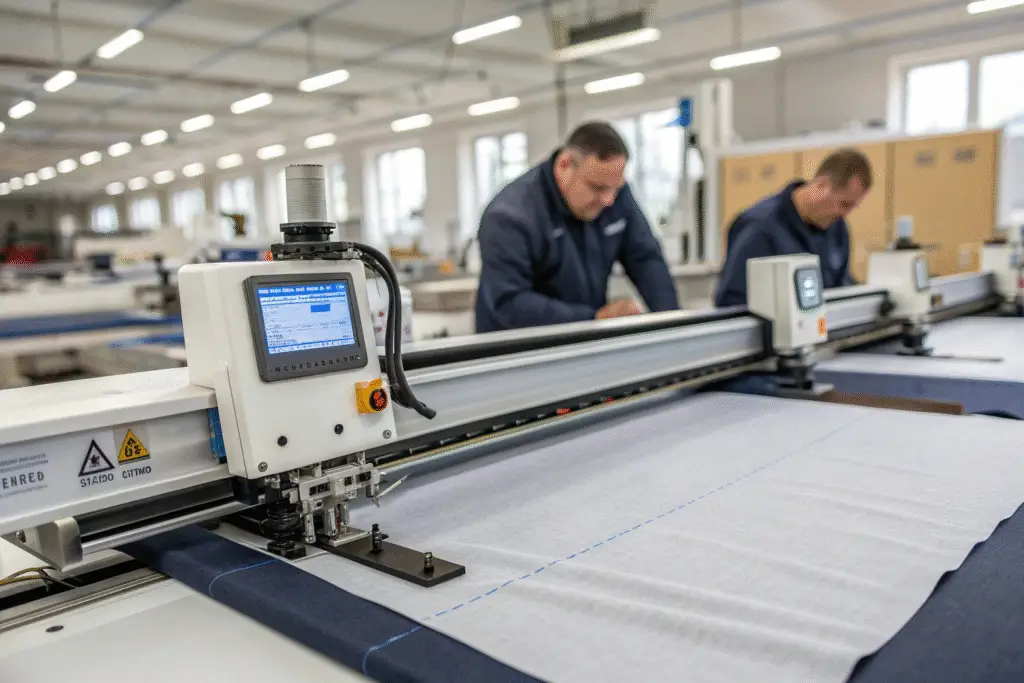
How Can Factories Improve Fabric Yield by 10%?
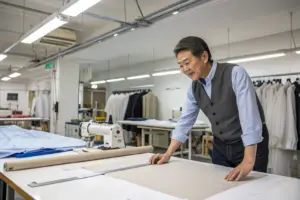
We use advanced marker-making software that optimizes how garment pieces are laid out before cutting. Solutions like Gerber AccuMark allow us to save 8-12% on fabric waste versus manual layout.
We also invest in automated cutting machines with precision lasers that reduce overcutting and salvage edge material. One client sourcing bamboo knitwear saved $18,000 across four styles using this approach.
How Do Lean Sewing Lines Improve Labor Productivity?
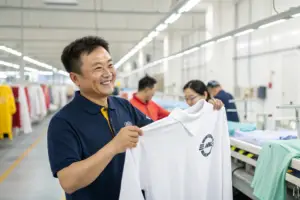
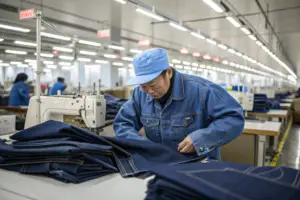
We use modular lines where each operator handles 1–2 steps rather than fixed bundles. With line balancing software and real-time monitoring, we maintain steady flow and reduce operator idle time.
In one case, we improved labor output by 17% while reducing defects by 9%. These gains meant we could quote lower MOQs without raising per-piece costs—a win for clients facing tariff shocks.
Can Lean Practices Improve On-Time Delivery and Reduce Rework?
Tariffs aren’t the only enemy of U.S. buyers. Missed ship windows due to late rework or unbalanced lines can result in thousands of dollars in lost revenue. Lean processes create structure, discipline, and speed.
Lean factories catch errors early, ship faster, and cut back on rushed air shipments.
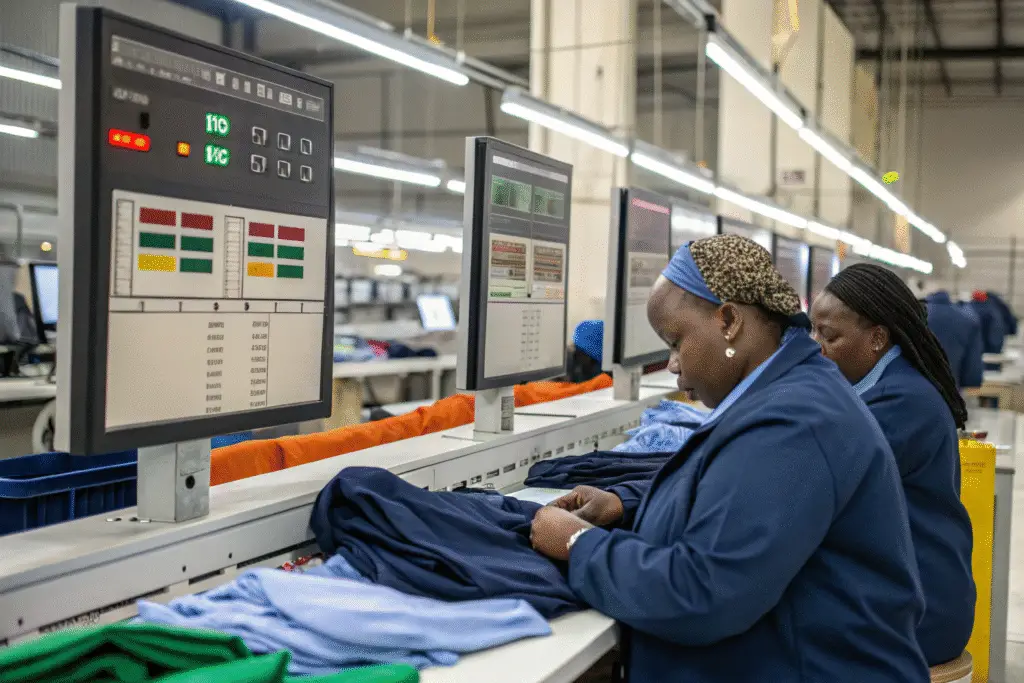
How Do We Catch Problems Early with Lean QC?
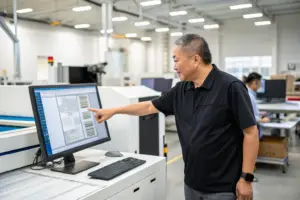
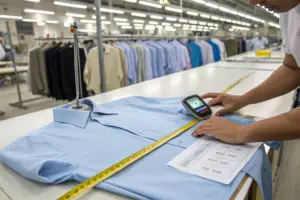
Rather than waiting until the end of production, our inline QC teams use tablets to track error rates live. With QIMA One integration, buyers like Ron can monitor quality stats remotely.
This system flags issues in real time. For example, if a print misalignment crosses 2% of a batch, we halt that line, retrain, and recheck—all before the goods reach packing. This reduces total rework by 35% on average.
How Does Lean Reduce Reliance on Costly Air Freight?
By improving predictability, we’ve helped brands move from emergency air shipments to DDP sea + rail models. With lean-driven production stability, clients confidently book consolidated freight through Maersk Flow.
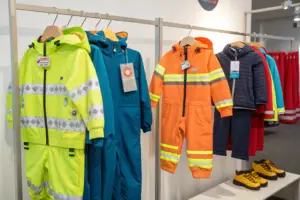
Just last month, one U.S. brand avoided $6,200 in air costs on a 6,000pcs hoodie order due to our updated cut-sew-pack system that maintained a 95% daily output rate with zero last-minute rework.
How Should U.S. Buyers Evaluate Lean-Ready Apparel Suppliers?
Not every supplier claiming to be “lean” delivers real savings. U.S. buyers should know what signals to look for—and what questions to ask.
A lean-ready apparel factory must provide data, transparency, and process ownership.
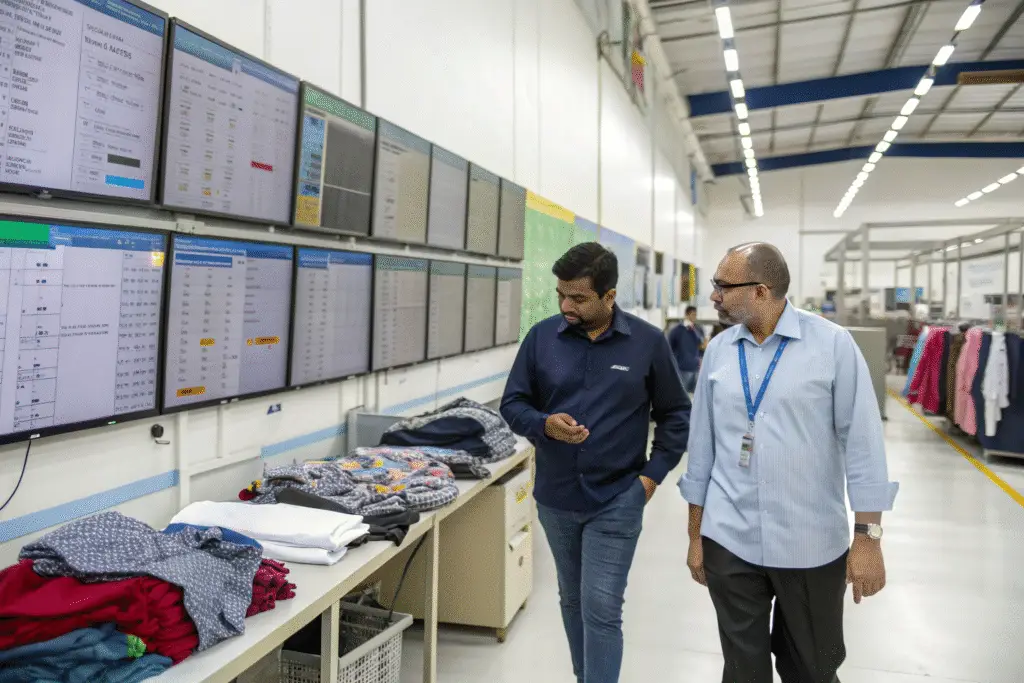
What Certifications and Tools Prove Lean Practices?
Ask your supplier about their use of:
- ISO 9001 for quality management
- Lean KPIs like OEE (Overall Equipment Effectiveness)
- Digital production dashboards (e.g., SewEasy)
- Fabric scrap tracking and recycling workflows
These aren’t just buzzwords—they’re signs of a system that converts lean ideas into cost savings you can feel.
How Do We Train Staff for Lean Execution?
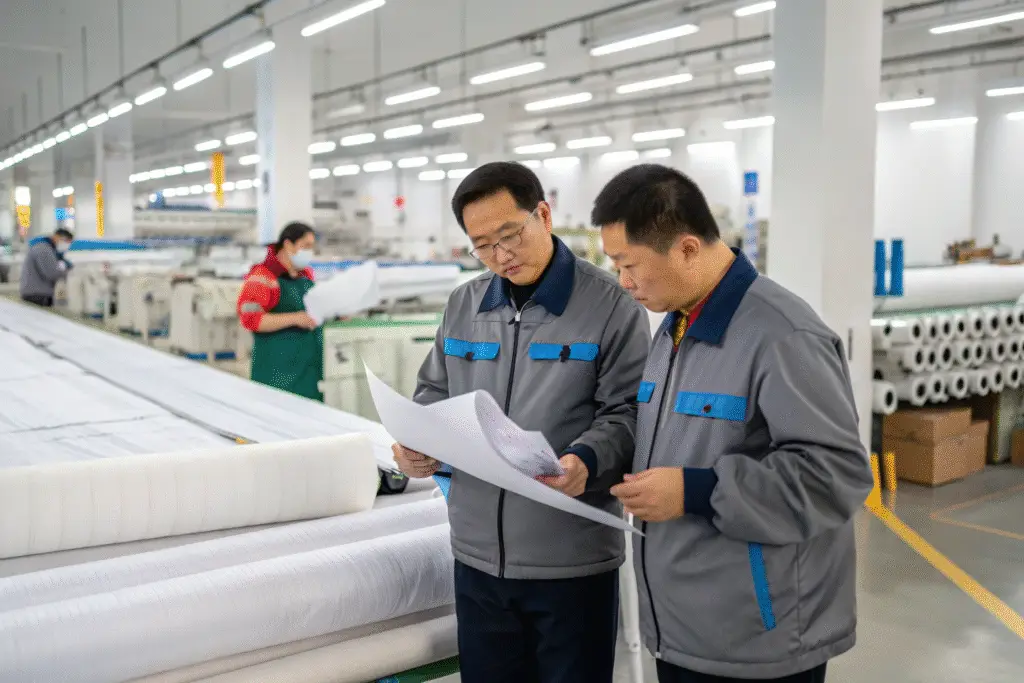
Every new line leader at Fumao goes through a 30-day lean onboarding program. We simulate delays, errors, and rerouting so they can troubleshoot on the fly. Our daily "Gemba walks" (shop floor check-ins) allow quick adjustments and reduce approval lag.
And most importantly, we train merchandisers to communicate lean constraints early to buyers—so you get accurate ETDs, costings, and risk breakdowns without surprises.
Conclusion
Lean manufacturing is not just a factory trend—it’s a buyer’s best defense in a market where tariffs, inflation, and delivery delays threaten profitability. By reducing waste by 10%, factories like ours can offset up to 15% in tariff impact without touching product quality.
Ron—and many like him—don’t need to switch countries to beat rising import costs. They need partners who deliver precision, transparency, and lean execution on every style.
Let’s cut the waste and protect your margins together. Contact our Business Director Elaine at elaine@fumaoclothing.com to discuss how Shanghai Fumao can reduce your sourcing risk—and keep your apparel business ahead of the tariff curve.