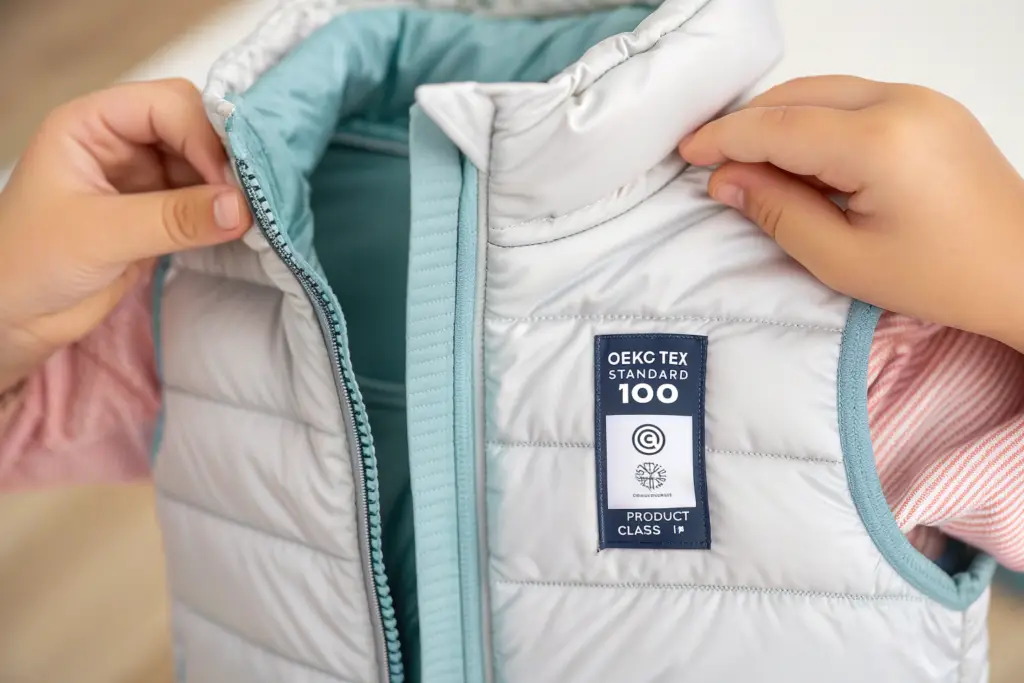
The lightweight down vest is a children's wardrobe essential, prized for its warmth-to-weight ratio and versatility. It snuggles close to the body, often worn over a thin layer and under a shell. For parents, it represents cozy comfort. Yet, this very intimacy and its complex construction make it a potential hotspot for hidden chemical risks. The question isn't just whether the supplier is certified, but whether they are certified to the right standard: OEKO-TEX STANDARD 100 Product Class I (Grade 1), the strictest benchmark for babies and young children.
Asking if your lightweight down vest supplier is OEKO-TEX Grade 1 certified is a direct probe into their commitment to the highest level of safety for the most vulnerable users. It tests whether they control the chemical integrity of every component—the outer shell fabric, the inner lining, the down fill, the thread, the zipper, and the cleaning processes—to levels safe enough for a baby's skin and respiratory system.
This certification is a non-negotiable differentiator for serious children's wear brands. Let's explore why it matters and how to verify it.
Why is Grade 1 Certification Critical for Down Vests?
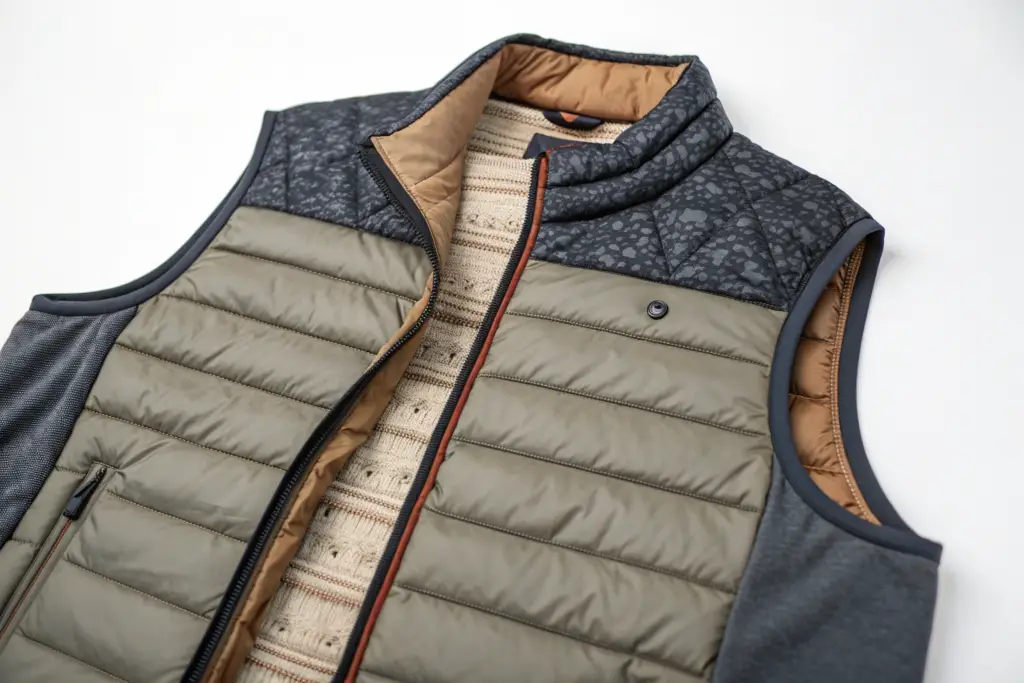
A down vest is not a simple piece of fabric. It is a system of materials, each with its own chemical profile, assembled into a product that is worn in close proximity to the skin and, crucially, near the mouth and nose. The "lightweight" aspect often involves thinner, more technically treated fabrics, which can concentrate risks.
What Are the Unique Chemical Risks in a Down Vest?
- The Down Fill Itself: This is the most overlooked risk. Down is a natural animal product that undergoes intensive cleaning and processing. This process can involve:
- Chlorine-Based Bleaches: Used to whiten down, which can leave residues of organochlorines and adsorbable organic halogens (AOX), substances strictly limited by OEKO-TEX.
- Detergents and Surfactants: Harsh cleaning agents can remain in the down cluster, potentially off-gassing or causing irritation.
- Anti-Dust/Anti-Allergen Treatments: Chemical treatments to reduce dust and allergens may involve restricted substances.
- Shell and Lining Fabrics: To achieve light weight and water resistance, these fabrics are often made from high-density nylons or polyesters treated with DWR (Durable Water Repellent) finishes. As with ski jackets, these finishes must be PFAS-free to meet OEKO-TEX standards. The dyes used must also be free from heavy metals and allergenic substances.
- Construction Elements: The thread, zipper tape and slider, and even the adhesive used in baffle construction (if any) must be compliant. Phthalates in plastic zipper pulls and heavy metals in zipper teeth are common failure points.