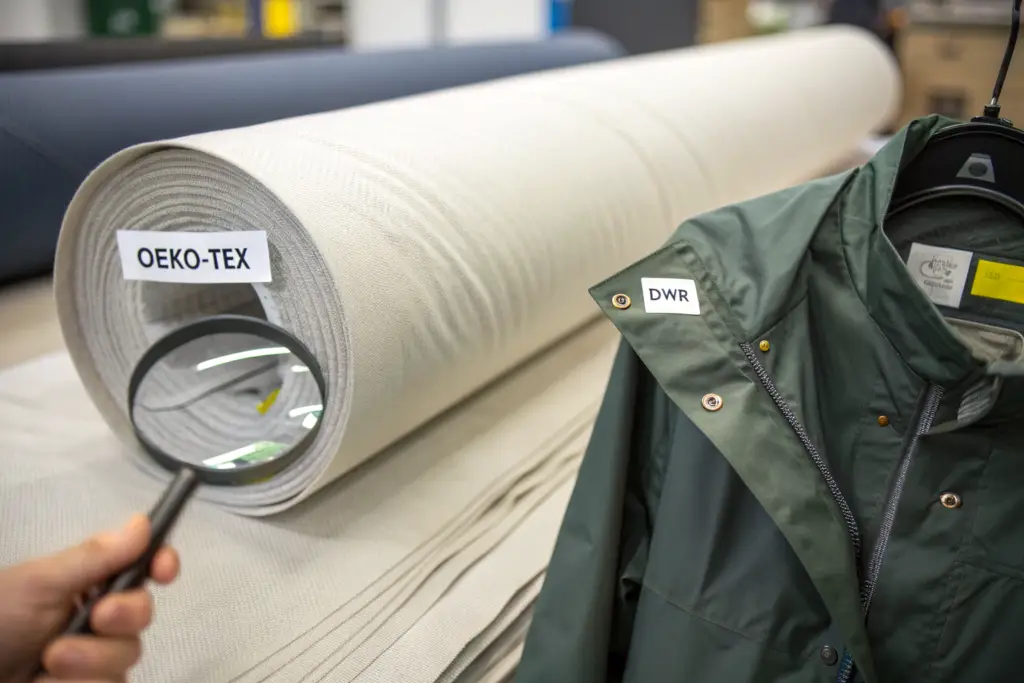
Last fall, a client proudly launched their new waterproof golf jacket line. They had done their due diligence—or so they thought. Their supplier assured them the fabric was "OEKO-TEX certified." The jackets performed well in initial rain tests. However, six months into the season, they started receiving customer complaints: a faint chemical odor when the jacket got wet, and some users reported skin irritation after wearing it in warm, drizzly conditions. In a panic, they sent a jacket to an independent lab. The result: the outer shell fabric passed basic tests, but the durable water repellent (DWR) finish contained high levels of a restricted fluorocarbon (a type of PFAS) that was not compliant with OEKO-TEX STANDARD 100. The supplier's certificate was for the base polyester knit only. This $150,000 mistake wasn't just about a faulty claim; it was about a fundamental misunderstanding of what true certification covers in a performance garment.
Asking if your supplier is using OEKO-TEX certified fabrics is the wrong question. The critical question is: "Is the FINISHED GOLF JACKET, including its water-repellent finish and all components, certified under OEKO-TEX STANDARD 100?" A fabric certificate is meaningless if the chemical finishes applied to it—the very agents that create water repellency—are non-compliant and can leach onto skin or into the environment.
Many suppliers exploit this ambiguity. Let's uncover what you must verify to ensure your golf jacket is truly safe and compliant.
Why Focus on the DWR Finish, Not Just the Fabric?
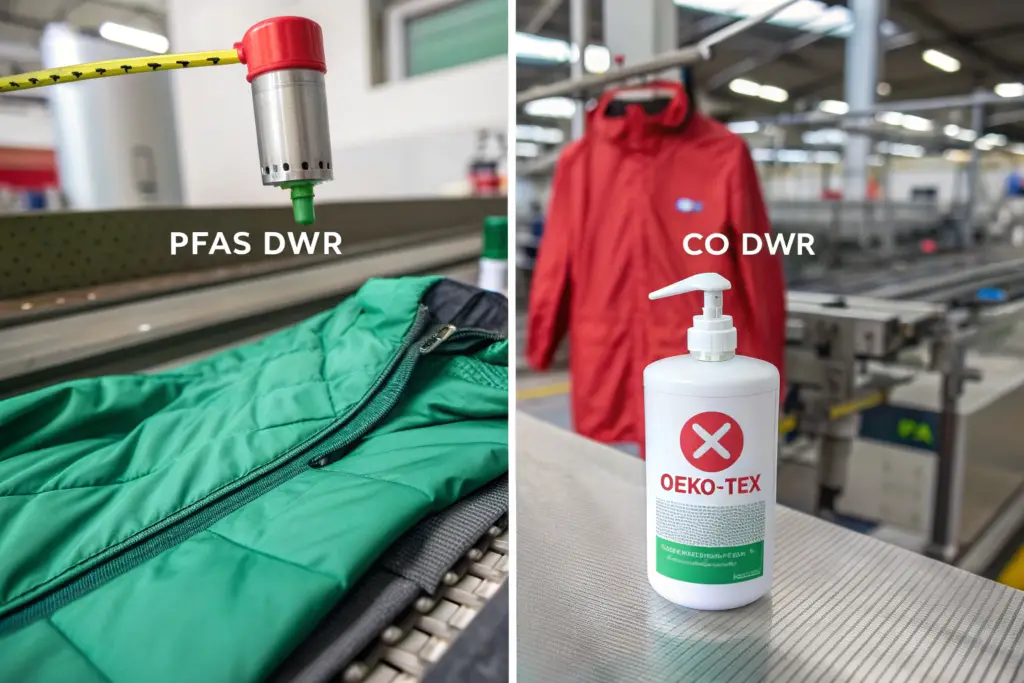
The water repellency in a golf jacket isn't magic; it's chemistry. The DWR is a separate chemical finish applied to the fabric surface. Historically, the most effective DWRs used per- and polyfluoroalkyl substances (PFAS), also known as "forever chemicals," which are now heavily restricted by OEKO-TEX due to their environmental persistence and potential health risks.
You must focus on the DWR finish because it is the most likely point of chemical non-compliance in a water-repellent jacket. A supplier can source OEKO-TEX certified base fabric but then apply a non-certified, PFAS-based DWR to achieve performance, completely invalidating the safety promise. The only valid certification is one that covers the fabric after all chemical finishes have been applied.
What is the difference between a DWR and a membrane?
This is a crucial distinction. A waterproof membrane (e.g., ePTFE like Gore-Tex, or PU) is a physical layer laminated inside the jacket for waterproofing. The DWR is a topical treatment on the outer fabric to make water bead up and roll off. Both must be compliant. A membrane's lamination adhesives and a DWR's chemical composition are separate but critical test points in the certification of the final garment.
Can a DWR be both high-performing and OEKO-TEX compliant?
Absolutely. This is the heart of modern textile innovation. New-generation, PFAS-free DWR technologies (often called "C0" or "PFC-free" DWRs) use chemistry based on long-chain polymers, dendrimers, or waxes. They meet stringent OEKO-TEX standards while providing excellent, durable water repellency for golf apparel, which faces rain and morning dew more than torrential downpours. At Shanghai Fumao, we work exclusively with mills that use these next-gen, compliant finishes for our golf collections.
How to Decode Supplier Claims and Certificates?
Supplier language is often designed to impress, not inform. You must become a detective. Here is a glossary of common terms and what they actually mean:
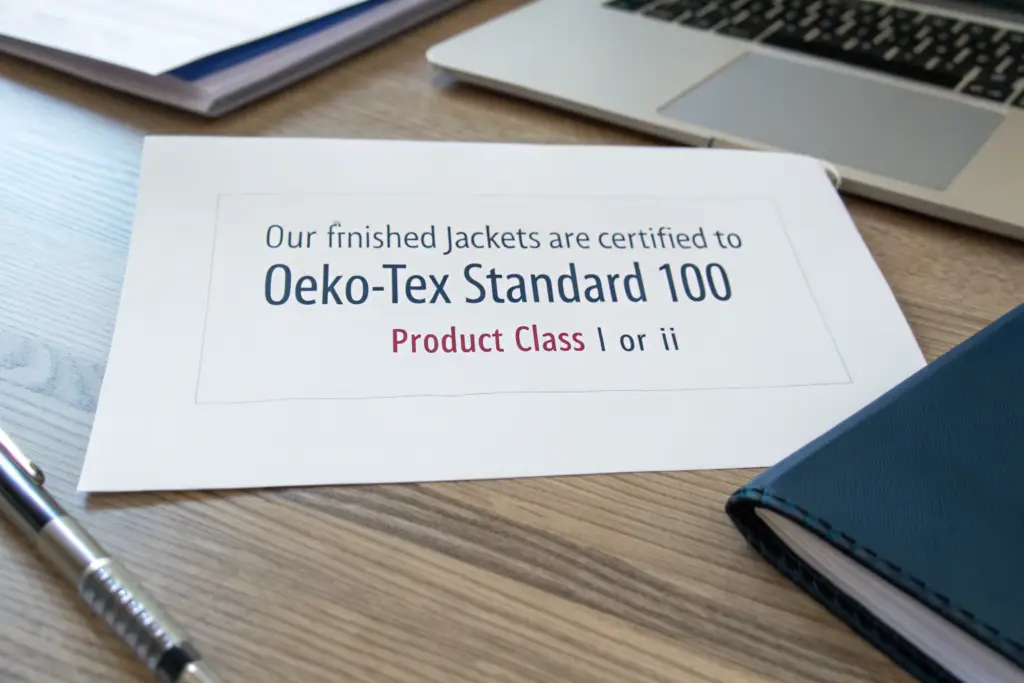
Decode claims by demanding specificity. "OEKO-TEX certified" is vague. "Our finished jackets are certified to OEKO-TEX STANDARD 100, Product Class I or II" is specific. Always ask for the certificate itself, not a summary. Then, perform the verification checks yourself.
| Supplier Claim | What It Often Means | The Right Question to Ask |
|---|---|---|
| "Our fabrics are OEKO-TEX certified." | The raw fabric from the mill is certified. The finished garment may not be. | "Can you show me the certificate for the finished jacket, including DWR?" |
| "We use OEKO-TEX compliant materials." | This is a self-declaration, not a certification. It has no third-party validation. | "Can you provide the official OEKO-TEX certificate number from the testing institute?" |
| "Our factory is OEKO-TEX certified." | This could refer to a STeP certificate for sustainable production, not product safety. | "I need the STANDARD 100 product certificate. Can you provide it?" |
| "The DWR is PFC-free." | This may be true, but "PFC-free" doesn't mean free of other harmful substances. OEKO-TEX tests for a full range. | "Is the PFC-free DWR part of an OEKO-TEX STANDARD 100 certified finished product?" |
How to perform a 60-second certificate check?
When you receive a certificate (always a digital PDF), look for three things: 1) Standard: Must say "STANDARD 100 by OEKO-TEX". 2) Product Class: For apparel, should be Class I (most stringent) or Class II. Class I is ideal for sportswear. 3) Article Description: Must describe the finished garment (e.g., "golf jacket," "men's outerwear"), not "polyester fabric" or "laminate." Then, take the certificate number and verify it on the official OEKO-TEX database. This last step catches falsified documents.
What Are the Hidden Risks of an Uncertified DWR?
The risks extend far beyond a failed lab test. They impact your brand's health, customer safety, and market longevity in tangible ways.
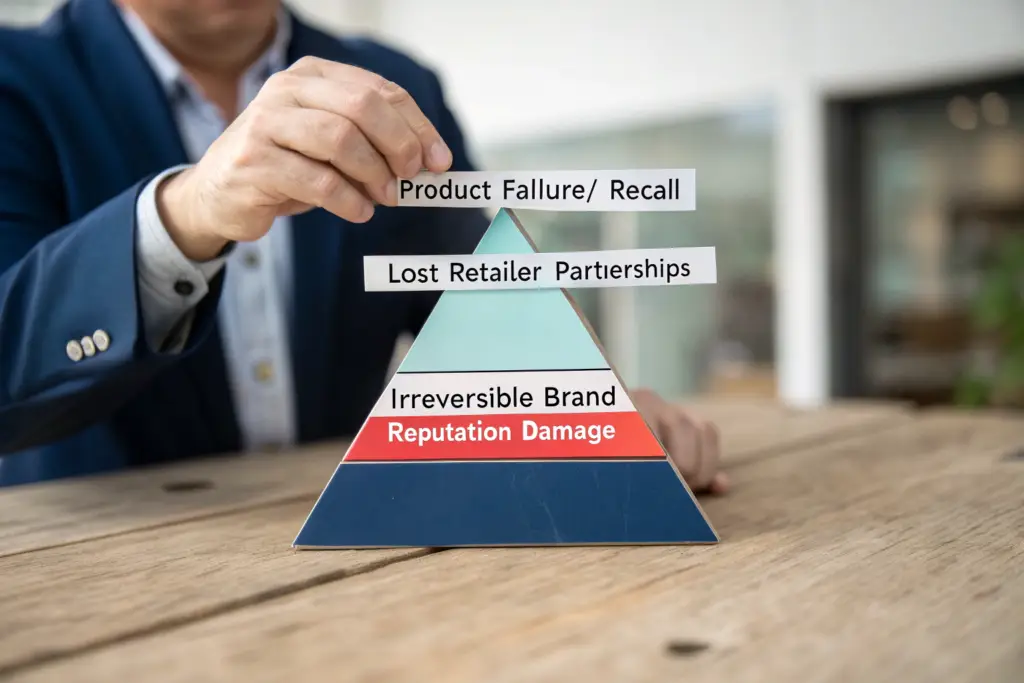
The hidden risks of an uncertified DWR include: 1) Regulatory Action: Violating laws like impending U.S. PFAS bans or EU REACH regulations. 2) Retailer Rejection: Major golf retailers and pro shops are mandating clean chemistry. 3) Brand Toxicity: The "forever chemical" association can permanently damage a brand's image. 4) Performance Failure: Some non-compliant DWRs wash out quickly, leaving jackets to "wet out."
How does this affect DDP (Delivered Duty Paid) shipments?
Under DDP terms, the supplier is responsible for the goods until they arrive at your door. If a shipment is held by customs for chemical non-compliance (increasingly common for PFAS), the delays and fines fall on the supplier. A reputable full-package manufacturer like Shanghai Fumao will never let this happen because our finished-garment certification is our guarantee of smooth clearance. An uncertified supplier puts your entire shipment and timeline at risk.
A brand importing into California used a non-compliant DWR. They were hit with a Proposition 65 lawsuit for failing to warn about PFAS exposure. The settlement, legal fees, and mandatory product recall totaled over $300,000—far exceeding the marginal cost of using a certified, PFAS-free finish from the start. This is not a hypothetical risk; it's a recurring business cost.
How Can Fumao Clothing Guarantee True End-to-End Compliance?
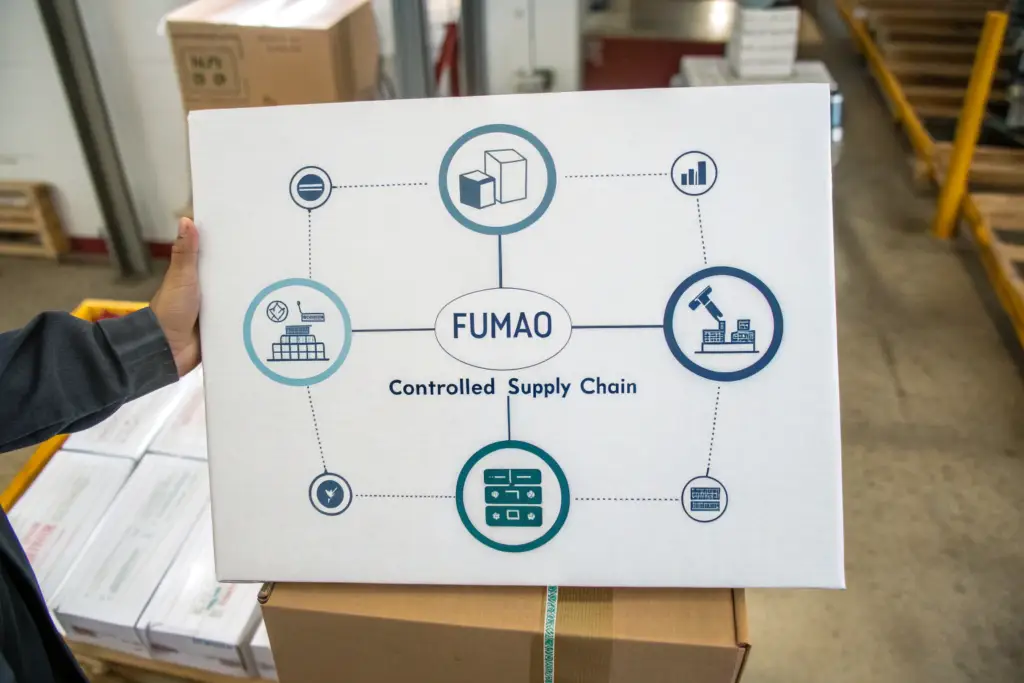
Our approach is built on a simple principle: we are the single point of accountability for the finished product's certification. We don't just assemble certified parts; we engineer and certify the complete system.
Fumao Clothing guarantees compliance through a full-package production model where we are the holder of the OEKO-TEX STANDARD 100 certificate for the finished golf jacket. We source pre-certified base fabrics and DWR finishes, manage the cutting, sewing, and application, and then submit the final assembled garment for certification under our name. You receive one certificate that covers everything, backed by our digital verification portal.
What does your "Certified Component Library" include?
We maintain a library of OEKO-TEX certified materials: not just fabrics, but also approved DWR finishes, membranes, zippers, threads, and insulations. When you design a jacket using components from this library, the path to final certification is drastically faster and more certain because the chemical safety of each input is pre-verified. This is a key part of our product development service.
How do you provide proof beyond the certificate?
We provide transparency that builds trust. For key clients, we offer access to a portal showing the live status of the OEKO-TEX certificate, test reports for the DWR finish and other key components, and batch numbers linking the certified materials to your specific production run. This turns a static document into a dynamic quality record.
Conclusion
The question isn't about your supplier's fabric; it's about their integrity, expertise, and control over the entire chemical profile of the finished garment. In the world of performance golf apparel, where water repellency is key, the DWR finish is the litmus test for a supplier's commitment to true safety.
Choosing a partner that offers vague assurances about fabric certification is a high-risk strategy. Choosing a partner like Shanghai Fumao, where finished-garment OEKO-TEX certification is a foundational output of our full-package production system, is a risk mitigation strategy. It protects your brand, satisfies your customers, and future-proofs your products against evolving regulations.
Don't just ask for a certificate. Demand the right certificate for the right product from the right partner. To see the difference genuine, end-to-end certification makes, contact our Business Director, Elaine, at elaine@fumaoclothing.com. Let's ensure your next golf jacket is truly as safe as it is performant.