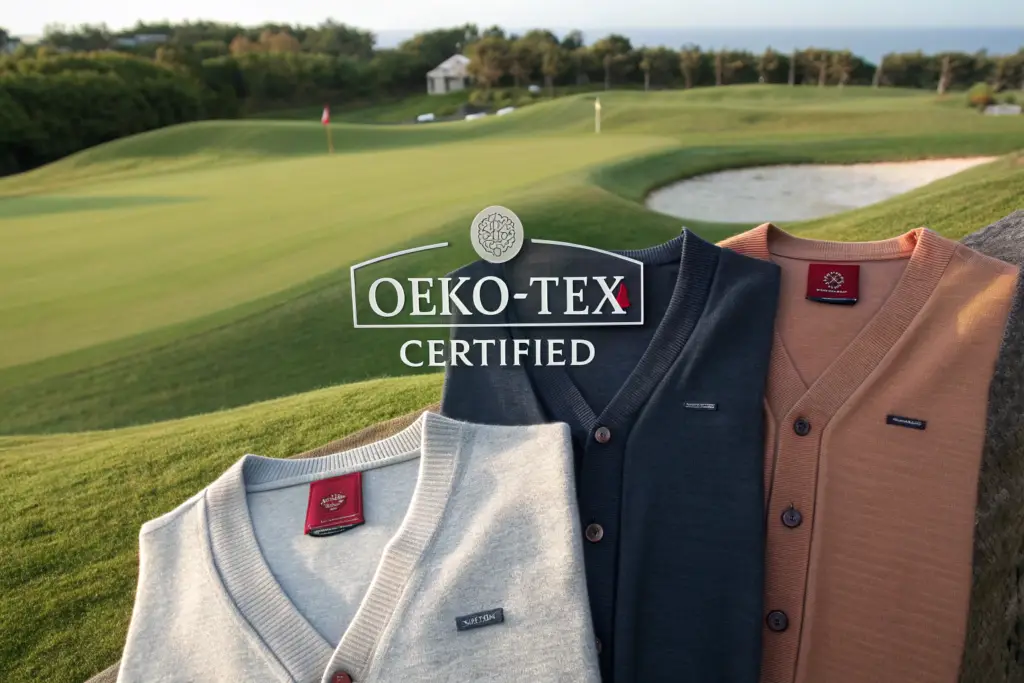
As you plan your golf collection for the upcoming season, you're likely focused on style, layering functionality, and fabric performance. Knitted cardigans and vests are staples, offering warmth and style on cooler days on the course. But there's a critical question that goes beyond aesthetics and warmth: what is the chemical safety profile of these knitwear layers? Many brands assume that because knits are often made from "natural" fibers like merino wool or cotton blends, they are inherently safe. This is a dangerous assumption. The journey from fiber to finished knit involves dyes, spinning oils, knitting lubricants, and finishing agents—all potential sources of hidden chemical risk.
If your golf collection is not using OEKO-TEX certified knitted cardigans and vests, you are potentially exposing your customers to allergens, skin irritants, and harmful substances that can be released through sweat and friction. OEKO-TEX Standard 100, especially Class 1 certification, is essential because it independently verifies that every component of the knitwear—from the yarn and dye to the buttons and trim—is free from over 100 harmful substances, ensuring safety during prolonged wear on the course. For a brand, this certification is your definitive proof of due diligence and a powerful differentiator in a market increasingly driven by health-conscious consumers.
A specific incident from a few seasons ago solidified our stance. A client sourced beautiful merino wool blend cardigans from a non-certified mill. The hand feel and warmth were perfect. However, after a few wears and washes, some customers reported a persistent chemical smell and mild skin redness. The issue was traced to chlorinated phenols used as a biocide in the wool storage and residual alkylphenol ethoxylates (APEOs) from the dyeing process—substances strictly regulated under OEKO-TEX. The brand faced a costly, reactive recall. At Shanghai Fumao, this lesson is now embedded in our knitwear sourcing protocol: OEKO-TEX Class 1 is our non-negotiable entry ticket.
1. The Hidden Chemistry in Knitwear: Why Certification is Non-Negotiable
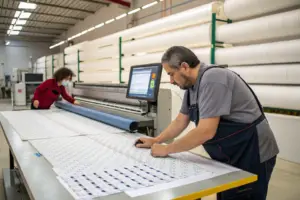
Knitwear manufacturing is a chemically intensive process. The perception of soft, natural fibers often masks a complex supply chain where multiple chemical applications occur. For a garment worn close to the skin, like a golf vest or cardigan, this chemical history matters.
From raw fiber to finished garment, knitwear undergoes processes that introduce potential contaminants: pesticides on cotton or wool, heavy metals in dyes, formaldehyde in wrinkle-resistant finishes, and allergenic substances in spinning oils. OEKO-TEX certification acts as a systematic filter at each stage, ensuring the final product is safe. This is especially crucial for golf, where body heat and occasional sweat can increase the potential for chemical transfer from fabric to skin.
The Chemical Journey of a Knitted Garment
Let's trace the potential risks OEKO-TEX controls:
- Raw Material Stage: Wool and cotton can carry pesticide residues. OEKO-TEX sets strict limits.
- Spinning & Knitting: Yarns are treated with spinning oils and knitting lubricants for processing efficiency. These can contain unwanted chemicals.
- Dyeing & Printing: This is the most chemically intensive phase. Metal-complex dyes, azo dyes, and fixing agents are used. OEKO-TEX bans certain azo dyes and restricts heavy metals like nickel, cobalt, and chromium.
- Finishing: Softeners, anti-pilling agents, and water-repellent treatments may be applied. These often contain formaldehyde or PFAS.
- Trims & Accessories: Buttons, zippers, and even the sewing thread must be considered.
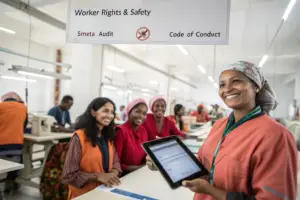
Our full-package manufacturing for knitwear is designed to manage this complexity. We don't just source finished sweaters; we oversee the process from yarn selection, choosing only from OEKO-TEX certified spinners, and work with knitting mills whose chemical management is audited against the standard. This vertical oversight is what turns a certificate into a genuine safety outcome.
2. The Functional Demands of Golf Knitwear: Where Performance Meets Safety
Golf knitwear isn't passive outerwear. It needs to offer stretch for the swing, breathability for variable temperatures, and often, water resistance for morning dew. These functional demands often require specialized yarn blends and finishes, which in turn introduce specific chemical profiles that must be vetted.
OEKO-TEX certification is the essential bridge between achieving technical performance and guaranteeing chemical safety. It verifies that the substances enabling stretch, moisture-wicking, or wind resistance are not harmful in the context of prolonged, intimate wear.
Case Study: Merino Wool & Synthetic Blends
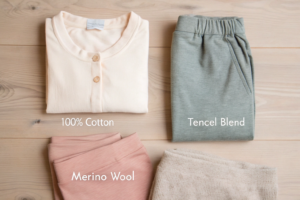
A common high-performance knit uses a merino wool and polyester blend. The wool provides natural warmth and odor resistance, while the polyester adds durability and shape retention. The risks here are twofold:
- Wool Processing: As a natural fiber, wool is particularly susceptible to pesticide residues and often treated with moth-proofing agents that can be toxic.
- Polyester Dyeing: Polyester requires high-temperature dyeing with disperse dyes, some of which are known skin allergens.
OEKO-TEX Class 1 testing addresses both. It sets near-zero limits for pesticide residues and strictly regulates allergenic disperse dyes. When we developed a line of performance cardigans for a brand last fall, our yarn supplier had to reformulate their dye recipe for the polyester component to meet the Class 1 allergen criteria. This upfront product development work ensured the final garment was both high-performing and indisputably safe.
Why Base Layers and Mid-Layers Demand the Highest Standard
Knitwear vests and cardigans are often worn over a polo shirt but directly against the arms or, in the case of a vest, the torso. They act as a mid-layer, trapping body heat. This creates a warm, slightly humid microclimate between layers, which can increase the rate of chemical extraction from fabrics.
Using a certification level for "outerwear" (which has looser limits) is insufficient for this use case. The Class 1 standard, designed for babywear, is the only appropriate benchmark for any garment with this degree of skin proximity and environmental exposure. It's the standard we apply to all our knitwear projects by default, ensuring your collection is safe for all-day wear, from the first tee to the eighteenth green.
3. The Brand Imperative: Trust, Compliance, and Market Advantage
In today's market, a brand's value is tied to its transparency and responsibility. Using OEKO-TEX certified knitwear is a direct investment in brand equity and risk mitigation.
For your brand, certification is a three-fold advantage: it builds consumer trust through verifiable safety claims, ensures compliance with stringent international regulations (like EU REACH), and provides a compelling marketing story that justifies premium positioning. In a crowded golf apparel market, this can be the decisive factor for a discerning customer.
From Liability to Leadership
Consider the alternative: a non-certified product leads to consumer complaints, potential regulatory action, and costly recalls. The financial and reputational damage can be severe. Certification is your documented proof of due diligence.
We make this process seamless for our clients. For every OEKO-TEX certified knitwear order, we provide a complete documentation pack, including the yarn certificate, the finished garment certificate (if applicable), and detailed test summaries. This becomes part of your brand's quality assurance archive, ready for retailer audits or consumer inquiries. This turnkey compliance is a core part of the value we deliver.
How to Verify Your Current or Potential Supplier
If you're unsure about your current knitwear source, ask these direct questions:
- "Can you provide the valid OEKO-TEX Standard 100 certificate for this specific knitted fabric, and is it Product Class I?"
- "Are the buttons, zippers, and other trims also OEKO-TEX certified?"
- "Can we perform a live verification of the certificate number in the official OEKO-TEX database together?"
A transparent supplier will comply immediately. At Shanghai Fumao, we encourage this. We've built our knitwear division on the principle that our certifications are your guarantees, open for verification at any time.
Conclusion
The quality of your golf collection is judged not just by its stitch, fit, and style, but by the unseen integrity of its materials. OEKO-TEX certification for knitted cardigans and vests represents this deep-layer quality—a commitment to safety that runs through every fiber.
It assures your customers that the layer they rely on for comfort and style is also their safeguard against hidden chemical risks. This assurance builds loyalty, enhances your brand's authority, and future-proofs your products against an increasingly regulated global market.
Don't let your collection's weakest link be an unverified assumption about safety. Partner with a manufacturer who embeds certification into the DNA of their knitwear production. At Shanghai Fumao, we specialize in crafting OEKO-TEX certified knitwear that meets the highest standards of both performance and safety. Let us help you ensure that every piece in your collection, from the base layer to the outer vest, carries the mark of verified trust. Contact our Business Director, Elaine, to discuss your knitwear needs: elaine@fumaoclothing.com.