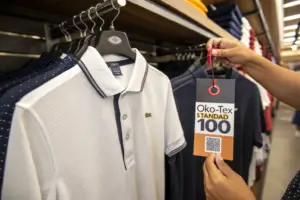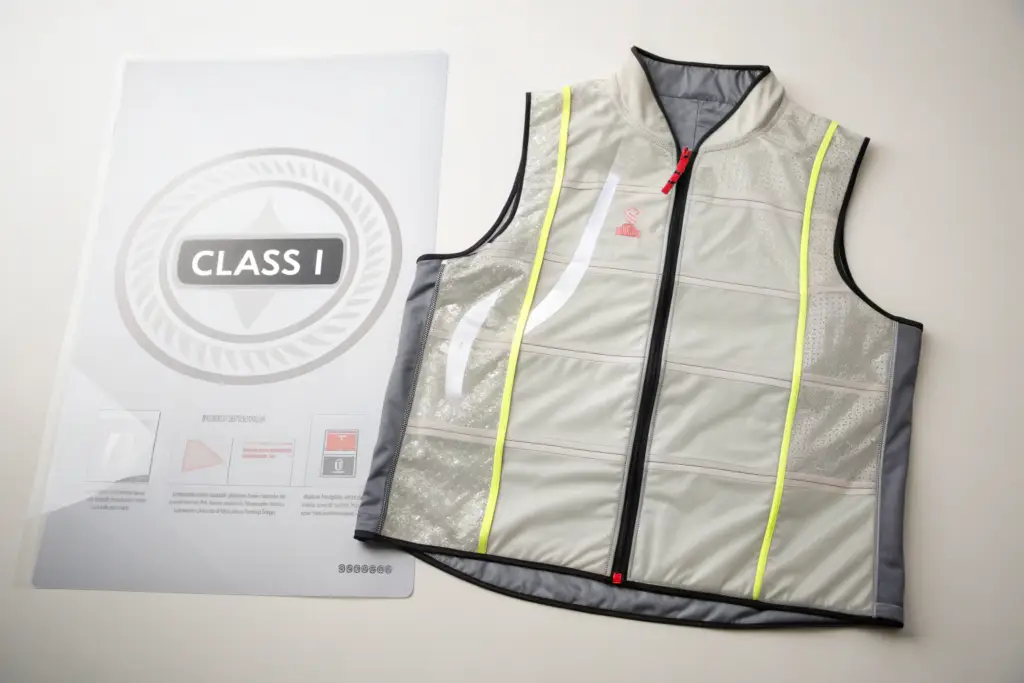
You’re sourcing a new line of functional vests, maybe for hiking, running, or urban wear. You’ve told your supplier you need it to be safe, and they’ve sent back a certificate. But does it simply say “OEKO-TEX certified,” or does it explicitly state “Product Class I (Babywear)”? If it’s not Class I, also known as Grade 1, you and your customers are not getting the highest possible standard of human-ecological safety. This is a critical distinction that many brands miss until it’s too late.
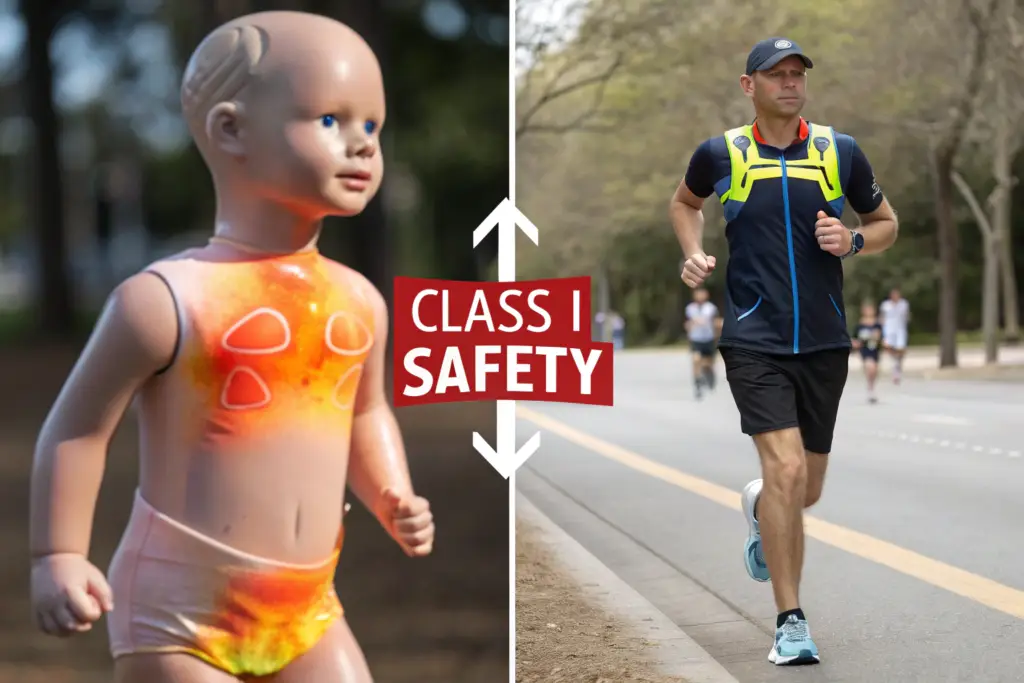
True OEKO-TEX Grade 1 (Class I) compliance means the functional vest and every single component in it have passed the most stringent chemical safety limits set by OEKO-TEX STANDARD 100, which are designed for babies’ sensitive skin. This is the gold standard, far exceeding the requirements for regular adult apparel (Class II or III). For a garment worn close to the body during activity, accepting anything less is a compromise on safety and quality.
Many suppliers use a generic OEKO-TEX certificate for adult wear to imply safety, but it doesn’t guarantee Grade 1 compliance. Let’s uncover why this grade matters for performance wear and how to verify it.
Why Should a Functional Vest Meet Babywear Safety Standards (Grade 1)?
It sounds extreme—why should an adult’s hiking vest be held to baby product standards? The answer lies in both physiology and ethics. Babywear (Class I) has the strictest limits because an infant’s skin is more permeable, their detoxifying organs are immature, and they frequently put clothing in their mouths. For a functional vest, which is worn directly against skin or thin base layers during sweat-inducing activity, the wearer’s skin is also warm, damp, and more absorbent.
The chemical restrictions in Grade 1 are significantly tougher. For example, the allowed limit for formaldehyde is roughly one-sixth of that for Class II adult skin-contact clothing. Limits for certain allergenic dye stuffs and pesticide residues are much lower or entirely prohibited. Choosing Grade 1 isn’t just about marketing; it’s a commitment to the purest, least irritating materials possible. Last year, we worked with a brand that wanted to rebrand their best-selling running vest as a premium, skin-safe product. By switching from their supplier’s Class II fabrics and components to our fully integrated Grade 1 production, they reduced customer complaints about skin irritation to zero within one season.
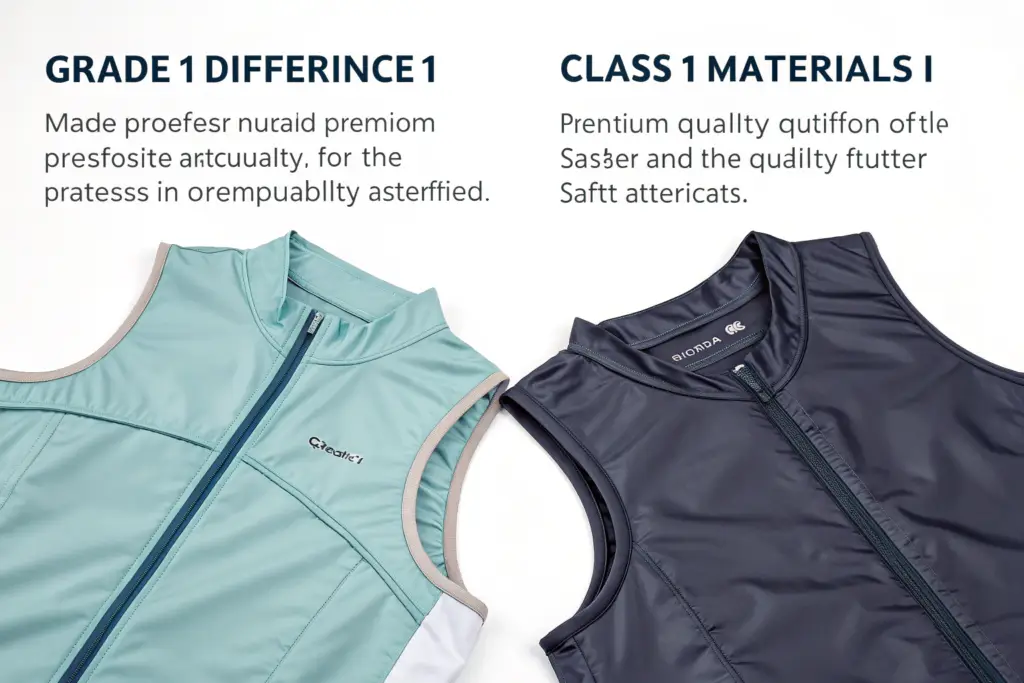
What Are the Specific Chemical Differences Between Class I and Class II?
The OEKO-TEX standard tests for over 100 regulated substances. The difference lies in the permitted limit values. Key areas with major discrepancies include:
- Formaldehyde: Strictly prohibited in detectable amounts for Class I; a small allowance exists for Class II.
- Heavy Metals (Cadmium, Lead, etc.): Permissible limits are 50-90% lower for Class I.
- Pesticides & Chlorinated Phenols: The list of banned substances is longer, and limits are drastically reduced.
- Skin-friendly pH Value: The acceptable range for Class I is narrower and closer to neutral, which is gentler on skin, especially when sweating.
For a supplier to claim Grade 1, they must test all components against these stricter thresholds. A supplier like Shanghai Fumao builds its supply chain around this from the start, sourcing only from trim and fabric partners who can consistently meet Grade 1 limits.
How Does Sweat and Friction Increase the Risk from Lower Grades?
During high-output activities, body heat and sweat act as solvents. They can increase the release and skin absorption of any residual chemicals present in the textile. Friction from backpack straps or repeated movement can also abrade fabrics and trims, potentially releasing particles. A vest meeting only the basic Class II standard may have chemical residues that are “acceptable” for limited, dry skin contact but become problematic under the stressful conditions of actual use. Opting for Grade 1 provides a much higher safety buffer, ensuring the garment remains safe even under extreme physiological conditions.
What Components in a Vest Must Be Individually Grade 1 Certified?
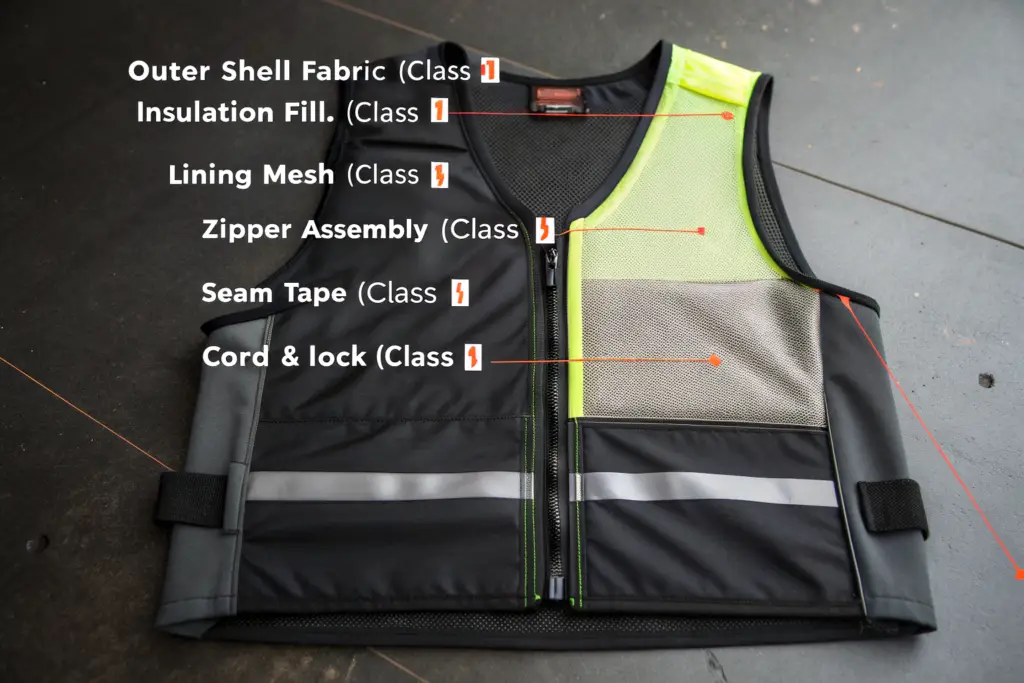
A functional vest is a complex assembly of technical materials. Relying on a single certificate for the “garment” is insufficient and often misleading. True Grade 1 compliance requires a system where each material is individually certified to Class I standards.
The main fabric is just the beginning. The real challenge lies in the numerous hidden components. For instance, the insulation (whether synthetic fill or down), the lining mesh, the zippers and sliders, the seam tapes, the cord locks, and even the bonding adhesives used in quilting must all be certified to Grade 1. This is where many suppliers fail or cut corners, using a Class I outer fabric with Class II or uncertified everything else.
Is Your Insulation and Down Truly Grade 1 Compliant?
This is a major blind spot. Down and feather insulation undergoes extensive cleaning and treatment processes that involve chemicals. A Grade 1 certificate for down is specific and verifies the absence of harmful residues from sanitization. Similarly, synthetic insulations like PrimaLoft or Thermore are treated with finishes for durability and loft. You must obtain the separate OEKO-TEX Class I certificate from the insulation supplier. We once audited a potential supplier who showed us a beautiful Class I shell fabric certificate. When we asked for the insulation certificate, they could only provide a generic safety data sheet—an immediate disqualification.
Are Zippers, Cords, and Seam Tapes Overlooked?
Absolutely. These small parts are critical:
- Zippers: The tape (fabric), the teeth/coil (metal or plastic), and the slider all have different chemical profiles.
- Elastic Cords & Cord Locks: Often made of PVC or other plastics containing plasticizers like phthalates, which are heavily restricted in Class I.
- Seam Tapes: Used for waterproof sealing, they are typically polyurethane or thermoplastic and involve adhesives.
Each of these requires its own certification. At Shanghai Fumao, our quality control protocol includes a “Component Certificate Checklist” for every vest style. No component enters production without its valid Class I certificate being uploaded to our system, creating a transparent chain of custody we share with our clients.
How to Vet Your Supplier’s Grade 1 Compliance Beyond the Certificate?
Seeing a “Product Class I” certificate is step one. Step two is verifying that this certificate is authentically applied to your specific order and that the supplier has the systems to maintain compliance in production. This is where you separate true technical partners from certificate brokers.
Ask for the certificate first. Then, immediately dig deeper with pointed questions about scope and process. A reliable supplier will have answers ready because they live this process daily.
What Are the 3 Must-Ask Questions About the Certificate Scope?
- “Is this certificate for the finished garment, or just for a specific material?” You need confirmation it’s a “Finished Article” certificate that covers the assembled vest, or a complete set of certificates for every component.
- “Can you provide the OEKO-TEX license number for this product?” Every certified article has a unique license number. This number should be traceable and is what legally allows you to use the OEKO-TEX label on your hangtag.
- “Does this certificate cover all colorways and fabrications for this vest style?” Dyes differ. A certificate for a “black polyester vest” does not automatically cover the same vest in “navy blue” or with a “recycled polyester” shell. Each major variation needs verification.
How to Assess Their Production Control for Grade 1 Integrity?
Certified materials mean nothing if they get mixed with non-certified ones on the factory floor. Ask about their full-package manufacturing controls:
- “How do you store and segregate Grade 1 materials from other inventory?”
- “What is your process for checking incoming materials against their certificates?”
- “Can you describe how you ensure that only certified thread, zippers, and insulation are used in a Grade 1 production batch?”
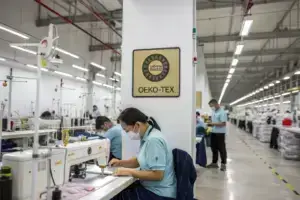
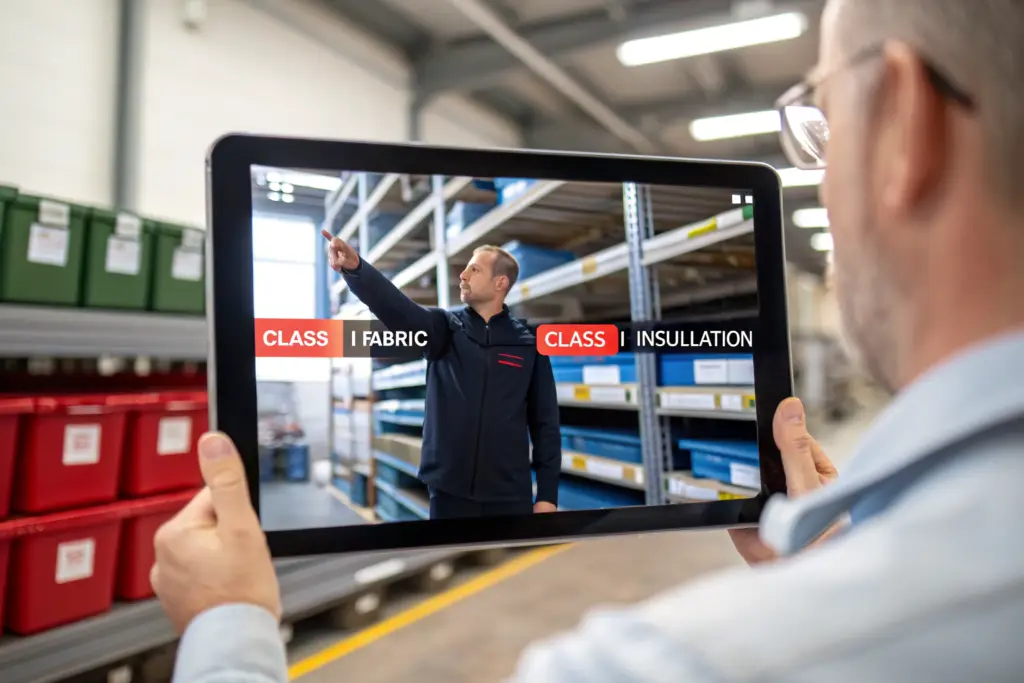
Request a virtual tour of their warehouse and production line. A competent factory will show you labeled storage areas and have a track-and-trace system. For example, during client audits, we demonstrate how each batch of certified down is logged and matched to specific vest production orders, ensuring absolute integrity from warehouse to shipping.
What Happens If Your Vest Isn’t Fully Grade 1 Compliant?
Choosing a supplier who cannot guarantee full Grade 1 compliance introduces multiple layers of risk that go beyond a simple marketing claim. The consequences are operational, financial, and reputational.
The most immediate risk is a failed lab test. Retailers, especially in Europe and North America, are increasingly conducting random batch testing. Customs authorities may also test shipments. If a single component (like the zipper tape) fails because it was only Class II, your entire shipment can be rejected, seized, or recalled.
Can You Legally Use the OEKO-TEX Label?
No, you cannot. The right to use the OEKO-TEX label on your product and marketing is strictly tied to the specific license number for that certified article. If your finished vest does not have its own “Finished Article” certificate or a complete set of verified component certificates, using the label is a violation of OEKO-TEX regulations. This can lead to legal action from the OEKO-TEX association and massive reputational damage if exposed. It constitutes greenwashing.
What Are the Long-Term Brand and Financial Risks?
The fallout from a compliance failure is costly:
- Recall Costs: Logistics, destruction, and refunds.
- Retailer Fines & Lost Business: Partners will lose trust.
- Consumer Backlash: In the age of social media, a safety scandal can be devastating.
- Lost Competitive Edge: You cannot legitimately claim the premium, safety-first position that Grade 1 allows.
Conversely, a fully Grade 1 compliant vest from a partner like Shanghai Fumao becomes a powerful asset. It allows for verifiable marketing claims, justifies a higher price point, and builds unshakeable trust with your customers who value health and transparency. It’s not just a cost; it’s an investment in your brand’s foundation.
Conclusion
Asking “Is your functional vest supplier OEKO-TEX Grade 1 compliant?” is the most important question you can ask for your technical apparel line. It moves the conversation from vague assurances of “safety” to a measurable, verifiable gold standard. True compliance requires every component—from the shell to the zipper slider—to be individually certified to the stringent Class I (babywear) limits, backed by a supplier with the systems to guarantee integrity through production.
Settling for anything less isn’t just a compromise; it’s an active risk to your product’s legality, your shipment’s security, and your brand’s reputation. In a market that values authenticity and performance, Grade 1 compliance is a definitive competitive edge.
You now have the blueprint to verify claims and demand proof. Use it to find a partner whose standards are as high as your ambitions. When you are ready to develop functional vests that offer unparalleled safety and quality, we are here to deliver. Contact Shanghai Fumao’s Business Director Elaine today. Let us provide our complete Grade 1 certification dossiers and demonstrate our controlled production process for your next high-performance vest line. Reach her at elaine@fumaoclothing.com. Let's build safety and performance into every layer.