As a manufacturer who has watched the women's golf category evolve from a small-size men's line to a powerhouse segment, I can state unequivocally: yes. The modern female golfer is not just participating; she is reshaping the market's priorities. Her demand for skirts and dresses that are stylish, high-performing, and responsibly made is directly fueling the surge in demand for OEKO-TEX and other certifications.
The women's golf market is absolutely driving demand for certified skirts and dresses, as female consumers increasingly prioritize personal well-being, skin safety, and environmental values—demands that translate directly into buyer requirements for chemical safety (OEKO-TEX), sustainable materials (GRS), and ethical production, making certification a key product differentiator and a new standard for the category. This is a fundamental shift, not a passing trend.
This driver is reshaping design briefs, sourcing strategies, and marketing narratives. Let's analyze the specific forces behind this shift and what it means for brands and buyers.
How Are Female Consumer Values Shaping Product Demands?
The female golfer of 2025 is often a multi-faceted consumer: she is health-conscious, environmentally aware, and values transparency. Her purchasing decisions are an extension of these personal values, which extend directly to the apparel she wears for a four-hour round.
Female consumer values are shaping product demands by elevating skin safety and material integrity to the same level of importance as fit and aesthetics, directly creating a commercial requirement for certifications that guarantee the absence of harmful substances and the use of responsible materials in close-fitting garments like skirts and dresses. She is buying for well-being, not just for sport.
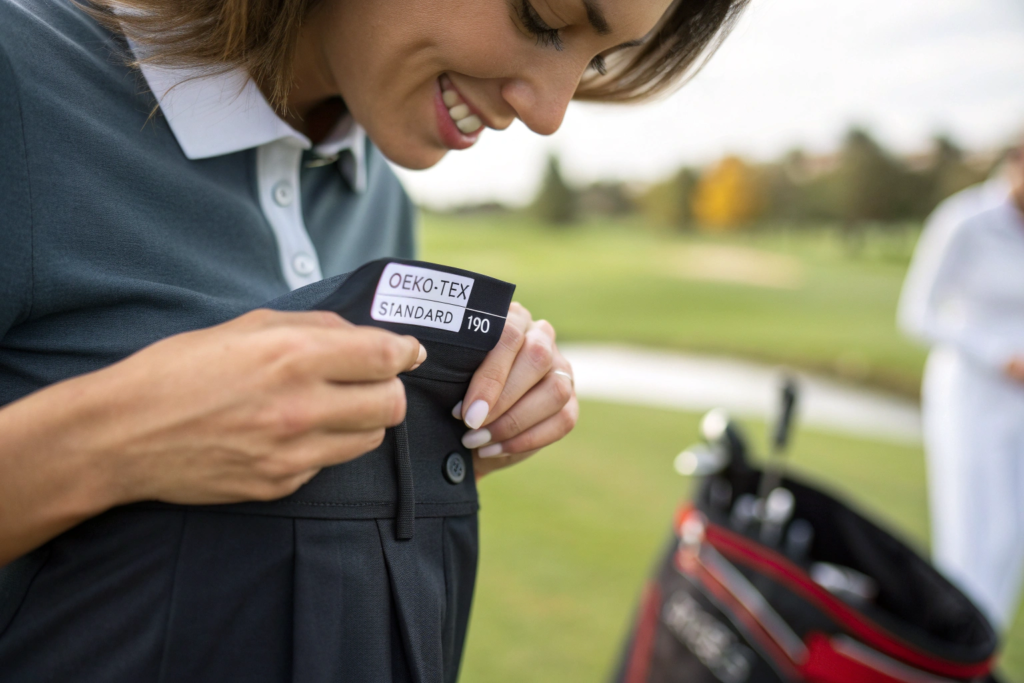
Why is Skin Safety a Paramount Concern?
Golf skirts and dresses sit directly against the skin for extended periods, often in sun and heat where pores are open. The risk of skin irritation from dyes, finishes, or chemical residues is a tangible concern. Women are more likely to research textile-related dermatitis and seek out safeguards. The OEKO-TEX label, particularly Article Class I (for babies) or Class II, provides a trusted, scientific answer to this concern. It's not just a marketing claim; it's a verified barrier against allergens and irritants like formaldehyde and heavy metals. A buyer for a women's-focused brand told us their switch to certified skirts resulted in a near-zero return rate for "skin irritation" reasons, a common issue with their previous supplier.
How Do Sustainability Values Translate to Skirt Design?
Sustainability is expressed in material choices. Demand for skirts made from recycled polyester or organic cotton is high. The GRS (Global Recycled Standard) certification provides the verified proof for these claims. For a dress or skirt, this often means a blend: a GRS-certified recycled polyester outer shell with a certified cotton-Lycra inner short. This complexity makes the factory's role crucial. At Shanghai Fumao, we manage this by sourcing certified components and maintaining a transparent Bill of Materials (BOM) for each style, which has become a key document requested by our women's brand clients.
What Unique Design Features of Skirts Drive Certification Needs?
The very design of a golf skirt or dress introduces specific certification challenges that go beyond a basic polo shirt. These features make certification not just preferable but often essential for quality assurance.
Unique design features like bonded seams, multiple material layers (outer shell, inner short, mesh panels), printed patterns, and specialized stretch fabrics drive certification needs because each added component and process introduces new chemical and material variables that must be individually verified for safety and performance. Complexity necessitates verification.
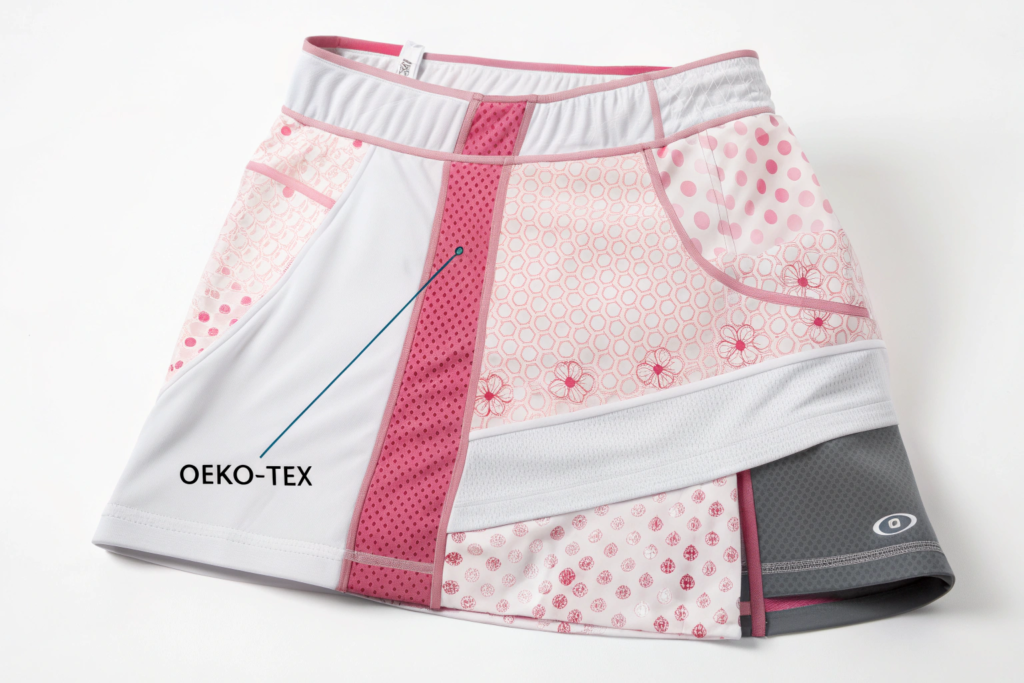
How Do Multi-Layer Constructions Impact Compliance?
A typical performance skirt has an outer layer for weather resistance, a middle layer for stretch and comfort, and an inner layer for modesty and chafe prevention. Each of these layers—often different fabrics (polyester, spandex blends, cotton)—requires its own certification. The adhesives or bonding agents used to fuse layers must also be compliant. This multi-layer approach is a key reason women's skirts often have a higher certification cost embedded than simpler garments. However, it's precisely this construction that delivers the performance female golfers demand, making the certification a necessary investment to ensure all layers are safe.
Why are Prints and Patterned Fabrics a Certification Focus?
Women's golf apparel uses more prints and patterns. The inks and dyes used for these designs are a major focus of OEKO-TEX testing. The certification ensures that even large-area prints are free from hazardous substances and have good color fastness to perspiration and rubbing. A buyer's nightmare is a floral-print skirt where the red dye transfers to the skin or a white golf cart seat. Certification mitigates this risk. We recently developed a custom jacquard-pattern skirt fabric; the mill's OEKO-TEX certificate was the deciding factor in our fabric selection, as it guaranteed the complex dye process was safe.
How is the Retail Landscape Responding to This Demand?
Women's golf apparel is a high-margin segment for retailers, from pro shops to specialty boutiques. These retailers are acutely aware of their customer's values and are actively curating their assortments to meet them.
The retail landscape is responding by explicitly requesting certified products from their wholesalers and brands, using certifications as a merchandising tool on floor displays and online filters, and educating their sales staff to communicate the value of these marks to the end consumer. Retailers are becoming the amplification channel for this demand.
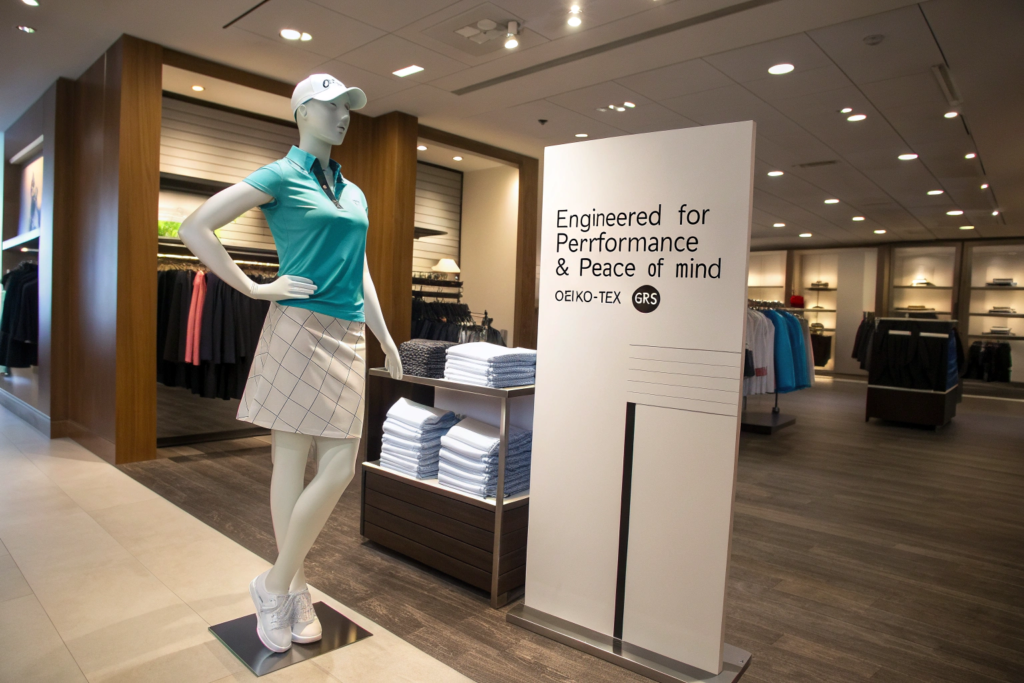
Are Retailers Using Certification as a Sales Tool?
Absolutely. Forward-thinking retailers are creating "Shop by Values" sections online or "Clean Performance" racks in-store. They train staff to say, "This line is OEKO-TEX certified, which means it's been tested for over 100 harmful substances, great for sensitive skin." This turns a technical certification into a relatable benefit during the sales process. For the buyer supplying these retailers, providing high-quality hangtags and point-of-sale materials that explain the certification becomes a value-added service that can secure shelf space.
What is the Impact on Wholesale Buying Criteria?
Buyers for these retailers are now including certification requirements in their RFPs (Request for Proposal) and tech packs. It's no longer an optional "nice-to-have." They need to provide proof to their merchandising teams. This has created a tiered market: certified lines get prime placement and full-price sell-through, while non-certified basics are relegated to sale racks. This commercial reality is the ultimate driver for brands and wholesalers to invest in certification for their women's collections.
What Does This Mean for Future Product Development?
The influence of the women's market is setting a new benchmark that will eventually permeate all golf apparel. The focus on certification is becoming a core part of the product development (PD) process, not a final-stage add-on.
This demand means future product development for women's golf apparel must begin with certified material sourcing as a foundational constraint, involve closer collaboration between designers and technical teams to ensure design aesthetics align with compliance, and prioritize traceability throughout the supply chain to support marketing claims. PD is now integrated with compliance.

How is the PD Timeline Affected?
The timeline extends slightly but becomes more robust. Sourcing certified fabrics and trims takes longer due to vetting and sampling. However, this upfront work prevents costly delays later from failed lab tests or material rejections. Factories like ours have adapted by creating pre-vetted "Certified Material Libraries" for clients, dramatically speeding up the initial fabric selection phase for skirts and dresses.
Will Men's Lines Follow Suit?
The trajectory is clear. Innovations and value-driven demands often start in the women's segment before moving to men's. As men become more educated on skin health and sustainability, and as retailers standardize their certification requirements across departments, men's golf apparel will follow. Smart brands are already applying the same certified sourcing principles across their entire collection to ensure consistency and streamline their supply chain management.
Conclusion
The women's golf market is not just driving demand for certified skirts and dresses; it is leading a fundamental transformation in how golf apparel is sourced, valued, and marketed. The female consumer's emphasis on safety, sustainability, and transparency has created a powerful commercial imperative that buyers and brands cannot ignore. Certification has shifted from a cost to a critical component of product integrity and market access.
For brands and wholesalers looking to succeed in this dynamic segment, partnering with a manufacturer that understands this holistic approach—where design, performance, and certification are developed in parallel—is essential. If you are developing your next women's golf collection and need a partner who speaks this language and possesses the technical expertise to execute it, let's connect. Contact our Business Director Elaine at elaine@fumaoclothing.com to discuss how Shanghai Fumao can help you create certified skirts and dresses that win in the marketplace.