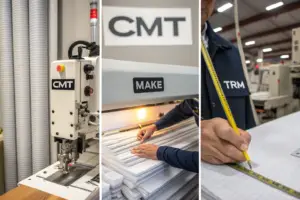
You face a constant pressure: get the latest styles to market fast, but don't compromise on the quality that keeps customers coming back. In the race of fashion, it often feels like you must choose one or the other. A factory promising impossibly quick turnarounds might deliver flawed goods, while a perfectionist workshop could miss your entire selling season. This isn't just an operational dilemma; it's a strategic one that defines your brand's reputation and bottom line.
In wholesale clothing manufacturing, neither speed nor quality should be sacrificed for the other; the objective is to achieve an optimal balance where robust systems ensure consistent quality is delivered within a timeline that captures market opportunity. The real differentiator is a manufacturer's ability to systematize quality control so thoroughly that it becomes a non-negotiable foundation, upon which efficient, reliable speed is built. At Shanghai Fumao, we operate on the principle that quality is the license to operate, and speed is the competitive advantage we build on top of it.
Treating speed and quality as opposites is the mistake of a reactive factory. A professional partner understands they are interdependent: poor quality destroys speed through rework and returns, while poor planning destroys quality through rushed, error-prone production. Let's examine why this balance is not a compromise, but a deliberate engineering of your supply chain.
Why Is Systemic Quality The Non-Negotiable Foundation?
Imagine building a house on sand. No matter how quickly you build it, it will collapse. In manufacturing, systemic quality is the solid foundation. Without it, any speed you achieve is illusory and costly. Speed built on a shaky quality foundation results in delayed shipments due to 100% inspections, chargebacks from retailers, and irreversible brand damage from poor customer reviews.
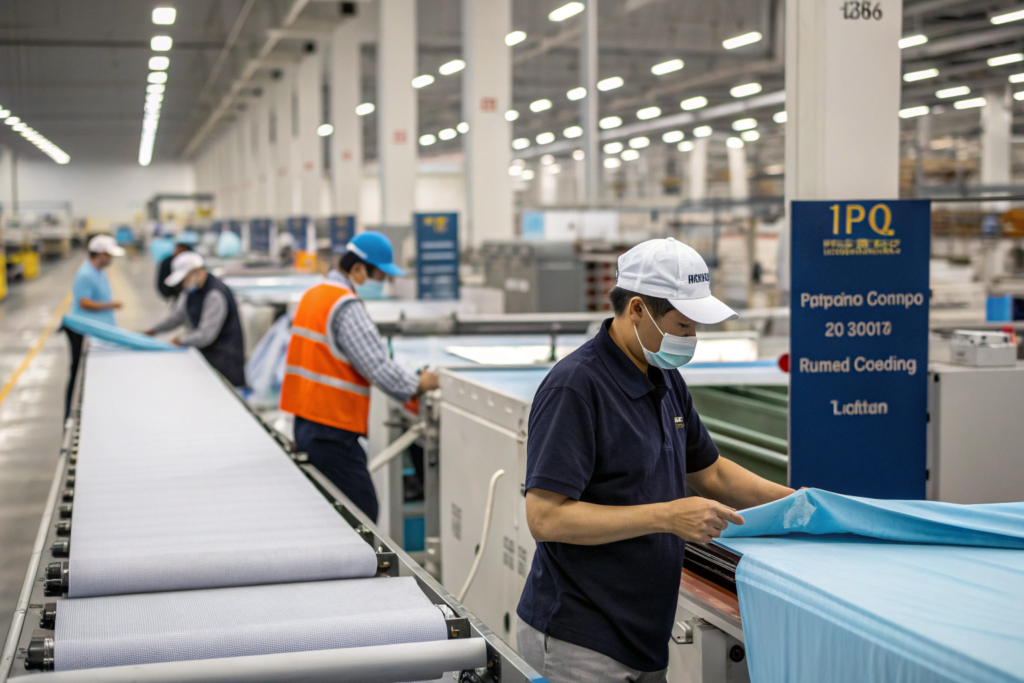
Systemic quality is non-negotiable because it is the mechanism that prevents catastrophic failure, protects profit margins from the high cost of defects, and builds the brand trust required for long-term business growth. It is not an inspection step; it is a production method. Our integrated In-Process Quality Control (IPQC) system, as detailed in our previous discussions, embeds checks at every stage—from fabric to finishing—to prevent errors from moving forward, making final delays less likely.
How Do Poor Quality Controls Inevitably Slow You Down?
The "speed" of a low-quality production run is a mirage. Consider the hidden timeline:
- Production Speed: Factory rushes, skipping in-line checks.
- Discovery: Major defects are found at final inspection.
- Crisis: The entire order may need sorting (adding days) or, worse, rework (adding weeks).
- Result: The "fast" order is now severely late, and you pay for the extra labor.
A client came to us after a bad experience where another factory promised a 30-day turnaround on 5,000 units. The goods arrived on day 30, but over 40% had misaligned prints and seam defects. The entire shipment was rejected, leading to a 60-day total delay and costly air freight for the replacement order. Their quest for pure speed cost them a season.
Can Quality Systems Actually Enable Faster Turnarounds?
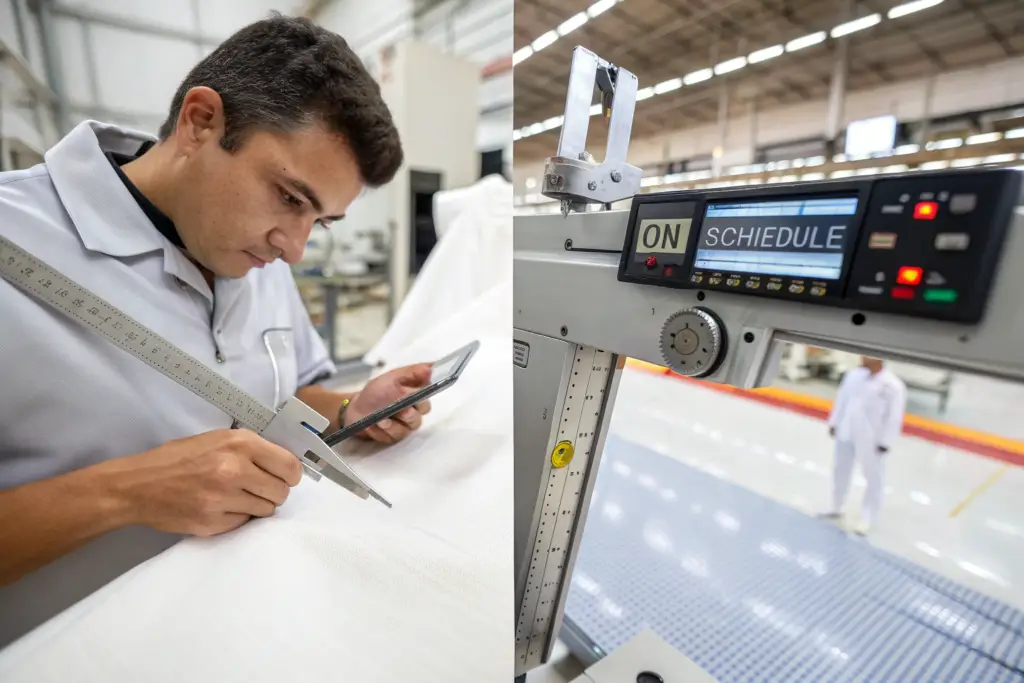
Absolutely. A predictable, high-first-pass-yield production line is inherently faster in terms of reliable output. When you eliminate stoppages for major rework, the flow is smooth. For instance, our First Article Inspection (FAI) and hourly line checks catch a stitching error when only 10 pieces are affected, not 1,000. Fixing it then takes minutes, not days. This systematic prevention creates a more predictable and ultimately faster total timeline because there are no catastrophic surprises. We guarantee on-time delivery because of our quality systems, not in spite of them.
How Can Strategic Planning Create Responsible Speed?
Once a quality foundation is secured, speed becomes a function of intelligent planning and process mastery. Responsible speed isn't about rushing; it's about compressing timelines through foresight, parallel processing, and removing bottlenecks.
Strategic planning creates responsible speed by developing a realistic Time & Action (T&A) calendar with buffer for critical approvals, proactively sourcing raw materials, utilizing digital tools for real-time tracking, and maintaining flexible logistics partnerships. This planning acknowledges complexity and manages it, rather than ignoring it in pursuit of an unrealistic date. We create a shared T&A with our clients that includes "hold points" for their approvals, ensuring their speed in feedback directly contributes to the overall timeline.

What Are The Key Levers for Timeline Compression?
Efficiency experts focus on the critical path. In apparel manufacturing, key levers include:
- Parallel Processing: Overlapping stages where possible. For example, while bulk fabric is being produced, trims can be sourced and approved, and production lines can be prepared.
- Proactive Raw Material Inventory: For repeat or core basic styles, holding fabric stock (Vendor Managed Inventory) can shave 3-4 weeks off the lead time.
- Digital Prototyping & Approvals: Using 3D renderings for initial design sign-off can cut sampling rounds by 50%.
We employed these levers for an activewear brand needing a fast-reaction reorder. Because we had their approved fabric in our bonded warehouse and their tech packs on file, we bypassed the 35-day fabric production window. By starting cutting immediately and using a pre-validated production line, we delivered a 3,000-piece order in 28 days door-to-door via sea freight, a timeline typically only associated with air shipment.
How Does Communication Velocity Impact Speed?
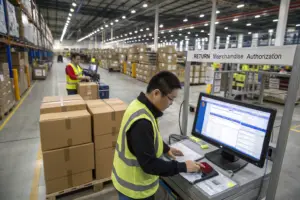
A major bottleneck you've identified is "inefficient communication." Speed is killed by waiting for email replies across time zones. We assign a dedicated project manager who serves as the single point of contact, empowered to make routine decisions and escalate swiftly. Coupled with a cloud-based PLM system, all comments, approvals, and changes are logged in real-time, visible to both sides. This eliminates version confusion and approval lag. For a client in New York, moving from email chains to our PLM portal reduced their average approval cycle time from 5 days to 1.5 days.
What Is The Real Cost of Choosing One Over The Other?
The question "speed or quality?" presents a false choice because opting for one at the total expense of the other carries a severe, often hidden, cost. Understanding these costs reveals why balance is the only financially sustainable path.
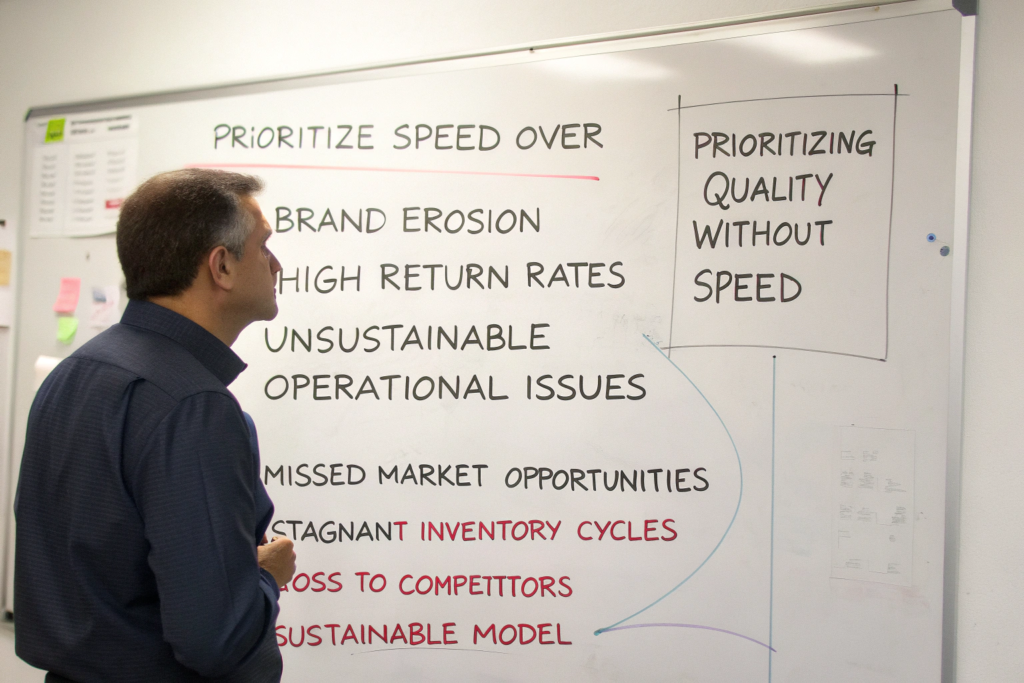
The real cost of prioritizing speed over quality is brand erosion, high return rates, and unsustainable operational firefighting. The real cost of prioritizing quality without regard to speed is missed market opportunities, stagnant inventory cycles, and loss to competitors. The sustainable model invests in the systems that allow both to coexist.
The High Price of "Speed at Any Cost"
A brand that consistently delivers poor quality, even if always on time, trains its customers to expect disappointment. The financials tell a clear story:
- Return Rates: Can skyrocket from an industry average of 10-15% to 30%+.
- Chargebacks: Retailers will levy fines for quality failures, directly cutting margins.
- Customer Acquisition Cost (CAC): Increases as positive word-of-mouth dries up and marketing must work harder to overcome negative reviews.
- Lifetime Value (LTV): Plummets as customers do not repeat purchases.
We analyzed this for a potential client whose return rate was 28%. By improving their product's fabric and construction quality with us—which added 7 days to the production timeline—their return rate dropped to 9% within two seasons. The slight delay was vastly outweighed by the margin protection and increased customer retention.
The Opportunity Cost of "Quality at Any Pace"
Conversely, a brand that cannot react to trends or deliver for key selling periods loses sales to competitors. This is not just a lost order; it's lost market relevance. For fast-fashion segments or holiday-driven collections, being late is the same as being wrong. The cost is 100% of the potential revenue from that collection, plus the wasted sunk costs in design and development.
How Do Leading Factories Achieve The Synergy?
The leading factories don't see this as a balance but as a synergy. They build systems where quality assurance drives efficiency, and efficient planning safeguards quality. This synergy is achieved through technology, skilled workforce management, and a culture of continuous improvement.
Leading factories achieve the synergy by integrating real-time production monitoring (MES) with quality data, investing in workforce training to reduce errors, and fostering cross-department collaboration where production and QC share the goal of "right first time, on time." This creates a virtuous cycle: fewer defects mean less rework, which means more predictable schedules, which allows for better planning and less rush, which in turn fosters higher quality.
What Is The Role of Technology in Synergy?
A Manufacturing Execution System (MES) is key. In our factory, the system tracks not just output pieces per hour, but also the defect rate per operation. If a sewing station's defect rate spikes, the system alerts the line supervisor and the QC manager simultaneously. This allows for a joint, root-cause analysis and fix before thousands of defective pieces are made. The data then feeds into training programs to prevent recurrence. Technology turns quality from a subjective opinion into a measurable, manageable part of the production speed equation.
How Does Culture Cement The Balance?
Ultimately, systems are run by people. A culture that punishes delays but ignores how they were caused will sacrifice quality. A culture that rewards only flawless goods without regard to deadlines will become slow. We promote a culture of "Prevention over Correction." Line workers are incentivized for low defect rates, not just high output. Planners are measured on the accuracy of their timelines (how often they hit the date they promised). This aligns everyone's goals with the outcome you seek: flawless goods, delivered reliably.
Conclusion
Asking whether speed or quality is more important is like asking whether the heart or lungs are more vital for life. You need both, functioning in harmony, to survive and thrive in the competitive wholesale landscape. The goal is not to choose, but to find a manufacturing partner that has engineered its operations to deliver both as standard.
This partner will have the systems to make quality inevitable and the planning intelligence to make speed reliable. They will understand that your reputation is built on quality, but your business is captured through timely delivery.
Shanghai Fumao is built on this synergistic model. Our quality controls protect your brand, and our strategic planning protects your timeline. We invite you to move beyond the false choice and experience manufacturing where consistency and reliability are delivered together. To discuss how we can bring this balance to your next order, contact our Business Director, Elaine. Let's build a schedule that respects the market and a product that respects your customer. Email: elaine@fumaoclothing.com.