As a brand owner, you're under pressure from consumers, retailers, and investors to address climate change. In apparel, this often leads to a search for labels and certifications that signal environmental responsibility. OEKO-TEX is a globally recognized name for material safety, but when customers ask about your brand's climate impact, is pointing to this certification enough? The answer requires a clear-eyed look at what OEKO-TEX does and does not cover.
OEKO-TEX certification, primarily through its STANDARD 100 and STeP modules, is a valid and important component of a holistic climate response, but it is not a complete solution on its own. It addresses critical indirect drivers of climate change—chemical pollution and resource-intensive production—by promoting cleaner chemistry and more sustainable factory processes. However, it does not directly measure or limit a product's carbon footprint, making it one essential piece of a broader environmental strategy.
Think of it this way: climate change is caused by greenhouse gas emissions. While OEKO-TEX doesn't audit your CO2 emissions per garment, it systematically reduces the use of harmful chemicals whose production is energy-intensive and whose release damages ecosystems that sequester carbon. It's a prevention-focused standard that tackles root causes of industrial pollution.
How does OEKO-TEX indirectly mitigate climate impact?
The link between chemical management and climate change is profound but often overlooked. The production, use, and disposal of hazardous chemicals are energy-intensive and polluting. By restricting these, OEKO-TEX drives change at the manufacturing source.
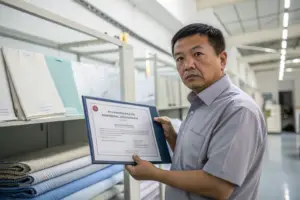
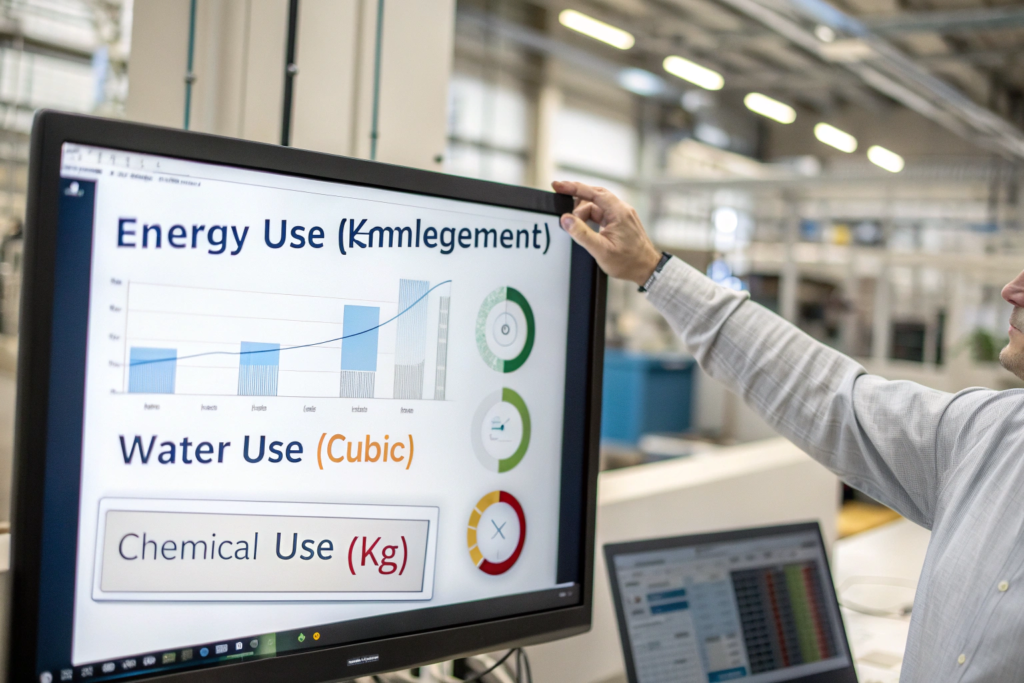
The OEKO-TEX STeP certification is particularly relevant here. It assesses a factory's performance in six areas: Chemical Management, Environmental Performance, Environmental Management, Social Responsibility, Quality Management, and Health & Safety. The "Environmental Performance" module directly measures and pushes for reductions in energy and water consumption, wastewater output, and air emissions. A factory striving for STeP certification must implement systems to monitor and reduce its resource use. For example, at Shanghai Fumao, our pursuit of STeP led to a 20% reduction in water consumption per garment over two years through optimized dyeing processes and water recycling—a change that also lowered the energy used for water heating.

Does restricting harmful chemicals reduce industrial carbon emissions?
Yes, indirectly. Many restricted substances, like certain azo dyes or formaldehyde-based finishes, are derived from petrochemicals. Their synthesis is energy-heavy. By mandating safer alternatives, OEKO-TEX reduces demand for these carbon-intensive chemicals. Furthermore, proper chemical management prevents pollution that can degrade soil and water, ecosystems that are vital carbon sinks. This systemic approach in our full-package manufacturing ensures that the products we make don't contribute to the problem through toxic legacy pollution, which is a form of long-term environmental debt.
How does STeP certification promote energy efficiency?
The STeP standard requires facilities to have an environmental management system that includes tracking energy consumption and setting improvement goals. This often leads to investments in more efficient machinery, LED lighting, and even on-site renewable energy. While it doesn't issue a carbon label, it creates the data-driven foundation for carbon reduction. A brand partnering with a STeP-certified manufacturer is essentially outsourcing a significant portion of its Scope 3 (supply chain) emissions reduction efforts to a partner with a verified system. This is a powerful response to climate concerns that goes deeper than product-level claims.
Where does OEKO-TEX fall short on direct climate action?
It's crucial to understand the boundaries of the certification to avoid greenwashing. OEKO-TEX was founded on human-ecological safety, not climate science. Its primary focus is on input toxicity, not output carbon.
The STANDARD 100 label does not provide information on the carbon footprint, water footprint, or recycled content of a product. A garment can be OEKO-TEX certified but still be made from virgin polyester (a petroleum product) in a coal-powered factory. It can be chemically safe but carbon-heavy. Therefore, using STANDARD 100 alone as a response to climate change questions is insufficient and can be seen as misleading. You need complementary certifications or data, such as Life Cycle Assessment (LCA) results, recycled material certifications (e.g., GRS), or carbon-neutral pledges.
Does it address material sourcing and circularity?
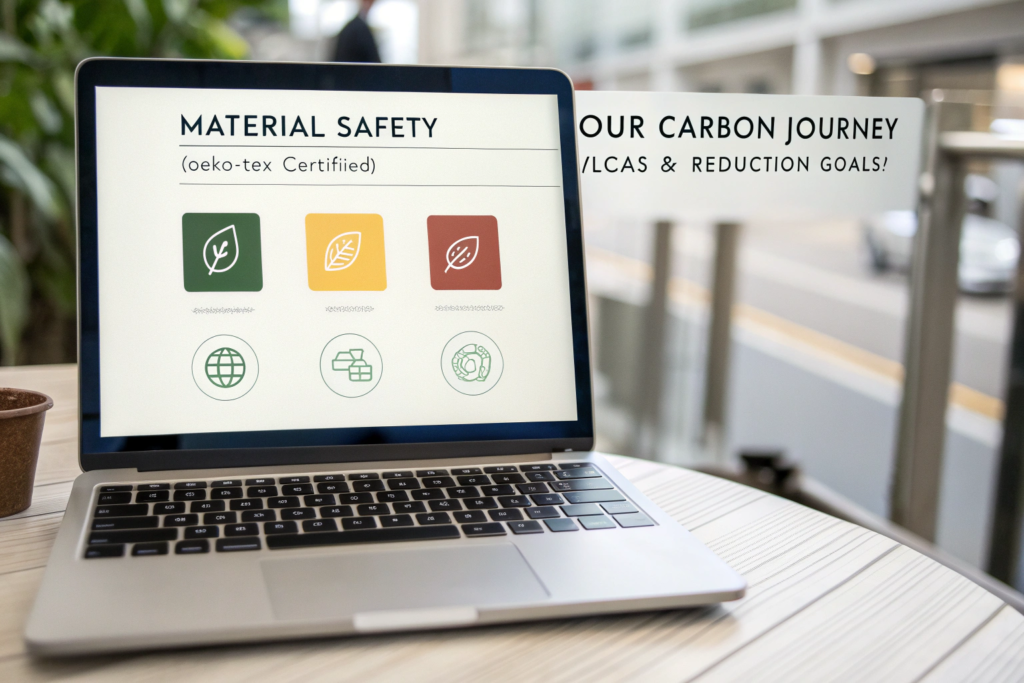
Only partially. The newer MADE IN GREEN label combines product safety (STANDARD 100) with sustainable production (STeP) and adds traceability. This is a stronger holistic label. However, OEKO-TEX standards do not mandate the use of recycled or low-impact biomaterials. Their focus is on the safety of whatever material is used. For a complete climate story, you must pair OEKO-TEX with material-specific choices—like using OEKO-TEX certified organic cotton or recycled polyester—and design for circularity (durability, reparability, recyclability), which we integrate into our product development guidance for clients.
How should a brand communicate this complex relationship?
Transparency is key. Brands should accurately state: "Our products are OEKO-TEX STANDARD 100 certified, ensuring they are free from harmful substances. Furthermore, our manufacturing partner holds STeP certification, verifying their commitment to reducing environmental impact, including energy and water use." This precise language credits the standard for what it does while acknowledging the separate, critical issue of carbon emissions. It turns a potential liability into a demonstration of nuanced understanding.
What is the strategic way to integrate OEKO-TEX into a climate strategy?
For forward-thinking brands, OEKO-TEX should be viewed as the essential "hygiene factor" for responsible production—the baseline—upon which a dedicated climate strategy is built.
The most effective approach is to use OEKO-TEX STeP as a supplier screening tool. Prioritize manufacturing partners who hold this certification, as it guarantees a level of environmental management maturity. Then, work with that partner to tackle the carbon footprint of your specific products. This could involve sourcing lower-impact materials, optimizing logistics through DDP services to consolidate shipping, or investing in carbon insetting projects within the supply chain.
Can OEKO-TEX be part of a "Climate Neutral" claim?
Not by itself. A "Climate Neutral" or "Carbon Neutral" claim requires measuring the footprint, reducing it as much as possible, and then credibly offsetting the remainder. OEKO-TEX supports the reduction phase, particularly in the production and chemical management areas, but does not provide the measurement or offsetting framework. A credible claim would be: "Made in a STeP-certified facility, with a 30% reduced carbon footprint compared to our baseline, and the remainder offset through Verified Carbon Standard projects."
What should you ask your supplier to connect the dots?
To build a robust strategy, ask your manufacturer:
- "Do you have OEKO-TEX STeP certification, and can we see your latest performance data for energy and water use?"
- "Can you provide carbon footprint data for our specific product style, or support us in conducting an LCA?"
- "What are your facilities' renewable energy targets, and do you source OEKO-TEX certified recycled materials?"
A partner like Shanghai Fumao, with STeP certification and a commitment to continuous improvement, is positioned to collaborate on these answers, turning certification into actionable climate progress.
Conclusion
OEKO-TEX certification is a valid and powerful response to the broader environmental concerns that are intrinsically linked to the climate crisis. It ensures products are made with safer chemicals and, through STeP, that they are produced in facilities actively managing their resource use and pollution. This prevents ecological damage and promotes industrial efficiency, which are foundational to long-term climate resilience.
However, it is not a carbon credit or a footprint label. The most responsible brands will use OEKO-TEX as the crucial foundation for material and production safety, while separately measuring, reducing, and communicating their direct carbon emissions. This dual approach is honest, comprehensive, and truly responsive to the full scope of climate change concerns.
Building such a strategy requires a manufacturing partner who understands both the science of safety and the imperative of decarbonization. Shanghai Fumao is committed to being that partner, providing certified safety and the data-driven systems to support your broader climate goals. Let's build a responsible future, stitch by stitch. Contact our Business Director Elaine: elaine@fumaoclothing.com.