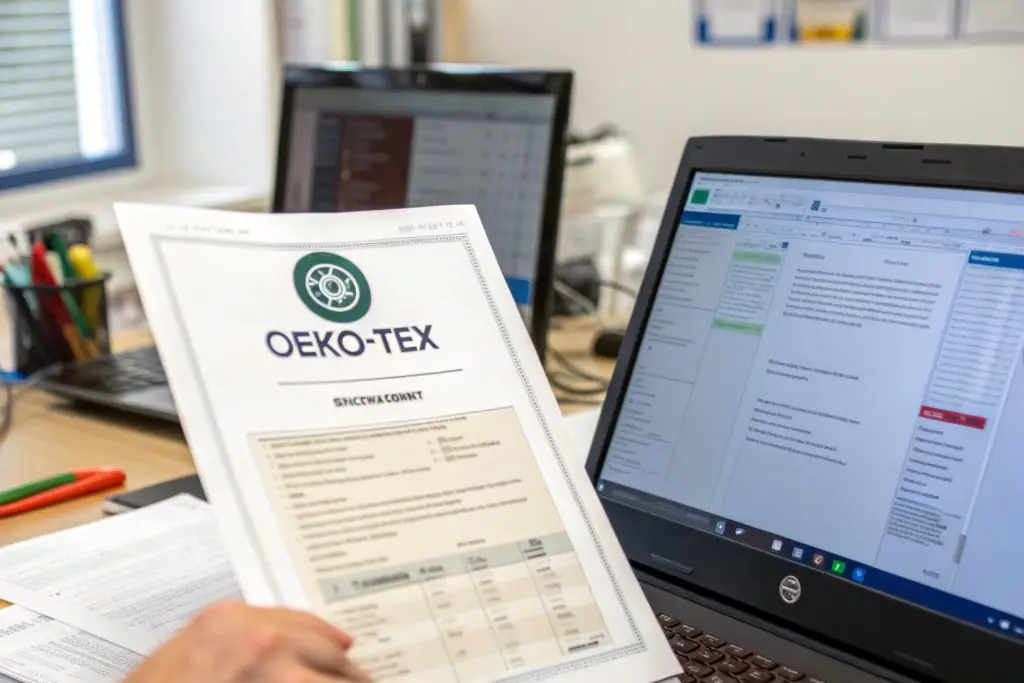
For any apparel brand sourcing from overseas, the nightmare scenario is discovering that the quality or safety certificates provided by your supplier are fake. This isn't just a theoretical risk; it's a frequent and costly reality in global supply chains. As the owner of Shanghai Fumao Clothing, I've seen firsthand how falsified documents can destroy trust, lead to rejected shipments, and cause massive financial loss. When brands ask me how to protect themselves, one of the most effective tools we discuss is OEKO-TEX® certification. But can this specific system truly be a solution to the pervasive problem of certificate falsification?
Yes, OEKO-TEX certification is a robust, systemic solution to supplier certificate falsification risks because its verification model is built on transparency, traceability, and third-party audits. It replaces easily forged paper documents with a publicly accessible, real-time online database that allows any buyer to independently verify a certificate's authenticity, scope, and validity in seconds.
For CEOs, brand owners, and buyers who are sensitive to both quality and risk, understanding this verification mechanism is not about textile chemistry—it's about supply chain security. Let's dissect how it works and why it's uniquely positioned to combat this specific pain point.
How Does the OEKO-TEX Verification System Work to Prevent Fraud?
The core strength of OEKO-TEX in combating falsification lies in its shift from a static document to a dynamic, interactive system. It moves trust from the supplier's claim to a neutral, verifiable platform.
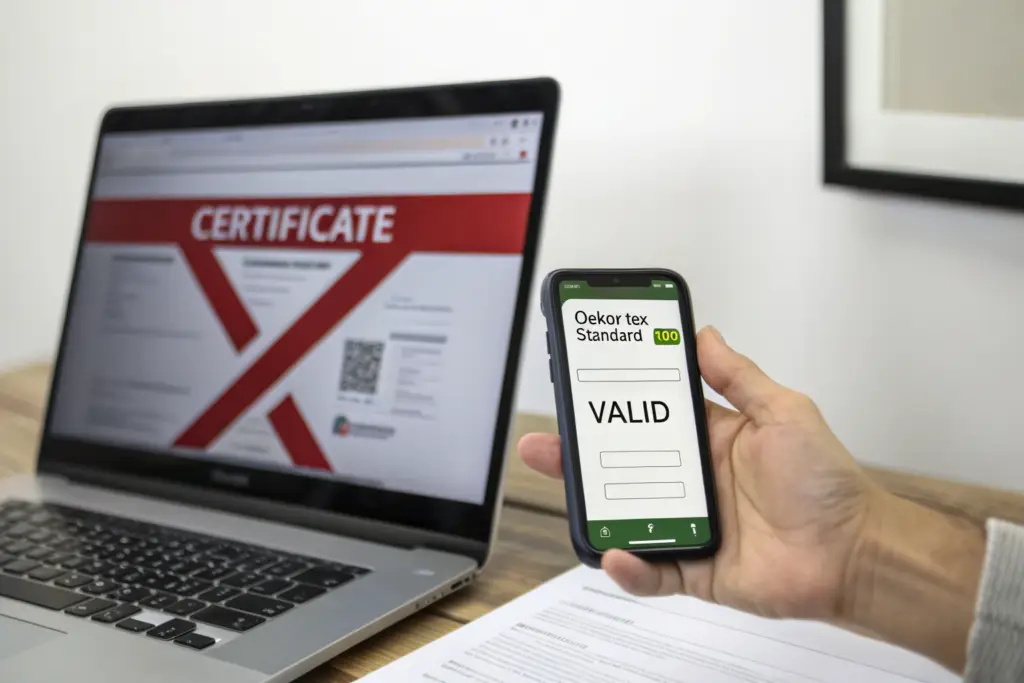
What is the "License Number & Online Check" Mechanism?
Every genuine OEKO-TEX STANDARD 100 or MADE IN GREEN certificate is linked to a unique license number. This number is not just printed on a document; it is the key to a public portal. Any brand, anywhere in the world, can go to the official OEKO-TEX website, enter this number, and instantly see:
- Certificate Status: Is it active, suspended, or expired?
- Certificate Holder: Which company (factory or mill) it was issued to.
- Product Scope: Exactly which products and materials it covers.
- Validity Period: The precise start and end dates.
This process takes less than a minute and requires no login or special permission. It turns due diligence from a days-long email exchange into an immediate, actionable fact-check. Last year, a potential client from Germany was evaluating us against another Chinese supplier who had provided an OEKO-TEX certificate. Our client used the online check and found the other supplier's certificate had expired six months prior, while ours was valid and covered the exact product they needed. They became our partner within the week.
Why is Third-Party Auditing More Secure Than Self-Declaration?
OEKO-TEX certificates are issued by independent, accredited testing institutes (like Hohenstein or TESTEX), not by the factories themselves. These institutes conduct regular, often unannounced, audits on certified entities. This means the certification body has a direct, verified relationship with the supplier, not just a submitted sample. Falsifying a document from such an institute is not just forgery; it is fraud against an independent organization that actively monitors its licensees. This creates a significant legal and reputational deterrent for suppliers.
How Does This Directly Address Buyer Pain Points?
The risks of certificate falsification are not abstract—they translate into direct, costly problems for importers. OEKO-TEX's system provides targeted solutions for each.
How Does it Eliminate "Inefficient Communication" with Sales Reps?
A common frustration is the endless back-and-forth with a sales representative requesting "proof" of certification, only to receive unverifiable scans. With OEKO-TEX, the conversation changes. A buyer can simply ask: "Please provide your OEKO-TEX license number for the fabric/product in question." The buyer then performs the check independently. This shifts the dynamic from one of request-and-potential-delay to one of immediate, collaborative verification. It streamlines communication by establishing a single, unambiguous data point.
How Does it Prevent "Delayed Shipments Due to Failed Tests"?
The ultimate consequence of a falsified safety certificate is often a shipment being held at customs or rejected by the brand's own QC lab after arrival. This causes catastrophic delays. Because OEKO-TEX certification requires pre-shipment testing of materials and production audits, the risk of a batch failing a standard chemical safety test at destination is virtually eliminated. When you source from a OEKO-TEX certified partner like Shanghai Fumao, you are not relying on a piece of paper; you are relying on a controlled production system that has been audited to maintain compliance.
What are the Limitations and Complementary Strategies?
While OEKO-TEX is a powerful solution, it is not a silver bullet for all supply chain fraud. Smart buyers use it as the cornerstone of a broader due diligence strategy.
Does OEKO-TEX Cover All Types of Supplier Fraud?
No. OEKO-TEX specifically certifies the human-ecological safety of textiles and leather. It does not automatically guarantee:
- Social Compliance (e.g., BSCI, SMETA): While MADE IN GREEN includes assessments of working conditions, for deep social auditing, dedicated standards are needed.
- General Business Integrity: It doesn't prevent a supplier from lying about capacity or on-time delivery performance.
- Other Material Certifications (e.g., GRS for recycled content): These require separate, specific verification.
Therefore, OEKO-TEX should be seen as a critical, specialized tool for mitigating chemical safety and falsification risk, within a larger toolkit for supply chain due diligence.
How to Build a "Trust-But-Verify" Partnership?
The most effective approach combines OEKO-TEX with other actions:
- Verify the Factory's Certification: Ensure the certificate is issued to the manufacturing unit you are using, not just a trading company.
- Request Audit Reports: For critical partnerships, request summaries of the certifying institute's factory audit findings.
- Conduct Your Own Sourcing Due Diligence: Use platforms to check the supplier's business license, export history, and even visit in person if volume justifies it.
- Partner with Transparent Manufacturers: Choose partners like Shanghai Fumao who proactively share their certification details and welcome verification.
What is the Commercial Impact of Choosing a Verified Certified Partner?
Moving from a regime of risk and suspicion to one of verified trust has direct bottom-line benefits. It transforms certification from a cost center into a value driver.
How Does it Reduce Total Cost of Ownership (TCO)?
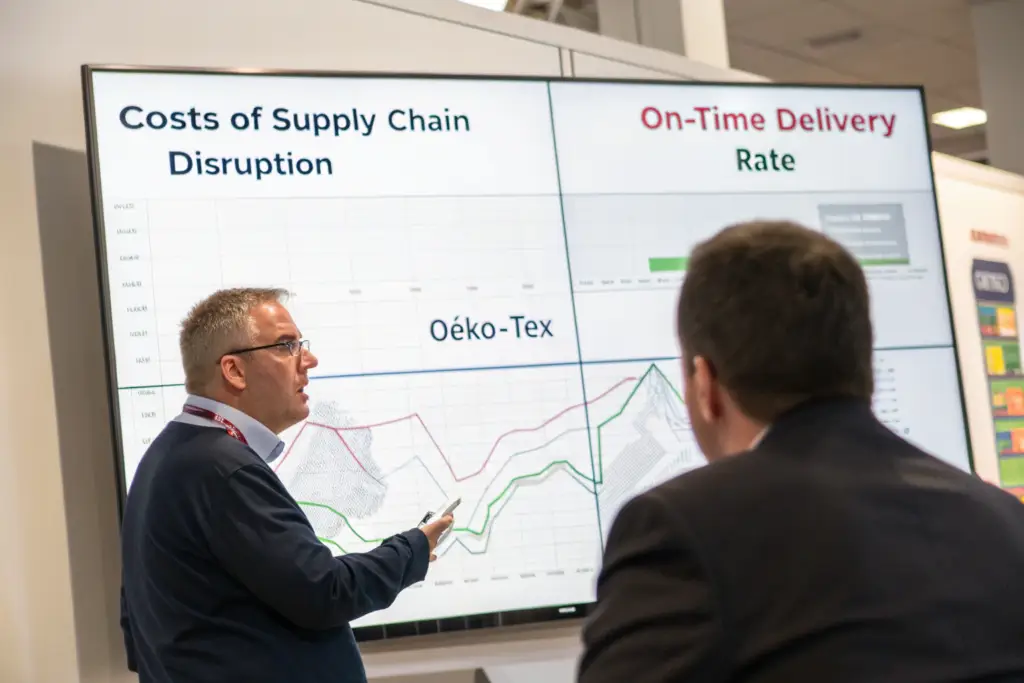
The cost of a single delayed or rejected shipment—including air freight, chargebacks, lost sales, and staff time—can dwarf the incremental cost of sourcing from a verified OEKO-TEX certified factory. By virtually eliminating the risk of compliance-based shipment failure, you are investing in supply chain predictability. This is a crucial calculation for profit-driven business owners.
Does it Strengthen Your Own Brand's Market Position?
Absolutely. When you can confidently market your products as OEKO-TEX certified, and you know that certification is verifiable, you build stronger brand equity. You avoid the existential risk of a scandal involving falsified safety claims. This allows you to target more demanding, higher-margin retail channels and build deeper consumer trust. Partnering with a certified and transparent manufacturer like Shanghai Fumao is the first step in securing this market advantage.
Conclusion
Is OEKO-TEX certification a solution to supplier certificate falsification risks? Resoundingly, yes. It is specifically engineered to be one. By replacing opaque documents with a transparent, real-time verification system backed by independent audits, it directly addresses one of the most corrosive forms of supply chain risk.
For brands and buyers, it is not merely a test report; it is a risk management protocol. It transforms the sourcing conversation from "Can I trust this document?" to "I have verified the system behind this claim." While it should be part of a broader supplier vetting strategy, its unique public verification model makes it one of the most powerful and practical tools available to combat certificate fraud in the textile industry.
If your current sourcing process involves crossing your fingers when a certificate arrives, it's time for a more secure foundation. At Shanghai Fumao, we build our partnerships on verifiable transparency. We invite you to check our certifications and see how a risk-managed supply chain can work for you. Contact our Business Director Elaine to start a partnership based on verified trust: elaine@fumaoclothing.com.