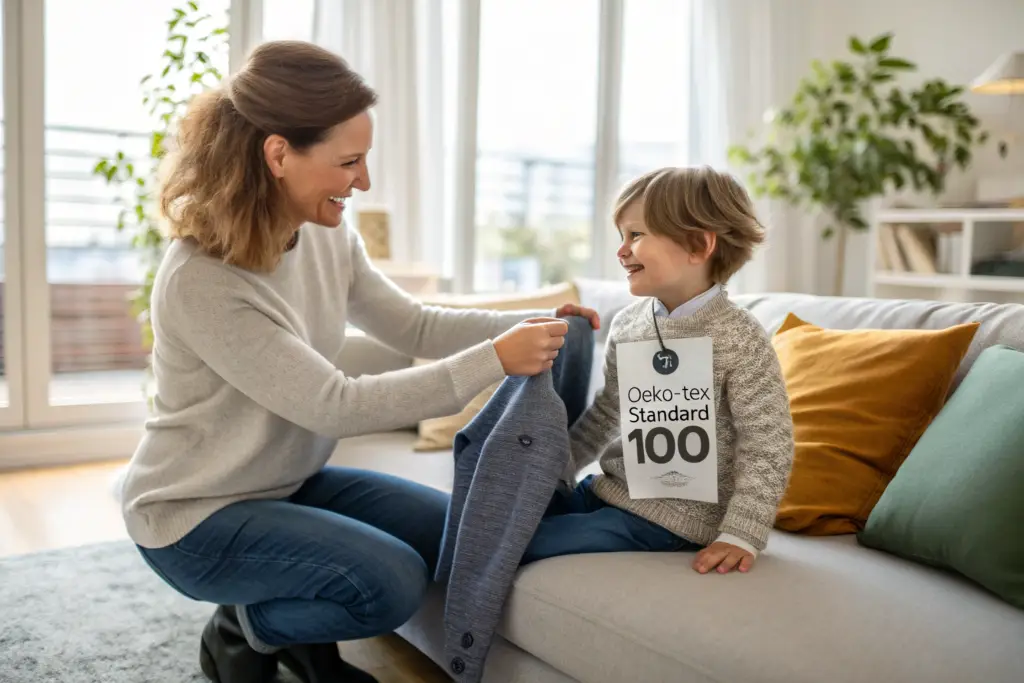
Last year, a client from Beverly Hills approached us with a dilemma. They were launching a premium children's knitwear line, priced at $120 per sweater. Their design was impeccable, using the finest Supima cotton. Yet, during focus groups, a surprising question kept arising from affluent mothers: "Is it safe for my child's sensitive skin?" They weren't just asking about softness. They were asking about chemicals, dyes, and long-term health. This experience made one thing clear: for high-income families today, luxury is no longer defined solely by brand name or design. It's increasingly defined by verified safety and conscious production. The absence of harmful substances has become a new luxury currency.
For clothing brands targeting high-income families, OEKO-TEX Standard 100 certification is not just a technical advantage; it has become a critical market expectation and a fundamental component of a credible premium value proposition. While not a legal "must," it is a commercial imperative to meet the sophisticated safety, quality, and transparency demands of this discerning demographic. Failing to offer it can be a significant competitive disadvantage, as this audience actively seeks out and validates these assurances.
The modern affluent consumer is highly informed. They use their purchasing power to align with their values, which prioritize family health, product longevity, and environmental stewardship. An OEKO-TEX label communicates a deep understanding of these priorities at the point of purchase. This article will explore why this certification has shifted from a "nice-to-have" to a "need-to-have" for brands serving this lucrative market.
Why Are High-Income Families Prioritizing Verifiable Safety?
The driving force is a fundamental shift in consumer psychology. High-income shoppers are investing in risk mitigation. They are willing to pay a premium not just for a product, but for the peace of mind that comes with it. With abundant access to information (and misinformation) about chemicals in the global supply chain, generic claims of "safe" or "non-toxic" are met with skepticism. They demand proof from trusted, third-party authorities.
For parents, this is particularly acute. A 2023 study by a major retail analyst firm found that over 70% of parents with household incomes above $150,000 consider independent safety certifications "very important" when purchasing children's apparel. This isn't about fear; it's about informed curation. These families are curating a lifestyle where every element, from food to fabrics, aligns with a health-conscious worldview. OEKO-TEX provides a globally recognized, scientifically rigorous benchmark that cuts through marketing noise. For instance, we had a client, a DTC luxury babywear brand, who embedded the OEKO-TEX certification number on their care labels. They encouraged customers to verify it online, a move that dramatically increased conversion rates by building immediate, verifiable trust.
How does OEKO-TEX address specific concerns of affluent parents?
The certification directly tackles top-tier concerns point-by-point:
- Skin Health: It tests for pH balance, ensuring fabrics won't irritate delicate or eczema-prone skin.
- Long-term Development: It prohibits substances like lead, cadmium, and phthalates, which are of particular concern for developing children.
- Durability and Value: Tests for colorfastness to saliva, perspiration, and washing ensure the garment looks new longer, aligning with the affluent preference for lasting quality over fast fashion.
For a brand, communicating this isn't about listing chemicals. It's about translating the science into parental benefits. You're not selling a "phthalate-free shirt"; you're selling "peace of mind during playtime."
What is the link between safety certification and brand loyalty in this segment?
Trust, once earned, creates fierce loyalty. When a brand consistently delivers verified safety, it becomes a trusted advisor rather than just a clothing provider. High-income families have lower price sensitivity but higher switching costs related to trust. They will stick with a brand that demonstrably shares their values. A brand we partner with, which focuses on organic cotton loungewear for families, uses its OEKO-TEX certification as the cornerstone of its loyalty program messaging. Their repeat customer rate is 40% above industry average, with surveys citing "trust in materials" as the key reason. They effectively use the certification as a tool for customer retention and brand advocacy.
Can a Brand Command Premium Pricing Without OEKO-TEX?
The short answer is: it's becoming exponentially harder. The premium apparel market is saturated. Design, fit, and fabric quality are often at parity among top competitors. In this landscape, differentiation shifts to intrinsic value and ethical provenance. OEKO-TEX certification provides a tangible, defensible reason for a higher price point that resonates with value-driven affluent buyers.
Consider the perspective of a parent comparing two beautiful cashmere baby blankets, both priced at $300. One has the OEKO-TEX label; the other has a generic "premium safe" tag. The certified blanket immediately communicates a higher level of due diligence, investment in testing, and commitment to safety. The price is justified by the embedded cost of assurance. Without it, the brand must rely solely on aesthetic and brand storytelling, which is more subjective and vulnerable to competition.
The financial impact isn't just lost sales; it's also reputational risk and opportunity cost.
- Lost Sales to Certified Competitors: You will consistently lose the most informed (and often most lucrative) customers to brands that offer the verification they seek.
- Increased Marketing Spend: You must spend more to convince customers of your safety without the third-party validation, often a less effective endeavor.
- Vulnerability in Crisis: If a question about material safety arises (even unfounded), lacking an independent certification leaves you defenseless. A brand with OEKO-TEX can point to the rigorous, ongoing audit process as their defense.
How does OEKO-TEX integrate with other luxury sustainability claims?
For the high-income market, OEKO-TEX is rarely a standalone claim. It's part of a trust stack. It combines powerfully with claims like GOTS (Global Organic Textile Standard) for organic materials, or B Corp certification for overall company ethics. OEKO-TEX covers the human ecological safety of the final product, while GOTS covers organic and social criteria. Together, they present an nearly unassailable narrative of comprehensive responsibility. At Shanghai Fumao, we guide our clients through building this trust stack. For a recent activewear line, we combined OEKO-TEX certified recycled polyester with GOTS-certified organic cotton in the blends, allowing the brand to market a product that was both safe and sustainably sourced, justifying a significant price premium.
How Does OEKO-TEX Certification Support a "Quiet Luxury" Aesthetic?
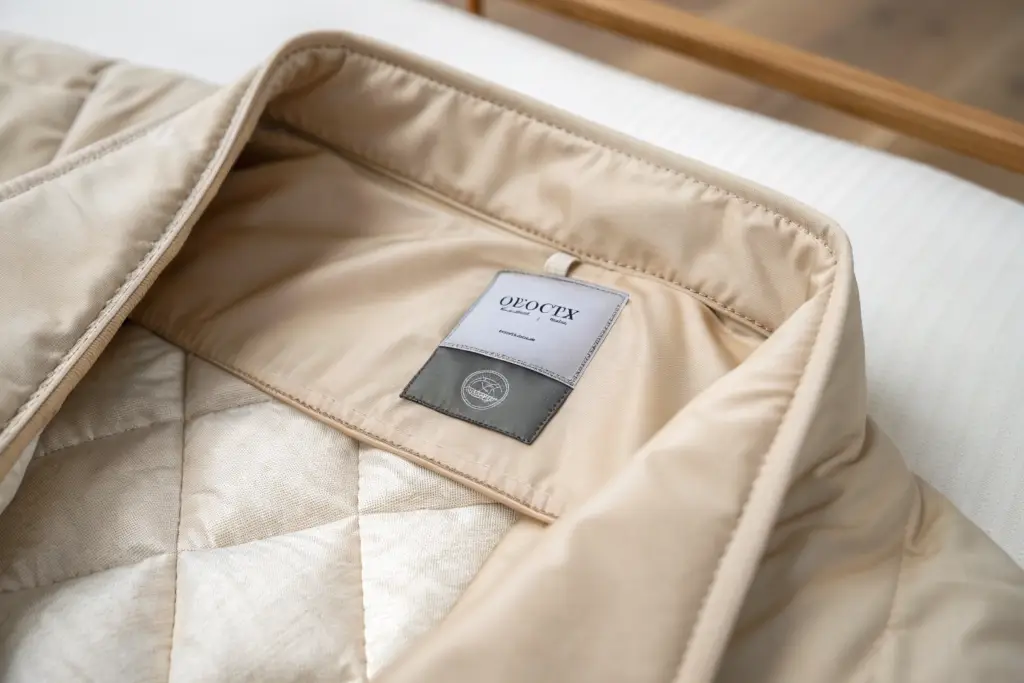
The "quiet luxury" trend, emphasizing understated quality, craftsmanship, and intrinsic value over logos, perfectly aligns with the essence of OEKO-TEX. This certification is the ultimate expression of quiet luxury in materials. It doesn't shout; it assures. It’s a detail discovered on the inner label—a secret between the brand and the discerning wearer that signifies deep care was taken where it matters most.
This aligns with how high-income families, especially younger affluent consumers, are shopping. They value "stealth wealth" and "conscious consumption." The story is in the making, not the marketing. OEKO-TEX fits this narrative because it represents an investment in processes and standards that may not be immediately visible but are fundamentally felt in the product's safety, comfort, and longevity.
What does the certification process say about craftsmanship?
The OEKO-TEX certification process itself is a story of meticulousness. It requires mapping and testing every single component—down to the sewing thread and non-textile accessories. This level of control and documentation is the hallmark of true craftsmanship. For a brand, this is a powerful narrative: "We care so deeply about the integrity of our product that we ensure even the smallest thread meets the highest safety standard." This resonates deeply with buyers who appreciate the nuance of quality.
How can brands communicate this "quietly"?
The communication should be confident but subtle:
- On Websites: Have a dedicated "Materials & Safety" page, not just a footer logo.
- In Store: Train staff to mention it as part of the quality narrative when discussing fabric hand-feel or construction.
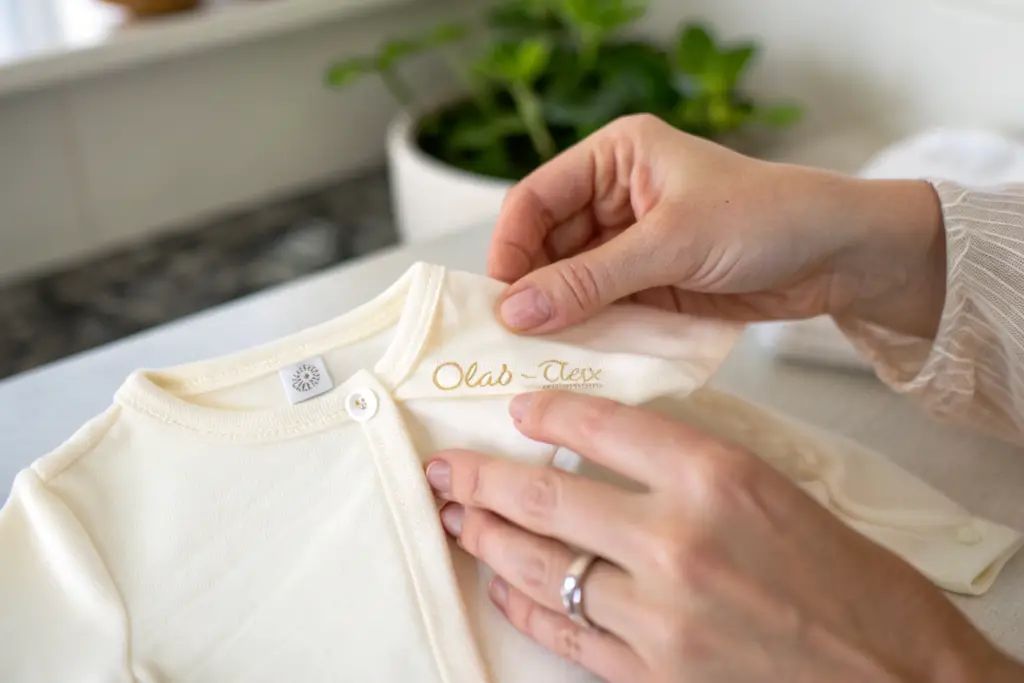
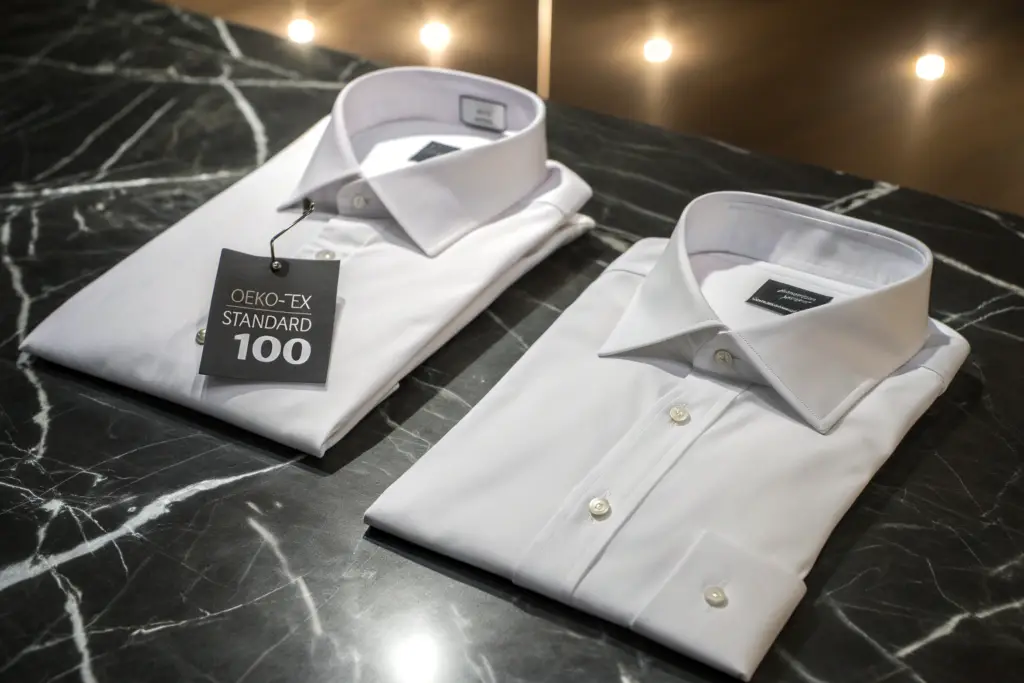
- On Tags: Use high-quality embossing or woven labels for the OEKO-TEX logo, matching the garment's premium feel. The team at Shanghai Fumao specializes in integrating these premium branding elements seamlessly during the manufacturing process, ensuring the physical evidence of quality matches the claim.
What Is the ROI for Brands Investing in OEKO-TEX for This Market?
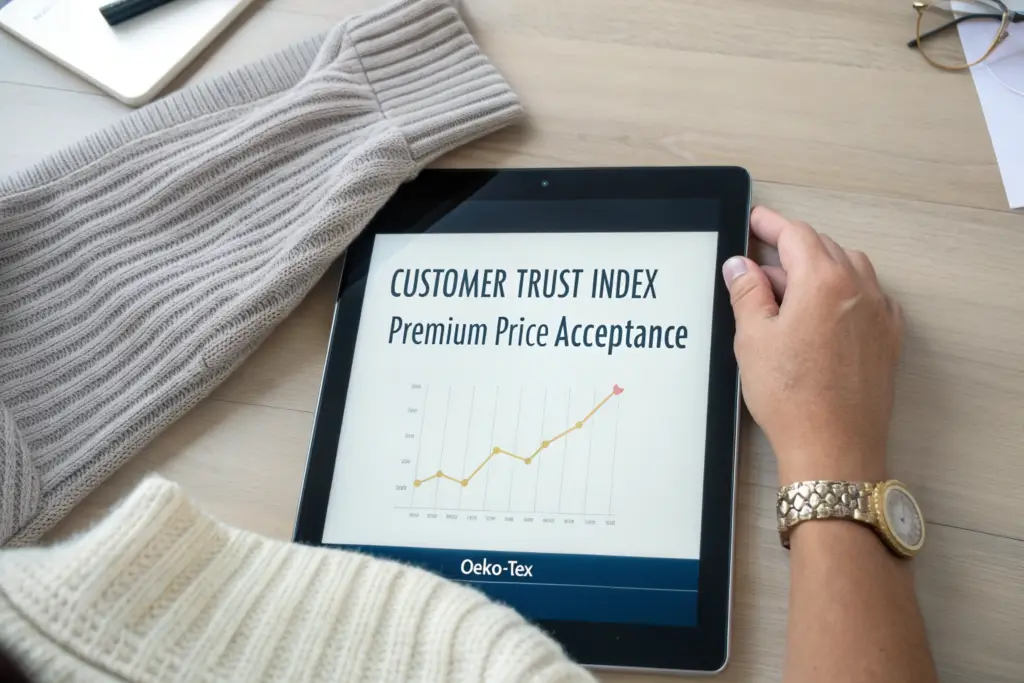
The return on investment extends far beyond a line item on a cost sheet. It must be measured in brand equity, market access, and risk reduction. For a factory like ours, obtaining certification for our processes allows us to serve brands targeting this sector, making us a more valuable partner. For the brand itself, the ROI is multifaceted.
We worked with an emerging luxury knitwear brand targeting affluent millennials. They invested in OEKO-TEX certification for their entire core line. Within one year, they observed:
- A 15% increase in average unit retail price for certified items versus their non-certified special pieces.
- A 30% reduction in customer service inquiries related to skin sensitivity or material questions.
- Successful entry into two high-end boutique chains that had a mandatory sustainability and safety questionnaire, where the certification was a deciding factor.
How does it reduce operational and reputational risk?
From a supply chain perspective, partnering with an OEKO-TEX certified manufacturer like Shanghai Fumao significantly de-risks production. It ensures that the complex, often fragmented apparel supply chain is aligned to a single, rigorous safety standard. This prevents the nightmare scenario of a shipment failing a retailer's or a country's safety compliance test, leading to rejected goods, fines, and brand damage. The certification acts as a supply chain insurance policy.
Does it provide a marketing and PR advantage?
Unquestionably. It provides authentic, third-party validated content for marketing. It can form the basis of PR pitches about "redefining luxury safety" or "the new standard in family wellness." It also enhances SEO (Search Engine Optimization) for terms like "safe luxury children's clothes" or "non-toxic premium apparel," driving highly qualified traffic from families actively researching these attributes. This targeted visibility is far more valuable than broad, generic traffic.
Conclusion
For clothing brands that target high-income families, OEKO-TEX Standard 100 certification has transcended optional status. It is a strategic imperative that directly addresses the core values of this audience: verifiable safety, exceptional quality, transparent integrity, and long-term value. In a market where trust is the ultimate currency, OEKO-TEX provides the independent, scientific verification needed to build that trust, justify premium pricing, and foster unshakable brand loyalty.
The question is no longer "Is it a must?" but rather "Can you afford to compete in the premium family market without it?" The competitive landscape and consumer expectations have clearly shifted. The brands that will lead are those that recognize safety not as a cost, but as a foundational component of modern luxury.
Building a collection that meets these exacting standards requires a manufacturing partner deeply versed in both the technical requirements and the narrative power of certifications like OEKO-TEX. At Shanghai Fumao, we build this assurance into every stage of our full-package manufacturing process, from fabric sourcing to final inspection. Let us help you create garments that meet the highest standards of safety and quality, giving you the confident story you need to win in the affluent family market.
To discuss how to integrate OEKO-TEX certification into your next high-end collection, contact our Business Director Elaine: elaine@fumaoclothing.com.