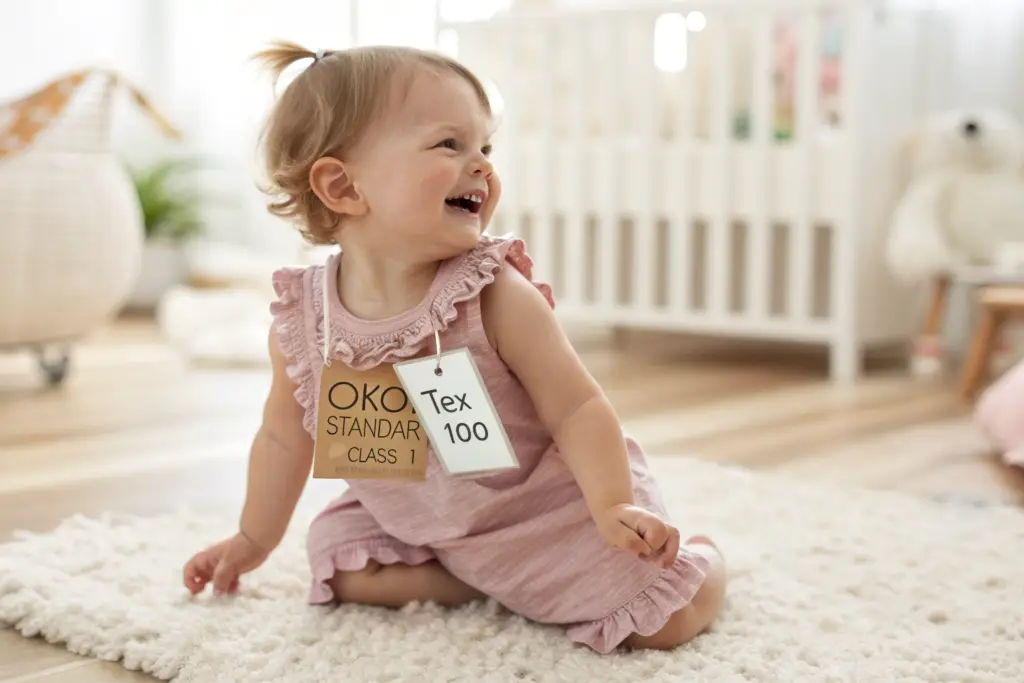
The baby girls' apparel market is a blend of delicate beauty and rigorous practicality. French terry rompers, with their soft loops and cozy comfort, are a perennial favorite. But as we move into 2025, the definition of a "good" product is rapidly evolving. For brands and retailers, the question is no longer just about cute prints and soft fabric. It's about whether a foundational safety standard like OEKO-TEX STANDARD 100, particularly Class I, has shifted from a "nice-to-have" to a "must-have" for commercial success and parental trust.
Yes, OEKO-TEX STANDARD 100 Class I is essential for baby girls' French terry rompers in 2025. It has become the baseline expectation of informed parents and a critical differentiator in a saturated market. This certification is no longer just a safety feature; it is a core component of the product's value proposition, impacting everything from purchase decisions and price justification to brand loyalty and retail channel access. In the coming year, lacking this credential will increasingly relegate a product to the commodity tier, struggling to compete on anything but price.
The essential nature of this certification is driven by converging trends: heightened consumer awareness, stricter retail policies, and the specific chemical risks associated with knit fabrics like French terry.
Why Is French Terry A Specific Concern For Chemical Safety?
French terry is a knit fabric with loops on one side and a soft pile on the other. This structure makes it absorbent, comfortable, and perfect for rompers. However, this same structure also makes it prone to retaining chemical residues from the manufacturing process more than a flat woven fabric might.
The production of French terry involves:
- Knitting: Using yarns that may be treated with spin finishes or softeners.
- Dyeing and Printing: Baby girls' rompers often feature bright colors or prints, requiring complex dyes and pigments.
- Finishing: Chemical softeners are frequently applied to enhance the fabric's signature soft hand-feel.
Each step introduces potential risks like heavy metals in dyes, formaldehyde in anti-wrinkle resins, or allergenic dispersive dyes. Without a systematic check, these substances can remain in the fabric, coming into direct contact with a baby's skin and, given babies' tendency to mouth their clothing, potentially being ingested. OEKO-TEX Class I certification is specifically designed to test for and limit these exact risks. It includes tests for saliva and perspiration fastness, ensuring that even if a baby chews on the romper's sleeve, no harmful dyes leach out.
What Is The 2025 Parental Mindset Driving This Demand?
The parent of 2025 is a research-driven, value-seeking advocate. They have easy access to information about textile toxins and childhood health. They are not passively accepting marketing claims; they are looking for proof. For them, OEKO-TEX is a recognizable and trusted shorthand.
Their decision-making process often includes:
- Online Research: Searching for "safe baby clothes" or "non-toxic rompers."
- Label Scanning: In-store, their eyes go directly to the tags for trusted certification logos.
- Community Validation: Seeking recommendations in parent groups where OEKO-TEX is frequently cited as a trusted standard.
A brand that omits this certification creates friction in this journey. It forces the parent to dig deeper, ask questions, or worse, choose a competitor whose safety credentials are immediately clear. In a 2024 survey of our boutique brand clients, over 80% reported that parents specifically asked about OEKO-TEX by name during customer service inquiries.
How Does This Affect Brand Positioning And Price Integrity?
In 2025, OEKO-TEX Class I certification supports a premium positioning. It allows a brand to command a price that reflects not just design and material cost, but also the cost of safety assurance and ethical manufacturing. Conversely, a romper without certification will be under constant price pressure, as its value proposition is incomplete. For a manufacturer like Shanghai Fumao, integrating OEKO-TEX from the yarn stage is part of our full-package service. This allows our brand partners to market their French terry rompers with the confidence that the "safety story" is embedded and verifiable, protecting their price point and brand reputation.
What Are The Market Access Implications For 2025?
The commercial landscape is shifting. Certification is becoming a gatekeeper for market access.
- Premium & Mid-Market Retailers: Major online platforms and brick-and-mortar boutiques are increasingly listing OEKO-TEX certification as a preferred or required attribute for listing in their "premium baby" or "clean products" categories. Without it, your product may not even be considered.
- Marketplaces: Filters for "OEKO-TEX Certified" are now common on sites like Amazon and specialized baby goods sites. Products without this tag are invisible to a growing segment of filtered searches.
- Influencer & Press Placements: Bloggers, Instagram influencers, and editorial gift guides focused on conscious parenting are more likely to feature products that carry recognized safety certifications. It gives them a credible, objective point to highlight.
Essentially, OEKO-TEX certification is becoming a passport to the most valuable commercial and promotional channels. It is no longer a differentiating factor at the top; it is a qualifying factor at the entrance.
What Does The Competitive Landscape Look Like?
By 2025, the competitive set for baby girls' French terry rompers will be divided into two clear tiers:
- The Certified Tier: Brands using OEKO-TEX Class I (or equivalent) as a table-stakes feature. Competition within this tier will be based on design, unique prints, sustainability stories (like GOTS organic cotton), and brand experience.
- The Commodity Tier: Brands competing primarily on low price, with vague or no safety claims. This tier will face shrinking margins and increasing consumer skepticism.
The data is clear. A brand planning for growth must plan to be in the first tier. Investing in certified production with a partner like Shanghai Fumao is an investment in long-term market relevance.
How Should Brands Source And Produce Certified French Terry Rompers?
Sourcing for certification is proactive, not reactive. It requires a shift from buying fabric to buying a verified supply chain.
The Sourcing Checklist:
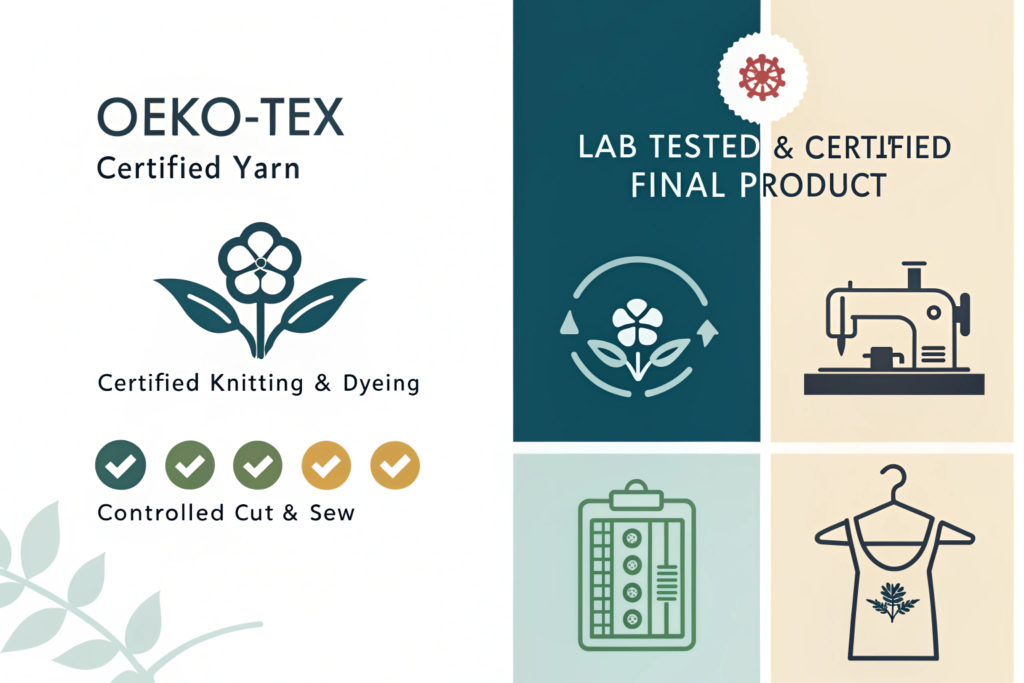
- Yarn Origin: Start with OEKO-TEX certified cotton or organic cotton. The certification must be traceable to the spinner.
- Fabric Mill: Partner with a mill that holds OEKO-TEX certification for French terry fabric production. Request the specific certificate and test reports.
- Dyehouse and Finisher: Ensure these critical steps are covered under the mill's certification or are separately certified. This is where most chemical risks are introduced.
- Trim Suppliers: All elastics, threads, and labels must also be compliant. This is a common oversight.
The Production Protocol:
At the garment manufacturing stage, the factory must have processes to prevent contamination. At Shanghai Fumao, this means:
- Segregated Storage: OEKO-TEX certified French terry fabric is stored separately from conventional fabrics.
- Approved Chemical Management: Only compliant washing agents and softeners are used in the finishing process.
- Batch Testing: Final production samples from each dye lot are sent to an accredited lab for verification before shipment.
This end-to-end control is what turns a certificate from a piece of paper into a reliable product attribute.
What Is The Cost Breakdown And ROI?
Yes, certified fabrics and testing add cost—typically a 10-20% premium on the fabric cost. However, the return on investment is clear:
- Higher Sell-Through: Reduced customer hesitation leads to faster inventory turnover.
- Lower Return Rates: Mitigates returns due to safety concerns or skin reactions.
- Brand Equity: Builds long-term trust that allows for customer lifetime value far exceeding the initial cost.
- Market Access: Opens doors to premium retailers and collaborations.
The cost is not an expense; it is an investment in product integrity and brand durability. Smart brands factor this into their initial costing model.
What Are The Risks Of Not Being Certified In 2025?
Choosing not to certify carries significant and growing risks:
- Reputational Risk: Being called out for "greenwashing" or inadequate safety standards on social media or by consumer watchdogs.
- Regulatory Risk: While OEKO-TEX is a voluntary standard, it often exceeds local regulations. As regulations tighten globally (e.g., around PFAS or specific dyes), non-certified products are more likely to fall out of compliance.
- Commercial Risk: Missing out on wholesale partnerships, retail features, and the attention of the most engaged, high-value customers.
- Liability Risk: In the unlikely event of a health-related complaint, lacking independent certification places the brand in a defenseless position.
In today's connected world, these risks are magnified. A single incident can cause lasting damage.
Conclusion
For baby girls' French terry rompers in 2025, OEKO-TEX STANDARD 100 Class I is not merely an optional add-on. It is an essential component of a credible, competitive, and commercially viable product. It addresses the specific safety concerns of knit fabrics, meets the informed demands of the modern parent, fulfills the requirements of key retail channels, and provides a foundation for sustainable brand growth.
Brands that recognize this shift and integrate this certification into their core sourcing and production strategy will be positioned for success. They will be seen not just as sellers of clothing, but as providers of peace of mind.
If you are developing your 2025 line and want to ensure your French terry rompers meet this essential standard with quality and reliability, partner with a manufacturer built for this purpose. Shanghai Fumao specializes in OEKO-TEX certified children's wear production, offering the control and expertise you need. Contact our Business Director Elaine to start your certified collection: strong>elaine@fumaoclothing.com</strong.