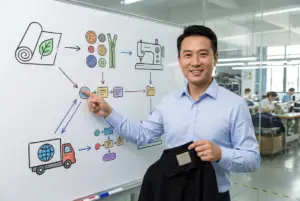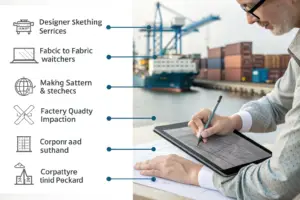
As a brand owner, you know the feeling. You have a great design for a new line of women's knitwear. You find a factory in Vietnam that offers a low price for the raw materials. Then, you scramble to find a separate cutting facility. After that, you need to find someone for sewing and trimming. Finally, you have to coordinate with a logistics provider to ship it all. By the time the pieces arrive at your warehouse in Los Angeles, you've dealt with four different vendors, three sets of quality issues, and two weeks of delays. Your profitable Q3 season is now a Q4 clearance event. This fragmented process is a major pain point for many U.S. brands.
For most established brands looking to scale efficiently and protect their margins, full package garment production is not just the right choice—it is the essential model for success. It transforms you from a project manager of chaos into a curator of product quality.
Moving from piecing together a supply chain to partnering with a single, vertically integrated manufacturer like Shanghai Fumao completely changes your business. I learned this lesson years ago when a client from New York, a brand that prides itself on rare styles, faced a disaster. Their shirt shipment from a "cheap" supplier arrived with mismatched buttons and crooked plackets. The supplier blamed the thread factory. We stepped in, re-cut and re-sewed the entire order at our own facility, and saved their season. That experience taught me that true value isn't just in the price of the fabric; it's in the control and coordination of the entire process. Let’s break down if this model is the right fit for you.
How do I know if my brand is ready to switch from cut-make-trim to full package?
You might be asking yourself if you are too small for a full-package manufacturer, or if you are losing control by giving up sourcing responsibilities. The truth is, the readiness for this model has less to do with your order volume and more to do with your brand’s specific pain points. I have seen small brands thrive with us because they were drowning in logistical nightmares, and I have seen large brands struggle because they refused to let go of micromanaging every single thread purchase.
The real question is about efficiency and expertise. When you handle sourcing and production separately, you are acting as your own general contractor. Are you an expert in global textile markets? Do you know which fabric mill in China has the best price on organic cotton this month? Can you spot a forged Oeko-Tex certificate from a Vietnamese supplier? Probably not. Your expertise is in design and selling. My team’s expertise is in manufacturing. When you switch to full package, you aren't losing control; you are upgrading your management team to include specialists in logistics, compliance, and textile engineering. Last year, a brand from Texas came to us frustrated with delayed shipments from India. They had the designs, but the factory kept missing windows because they couldn't get the right zippers. By switching to our full package service, we sourced the zippers locally in China, matched the quality, and got their jackets to Dallas in time for the first cold snap.

What are the signs that my current supply chain is holding my brand back?
If you spend more time chasing suppliers for updates than you do designing your next collection, that is a clear sign. Another major red flag is inconsistent quality. If your best-selling polo shirt from last season has a different fit or a different shade of blue in this season's reorder, your supply chain is broken. This usually happens because your fabric supplier changed their yarn source without telling you, or your cutting house had a different marker efficiency. A full-package manufacturer owns that outcome. We guarantee that the shirt we produce in June matches the shirt we produced in March because we control the yarn, the dyeing, and the cutting from start to finish. We handle the certifications and logistics, so you don't have to worry about a supplier sending the wrong documents that hold your goods at customs.
How can a full-package supplier help me hit competitive price points without sacrificing quality?
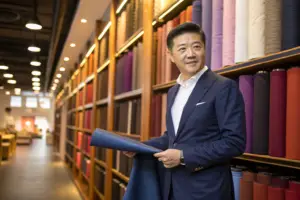
This is the number one concern I hear from brand owners like you. You think, "If I let you source everything, won't you just mark it up?" Actually, the opposite is true. When I source materials for you, I am not a small buyer calling a mill for 500 yards of fabric. I am a factory with five production lines, placing bulk orders for thousands of yards every month. I have leverage. I have relationships. I know which mills have overstock or which ones are running a promotion.
For example, we worked with a brand that makes high-end kids' wear. They were buying organic cotton fabric from a broker in the US, then shipping it to a cutter in Bangladesh. The costs were through the roof. We stepped in, found the same certified organic cotton directly from a mill we have partnered with for ten years, and produced the garments here. Their material cost dropped by 18%, and their shipping costs plummeted because the goods came directly from our factory to their distributor. We didn't just build a shirt; we built them a better margin.
What specific production capabilities should I look for in a full-package vendor?
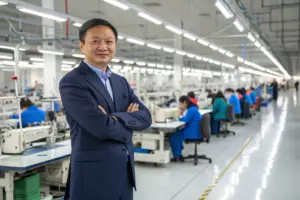
Not all full-package vendors are created equal. When I started in this business 20 years ago, "full package" often meant the factory could sew a shirt and buy the fabric. Today, it means something much more complex, especially for the U.S. market. You need a partner who understands American fits, American compliance laws, and the speed of the American fashion cycle. You need to look beyond just the price per unit and examine the entire ecosystem of the factory.
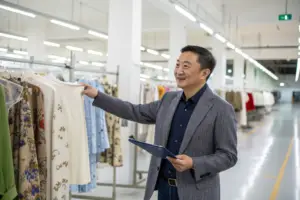
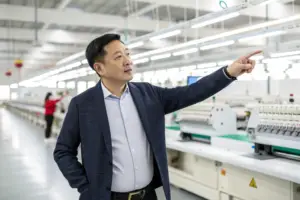
You should look for a factory that has in-house design and development support. Many times, a brand sends us a sketch that looks amazing on paper but would be structurally unsound as a garment. Our pattern makers can suggest subtle changes to the cut or seam construction that keep the design intact but make it actually wearable. Another crucial capability is in-house printing or embroidery. If you have to send your cut pieces out to a third party for decoration, you are adding transit time, increasing the risk of damage or loss, and creating another potential point of failure. We have integrated our embroidery and printing lines right next to our sewing lines. When we made a line of custom logo activewear for a yoga studio chain in California, we moved the design from the screen printer to the sewing line in minutes, not days.
Which in-house facilities are non-negotiable for quality assurance?
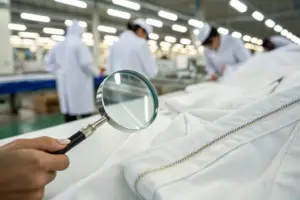
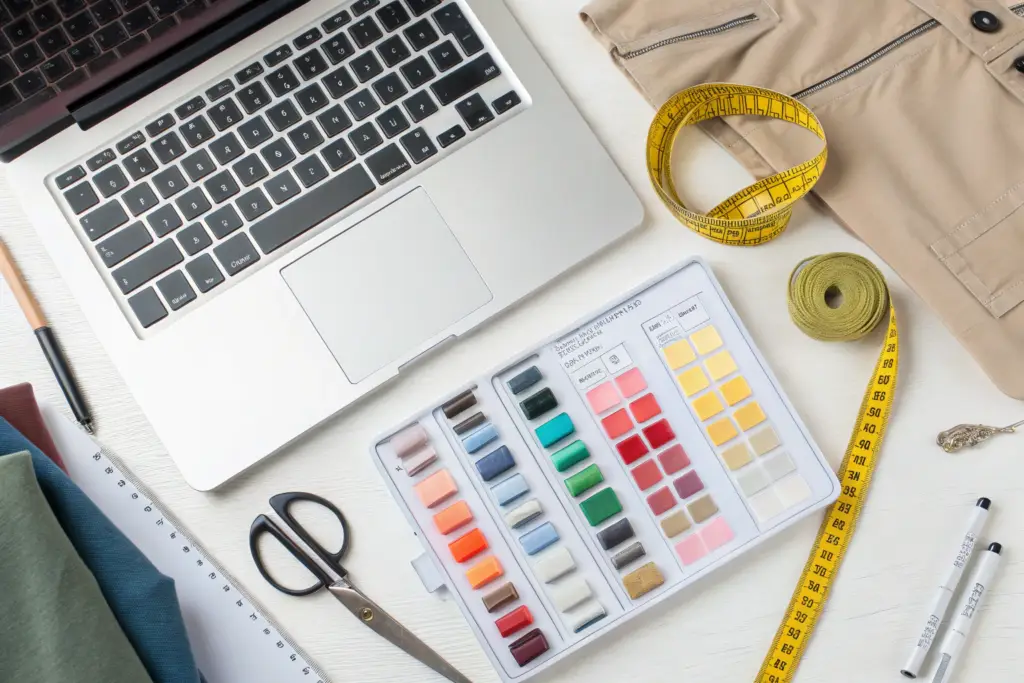
For me, the most critical in-house facility is a real, functioning quality control lab. Not just a table where someone looks at a shirt, but a lab with washing machines, light boxes for color assessment, and tensile testers for fabric strength. You need to verify that the factory can test for shrinkage, colorfastness, and pilling before they cut 1,000 yards of fabric. A vendor who has to send samples out to a third-party lab for basic tests is a vendor who is going to slow you down. They should be able to test a strike-off or a fabric sample and give you instant feedback. We once had a client bring us a "rare style" woven shirt made from a very delicate fabric. We tested it in our lab and realized the standard seams would tear the material. We suggested a french seam construction instead, which preserved the look and saved the production run.
How do a factory's certifications prove they can handle complex export logistics?
Certifications are not just badges on a website. They are proof that a factory has passed rigorous audits. For exporting to the U.S., look for certifications like WRAP or BSCI. These prove that the factory adheres to social and ethical standards, which is becoming increasingly important for American consumers. But also look for product-specific certifications like GOTS for organic cotton or Oeko-Tex for harmful substances. These certifications mean the factory has a system. They have traceability. They can provide you with the documentation you need to clear customs without delays. If a supplier ever "falsifies certificates," as I know happens, your entire shipment can be seized and destroyed. A reliable partner like Shanghai Fumao maintains valid certifications and provides them upfront. We handle the paperwork so you don't have to worry about a knock on your door from U.S. Customs and Border Protection.
Can a Chinese full-package factory really handle DDP shipping to my US warehouse?
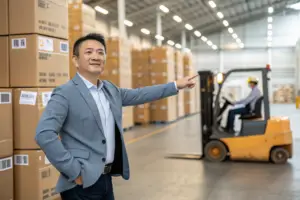
This is a question I get from almost every new client, especially after they have been burned by "freight collect" nightmares. They are tired of their goods sitting at the port because their freight forwarder messed up the ISF filing. The short answer is yes, a capable full-package factory can and should handle DDP (Delivered Duty Paid) shipping. In fact, we prefer it. It allows us to guarantee the delivery date, which is the most important thing to you.
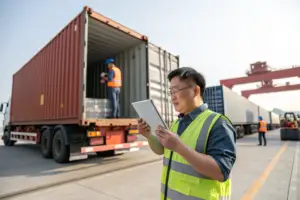
When we ship DDP, we are taking full responsibility. We book the vessel. We file the paperwork. We pay the duties. We handle the trucking to your door. If something goes wrong, it is on us to fix it. This gives you one single point of contact. You don't have to call a broker in Long Beach to find out why your truck is late. You call Elaine, our Business Director. She finds out, and she fixes it. This model is built for the brand owner whose time is better spent on strategy than on logistics. I remember shipping a large order of men's trousers to a distributor in Chicago. A snowstorm hit the Midwest and closed the rail yard. Because we were managing the DDP shipment, we immediately diverted the container to a trucking company we had a relationship with. The goods arrived three days late, but they arrived before the season ended. If the client had been managing that, they would have just been stuck on hold with the rail company.
What exactly is covered when a manufacturer offers DDP terms?
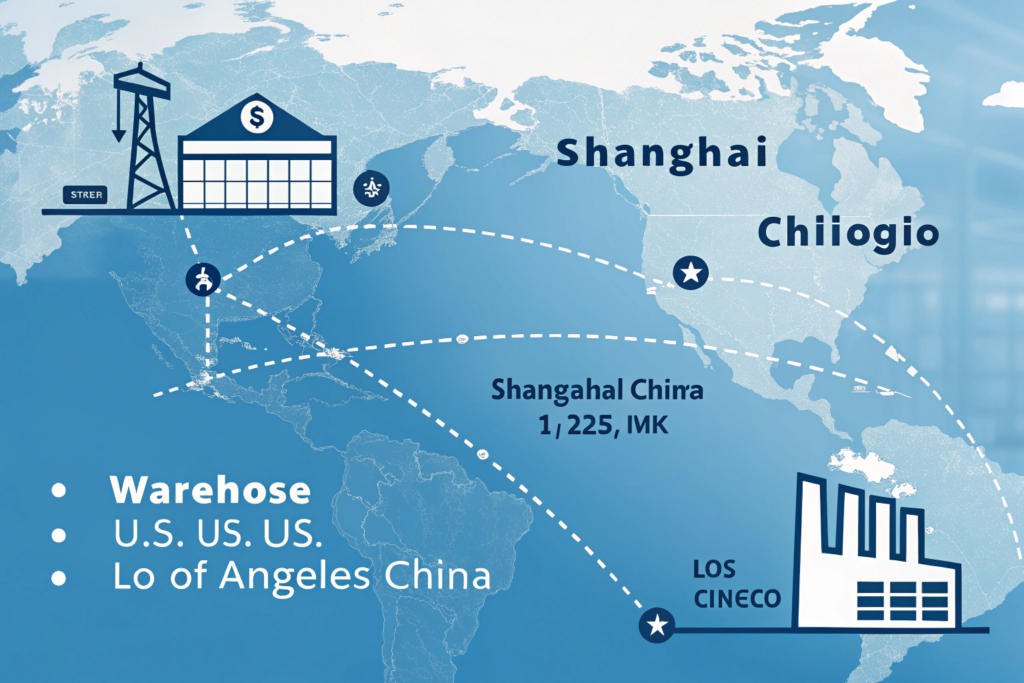
When we quote you DDP, we are covering everything from the moment the goods leave our loading dock in Shanghai to the moment they are unloaded at your dock in the U.S. This includes export packing, domestic trucking in China, customs clearance in China, ocean freight, marine insurance, U.S. import duties and taxes, U.S. customs clearance, and final delivery to your address. The only thing you do is receive the goods. We use our consolidated buying power with shipping lines to get you better freight rates than you could get on your own. We also have relationships with customs brokers who specialize in apparel, so they know exactly how to classify your knitted sweaters versus your woven jackets to ensure you pay the correct (and often lowest legal) duty rate.
How does DDP streamline the payment process for international buyers?
DDP simplifies payments because you are paying for the goods and the logistics together. Instead of making a payment to the factory, then another payment to a freight forwarder, and then another check for duties, you make one single payment against our commercial invoice. This makes accounting cleaner and cash flow more predictable. We typically work with payment methods that protect both parties, such as T/T transfers with a deposit and a balance paid against the Bill of Lading. This structure builds trust. You know we aren't going to ship garbage because we won't get paid the final amount until you have proof the goods are on the water. And we know you are a serious buyer because you put down the deposit to start production.
Why should I partner with a single factory instead of splitting my production across multiple countries?
I understand the appeal of spreading your production. You might get a cheaper price for cotton t-shirts in India, a better wash for denim in Vietnam, and a faster turnaround for polyester jackets in China. It seems like you are optimizing each category. But in reality, you are creating a monster of complexity. You now have to manage three different time zones, three different sets of cultural business practices, and three different logistics pipelines. The risk of delayed shipments or quality inconsistencies multiplies.
Building a long-term partnership with one full-package factory creates consistency. We learn your brand. We learn your fits. We learn your quality expectations. We become an extension of your team, not just a vendor. A few years ago, a brand owner from Seattle visited our factory. He had been splitting his production three ways. He told me his biggest headache was that his "rare style" skirts from India were always a slightly different size than the matching tops from Vietnam. He spent thousands on extra QA just to sort sets. We convinced him to consolidate his woven and knit production with us. We now make his entire collection. The sizing is perfect, the colors match, and he ships everything on one pallet. He has peace of mind, and he actually looks forward to our video calls because we are solving problems together, not just taking orders.
How does a long-term partnership improve product quality and innovation?
When you work with us consistently, we start to innovate for you. We remember that last spring, your best-selling women's blouse had a problem with collar rolling. When you come to us this year with a similar design, we proactively suggest a different type of interfacing to prevent that issue. We become invested in your success. Your sell-through rate becomes our success metric. This level of care doesn't exist in a transactional relationship with a random supplier found on Alibaba. It's born from trust and shared history. We have access to new fabric technologies and manufacturing techniques from our network. We can bring these to you first because we know your brand's aesthetic and quality standards.
What are the hidden costs of managing a fragmented global supply chain?
The hidden cost is your time. How many hours a week do you spend on WeChat or WhatsApp trying to get a straight answer from a sales rep in a different country? How much is your time worth? Then, add in the cost of mistakes. If the factory in Vietnam sends the wrong fabric, who pays for the rush shipping to get the correct goods to the U.S.? What about the cost of air freight when your sea shipment from India is delayed? These costs eat into your margins far more than the 5% you thought you saved by splitting production. A full-package partner absorbs these risks. We manage our own supply chain, so if a fabric shipment from our mill is late, we fix it internally without billing you for the delay.
Conclusion
Navigating the world of apparel manufacturing is complex. You have to balance quality, cost, speed, and reliability. After decades in this industry, I have seen the fragmented approach fail too many promising brands. The stress of chasing delayed shipments, verifying fake certificates, and fixing quality problems drains the energy you should be spending on your designs and your customers. Full package garment production offers a streamlined, professional alternative. It places the burden of execution on the experts—the manufacturer—and frees you up to be the creative force behind your brand.
If you are tired of being your own general contractor and are ready to partner with a team that treats your deadlines as their own, I invite you to reach out. At Shanghai Fumao, we have built our entire operation around being that dependable partner for U.S. brands. We understand the American market because we have served it for years. We have the production lines, the in-house capabilities, and the logistics expertise to take your vision from a sketch to a product on a shelf in New York or Los Angeles.
Let's stop playing phone tag with suppliers in different time zones. Let's build a partnership. Please contact our Business Director, Elaine, directly at elaine@fumaoclothing.com to discuss your next collection. Tell her about your biggest production headache from last year, and let's figure out how to make sure it never happens again.