In 2025, India’s textile industry—once hailed as a global manufacturing powerhouse—is at a critical crossroads.
From spiking cotton prices and power outages to export order cancellations and labor unrest, the country’s apparel sector is reeling. Many are now asking:
Can India recover like Turkey did after its 2022–2023 downturn?
Let’s analyze what caused India’s textile slide, how Turkey managed a remarkable turnaround, and what India must do now to regain its competitive edge in the global apparel market.
What Triggered India’s 2025 Textile Slowdown?
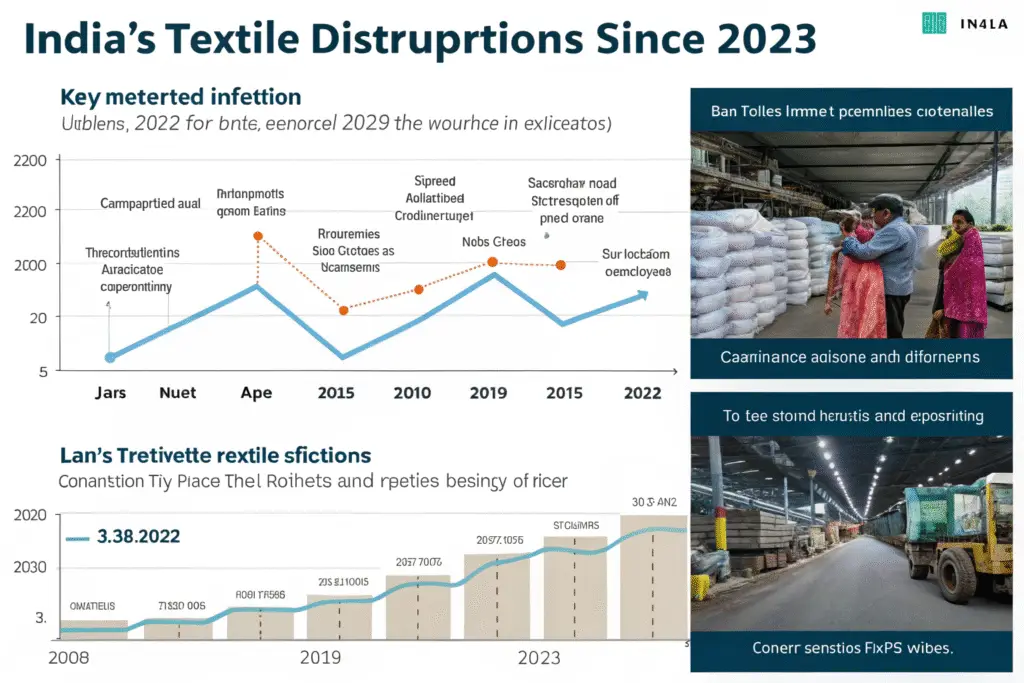
The crisis didn’t erupt overnight. It built up through multiple compounding shocks:
⚠️ Key Drivers of India’s Textile Crisis:
- Raw Material Volatility: Cotton prices spiked 38% YoY in Q1 2025 due to droughts in Gujarat and Maharashtra.
- Energy Shortages: Unreliable power supply in Tamil Nadu and Telangana caused repeated production halts.
- Labor Migration: Skilled workers moved to construction and logistics sectors for better pay.
- Export Drop: U.S. and EU buyers reduced India orders by 21% in H1 2025 due to delayed delivery risks and tariff uncertainty.
- Domestic Overcapacity: Mills over-invested in 2023 expecting a post-COVID boom that didn’t last.
How Did Turkey Bounce Back from a Similar Collapse?
Turkey faced a similar downturn in 2022–2023 with:
- Inflation above 80%
- Lira devaluation
- Supply chain bottlenecks
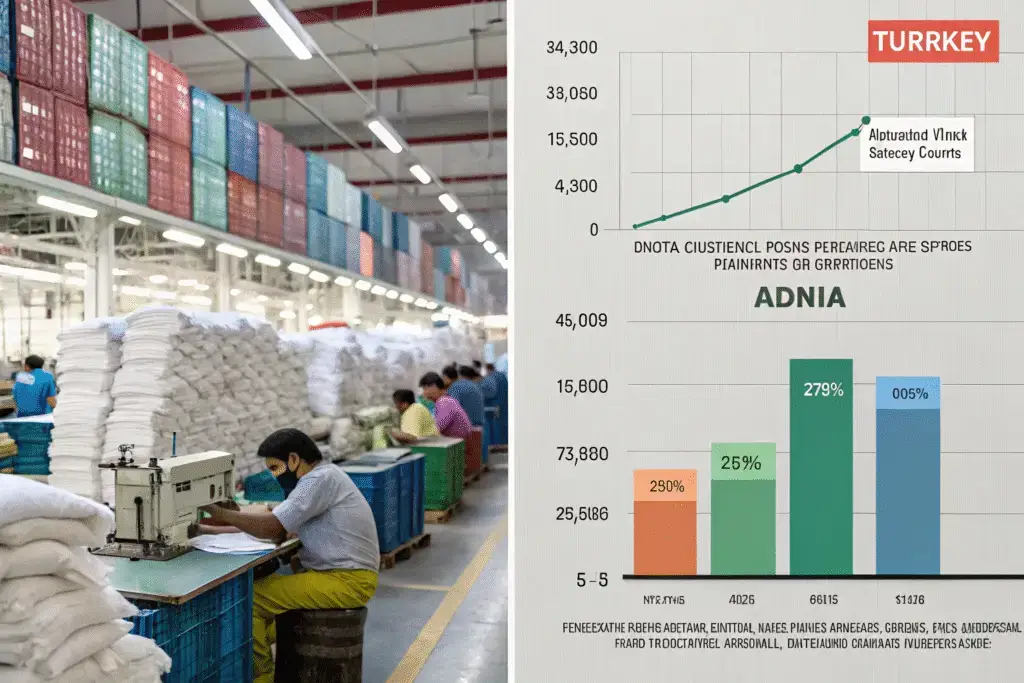
Yet by late 2023, it achieved a 12.5% growth in apparel exports and regained market confidence.
🇹🇷 Turkey’s 3 Recovery Pillars:
- Green Modernization: Shifted quickly to solar-powered mills, waterless dyeing, and digital QA.
- Nearshoring Edge: Proximity to EU enabled quicker turnarounds as buyers fled Asian delays.
- Flexible Financing: Government-backed export credit lines and tax breaks for factories that stayed operational.
India could adapt these models—but needs fast policy alignment and infrastructure fixes.
India vs Turkey: Recovery Capacity Comparison
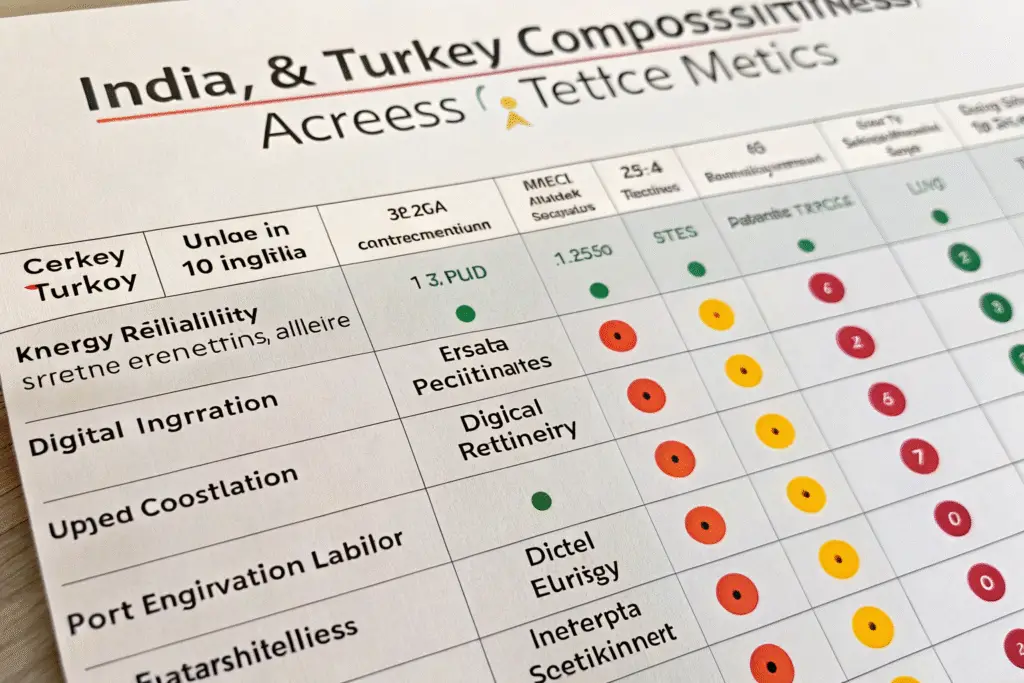 |
Category | India (2025) | Turkey (2023–2024) |
|---|---|---|---|
| Energy Reliability | ⚠️ Frequent outages | ✅ Stable supply | |
| Labor Retention | ⚠️ High turnover | ✅ Competitive wages | |
| Order Lead Time | ⚠️ 40–60 days | ✅ 25–30 days | |
| Port Throughput | ⚠️ Congested ports | ✅ High efficiency | |
| Green Certifications | ⚠️ Patchy adoption | ✅ Widespread (OEKO-TEX, GOTS) | |
| Digitization (ERP/MES) | ⚠️ Low | ✅ Medium-High |
What Must India Do to Revive Its Apparel Competitiveness?
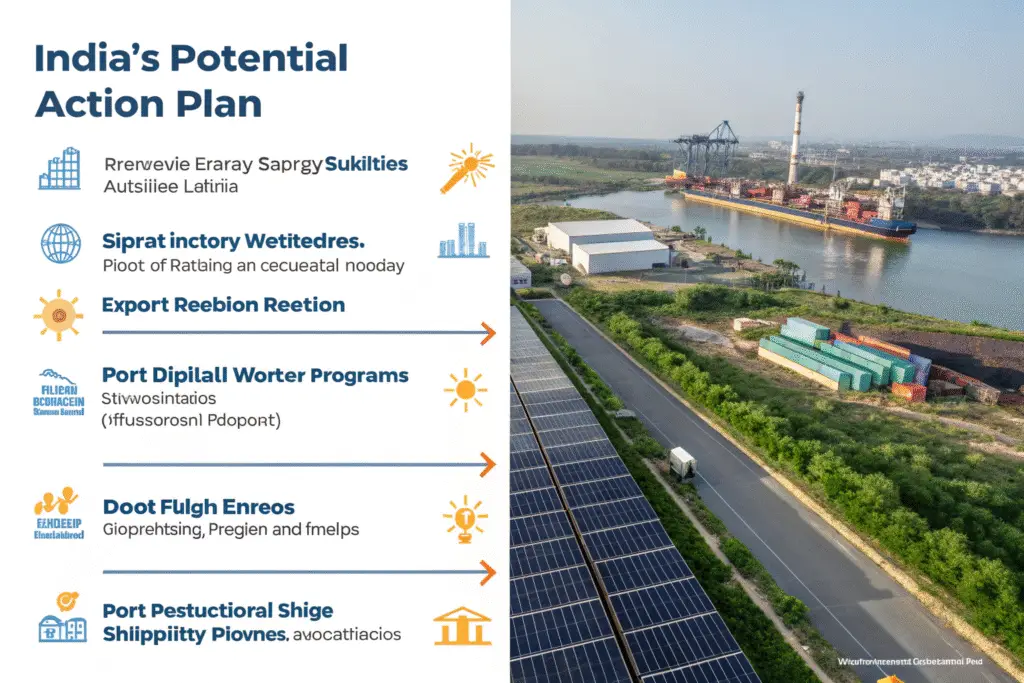
India’s textile sector still has core strengths—raw material availability, low labor costs, and scale.
But to regain lost ground, it must:
✅ 1. Subsidize Green Energy for Mills
- Priority: Solar, biomass, and grid upgrades for textile clusters (Tiruppur, Surat, Ludhiana)
- Turkey example: 43% of factories now use solar-dyeing setups
✅ 2. Launch Worker Retention Schemes
- Offer skill upgradation and minimum income guarantees to reduce labor migration
- Turkey retained workforce via inflation-indexed wages
✅ 3. Accelerate Port & Rail Logistics
- Reduce inland transport from spinning to CMT hubs
- Increase port container handling capacity by 15% in Chennai & Mundra
✅ 4. Offer Export Credit + Carbon Incentives
- Immediate soft loans for buyers switching from polyester to sustainable blends
- Incentivize BCI, GOTS, and RCS-certified exports to offset EU carbon taxes
✅ 5. Push Digitization in MSME Clusters
- Grants for ERP, inventory control, and real-time production monitoring
- Connect with buyers via digital sampling & compliance portals
Conclusion: Can India Rebound Like Turkey?
India’s apparel sector sits at a fork in the road. The current crisis could trigger mass MSME collapse—or spark a modernization wave that leapfrogs old inefficiencies.
Turkey showed that with bold energy, digital, and policy reform, a struggling textile economy can not only recover—but become more competitive than before.
At FUMAO, we help brands navigate sourcing challenges with:
- Vendor diversification (India, Vietnam, Turkey, China)
- Transparent factory sustainability scores
- Cost modeling for carbon + tariff exposure
📩 To explore how you can safely continue sourcing from India—or mitigate with nearshore alternatives—email us at elaine@fumaoclothing.com. The right sourcing pivot now can save your brand in 2025.