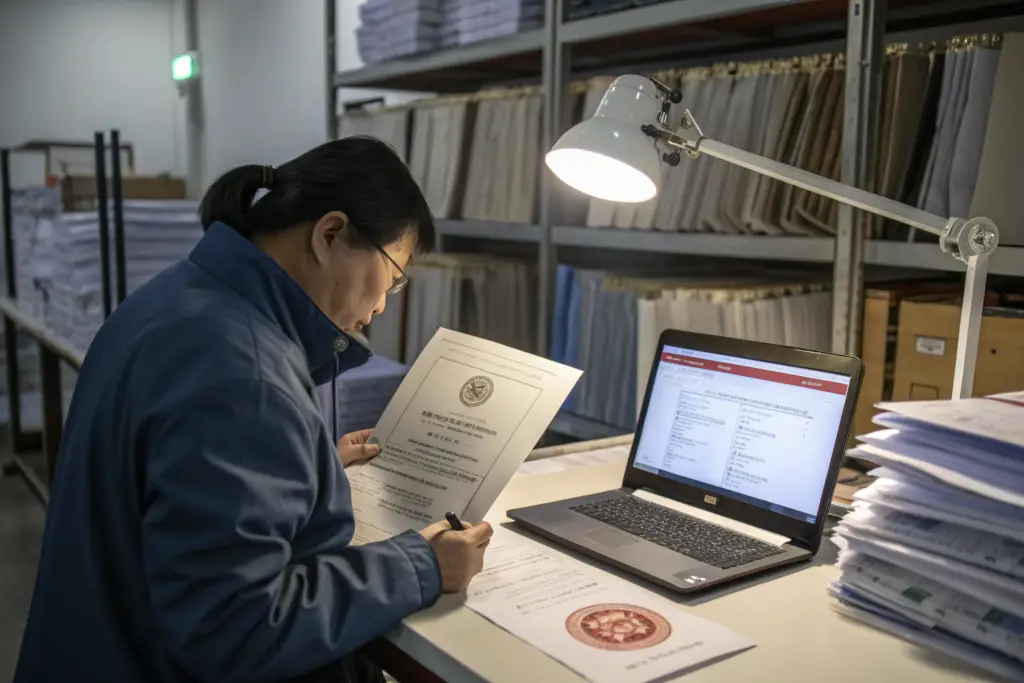
You’ve found a Chinese supplier who promises OEKO-TEX certified production. They’ve sent you a PDF that looks official. But in a market where document falsification is a known risk, how do you move from hopeful trust to concrete verification? We recently conducted an audit for an American brand who had received three seemingly valid certificates from different factories. Using the steps below, we found one was expired, another was for a completely different product, and the third was an outright forgery. The brand avoided a potential six-figure loss. This isn't about distrust; it's about professional due diligence. Here is your actionable, step-by-step verification protocol.
To verify the authenticity of an OEKO-TEX certificate from a Chinese garment supplier, you must conduct a multi-point audit that combines digital verification in the official OEKO-TEX database, forensic analysis of the certificate document, a scope-of-certification review against your specific product, and an assessment of the factory’s physical and procedural compliance systems. This process transforms a piece of paper into proof of a working safety management system.
Let’s break down this protocol into executable steps that you can implement immediately, even from thousands of miles away.
Step 1: The Digital Verification – Your Unbeatable First Move
Every genuine OEKO-TEX STANDARD 100 certificate has a unique, traceable number. This is your most powerful tool against fraud.
Immediately go to the official OEKO-TEX "Certification Check" or "Buying Guide" database. Input the certificate number provided by the supplier. This free, public tool is the single source of truth and will display the current status, the certified company's legal name, the product class, the specific certified articles, and the validity dates.
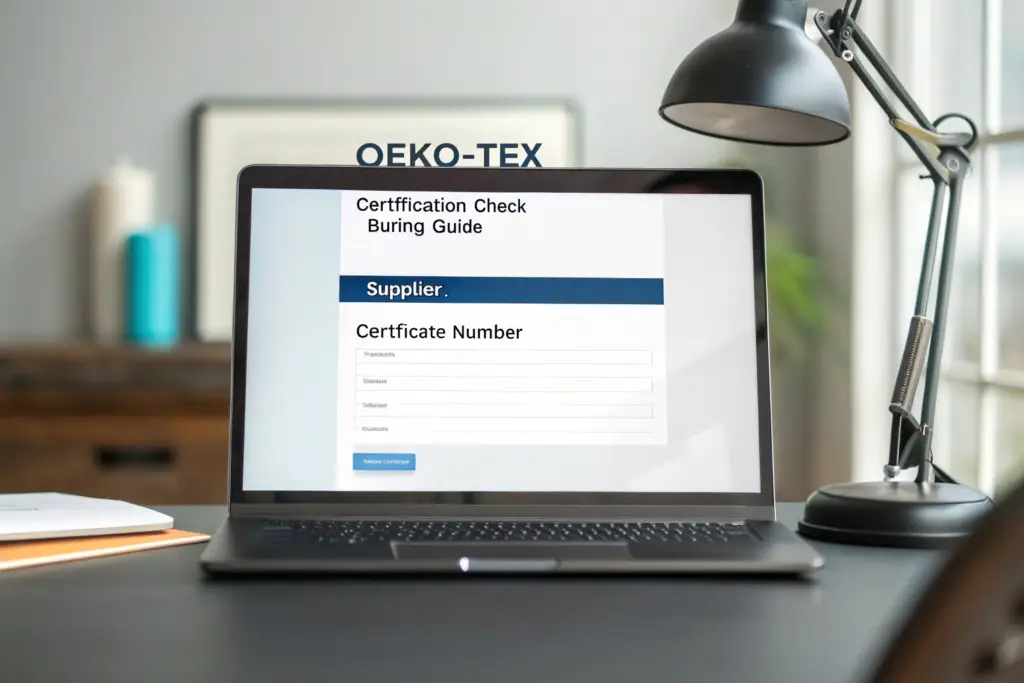
What Exact Information Must Match?
- Company Name: The listed company must match the legal entity you are contracting with. Be wary if it's a different trading company or a parent company you have no direct agreement with.
- Product Class: For garments with skin contact (like most apparel), it should be Class II. For babywear, it should be Class I. A certificate for Class IV (decorative materials) is invalid for clothing.
- Article Description: The description should logically encompass your product (e.g., "jacket," "trousers," "knitted sweater"). Vague terms like "textile fabrics" do not certify a finished garment.
- Status and Validity: It must read "VALID," not "suspended" or "expired." Check the expiry date against your production and delivery timeline.
Step 2: The Document Forensics – Spotting the Red Flags in the PDF
Once the database checks out, scrutinize the PDF certificate they provided. Fraudulent certificates often have inconsistencies here.
A genuine certificate is a structured document from a specific OEKO-TEX member institute (e.g., Hohenstein, TESTEX). Key elements include high-resolution logos, the unique certificate number, the certified company's address, a detailed list of certified articles with internal article numbers, the standard version, and clear issue/expiry dates.
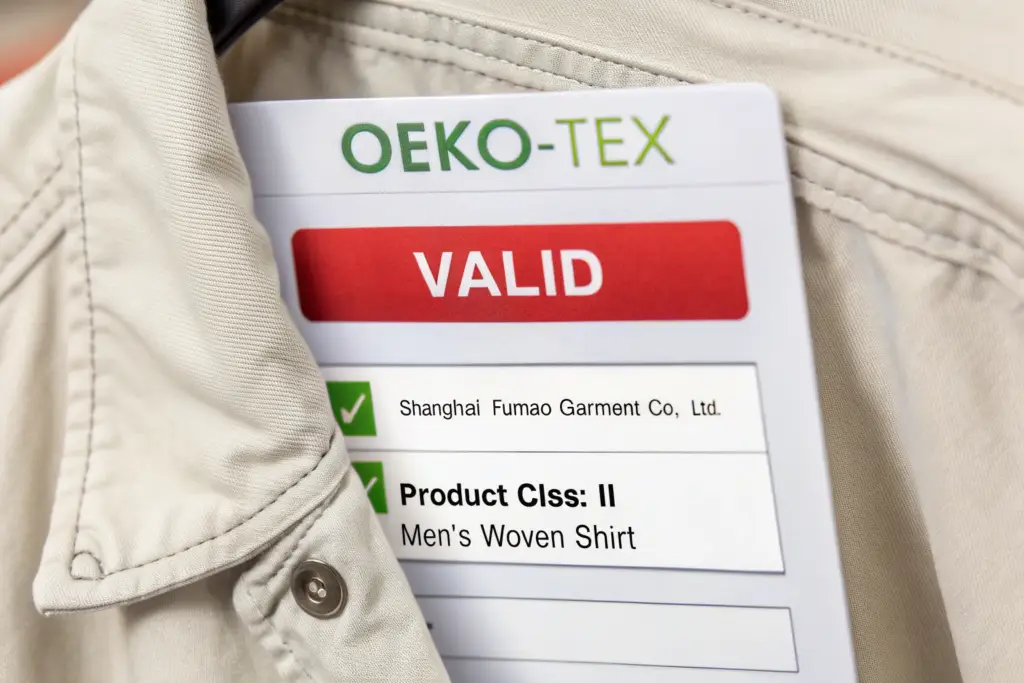
How to Identify a Forged PDF Document?
- Poor Graphic Quality: Blurry, pixelated, or recreated OEKO-TEX/institute logos.
- Data Mismatch: Any detail (dates, company name, article list) that doesn't perfectly match the online database.
- Unprofessional Formatting: Spelling errors, odd fonts, or incorrect document structure.
- Missing Security Features: Some institutes use watermarks or specific PDF security.
A common trick is "certificate hijacking"—taking a valid certificate from a legitimate company and editing the name. The online database check instantly exposes this.
Why Does the "Standard Version" Matter?
The standard version (e.g., "06.2023") indicates under which set of limit values the product was tested. OEKO-TEX updates these annually. You want production under a recent version to ensure compliance with the latest safety knowledge. An old version may not meet current standards or retailer requirements.
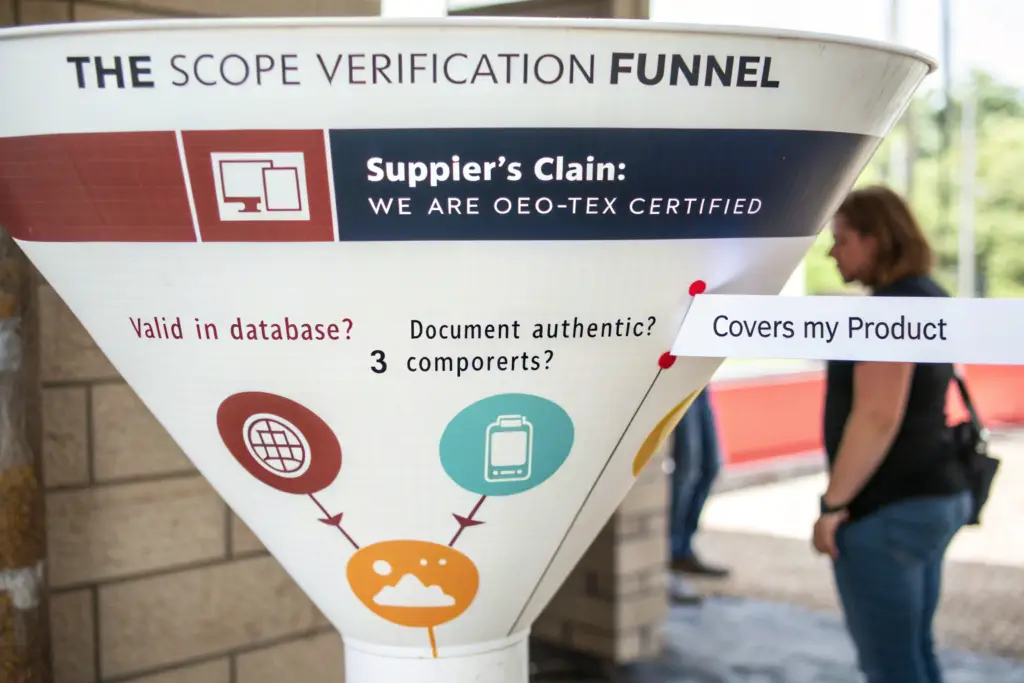
Step 3: The Scope Audit – Does the Certificate Cover YOUR Product?
This is the most critical and overlooked step. A factory may have a valid certificate, but not for the specific garment you are ordering.
You must confirm that the certificate covers the finished garment you are buying, not just a component fabric. For a woven shirt, for example, the certificate must list the assembled shirt (including its specific style/reference number), proving that all components—fabric, thread, buttons, interlinings—have been tested as a system.
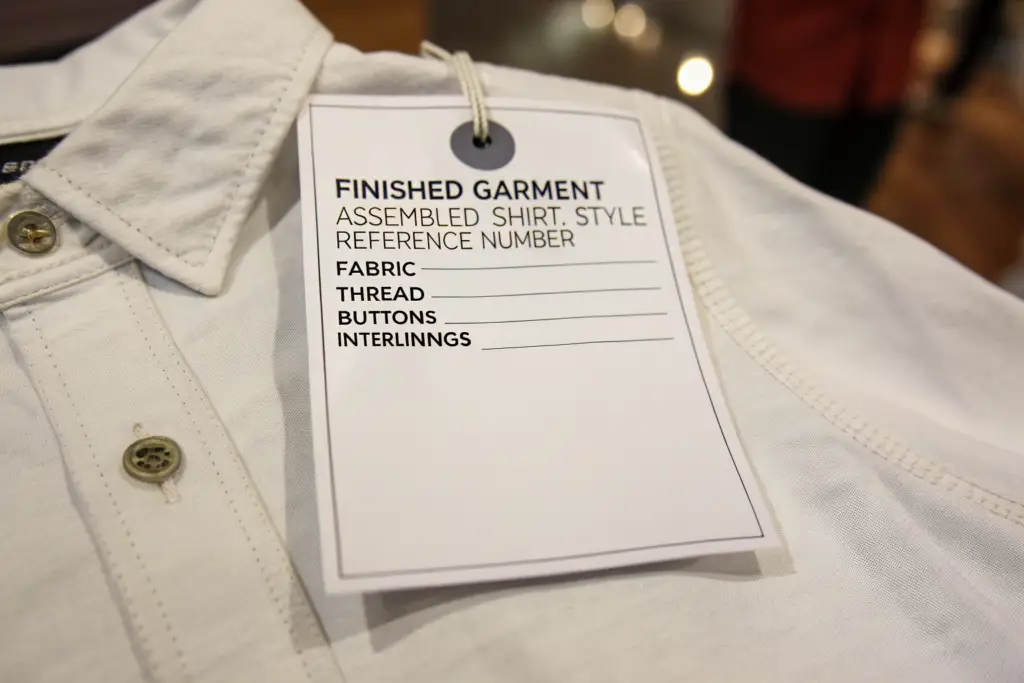
How to Conduct a "Component-Level" Inquiry?
Ask the supplier: "Please provide the OEKO-TEX Transaction Certificates (TCs) or component certificates for the main fabric, lining, buttons, and thread used in our style #XYZ."
- If they cannot provide these, the final garment certificate may not be legitimate for your custom product.
- If they can, cross-reference the article codes on those TCs with the final garment certificate.
This process reveals if they are sourcing from certified material suppliers, which is a hallmark of a serious operation. At Shanghai Fumao, we provide this full documentation pack to clients as standard practice.
What About New or Custom Designs?
If you are developing a new product, the factory must apply for a new OEKO-TEX certificate for that specific article. The process takes 2-4 weeks. A supplier who claims "our factory is certified, so your new style is automatically covered" is incorrect and a major red flag.
Step 4: The Factory System Check – Verifying Operational Compliance
A factory can have a certificate but lack the systems to maintain compliance during production. Your verification must extend to their processes.
A professional OEKO-TEX certified manufacturer should have a Quality Management System that includes segregating certified and non-certified materials, using approved chemicals, and maintaining batch traceability. Evidence of this is often found in higher-level certifications like OEKO-TEX STeP (Sustainable Textile Production) for the facility.
What Questions to Ask During a Virtual or Physical Audit?
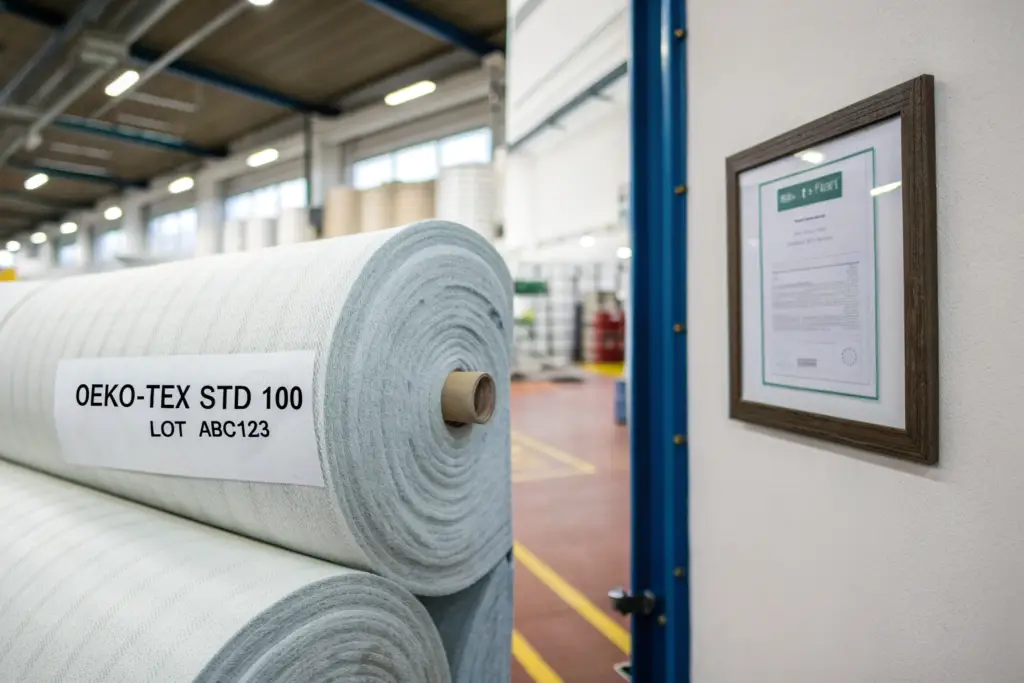
- Material Storage: "Can you show me how you store OEKO-TEX certified fabrics separately from non-certified ones?"
- Chemical Management: "What certified chemicals (e.g., OEKO-TEX ECO PASSPORT) do you use for washing or finishing?"
- Record Keeping: "How do you track which certified material batch was used in which production lot?"
- STeP Certification: "Do you hold OEKO-TEX STeP certification for your factory? May I see the certificate?"
Their ability to answer these fluently and provide evidence is telling. We welcome such audits at our facility to demonstrate our integrated compliance system.
How Does STeP Certification Provide a Higher Assurance?
OEKO-TEX STeP certifies the entire manufacturing facility's environmental and social performance, including its chemical management. A factory with STeP is audited on its systems, not just its final products. This is a strong indicator that their STANDARD 100 certification is backed by robust, day-to-day operational discipline. It's a layer of verification that goes beyond the product to the process.
Step 5: The Contractual Lock – Building Verification into Your Agreement
Finally, make verification a formal part of your business relationship to ensure ongoing compliance.
In your purchase order or contract, include a clause stating that shipment and final payment are contingent upon the provision of a valid, verifiable OEKO-TEX certificate number for the exact goods shipped, and that this number will be verified in the official database by you prior to payment release.
What is the Final Pre-Shipment Verification?
- Require the supplier to provide the OEKO-TEX certificate number for the production batch before shipping.
- Perform a final check in the OEKO-TEX database to confirm the status is still "valid" and the article description matches.
- Confirm the quantity shipped falls within the scope of the certificate.
This final step closes the loop and prevents last-minute substitution with uncertified goods.
Conclusion
Verifying an OEKO-TEX certificate in China is a systematic process of elimination, moving from digital truth to documentary detail, from product scope to production systems. It is the essential work that separates professional, low-risk suppliers from the rest.
By mastering this protocol, you do more than avoid fraud; you identify partners who view certification as an integral part of their quality system, not just a sales document. You shift your supply chain from a source of anxiety to a foundation of brand confidence.
If you seek a partner where this level of verification is welcomed, streamlined, and built into our operational DNA, we are here. At Shanghai Fumao, we provide transparent access to our certifications, component dossiers, and factory systems because our credibility is our product. Contact our Business Director Elaine at elaine@fumaoclothing.com to request our verifiable credentials and start a partnership based on proof, not promises.