You’ve received a PDF. It looks official. It has logos and a signature. It says your supplier’s factory is OEKO-TEX, BSCI, or GOTS certified. For a U.S. brand owner, this document is meant to be your guarantee of quality and ethics. But in reality, a PDF alone is worthless. It can be outdated, falsified, or for a different product line entirely. How do you move beyond the paper to find the truth? You need a verification process that is as rigorous as your own quality standards.
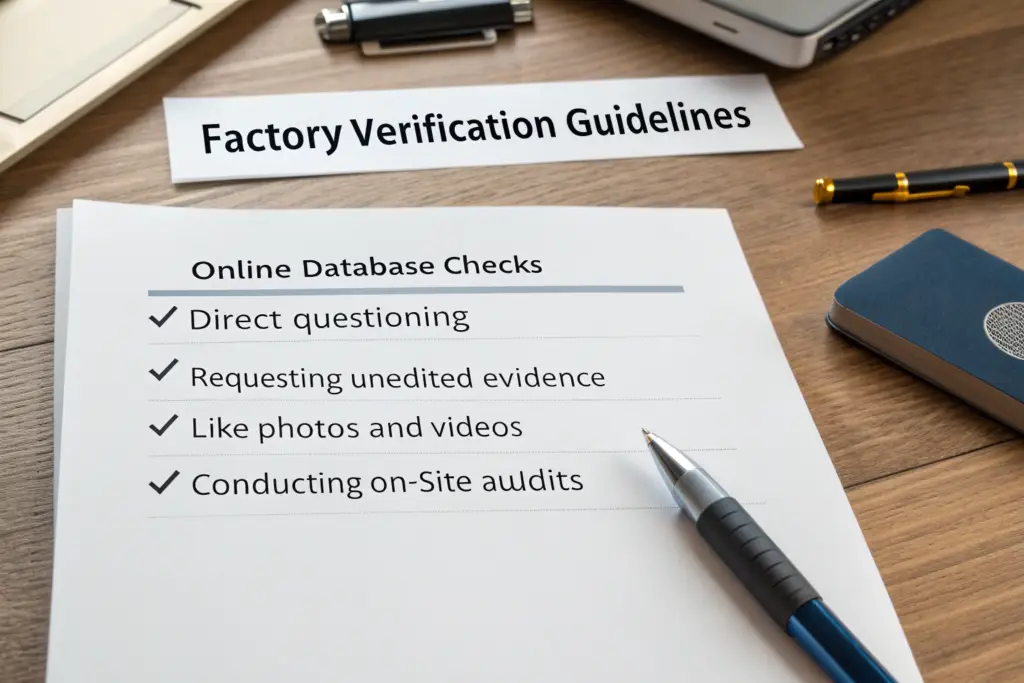
To truly verify a factory’s certificates, you must adopt a multi-layered approach that combines online database checks, direct questioning about audit cycles, requests for unedited evidence (like factory floor photos/videos), and, for critical partnerships, conducting your own or hiring a third-party for an on-site verification audit. The paper is just the starting point for a real conversation about compliance.
I have seen this problem from both sides. Before founding Shanghai Fumao, I worked for a large U.S. importer. We once nearly placed a six-figure order based on a valid BSCI audit report. A last-minute video call where we asked to “walk” the factory floor via phone camera revealed the facility in the report was not the one preparing our samples. The paper was real, but it was being misused. This experience now shapes how we, as a factory, proactively prove our credentials to clients like you.
Why Is Checking the Official Online Database the First Critical Step?
Every major certification body maintains a public online database. This is your first and most powerful tool. It turns a static document into a dynamic, verifiable fact. Relying solely on the PDF a supplier sends is like accepting a resume without checking references.
Checking the official database is critical because it confirms the certificate is active, issued to the correct factory entity, covers the right product scope, and has not been altered. It is the single fastest way to catch misrepresentation or use of expired certificates. This step takes five minutes but can save you from catastrophic compliance failures.
For example, a client of ours in the activewear space once sent us a competitor’s quote that included a GOTS certificate. They asked if our prices were competitive. Our first action wasn’t to lower our price; it was to look up the certificate in the Global Organic Textile Standard (GOTS) public database. We found it was registered to a small fabric mill, not the garment factory quoting the job. The factory was likely planning to buy certified fabric but lacked the certification for the complex cutting and sewing processes. We explained this risk to the client. They appreciated the transparency and chose us because our Shanghai Fumao facility’s certificate covered the full production process.
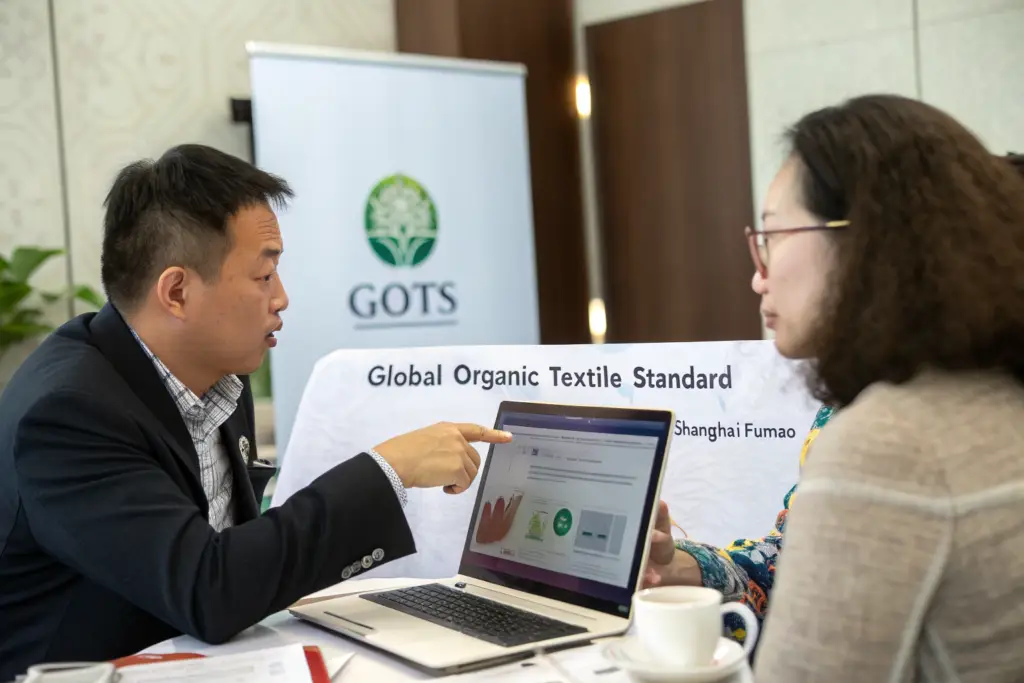
The process is straightforward but requires attention to detail. You need the exact certificate number and the factory’s legal name as it appears on their business license.
- Go to the certifier’s official website (e.g., OEKO-TEX, GOTS, Bureau Veritas for BSCI/SA8000, Control Union for various standards).
- Find their “Certificate Check,” “Find a Supplier,” or “Public Database” tool.
- Input the details. Match everything: the name, address, scope, and validity date.
A trustworthy factory will happily provide the direct link. If a supplier hesitates or gives excuses, consider it a major red flag.
What Are the Key Details to Scrutinize in the Database Listings?
Do not just check for a “valid” status. Dig deeper:
- Holder Name & Address: Is it the exact factory you are auditing, or a parent company or trading firm? A mismatch means the certificate may not apply.
- Scope/Certified Products: Does it list “knitted garments” when you are making woven jackets? Is it for “sewing” only, excluding printing or washing?
- Issue and Expiry Date: Is the certificate current for your production window? An audit last year doesn’t guarantee conditions today.
- Certification Body: Is it a reputable, internationally recognized auditor like SGS, TÜV, or Intertek?
What Questions Should You Ask During a Sourcing Call to Uncover the Real Story?
The sourcing call or video meeting is your live audit. Move beyond price and MOQ discussions. The questions you ask here reveal whether certification is a lived-in reality for the factory or just a marketing cost. Your goal is to assess their daily operational integrity.
Ask specific, operational questions about the certification’s maintenance: “Can you walk me through your last audit corrective action plan?” or “How do you train new workers on the chemical management procedures required by OEKO-TEX STeP?” Their comfort and detail in answering will tell you more than any certificate. Vague answers signal that management is not engaged with the standards.
Last quarter, a potential brand partner from Seattle asked us, “How does your BSCI audit process integrate with your own monthly HR reviews?” This was an excellent question. It showed they understood that real social compliance is ongoing, not a yearly event. We were able to share a specific case: after our last BSCI audit noted a need for more structured fire drill documentation, we didn’t just fix the paperwork. We implemented a quarterly drill schedule and integrated the records into our digital management system. We showed them screenshots. This level of detail secured their trust and the order.
How to Frame Questions About Audit Cycles and Non-Conformities?
Ask questions that force a narrative, not a “yes/no” answer:
- “Can you describe the most common non-conformity found in your last audit, and what permanent change you made to prevent it?” (This reveals a culture of continuous improvement vs. temporary fixes).
- “When was your last surprise audit, and who conducted it?” (Surprise audits by brands or third parties are the ultimate test).
- “How do you ensure your sub-suppliers (like fabric mills) comply with the substance restrictions in our standards?” (Tests their supply chain control).
Why is Requesting Unedited Visual Evidence a Game-Changer?
Always ask for recent, unedited photos or a live video walk-through of the specific areas covered by the certificate.
- For a Social Compliance Cert (BSCI/SA8000): Request to see the dormitories, canteen, and first-aid station during a live video call. Don’t accept staged photos.
- For an Environmental Cert (STeP): Ask for a video showing the working wastewater treatment plant or organized chemical storage areas.
- For a Quality Cert (ISO 9001): Request to see the calibration stickers on testing equipment in the lab.
A factory that is truly certified will have these areas audit-ready at all times and will be proud to show them. This simple request filters out a huge number of non-compliant suppliers.
When Should You Invest in a Third-Party or On-Site Verification Audit?
For high-value, long-term partnerships or high-risk product categories, paper checks and video calls have limits. There is no substitute for being on the ground. The decision to audit is an investment in risk mitigation.
You should invest in an on-site verification audit when the order volume is high, the product is for a sensitive market (e.g., childrenswear), you have had prior issues with the supplier, or you are planning a strategic long-term partnership. It is the final layer of due diligence that validates everything you’ve seen on paper and screen. The cost is minor compared to the financial and reputational damage of a failed shipment or compliance scandal.
We encourage our key clients to audit us. Two years ago, a major distributor from the Midwest, planning to make us their primary Asian partner for men’s wear, hired SGS to conduct a comprehensive audit against their own proprietary checklist, which included elements of OEKO-TEX, SMETA, and C-TPAT security criteria. While we already held all the necessary certificates, their auditor spent two days on-site. The final report gave their management unparalleled confidence. It transformed our relationship from a supplier to a verified strategic partner, and their order volume with Shanghai Fumao has grown 300% since.

What Are the Different Types of On-Site Verification Audits?
You can tailor the audit to your needs:
- Certificate Verification Audit: A focused check to confirm that the practices on the ground match the claimed certificate (e.g., is the GOTS organic cotton segregation process actually followed?).
- Social/Labor Compliance Audit: Deep dive into working hours, wage records, freedom of association, and health & safety.
- Technical/Quality Capacity Audit: Assessment of machinery, skilled workers, quality control processes, and sample development capabilities.
- Unannounced Audit: The most revealing type, though often requiring prior agreement in the contract.
How to Select and Brief a Third-Party Audit Firm?
If you don’t have your own staff to audit, hire a globally recognized firm.
- Choose a Reputable Firm: Use companies like SGS, Bureau Veritas, Intertek, or TÜV Rheinland. Their reputation is their currency.
- Provide a Clear Brief: Don’t just ask for a “standard social audit.” Give them your specific concerns, the certificates to verify, and your code of conduct. Share the factory’s provided documents in advance.
- Review the Full Report, Not Just a Summary: Insist on receiving the detailed audit report with findings, evidence photos, and interview notes. The non-conformities section is often more telling than the final score.
How Can You Use Continuous Monitoring to Maintain Confidence Over Time?
Verification is not a one-time event at the start of an order. Conditions change, management turns over, and pressures to cut corners arise. Building a system for continuous monitoring is what separates professional sourcing from hopeful ordering.
Implement continuous monitoring by integrating certificate expiry dates into your order calendar, requiring regular self-assessment questionnaires, conducting intermittent video spot-checks, and testing finished goods through independent labs for every production batch. This creates a system of accountability that lasts the entire business relationship.
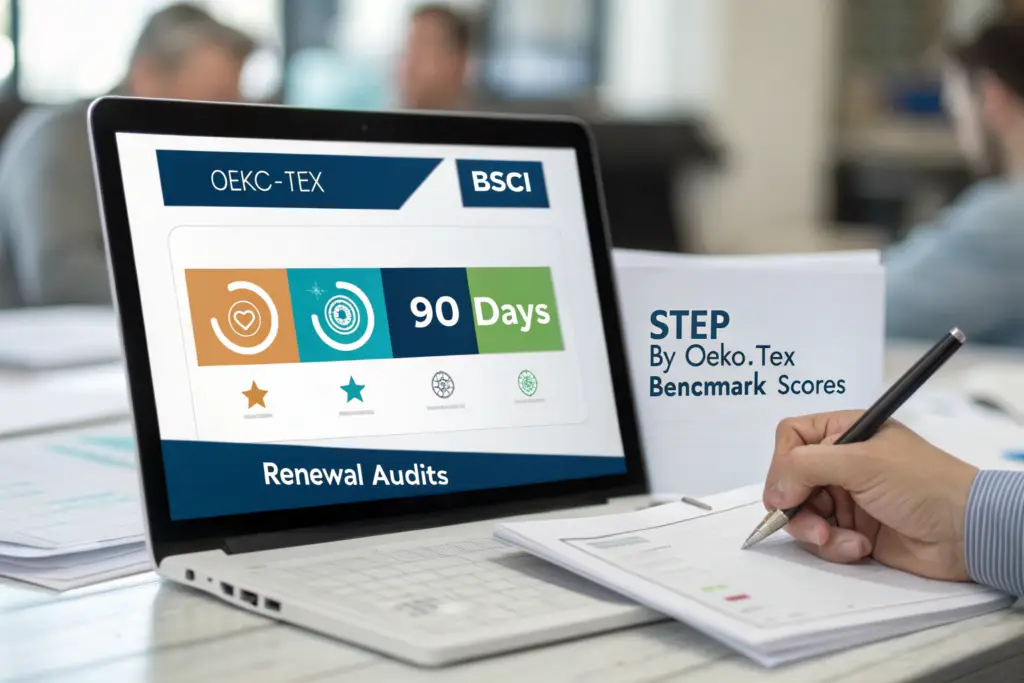
We built a client portal for this specific purpose. For our partners, it’s not just for tracking orders. It automatically alerts them 90 days before any of our key certificates (OEKO-TEX, BSCI) expire and shows the status of our renewal audit. We also upload annual summaries of our STeP by OEKO-TEX benchmark scores. This transparency removes the need for our clients to constantly ask for updates and builds a foundation of trust. One client told me this proactive approach was the main reason they stopped sourcing from a factory in Vietnam where they were always chasing documents.
What Should Be Included in a Supplier Self-Assessment Questionnaire?
Send a concise but detailed questionnaire every 6-12 months. Key sections should cover:
- Certification Updates: Any changes in status, scope, or upcoming audits.
- Major Operational Changes: Changes in ownership, key management, or factory location.
- Incident Reporting: Ask about any recent labor disputes, safety incidents, or environmental notices from local authorities.
- Sub-Supplier Updates: Any changes in their core fabric or component suppliers.
Why is Periodic Product Testing a Non-Negotiable Part of Monitoring?
Even with the best factory and valid certificates, third-party lab testing of finished goods is your final safety net. Schedule it for every production run, especially for standards like OEKO-TEX STANDARD 100 which regulates chemical content. Use the test reports not as a weapon, but as a collaborative quality checkpoint. Share the results with your factory. If a failure occurs, a good factory will work with you to investigate the root cause in their supply chain—whether it’s a contaminated batch of dye or a non-compliant zipper supplier. This turns monitoring into a joint problem-solving exercise that strengthens the partnership.
Conclusion
Verifying a factory’s certificates goes far beyond accepting a PDF. It is a disciplined process that moves from online fact-checking, to probing dialogue, to visual verification, and, for critical partners, on-the-ground validation. This layered approach protects your brand, ensures product integrity, and builds partnerships based on transparency rather than hope.
In the end, the most reliable factories don’t see this scrutiny as a burden. They welcome it as an opportunity to demonstrate their professionalism and differentiate themselves from the countless suppliers who rely on empty paperwork. Your rigorous verification process naturally attracts and retains the best manufacturing partners.
Tired of chasing documents and worrying about the authenticity behind certificates? Partner with a factory that is built for transparency. At Shanghai Fumao, we open our digital records, our audit reports, and our factory doors to your verification. Let us show you how true partnership works. Contact our Business Director Elaine to schedule your introductory call and factory tour. Email: elaine@fumaoclothing.com.