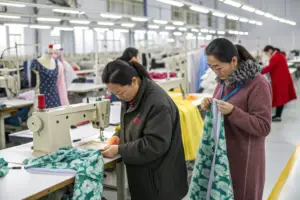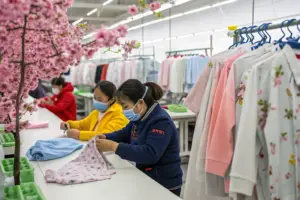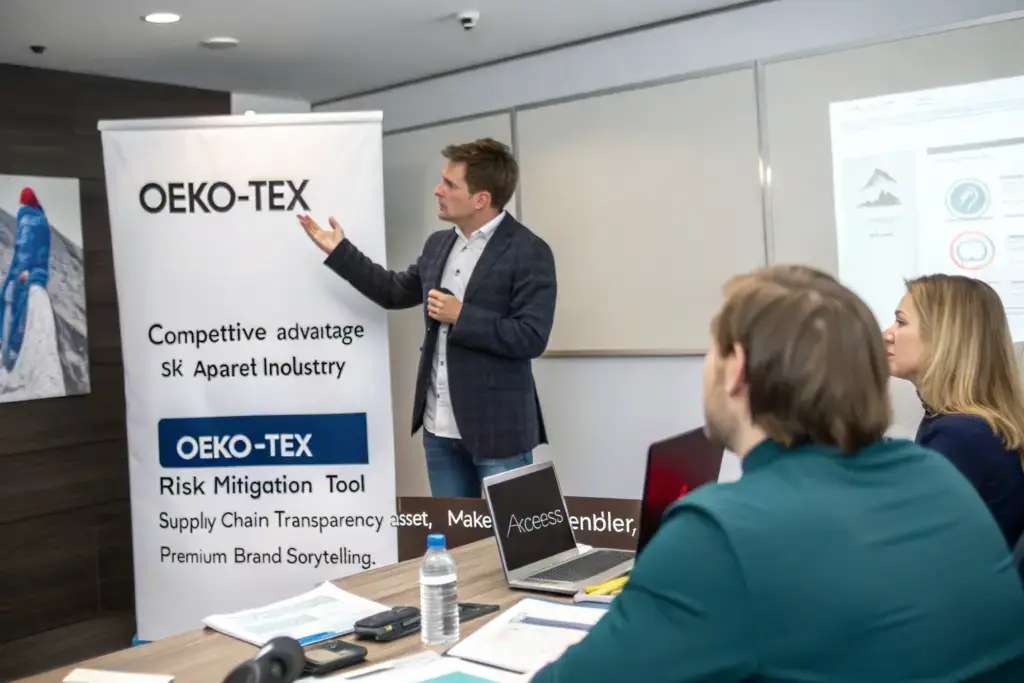
In the crowded, high-stakes market of B2B ski apparel, brands and retailers are constantly searching for an edge. Beyond technical specs and design, what truly convinces a buyer to choose one supplier over another? Increasingly, it's proof of responsibility. An OEKO-TEX certification is more than a safety seal; it's a sophisticated business tool that, when strategically deployed, can unlock doors, justify premiums, and build unshakeable B2B partnerships.
To use OEKO-TEX as a competitive edge in B2B ski apparel sales, you must strategically reframe it from a basic compliance certificate into a multifaceted value proposition. This involves leveraging it as a risk mitigation tool for your buyers, a supply chain transparency asset, a market-access enabler, and a foundation for premium brand storytelling. It answers the buyer's core commercial questions about liability, sell-through potential, and brand equity.
For a buyer like "Ron" from our background, who is sensitive to quality and logistics risks, OEKO-TEX isn't about ethics—it's about predictable, profitable business. Your sales pitch must speak that language.
How does OEKO-TEX mitigate commercial risk for your B2B client?
Your B2B client's primary goal is to source products that sell without causing problems. OEKO-TEX directly addresses several of their top commercial risks: product recalls, rejected shipments, and reputational damage.
Start the conversation with risk mitigation. Frame OEKO-TEX certification as a form of insurance. Explain that by partnering with a certified manufacturer like Shanghai Fumao, they are transferring the liability of chemical compliance away from their brand. Our full-package manufacturing includes a supplier agreement that guarantees OEKO-TEX compliance, with indemnity clauses protecting them. This directly tackles the pain point of suppliers falsifying certificates. For example, we can share (anonymously) how our systems caught a non-compliant batch of trim from a sub-supplier before it reached production, saving a client from a potential $50,000 recall. This isn't a story about us being "green"; it's about us being rigorously reliable.

How does it protect against retail compliance and rejected shipments?
Major retailers and marketplaces have stringent Restricted Substances Lists (RSLs). OEKO-TEX STANDARD 100 is often more comprehensive than individual RSLs. Presenting a valid OEKO-TEX certificate dramatically streamlines a client's compliance process with retailers, reducing administrative burden and the risk of costly shipment rejections at the distributor or port of entry. This assurance of reliable delivery is a tangible financial advantage. It means their goods won't be stuck in customs or sent back, missing the crucial selling season.
Can it reduce liability in key markets like North America and Europe?
Absolutely. Regulations like California's Proposition 65 and evolving EU chemical laws (e.g., REACH) create a minefield for importers. OEKO-TEX certification, especially the stringent Class I for any skin-contact layers, demonstrates "due diligence." In a legal dispute, it serves as a robust, third-party defense. This transforms the certification from a cost into a strategic investment in market access and legal protection, directly supporting their profit model.
How does it enhance product value and sell-through potential?
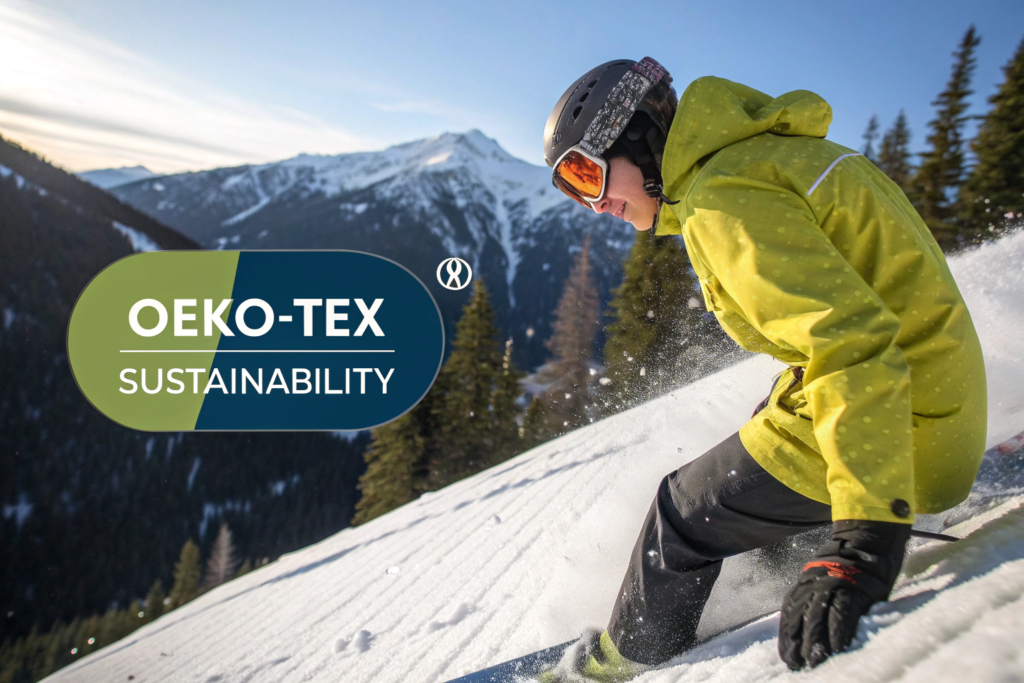
The end consumer is the final judge. In ski apparel, the APAC boom and growing global consciousness mean consumers are actively looking for safety and sustainability signals. OEKO-TEX is a recognized, trusted label that influences purchasing decisions at the point of sale.
Provide your B2B client with the commercial argument for consumer demand. Share data or case studies showing that products with visible sustainability certifications have higher conversion rates and can command a price premium. Position OEKO-TEX as a marketing asset they can use. Offer them ready-to-use marketing copy, high-resolution images of the labels, and even content about what the certification means for the skier—peace of mind, skin safety during high exertion, and environmental responsibility. This turns your product development into their competitive edge on the retail floor.
How does it support entry into premium retail channels?
High-end department stores, specialty outdoor retailers, and curated marketplaces vet their suppliers rigorously. An OEKO-TEX STeP certification for the manufacturing facility is a powerful credential during this vetting process. It shows the retailer that the brand's products come from a responsibly managed supply chain, reducing the retailer's own due diligence burden. We've seen clients use our STeP certification as part of their pitch to secure shelf space in premium European outdoor stores, successfully justifying a higher wholesale price point.
Can it be a differentiator in private label and customization?
For buyers looking for customization or private label manufacturing, OEKO-TEX offers a clear point of differentiation from generic competitors. You can pitch: "While others just sew your customizable logo onto a generic jacket, we build your brand on a foundation of certified safety and transparency." This elevates the conversation from purely price-based to value-based. It allows their private label to compete not just on design, but on substantiated quality and responsibility—key factors for modern consumers.
How to communicate this edge in your sales process?
Having the certification is one thing; communicating its strategic value is another. Integrate OEKO-TEX into every stage of your B2B sales funnel, from initial contact to final contract.
On your website and Alibaba storefront, don't just list "OEKO-TEX Certified." Create a dedicated page or section explaining why it matters for their business. Use headlines like "Supply Chain Confidence for Brand Owners" or "Reduce Your Compliance Risk." In initial inquiries, proactively include information about your certifications in your response. During sampling, ensure the hangtag on the prototype includes the OEKO-TEX label. In contract negotiations, explicitly reference the certification in the quality assurance clause.
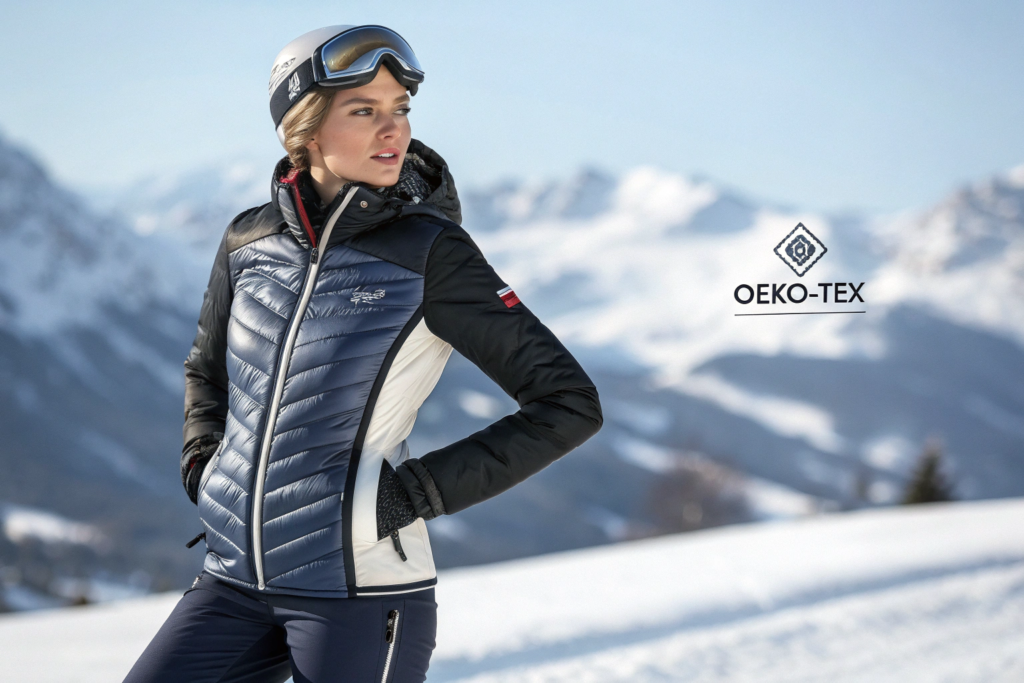
What proof points should you provide?
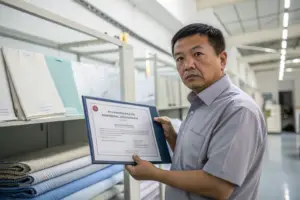
Move beyond the certificate. Provide a "Certification Dossier" that includes:
- The valid OEKO-TEX STANDARD 100 certificate for the product.
- Your facility's OEKO-TEX STeP certification (if applicable).
- A one-page explainer on how your quality control system enforces compliance (e.g., material lot tracking, batch testing).
- Testimonials or case studies (without breaking confidentiality) about how your compliance systems saved a client time or money.
This dossier becomes a powerful sales tool that builds immense trust and justifies your competitive pricing structure.
How to handle price objections strategically?
When faced with "Your price is higher," pivot from cost to value. Use a framework: "We understand budget is important. The investment in OEKO-TEX certification ensures three things that protect your margins: 1) No costly recalls, 2) Smoother, faster customs clearance, and 3) A product that can sell at a premium. Let's calculate the potential cost of not having this protection." This reframes the conversation and positions you as a strategic partner, not just a vendor.
Conclusion
In B2B ski apparel sales, OEKO-TEX is a powerful lever that transcends basic product safety. When articulated strategically, it addresses the core commercial fears of every brand owner and buyer: risk, reliability, and marketability. It transforms your manufacturing capability into a comprehensive business advantage that protects their investment and amplifies their brand story.
To truly stand out, you must be the manufacturer who doesn't just offer a certificate, but who builds an entire value proposition around verifiable safety, transparency, and shared commercial success. This is how you move from being a supplier to being a strategic partner.
Shanghai Fumao is engineered to be that partner. We provide the certifications, the systems, and the commercial narrative to give your brand a definitive edge in the competitive ski market. Let's discuss how to make OEKO-TEX work for your bottom line. Contact our Business Director Elaine: elaine@fumaoclothing.com.