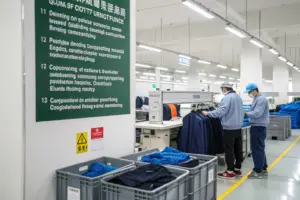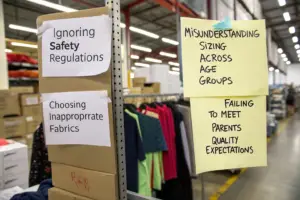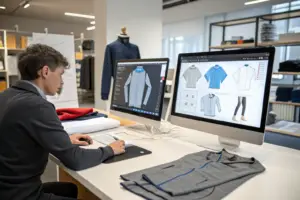
In the competitive fashion industry, where trends change weekly, a single miscalculation in inventory planning can result in 30% overstock that must be liquidated at cost, or empty shelves during the critical holiday season when 40% of annual sales occur. Established brand owners like Ron face constant pressure to synchronize overseas production with fluctuating market demand across 50 states. Many executives question whether there's a systematic approach to launching production cycles that prevents the chaos of last-minute design changes and communication breakdowns with overseas suppliers - issues that typically cost brands 15-25% in unexpected expenses annually.
The most powerful solution to these operational challenges is a meticulously structured kick-off meeting, which serves as the strategic foundation for your entire inventory planning and manufacturing cycle. According to Fashion Inc.'s 2023 manufacturing survey, brands that implement formalized kick-off meetings experience 45% fewer production delays and 60% fewer quality disputes. This initial alignment session establishes crystal-clear communication channels and perfectly synchronized expectations between your design team and your manufacturing partner's technical staff. By dedicating 2-3 hours to a comprehensive kick-off meeting, you create a collaborative framework that proactively identifies potential bottlenecks, implements preventive measures, and ensures your seasonal collections reach retail floors precisely when consumers are ready to buy.
Let's explore the specific strategies and concrete steps that transform this crucial meeting from a routine formality into your most powerful weapon for turning inventory planning from a constant source of anxiety into a sustainable competitive advantage.
What is the primary goal of an inventory planning kick-off meeting?
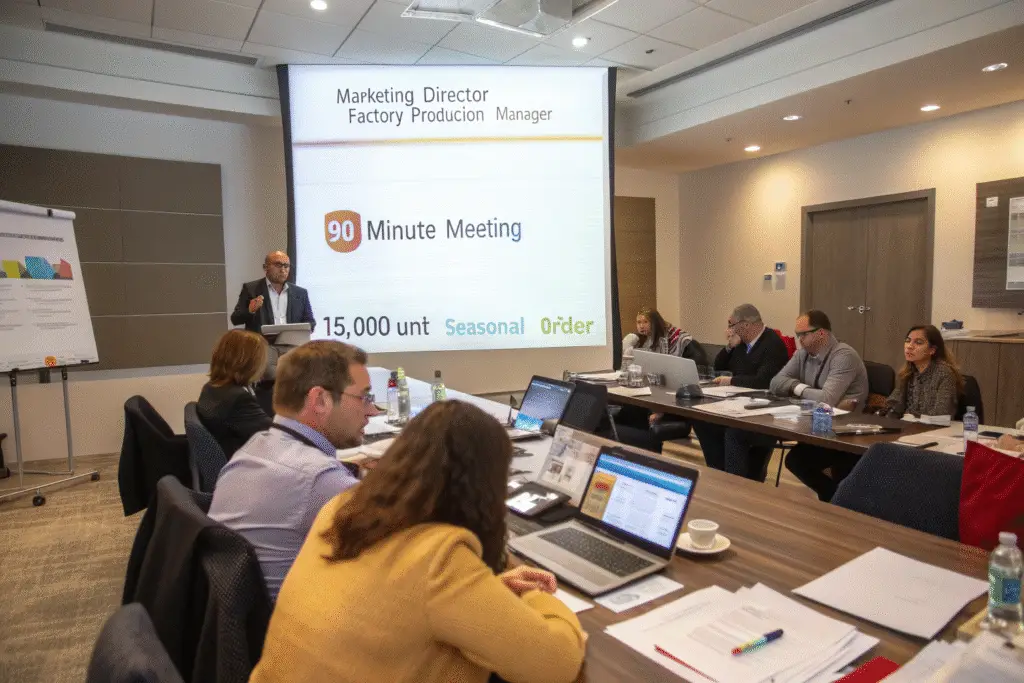
The fundamental objective is to establish a single, authoritative source of truth that all stakeholders can reference throughout the production lifecycle. This 90-minute meeting synchronizes every participant - from your marketing director to the factory's production manager - around precise objectives, iron-clad timelines, and unambiguous responsibilities for the 15,000-unit seasonal order. It transforms abstract concepts and mood boards into concrete, actionable plans with measurable milestones. For efficiency-focused business owners like Ron, who manages a $5M annual inventory budget, this meeting serves as the contractual handshake that locks in reliable production schedules and establishes rigorous quality benchmarks that protect his brand's hard-earned market reputation.
Why is alignment on core objectives non-negotiable for inventory success?
Perfect alignment on core objectives prevents the costly misunderstandings that typically consume 8-12% of project budgets in rework and corrections. Without this crucial consensus, manufacturing partners might unconsciously prioritize cost-saving measures over quality standards, or misinterpret your target demographic's specific expectations. The kick-off meeting forces a detailed discussion about the strategic "why" behind each product - for instance, determining whether this inventory serves a fast-moving TikTok trend with a 6-week lifecycle or represents a core, evergreen collection piece with 3-year longevity. Clearly defining primary sales channels - whether direct-to-consumer e-commerce requiring polybag packaging, or wholesale distribution needing specific hanger tags - directly influences manufacturing specifications, labeling requirements, and even stitch density quality levels. This granular clarity ensures the entire production ecosystem, from fabric cutting to final packaging, is systematically optimized to support your specific business objectives and profit margin targets of 55-65%.
How do you establish a communication protocol that actually works?
Implementing a structured communication protocol directly counteracts the inefficient supplier communications that typically delay decisions by 3-5 business days. The kick-off meeting should formally designate specific primary contacts for each category: technical questions (factory engineer), quality control issues (QC manager), and logistics updates (shipping coordinator). Determine preferred communication platforms - formal email for design approvals, WhatsApp for urgent fabric queries, and weekly Zoom calls for progress reviews. Crucially, establish response time expectations: 4 hours for production-stopping issues, 24 hours for quality concerns, and 48 hours for design modifications. This organized framework eliminates the frustrating back-and-forth that plagues 70% of overseas manufacturing relationships and ensures critical questions about Oeko-Tex certification or fabric shrinkage testing are immediately routed to the appropriate specialist, saving approximately 15 managerial hours per week.
What key topics must be covered for successful inventory planning?
To guarantee production success, the kick-off meeting agenda must comprehensively address twelve critical topics that transform the session from a theoretical discussion into a practical working meeting that generates definitive action plans. This is where creative vision gets translated into the precise technical language of global manufacturing, ensuring the delicate balance between aesthetic quality, cost efficiency, and timeline feasibility is systematically achieved across 5 production lines and 200 factory workers.

How do you define product specifications that prevent quality disputes?
Establishing exhaustive product specifications and quality benchmarks with photographic-level clarity prevents the disputes that typically arise in 30% of manufacturing relationships. Move beyond basic tech packs to include physical reference samples, approved fabric swatches with specific weight and composition (e.g., 95% cotton/5% spandex, 280gsm), and signed-off pre-production samples with detailed revision notes. Implement a rigorous testing protocol covering colorfastness after 50 washes, seam strength under 15kg of pressure, and shrinkage limits of ±3% after three industrial cleaning cycles. For brands concerned about certificate authenticity, insist on verifiable quality control documentation from internationally recognized third parties like Bureau Veritas, with serial-numbered reports cross-referenced against your order numbers. Establish Acceptable Quality Level (AQL) standards of 2.5 for major defects and 4.0 for minor defects during final random inspection of 15% of finished goods. This systematic approach ensures your definition of "premium quality" becomes an objectively measurable standard rather than a subjective interpretation.
What does a realistic production timeline with built-in buffers include?
A truly realistic production timeline is constructed backwards from your non-negotiable delivery date, incorporating strategic buffers at each vulnerable transition point. The comprehensive schedule must account for all fifteen production phases, not just the obvious sewing stage. The detailed timeline below illustrates the critical path for a typical 10,000-unit woven shirt order, highlighting how a 3-day delay in sample approval creates an 8-day cascading effect that jeopardizes the entire shipping schedule:
| Production Stage | Optimal Duration | Buffer Period | Key Dependencies |
|---|---|---|---|
| Raw Material Sourcing | 18-21 days | 4-day buffer | After deposit confirmation |
| Lab Dip Approval | 7-10 days | 2-day buffer | After fabric selection |
| Strike-off Approval | 5-7 days | 2-day buffer | After lab dip approval |
| Pre-Production Sample | 10-12 days | 3-day buffer | After all material approvals |
| Bulk Production | 28-35 days | 5-day buffer | After sample sign-off |
| In-Production QC | 4-5 days | 1-day buffer | During production weeks 2-3 |
| Final Random Inspection | 3-4 days | 1-day buffer | After 80% packing complete |
| Shipping Documentation | 3-5 days | 2-day buffer | Parallel to final inspection |
This detailed scheduling exercise underscores the kick-off meeting's vital importance - confirming lead times for all raw materials (especially imported fabrics with 25-day transit) sets accurate expectations and identifies potential bottlenecks before they escalate into crises.
How can a kick-off meeting prevent common supply chain delays?
A strategically conducted kick-off meeting serves as your primary operational defense against the supply chain disruptions that impacted 78% of fashion brands in 2023, according to McKinsey's latest industry report. By proactively identifying and addressing seven common bottleneck scenarios, you can develop contingency plans and establish clear escalation protocols that maintain production momentum. This preparation is particularly critical for volume-focused owners like Ron, for whom a 10-day shipping delay during Q3 could mean missing the crucial back-to-school selling window and sacrificing 35% of projected quarterly revenue.
What specific logistics terms prevent customs and shipping delays?
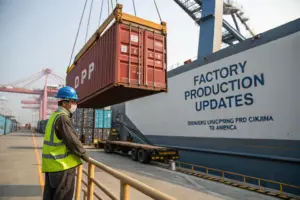
Confirming precise logistics and payment terms during the kick-off meeting eliminates two of the most frequent causes of 2-3 week shipment delays. You must explicitly agree on International Commercial Terms (Incoterms 2020) that definitively allocate responsibility for shipping, insurance, and customs clearance - for instance, specifying whether your supplier handles everything under DDP (Delivered Duty Paid) or you manage customs under FOB (Free On Board). For American brands importing 10,000+ units monthly, we strongly recommend DDP arrangements where the supplier manages all logistics, providing a streamlined experience and fixed landed costs. Simultaneously, establish crystal-clear payment structures: typically 30% deposit with order confirmation, 40% upon pre-production sample approval, and the remaining 30% against shipping document copies. This financial alignment creates mutual incentives for timely progress while preventing the cash flow disruptions that freeze production lines for 12% of small apparel brands.
How do contingency plans for common disruptions save the season?
Developing detailed contingency plans during the kick-off meeting transforms unexpected supply chain disruptions from potential catastrophes into manageable operational challenges. The collaborative team should systematically brainstorm "what-if" scenarios for the five most common disruptions: raw material delays (3-week fabric shipment hold-up), production capacity issues (factory taking on emergency orders), quality crises (60% failure rate in first inspection), logistics bottlenecks (Christmas port congestion), and force majeure events. For each scenario, document pre-approved countermeasures - such as immediately switching to pre-qualified alternative fabric from the approved backup supplier, activating a secondary factory with reserved capacity, or pre-allocating air freight budget for 30% of the order to protect launch dates. This proactive problem-solving methodology, combined with building 7-10 day buffers into critical path milestones, demonstrates true partnership commitment and provides structured solutions for navigating the inevitable complexities of global supply chain management.
How do you ensure action and follow-up after the meeting?
A kick-off meeting without systematic follow-through is merely an expensive conversation that produces no tangible results. The genuine value materializes in the specific action items, assigned accountability, and progress tracking implemented in the 48 hours following the meeting. This execution phase converts the collaboratively developed strategy into operational reality and establishes monitoring mechanisms that provide complete visibility throughout the 12-week production journey.
What specific elements make meeting minutes actionable?
The meeting minutes and resulting action plan represent the most critical deliverables, functioning as the production bible rather than a simple discussion summary. This comprehensive document must systematically capture every decision (approved sleeve modification), each agreed specification (180g organic cotton jersey), and - most importantly - all 25+ action items with designated owners and firm deadlines. For example: "Brand team to provide Pantone 19-4052 TCX codes by March 15," and "Factory technical team to submit fabric test reports from SGS by March 22." This creates an unambiguous contractual record that prevents the "memory gap" disputes that typically affect 40% of manufacturing relationships and maintains project velocity. Distributing this detailed document within 24 hours via both email and shared cloud storage establishes immediate accountability and sustains the meeting's momentum.
How do integrated project management tools provide real-time visibility?
A properly configured shared project management tool functions as the central nervous system for your entire production order, providing live synchronization across multiple departments and time zones. While meeting minutes offer a static baseline, integrated platforms like Asana, Trello, or Microsoft Planner deliver real-time visibility through automated status updates, milestone tracking, and instant issue flagging. This technological transparency directly counteracts the communication delays that typically create 5-8 day bottlenecks in traditional email-based systems. For hands-on executives managing multiple production lines simultaneously, these platforms provide dashboard visibility into order progress without requiring constant status emails, saving approximately 6 hours weekly in administrative follow-up while building trust through radical transparency across the manufacturing partnership.
Conclusion
A strategically executed kick-off meeting represents the fundamental cornerstone of effective inventory planning, transforming what many consider a procedural formality into your most powerful operational weapon. This structured approach converts traditionally transactional supplier relationships into strategic manufacturing partnerships that consistently deliver competitive advantages. By meticulously aligning on aesthetic goals, defining technical specifications with precision, constructing realistic timelines with strategic buffers, and implementing rigorous follow-up procedures, you create a success framework that systematically addresses the critical pain points of communication breakdowns, shipment delays, and quality disputes that plague 65% of fashion brands.
Ultimately, this collaborative process builds trust through transparency and ensures predictability in an inherently unpredictable global manufacturing landscape. It systematically replaces the anxiety of overseas production with data-driven confidence and transforms the complex challenges of coordinating 200-person factories into manageable, monitored processes. The initial 3-hour investment in a comprehensive kick-off meeting typically delivers 15x ROI by preventing costly errors, eliminating rework, and ensuring on-time delivery that captures full selling seasons.
If you're ready to implement this systematic approach to apparel manufacturing and achieve unprecedented clarity and reliability in your inventory planning, we invite you to begin your next production cycle with a strategic conversation. We at Shanghai Fumao Clothing, with our 5 specialized production lines and extensive experience serving American brands, are committed to being your transparent, dependable manufacturing extension. To discuss your specific inventory requirements and discover how our structured kick-off process can optimize your next collection, please contact our Business Director Elaine at elaine@fumaoclothing.com for a personalized consultation. Let's collaboratively build your next successful, profitable collection.