Updating a tech pack for a new season feels like a daunting task for many brands. You have the creative vision, but the technical execution can be a bottleneck, causing delays and cost overruns. A well-prepared tech pack is the single most important document for a smooth manufacturing process. It bridges the gap between your design dream and the physical product your customers will love. This guide will walk you through the practical steps to efficiently update your tech pack, ensuring your new collection launches on time and within budget.
A tech pack, or technical package, is the detailed blueprint for your garment. Updating it for a new season involves a systematic review and revision of all its components—from design sketches and bill of materials to construction details and quality standards—to reflect the new collection's requirements while incorporating feedback and learnings from previous production runs. A precise tech pack is your primary tool for clear communication with your clothing manufacturer, minimizing errors and ensuring you get exactly what you designed.
Let's dive into the specifics of how you can refine this critical document for your upcoming launch.
Why is a Detailed Tech Pack Crucial for Manufacturing?
A detailed tech pack is not just paperwork; it's the foundation of a successful production run. It aligns everyone involved, from your design team to the factory floor. We once worked with a startup brand that provided minimal sketches for their first knitwear order. The result was a miscommunication on the rib cuff tension, leading to 30% of the units being unusable. For their second season, we helped them develop a comprehensive tech pack, and their defect rate dropped to less than 2%.
A vague tech pack invites interpretation, and in manufacturing, interpretation leads to mistakes. It is the single source of truth. It specifies every detail, leaving no room for assumptions. This clarity is vital for getting accurate bulk production quotes and for the factory to plan its workflow efficiently. Without it, you risk multiple sample rounds, delayed timelines, and unexpected costs that can eat into your profit margins.

What are the key components of a tech pack?
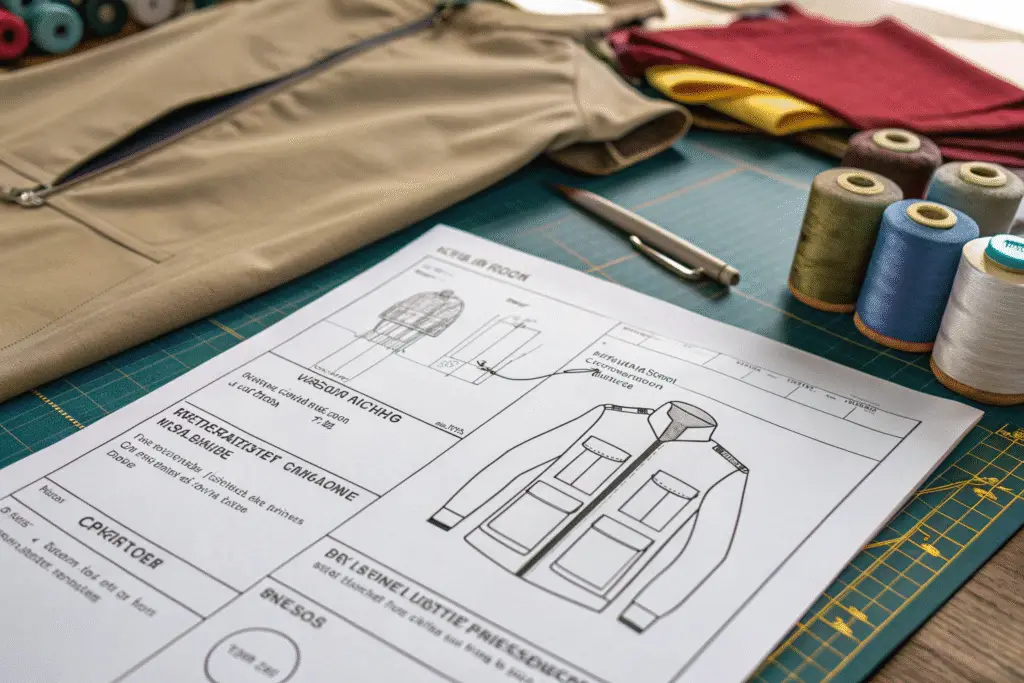
A complete tech pack contains several core elements. The first is the technical flats. These are detailed sketches of the garment's front, back, and side views, including all stitching, topstitching, and hardware placements. They are not artistic drawings but precise, scaled illustrations. Second is the Bill of Materials (BOM). This is a detailed list of all raw materials required, from the main fabric and interlinings to threads, zippers, buttons, and labels. Each component should be specified with a supplier code, description, and quantity.
How does a tech pack prevent production errors?
The tech pack acts as a preventive measure. By providing quantified specifications for every aspect, it eliminates guesswork. For example, a client recently updated their tech pack for a line of woven shirts to include a specific stitch-per-inch (SPI) count for the collar attachment. In previous seasons, this was not specified, and the factory used a lower SPI, which compromised the collar's durability. With the updated tech pack, the quality was consistent and met their standards. This level of detail in construction comments, tolerance limits, and measurement specs ensures the final product matches your prototype exactly.
How to Effectively Review and Revise Your Design Sketches?
The design sketch is the heart of your tech pack update. This is where your new season's vision begins to take tangible form. Last year, an activewear brand we partner with decided to update their best-selling leggings. The designer wanted to change the back waistband contour for a more flattering fit. Instead of just a new sketch, we created overlays comparing the old and new silhouettes, making the revision clear and immediate for our pattern-making team.
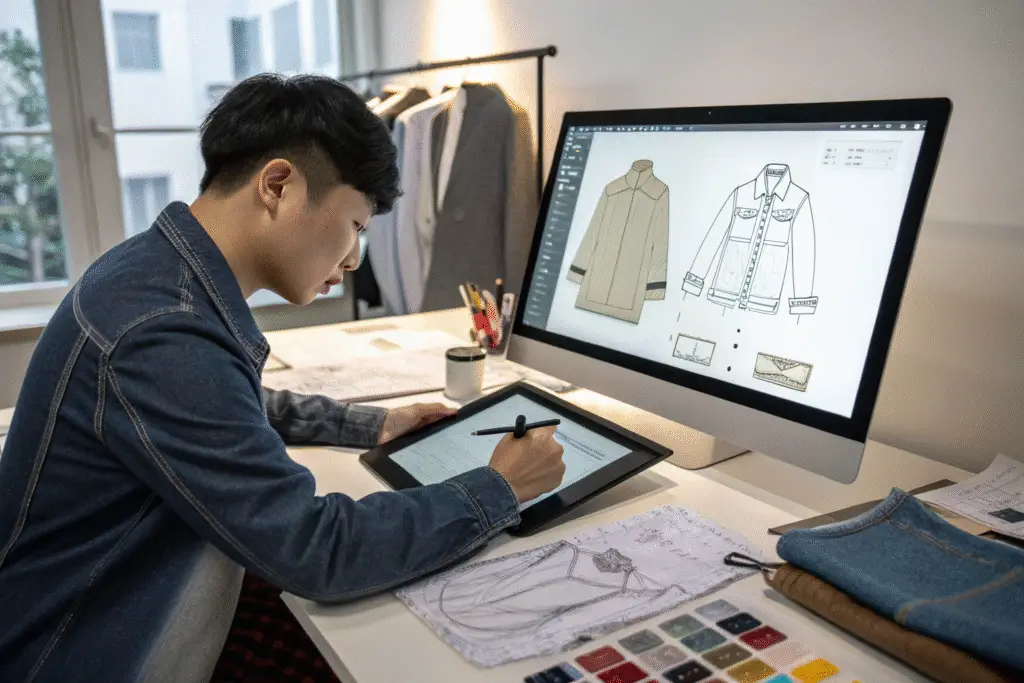
Start by comparing your previous season's sketches against the actual finished garments. Look for discrepancies. Then, create new technical flats for your updated designs. These should be in black and white, clearly showing all construction lines, seam placements, and hardware. Use callouts to note any changes from the previous version. This visual guide is the first thing our sample makers reference.
What design elements often need updating?
Common updates include changes to the silhouette, such as moving from a straight to an A-line skirt. Other frequent revisions involve neckline shapes, sleeve constructions, and pocket placements. The rise of sustainable apparel has also led to more updates in material composition, which must be accurately reflected in the sketches and BOM. Even a small change, like relocating a logo, needs to be precisely documented in the revised sketches to avoid errors in sampling.
How to integrate fit feedback into new sketches?
Always base your sketch revisions on the fit feedback from your last production run. If a specific style had a tight armhole or a loose hem, the new sketch should reflect the corrected dimensions. We recommend creating a "Fit Comments" section directly linked to the sketch, using arrows and text boxes to point to the specific area of improvement. This directly translates past problems into new solutions, ensuring a better-fitting garment from the first sample.
What Should You Update in Your Bill of Materials (BOM)?
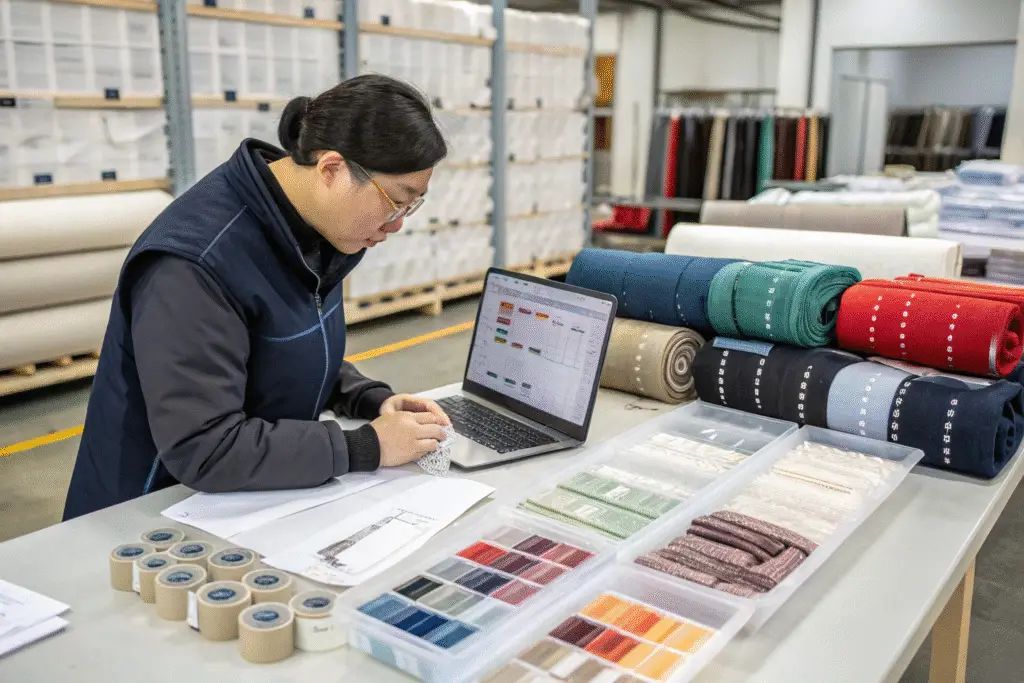
The Bill of Materials (BOM) is your ingredient list, and it must be meticulously updated for any material changes. We had a case with a client producing men's trousers who found that their fabric supplier was discontinuing a specific cotton blend. For the new season, we helped them update the BOM with two new approved fabric options, including their composition and performance test reports, ensuring no disruption to their production timeline.
Review every single line item in your old BOM. Check with your material suppliers for availability and any changes in composition or price. If you are introducing new materials, like switching to recycled polyester, this is the time to add them with full specifications. Include not only fabrics but also all trims, labels, and packaging. An outdated BOM can lead to the factory sourcing the wrong material, causing delays and potential quality issues.
| BOM Component | Common Updates for a New Season | Key Information to Include |
|---|---|---|
| Main Fabric | New supplier, blend, or weight. | Fiber content, GSM, width, finish, and supplier code. |
| Thread | Color change to match new fabric. | Color code (Pantone), type (e.g., polyester core-spun), and ticket number. |
| Zippers & Buttons | New size, color, or material (e.g., plastic to metal). | Size, color, material, and supplier reference number. |
| Labels | Updated care instructions or new logo. | Content (e.g., 100% Cotton), wash care symbols, and logo details. |
How to source and specify new sustainable materials?
When sourcing new sustainable materials, your BOM update must be extra thorough. Beyond the basic description, include the supplier's name and any relevant sustainability standards or certifications, such as GRS or OCS. We also advise requesting and attaching a test report for the new material to the tech pack, checking for pilling, shrinkage, and colorfastness to ensure it meets your quality benchmarks before moving to bulk production.
Why is updating care labels critical?
Care labels are a legal requirement and a customer service tool. If you change your fabric or construction, the care instructions might also change. An incorrect care label can lead to garment damage and customer returns. For instance, if you update a top from 100% cotton to a cotton-elastane blend, the wash and iron temperature instructions must be revised accordingly. Always double-check the care instructions against the final material composition.
How to Refine Construction Details and Measurement Specs?
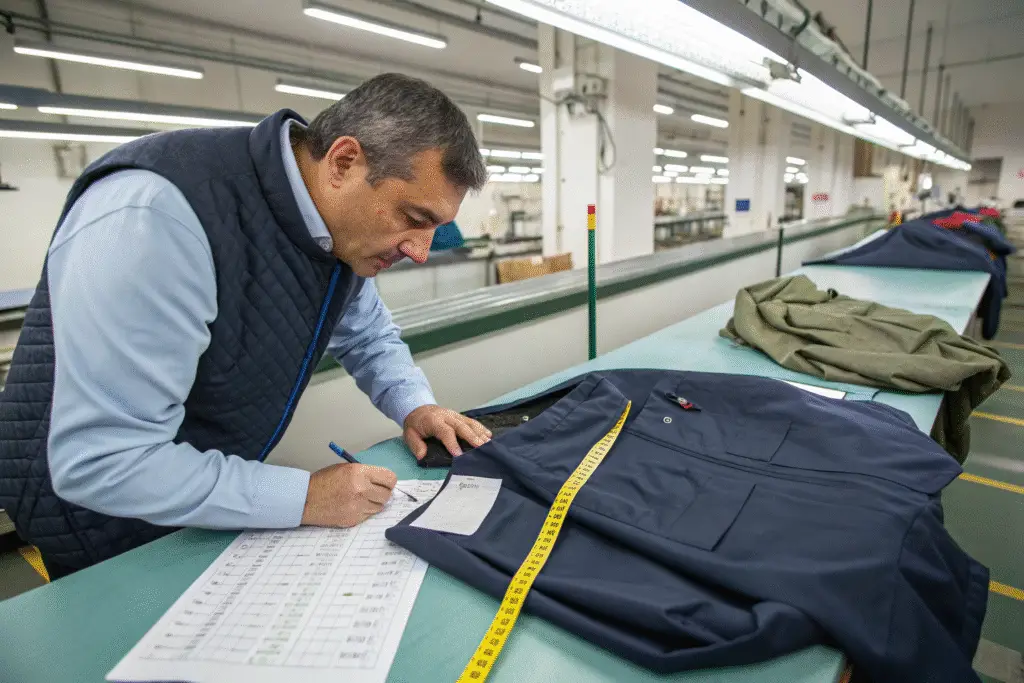
This is where precision engineering meets fashion. Construction details and measurement specs define the fit, feel, and function of your garment. A sportswear brand we work with updated their tech pack for a new jacket by adding a specific seam-taping process for waterproofing. This detailed construction note ensured the factory used the correct technique, resulting in a high-performance product that met their technical specifications.
Start by analyzing the fit comments from your previous season's prototype samples. If a sleeve was too long, adjust the measurement spec accordingly. Review every construction detail—stitch types, seam finishes, and hardware application methods. Be explicit. Instead of "sew button," specify "button attached with a cross-stitch using 4 holes." This level of detail ensures consistency across thousands of units.
What are the most common fit issues to correct?
The most common fit issues we see revolve around sleeve pitch, armhole depth, and overall garment length. Another frequent issue is grading inconsistencies between sizes. When updating your tech pack, use the measurement spec from the last approved sample as your base, not the original design spec. This incorporates the real-world adjustments made during the development process, giving you a much more accurate starting point for the new season.
How to ensure consistent grading across all sizes?
Grading rules must be clearly defined in your tech pack update. A table is the most effective way to present this. For example, you should specify how much the chest measurement increases from size M to L. This ensures a consistent fit across the entire size run. We help our clients by creating a graded spec sheet that is locked after the fit is approved, which becomes the absolute standard for our production team to follow.
Conclusion
Updating your tech pack for a new season is a strategic investment. It streamlines communication, prevents costly errors, and ensures your brand's creative vision is perfectly translated into a high-quality, well-fitting final product. By methodically reviewing and revising each component—from design sketches and BOM to construction details—you empower your manufacturing partner to deliver exactly what you need. A precise tech pack is the key to a smooth, efficient, and successful production run, allowing you to launch your collection with confidence.
If you are looking for a manufacturing partner that values clarity and precision as much as you do, let's talk. We at Fumao Clothing are experts in guiding brands through the entire development and production process. Contact our Business Director Elaine today to discuss how we can help you produce your next clothing line. Reach out at elaine@fumaoclothing.com.