Every garment in your rental inventory is an asset—but only if you know how to manage its entire lifespan.
A rental garment lifecycle plan maps each step from acquisition to retirement, helping reduce losses, control quality, and maximize return per item through smart tracking and structured transitions.
At Fumao, we build lifecycle systems that extend usage, cut waste, and turn every return into a next opportunity. Here’s how to design one that works.
Key Stages in a Garment’s Rental Lifecycle Explained
Think of each garment like a living product. It needs onboarding, maintenance, evaluation, and offboarding—all in sync.
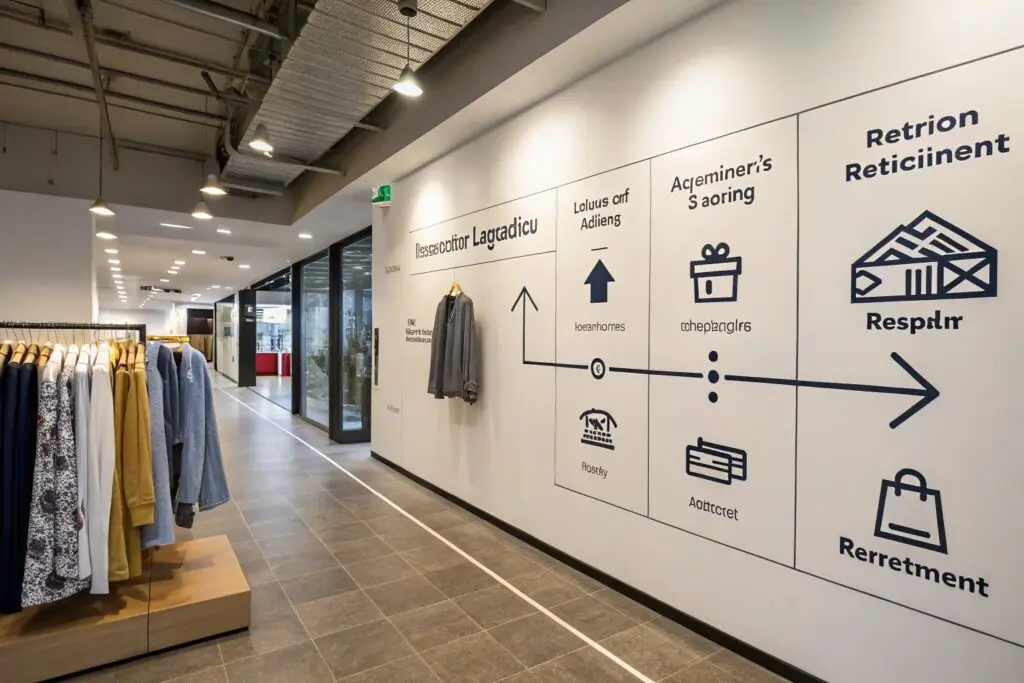
The rental garment lifecycle has five key stages: acquisition, active use, maintenance, assessment, and exit (resale or recycling).
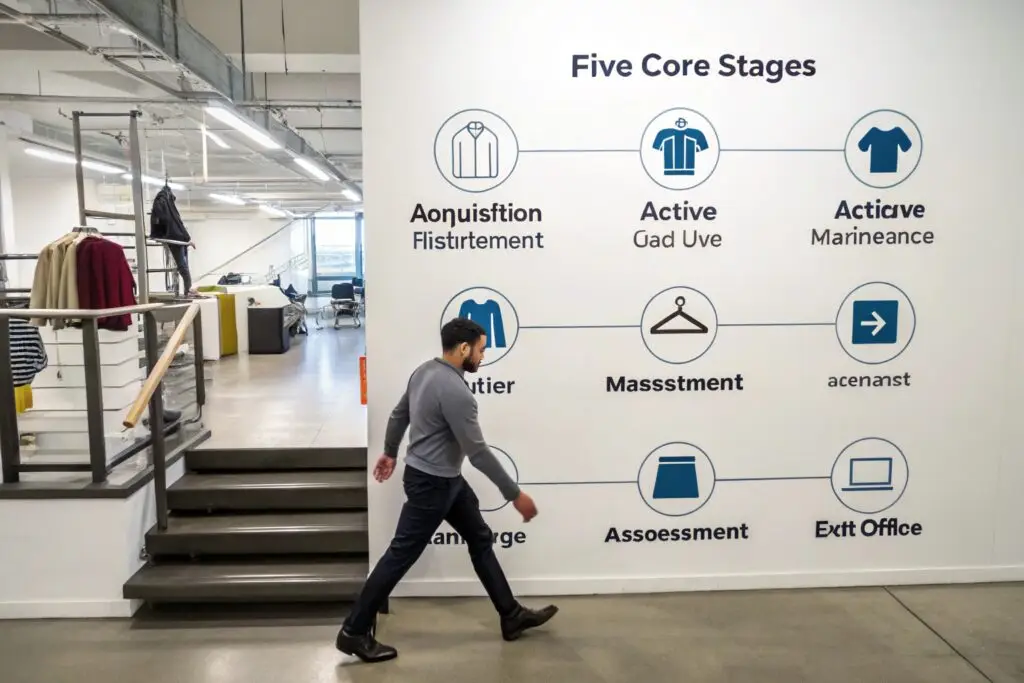
What does a typical lifecycle plan look like for rental apparel?
| Stage | Description | Timeline (avg.) |
|---|---|---|
| Acquisition | Ordering, tagging, prepping, stocking | 2–3 weeks |
| Active Rotation | Rental usage, checkouts, returns, inspections | 6–18 months |
| Maintenance | Repairs, steaming, laundry cycles | Ongoing |
| Performance Review | Wear tracking, damage scoring, usage benchmarks | Monthly or Quarterly |
| Retirement | Resell, donate, repurpose, or recycle | After 15–30 uses |
Every stage should be visible in your system. Garments in limbo (between return and restock, or use and repair) are where most rental businesses lose money.
We guide clients to use physical tags or digital dashboards that show where each garment sits in its journey.
Why does lifecycle planning1 reduce waste and boost ROI?
Without structure:
- High-usage items burn out too fast
- Under-used stock clogs shelves
- Repairs are reactive instead of scheduled
- Retirements happen too late—damaging brand image
Structured lifecycle tracking lets you forecast replacement, optimize maintenance budgets, and extend each garment’s value window.
How to Set Usage Limits and Retirement Criteria?
Every garment has an expiration date—but in rentals, you choose how and when to pull it.
Set usage limits based on garment type, wash durability, and wear condition benchmarks—then build rules for retirement to preserve brand quality and prevent waste.
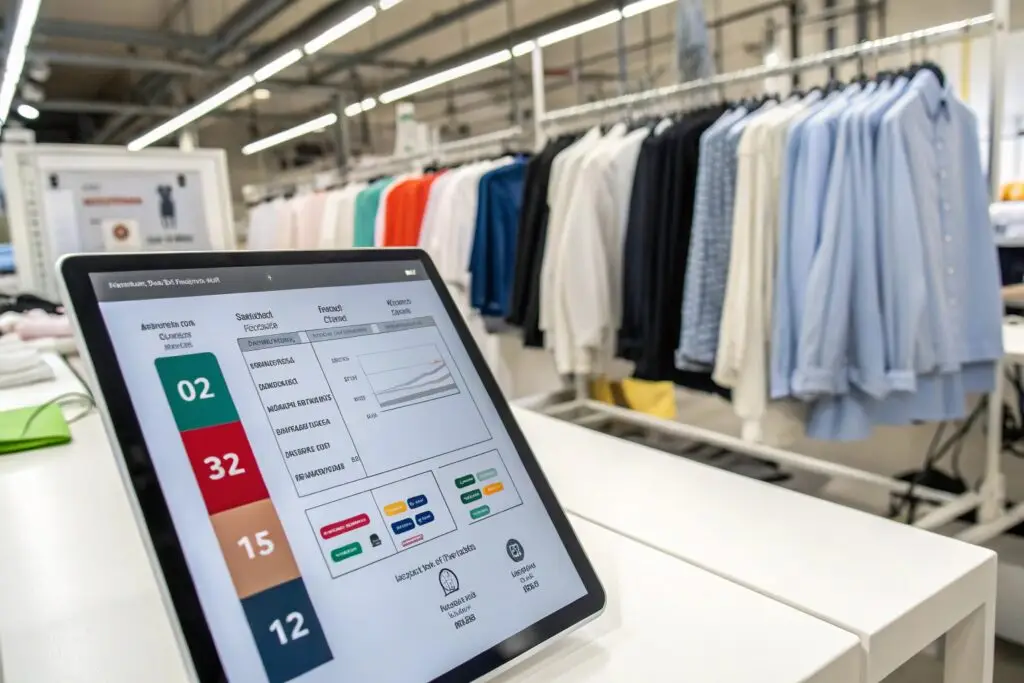
%[Tablet showing garment logistics interface near racks of formal shirts](https://shanghaigarment.com/wp-content/uploads/2025/05/a-fashion-logistics-interface-or-garment-tag-show-1024x683.webp "Clothing tracking dash_)
What’s the best way to define usage thresholds2?
We recommend setting limits by garment type and construction. Here's a basic guideline:
| Garment Type | Suggested Max Uses | Indicators for Early Exit |
|---|---|---|
| Uniform Shirt | 30–40 rentals | Fading, collar deformation |
| Chef Coat | 25–35 rentals | Yellowing, seam fatigue |
| Blazer | 20–30 rentals | Lining wear, shape collapse |
| Event Dress | 10–15 rentals | Fabric pilling, zipper damage |
You can also set limits by total wash count3, using barcode or RFID tracking.
We helped one hotel client automate retirement: when a blazer hits 25 wears or 50 washes, it flags for evaluation. Their customer complaint rate dropped by 32%.
What retirement criteria4 should be standardized?
- Usage count or wear cycles
- Visual appearance (fade, fit, fray)
- Repair count (e.g., more than 3 repairs = retire)
- Time-in-stock (e.g., more than 18 months)
Create a retirement checklist and assign scoring. Garments below a quality threshold move to the exit stage.
Tracking Wear-and-Tear to Optimize Garment Longevity
Wear isn’t random—it follows patterns. And patterns can be tracked and managed.
Track wear-and-tear using digital logs, physical tags, and repair history to predict damage trends, manage maintenance timing, and extend garment life strategically.
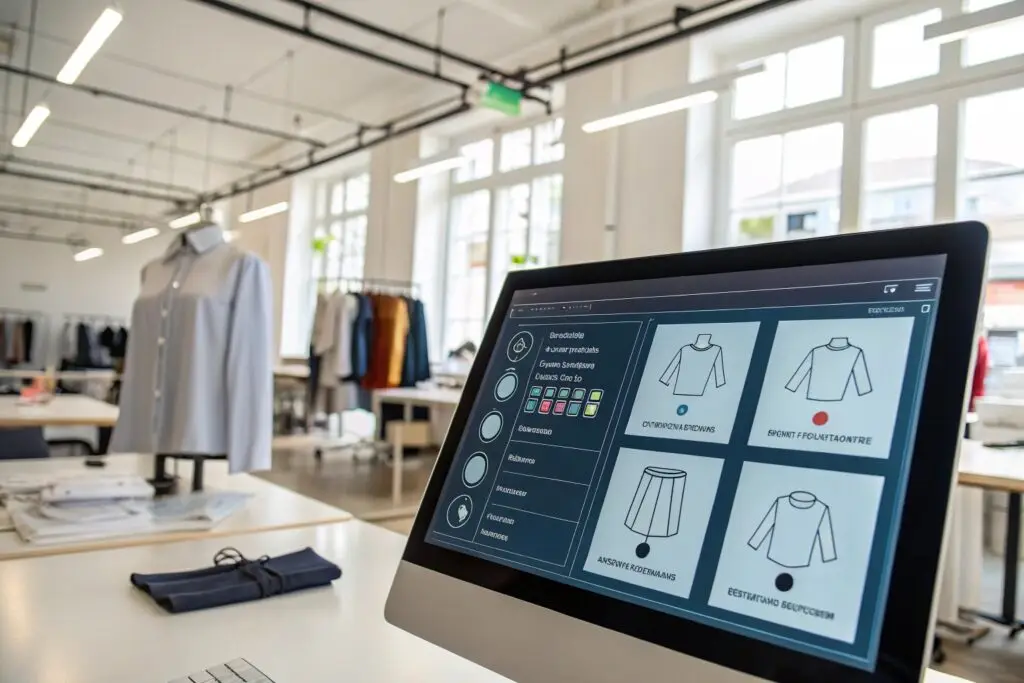
What systems help track wear without slowing operations?
We recommend a three-tier tracking model:
- Digital Scanning5 (e.g., barcode per rental cycle)
- Damage Log Tags (e.g., sewn-in checklist or scan tag)
- Repair Tracker6 (log date, type of fix, technician)
Here’s how we rate wear levels:
| Wear Score | Description | Action Required |
|---|---|---|
| 1 | Light wear, no visible damage | None |
| 2 | Minor signs (loose threads) | Monitor or quick fix |
| 3 | Moderate (color fade, stain) | Laundry or repair |
| 4 | Heavy (holes, shrinkage) | Schedule for retirement |
One of our clients built a repair report dashboard. It showed chef jackets failing faster at underarm seams. We redesigned that area—saving $8,000 in replacement costs over six months.
How does predictive maintenance7 increase garment lifespan?
Instead of waiting for failure:
- Flag high-use items for mid-cycle inspection
- Schedule repair batching weekly
- Swap out items before damage occurs
This prevents in-field failures and keeps your brand looking sharp.
When and How to Resell or Repurpose Retired Items?
Not every retired garment needs to go in the trash. With the right channels, you can recover value—or extend usefulness.
Resell or repurpose retired garments by grading condition, cleaning for secondary use, and organizing resale, donation, or recycling streams.
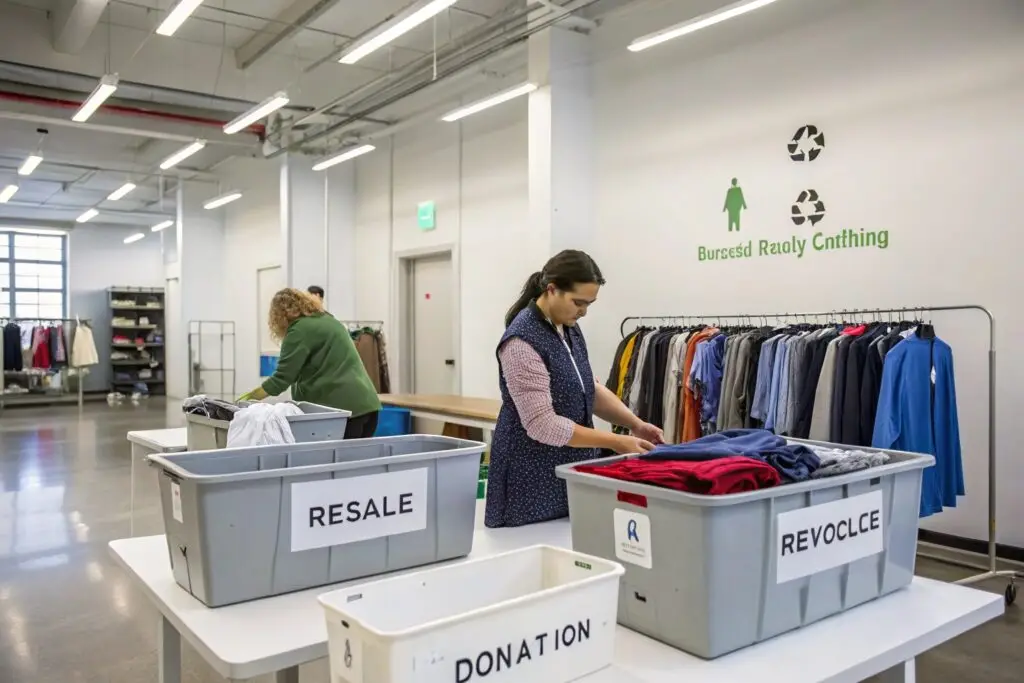
What are the most common exit paths for rental garments?
| Status | Exit Strategy | Benefits |
|---|---|---|
| Lightly Used | Resale (B2B or end-user)8 | Recover sunk cost |
| Damaged but wearable | Repurpose (rags, staff wear)9 | Internal reuse, reduced waste |
| On-brand but outdated | Donate to charity10 | CSR and tax write-off |
| Unusable | Recycle via fabric recovery | Eco-positive disposal |
We helped one hospitality client launch a B2B “uniform outlet” for retired items. They sold off older models to smaller hotels at a discount—recovering 20% of original value.
What’s the best time to transition to resale or reuse?
- After hitting max rental count
- At end of season if style is out of trend
- When repair cost exceeds 30% of item value
- If newer versions have launched
Use a monthly exit report to review what’s ready. Build a pipeline—not a stockpile.
Conclusion
Every rental garment deserves a roadmap. With a clear lifecycle plan—from first rental to final retirement—you control costs, maintain quality, and unlock value at every step. At Fumao, we help you manage inventory as a system, not just a shelf.
-
Explore how lifecycle planning can enhance efficiency and profitability in rental apparel businesses. ↩
-
Understanding best practices for usage thresholds can help optimize garment lifecycle management and reduce costs. ↩
-
Learning about total wash count can provide insights into garment durability and effective management in rental operations. ↩
-
Exploring standardized retirement criteria can enhance garment quality control and customer satisfaction in rental services. ↩
-
Explore this link to understand how Digital Scanning can enhance tracking efficiency and reduce operational slowdowns. ↩
-
Learn how a Repair Tracker can streamline your maintenance processes and extend the lifespan of your garments. ↩
-
Discover the advantages of predictive maintenance and how it can prevent costly failures and enhance garment longevity. ↩
-
Exploring the benefits of resale can help you understand how to recover costs effectively and make informed decisions about your rental inventory. ↩
-
Learning about effective repurposing strategies can reduce waste and promote sustainability in your business operations. ↩
-
Discovering the advantages of donating can enhance your corporate social responsibility efforts and provide tax benefits. ↩