Finding the perfect jersey fabric for your T-shirt line can feel like a huge challenge. You need a material that looks great, feels comfortable, and stands up to washing. Your choice directly impacts customer satisfaction and your brand's reputation. This guide will walk you through the key steps to make the right decision.
Choosing the best jersey fabric for T-shirts involves understanding fiber content, weight, and construction to match your brand's quality and design needs. A reliable manufacturing partner with strong fabric sourcing expertise is crucial for consistent results and on-time delivery.
Let's dive into the details of jersey fabric sourcing. This knowledge will help you communicate clearly with suppliers and get the high-quality T-shirts your customers deserve.
What Are The Key Properties Of High-Quality Jersey Fabric?
When you source jersey fabric, you must check several key properties. These properties determine how the T-shirt will look, feel, and last. Ignoring them can lead to unhappy customers and returned products.
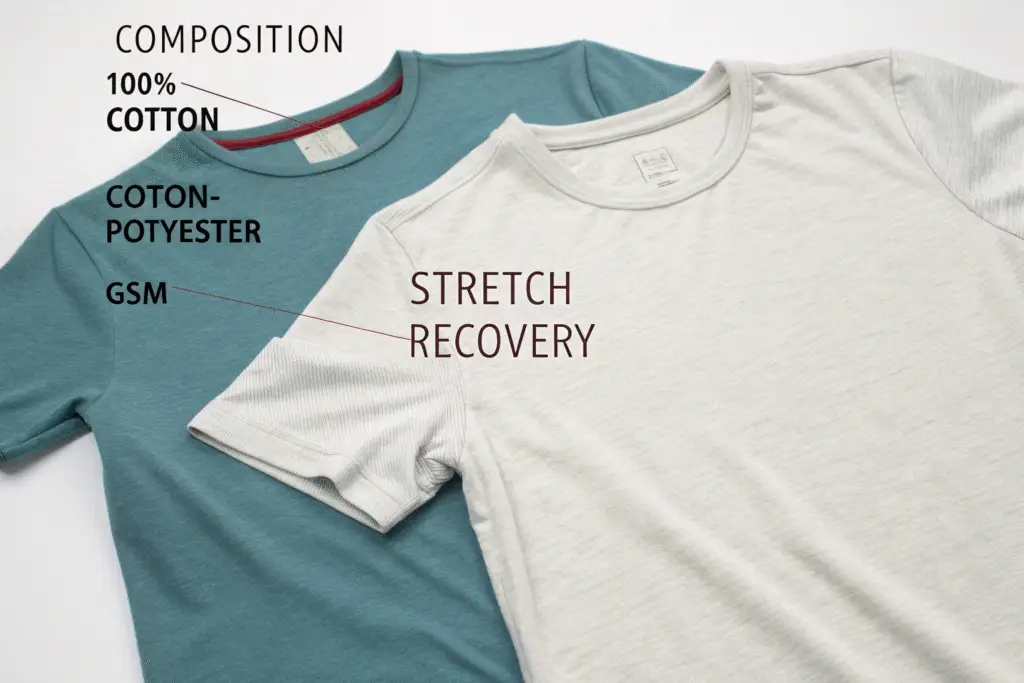
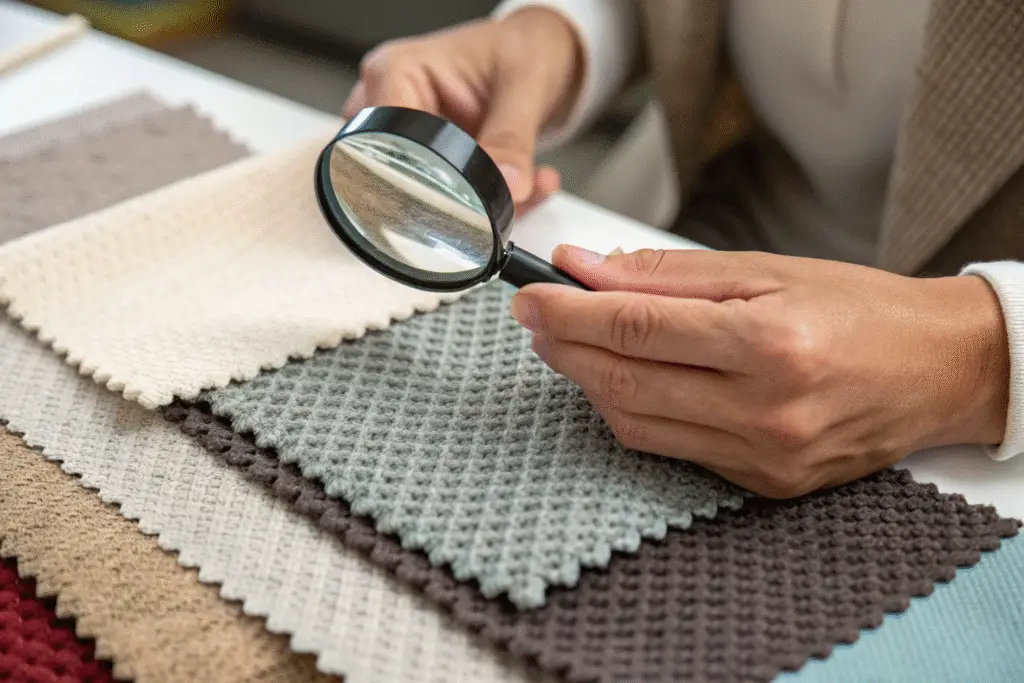
The most important properties are composition, weight, and stretch. The fiber content, like 100% cotton or a cotton-polyester blend, defines the basic feel and performance. Fabric weight, measured in GSM (grams per square meter), tells you how heavy and thick the material is. Stretch and recovery determine how well the T-shirt keeps its shape after being worn and washed.
What Fiber Blends Are Best For T-Shirt Durability?
The best fiber blend depends on your target market. For premium, soft T-shirts, 100% combed cotton is a top choice. It is strong, breathable, and gets softer with each wash. For activewear or budget-friendly options, a cotton-polyester blend is better. Polyester adds durability, reduces shrinking, and helps the fabric dry faster. At our factory, we help brands choose between these common blends:
| Blend | Best For | Key Benefit |
|---|---|---|
| 100% Combed Cotton | Premium Everyday Wear | Superior Softness & Breathability |
| 50% Cotton / 50% Polyester | Budget-Friendly & Sporty | Wrinkle Resistance & Durability |
| 90% Cotton / 10% Spandex | Fashion & Fitness | Added Stretch for Comfort & Fit |
Another excellent option is ring-spun cotton. This spinning method creates a stronger, finer, and smoother yarn. T-shirts made from ring-spun cotton have a notable soft hand feel and greater longevity compared to those made from open-end cotton. Understanding these material differences is a core part of our product development service to ensure your vision becomes a reality.
How Does Fabric Weight Impact T-Shirt Quality?
Fabric weight directly impacts the quality and seasonality of your T-shirts. A lighter fabric, around 130-150 GSM, is ideal for a soft, lightweight tee that drapes well. However, it may be slightly see-through and less durable. A medium weight of 160-200 GSM is the standard for most retail T-shirts. It offers a good balance of comfort, opacity, and durability.
For heavyweight T-shirts, look for 220-300 GSM. This weight provides a structured, premium feel and is very durable, perfect for streetwear or winter collections. The right fabric weight is a critical discussion we have with every client. It ensures the final garment meets both design expectations and practical performance needs for the specific market.
How To Evaluate A Jersey Fabric Supplier?
Choosing a fabric supplier is as important as choosing the fabric itself. A unreliable supplier can cause delays, quality issues, and lost profits. You need a partner who is transparent, consistent, and communicative.
Evaluation should be based on their quality control processes, certifications, and communication efficiency. You must verify their claims and ensure their operations align with your standards. A good supplier will welcome your questions and provide evidence of their reliability.
What Certifications Should A Reliable Supplier Have?
Certifications are proof of a supplier's commitment to quality and ethical standards. For jersey fabric, the most important certifications include Oeko-Tex Standard 100, which confirms the fabric is free from harmful substances. GOTS (Global Organic Textile Standard) is crucial if you are sourcing organic cotton. Another key certification is ISO 9001, which demonstrates a robust quality management system.
We always provide these certificates to our partners. It builds trust and shows we are serious about quality assurance. This is especially important for brands selling in North America and Europe, where consumers and retailers are increasingly conscious of product safety and environmental impact. Don't be afraid to ask for these documents; a trustworthy supplier will provide them readily.
How Can You Test Communication And Logistics Efficiency?
Inefficient communication is a major pain point. To test this, initiate contact and note their response time and clarity. Do they understand your needs? Do they ask insightful questions? A good sales rep acts as a partner, not just an order-taker. You can also ask for references from their other U.S. clients.
For logistics, ask detailed questions about their shipping process. Do they offer DDP (Delivered Duty Paid) services? This mode is crucial as it simplifies the process for you—we handle all logistics, costs, and risks until the goods arrive at your U.S. warehouse. This prevents unexpected fees and delays, ensuring you never miss a selling season due to logistical complications.
What Is The Full-Package Manufacturing Process For T-Shirts?
A full-package manufacturing process covers everything from sourcing raw materials to delivering the finished T-shirts to your door. This model saves you time and hassle by relying on a single, accountable partner. It streamlines the entire production cycle.
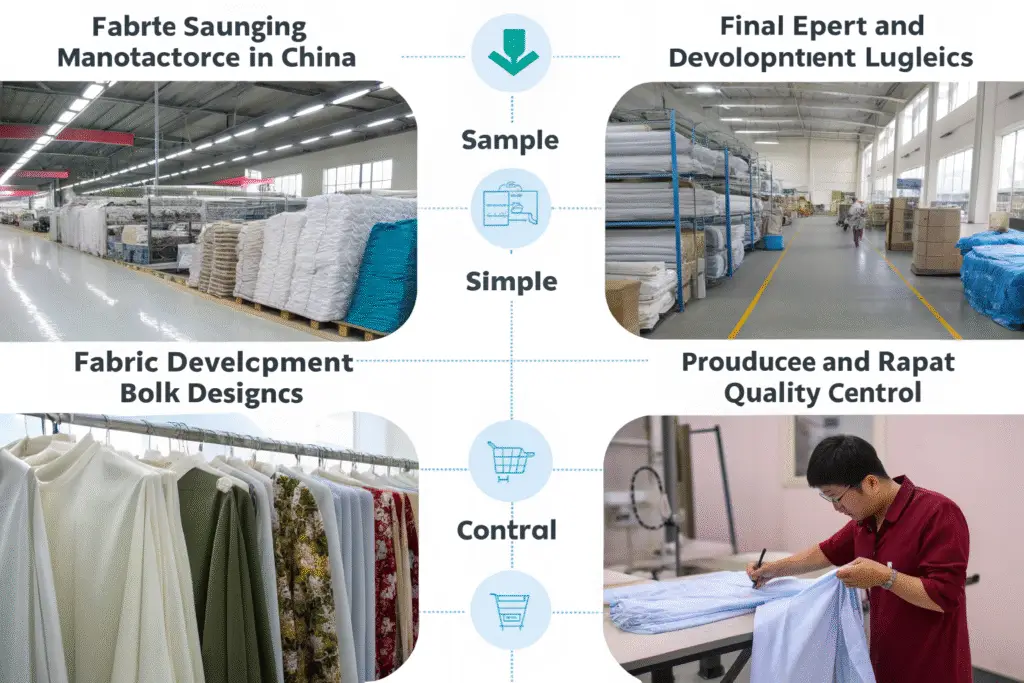
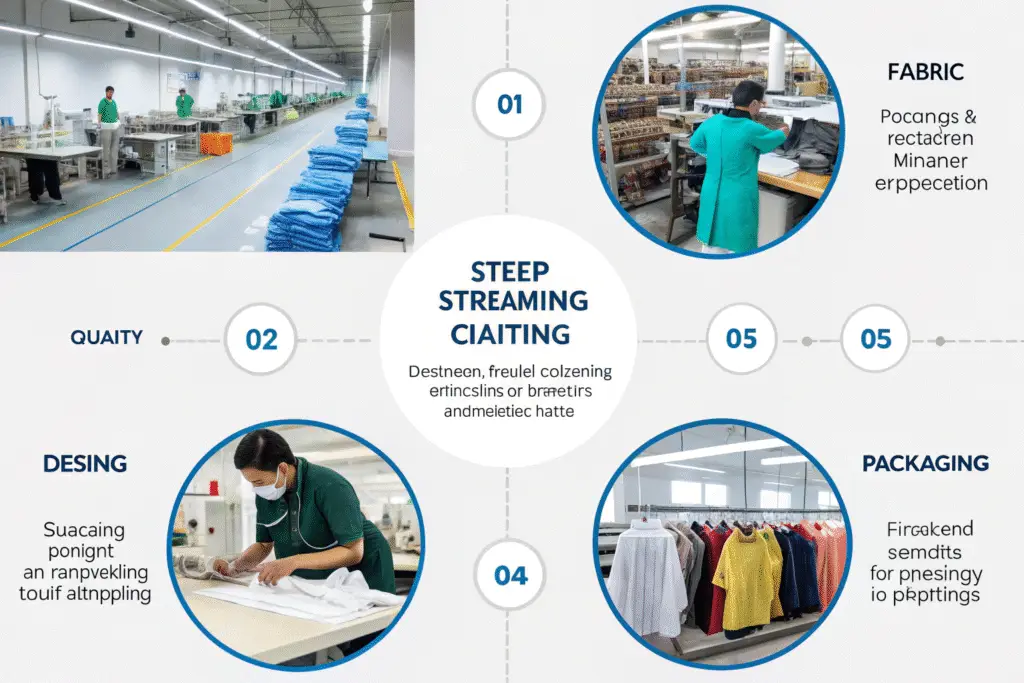
The process typically includes fabric sourcing and testing, pattern making, sample development, bulk production, quality control, and final export logistics. Each stage is critical for transforming your design into a market-ready product.
How Does Sampling Work Before Bulk Production?
Sampling is your first look at the real product. It is a non-negotiable step. The process usually starts with a prototype sample, made from a similar fabric, to check the basic pattern and fit. Once approved, we move to a pre-production sample. This sample is made with the exact jersey fabric and trims you ordered.
We encourage our clients to be thorough during this stage. Check the stitch quality, the print or embroidery, and the overall feel. We make revisions until you are 100% satisfied. This meticulous approach to apparel development prevents costly mistakes during the bulk order and ensures the final T-shirts meet your exact specifications.
What Quality Control Checks Are Done During Production?
Quality control is continuous. During production, our QC team conducts in-line inspections. They check the cutting, sewing, and stitching against the approved sample. After production, we perform a final random inspection (AQL standard) on the finished T-shirts.
This final check covers everything: fabric flaws, sewing defects, sizing measurements, color fastness, and function of labels and packaging. Our strict quality control protocols are designed to catch issues before shipment. This reliability is why U.S. brands trust us to be their manufacturing extension, ensuring their reputation for quality remains intact.
Why Is DDP Shipping Crucial For US Apparel Importers?
DDP (Delivered Duty Paid) is a shipping term that places the maximum responsibility on the supplier. For you, the U.S. importer, it means a predictable cost and a hassle-free process. You know the final price upfront, with no surprise fees.
Under DDP, we, the supplier, handle all tasks, costs, and risks associated with getting the goods from our factory in China to your warehouse in the U.S. This includes export formalities, international freight, insurance, and most importantly, U.S. customs clearance and import duties.
How Does DDP Prevent Unexpected Costs And Delays?
With DDP, you receive one all-inclusive price. There are no hidden charges for customs brokerage, duty taxes, or port fees. This makes your financial planning accurate and simple. Furthermore, because we manage the entire logistics chain, we have more control over the timeline.
We work with trusted freight forwarders to ensure smooth customs clearance. Our experience with U.S. import regulations helps prevent documentation errors that often cause costly delays at the port. This reliable logistics system is a key reason our clients consistently receive their orders on time, protecting them from missing crucial selling seasons.
What Are The Risks Of Other Shipping Terms Like FOB?
Terms like FOB (Free On Board) can seem cheaper at first, but they transfer significant risk and work to you. With FOB, you are responsible for the main shipping cost, insurance, and all import processes once the goods leave the origin port. This requires you to hire a customs broker and handle complex paperwork.
If you are unfamiliar with U.S. customs regulations, this can lead to mistakes, storage demurrage fees, and unexpected duty bills. These surprises can erase your profit margin. For apparel importers, the simplicity and predictability of DDP Incoterms make it the superior choice, allowing you to focus on selling, not shipping.
Conclusion
Sourcing the best jersey fabric for your T-shirts is a detailed process. It requires a deep understanding of fabric properties, a rigorous method for evaluating suppliers, and a partnership with a manufacturer that offers a comprehensive full-package service. Prioritizing quality control and opting for DDP shipping will safeguard your profits and ensure timely delivery to your market.
Mastering these elements is the key to building a successful and reputable apparel brand. You need a manufacturing partner who not only provides excellent fabric and production but also offers transparency and reliability at every step.
We are dedicated to being that partner for ambitious U.S. brands. Let us help you bring your high-quality T-shirt visions to life with confidence. For a consultation on your next apparel order, please contact our Business Director, Elaine, at elaine@fumaoclothing.com.